The Evolution of Agentic Workflows
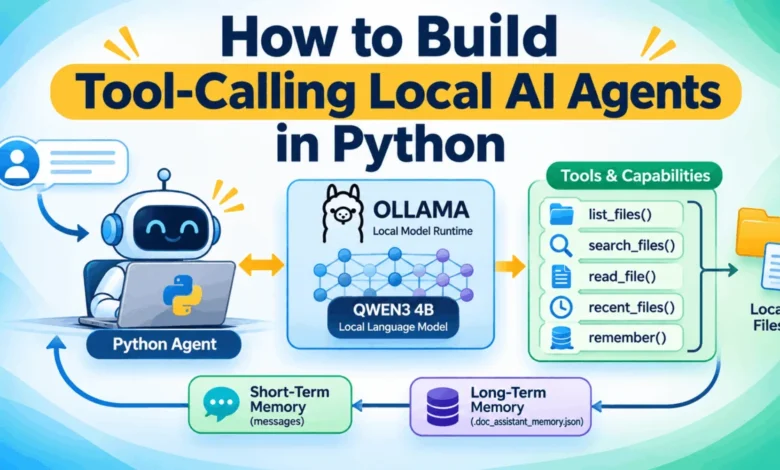
The concept of an AI agent is rooted in the ability of a large language model (LLM) to bridge the gap between abstract reasoning and concrete execution. Traditionally, language models were confined to their training data; however, the emergence of "tool calling"—or function calling—allows these models to bridge this gap by requesting external actions. When a model identifies a task it cannot perform directly, such as reading a specific local file or searching a directory, it triggers a structured response that the underlying Python code executes. This cycle of reasoning and action defines the modern AI agent.
Recent industry data indicates a surging interest in local AI deployment. With the rise of model compression techniques and optimized inference engines like Ollama, hardware that was once restricted to basic tasks can now host high-performing models like Qwen3. This shift addresses growing concerns regarding data sovereignty, as developers no longer need to transmit sensitive codebases to third-party servers to receive intelligent guidance.
Technological Foundation: Setting Up the Local Environment
To build a functional local agent, the setup process requires a structured approach to hardware and software configuration. The initial step involves installing the Ollama runtime, which serves as the primary engine for hosting open-weight models. By selecting a model such as Qwen3 (4B parameters), developers gain access to an architecture specifically optimized for structured output, which is essential for accurate tool invocation.
Setting up the development environment follows a standard Python best practice: the creation of a virtual environment ensures that the agent’s dependencies remain isolated. Once the Ollama server is active, developers must consider the "context window"—the finite amount of information a model can process at once. For an agent to function effectively, the context length must be sufficient to hold the current conversation, the definitions of available tools, and the results of those tools. Configuring the environment variable OLLAMA_CONTEXT_LENGTH to 32,000 tokens allows for complex, multi-step interactions without prematurely truncating the agent’s memory.
The Mechanism of Tool-Calling Exchanges
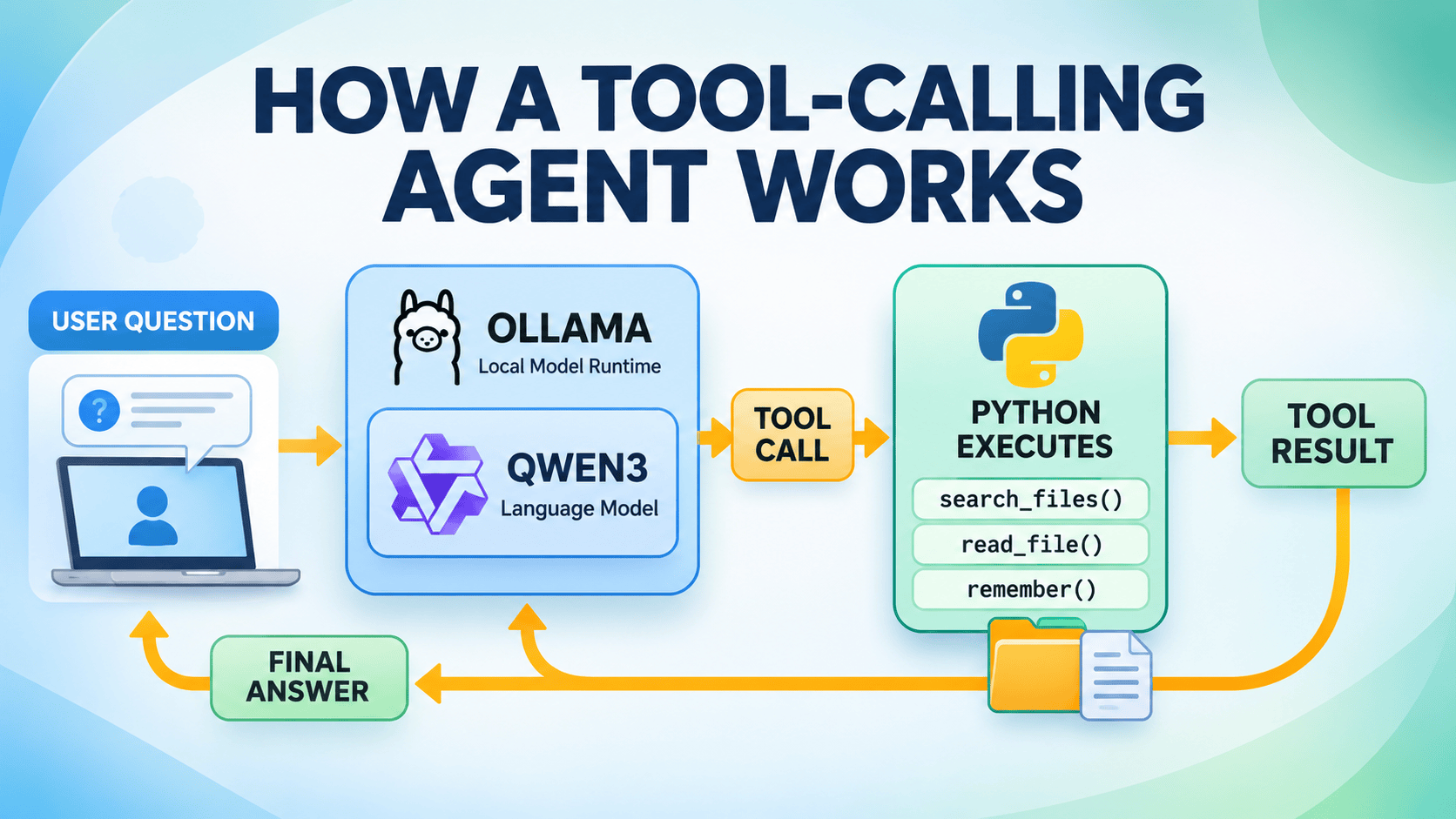
The interaction between the user, the agent, and the local files follows a sophisticated, four-role communication cycle:
- System: Defines the core directives and persona of the assistant.
- User: Initiates the inquiry or specific command.
- Assistant: Evaluates the request and, if necessary, emits a structured tool-call request.
- Tool: The Python function executes the request, returning data that the assistant then synthesizes into a human-readable answer.
This cycle is iterative. A single query might require the agent to search for a file, read its contents, and then "remember" a specific fact for future use. This requires a robust loop, often managed by a central run_turn function that monitors the agent’s progress and prevents infinite loops by enforcing a maximum number of execution steps.
Designing Secure and Efficient Tools
A primary concern when building local agents is security. Because the agent has the authority to interact with the file system, it must be restricted to a specific directory. By implementing "safe path" validation, developers can ensure that the agent cannot traverse outside the designated project folder, mitigating the risk of unauthorized file access.
The toolset for a project assistant typically includes:
- List Files: Provides the model with an overview of the directory structure.
- Search Files: Performs keyword-based searches to locate specific logic or documentation.
- Read File: Retrieves content from a file, with built-in constraints to ensure only relevant chunks are loaded into the context window.
- Recent Files: Analyzes file modification times to help the model understand current work progress.
- Remember: Persists key information into a JSON file, creating a long-term memory layer that survives beyond the current session.
These tools are designed to be "read-heavy." By keeping most operations read-only and imposing strict limits on output length (e.g., 3,000 characters), developers prevent the model from becoming overwhelmed by large data dumps, which would otherwise exhaust the context window.
Memory Management and Long-Term Context
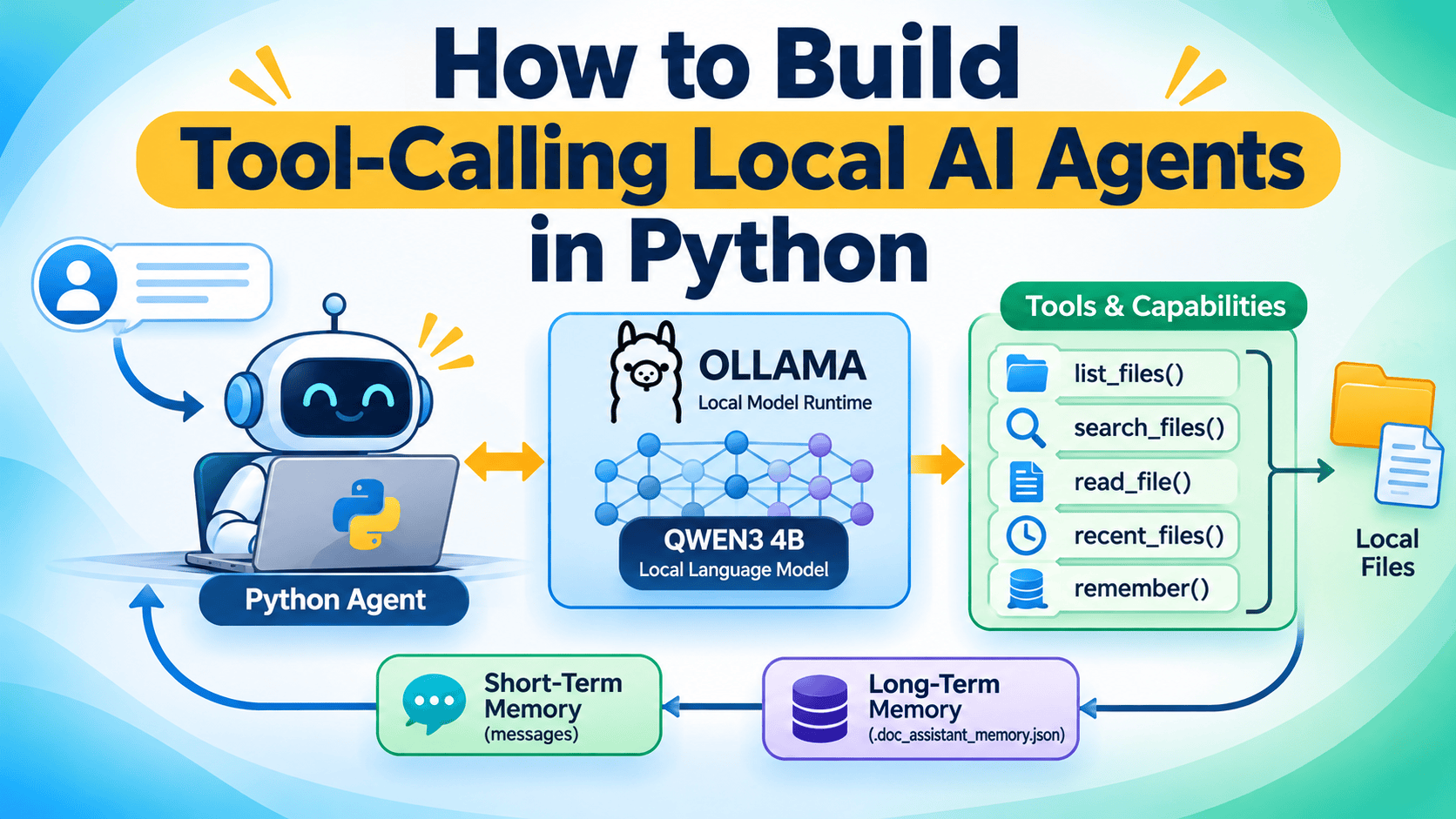
A key challenge in building agents is the lack of persistent memory in standard LLMs. This is solved by using two distinct strategies: short-term "session" memory and long-term "factual" memory. The session memory is managed by a list that records the conversation history, which is then trimmed to retain only the most relevant recent exchanges. This allows the model to maintain coherence during a long discussion.
Long-term memory is achieved by loading a "facts" file during the system prompt initialization. If a user asks the agent to "remember" that a project uses a specific testing framework, that fact is saved to a JSON file. Every subsequent launch of the agent reads this file, effectively providing the model with a background knowledge base regarding the user’s preferences and project requirements.
Implications and Future Directions
The deployment of local, tool-calling agents represents a democratization of productivity tools. By moving these capabilities from centralized servers to local machines, developers gain complete control over their workflows. This approach is particularly relevant for sectors with strict data privacy requirements, such as finance, healthcare, and proprietary software development.
However, the technology is not without its limitations. Local models are generally less adept at handling highly complex logical chains compared to their massive, cloud-hosted counterparts. Furthermore, the performance of an agent is heavily dependent on the quality of its "system prompt" and the clarity of its tool documentation. As developers continue to refine these agents, the focus will likely shift toward more robust error handling and the integration of even more specialized tools, such as web-based documentation lookups or automated testing suites.
In conclusion, building a local AI agent is a multi-disciplinary task that combines Python programming, prompt engineering, and an understanding of LLM architecture. By adhering to the principles of secure, constrained, and iterative design, developers can create powerful assistants that act as force multipliers, significantly reducing the cognitive load required to manage complex project folders and documentation. As the open-source community continues to iterate on models like Qwen3 and Llama 3, the potential for these local agents to evolve into truly autonomous, reliable coworkers continues to expand.
Related posts: