Google Expands its AI and Economy Research Initiative with World-Class Economists and Nobel Laureate

As artificial intelligence rapidly transitions from theoretical research laboratories into the daily fabric of global workplaces, businesses, and households, understanding its broader macroeconomic footprint has become a critical imperative for economists, policymakers, and industry leaders alike. To meet this challenge head-on, Google has announced a major expansion of its AI & Economy Research Program. The initiative is bolstered by the addition of several preeminent global authorities, including Nobel Laureate Philippe Aghion and Professor Ajay Agrawal, alongside a distinguished roster of academic advisors, visiting fellows, and new program directors.
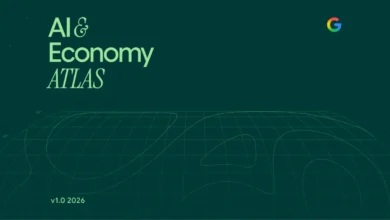
This strategic expansion follows closely on the heels of the recent launch of the AI & Economy ATLAS v1.0, an interactive open-access platform designed to track how real-world users engage with artificial intelligence tools in professional and personal settings. However, as the technological landscape continues to shift at an unprecedented pace, recognizing adoption patterns represents only the initial phase of a much larger transformation. Navigating the systemic economic adjustments brought on by generative AI and machine learning requires a rigorous, multidisciplinary approach that marries fine-grained empirical data with deep economic theory. By reinforcing its research team with some of the brightest minds in academia and industry, Google aims to provide organizations, workers, researchers, and governments with the analytical tools necessary to comprehend and manage this complex technological transition.
The Evolution of the AI & Economy Research Program
Technological revolutions are rarely instantaneous, uniform events; rather, they unfold over extended periods through waves of experimentation, structural adjustment, and widespread diffusion. Google’s AI & Economy Research Program is specifically structured to measure and analyze this ongoing evolution in real time. The initiative focuses on several core pillars: the future of work and labor market dynamics, overall productivity and economic growth, global technology diffusion across varied industrial sectors, and the accelerating impact of artificial intelligence on scientific discovery.
Executing a research agenda of this scale and complexity demands deep, continuous collaboration among academic institutions, industry pioneers, and public policymakers. To broaden its scientific capacity and engage meaningfully with these diverse stakeholder groups, the program is integrating a cohort of external advisors and visiting scholars. This structure is designed to ensure that the insights generated are not merely theoretical, but are grounded in the practical realities of modern economic systems and labor markets.
To spearhead empirical projects and synthesize these multifaceted research streams, Google has appointed two renowned researchers as Directors of the AI & Economy Research Program: Anu Madgavkar and Daniel Rock. They will lead the initiative alongside Alex Imas, Director of AGI Economics at Google DeepMind, and Zanna Iscenko, AI & Economy Lead in Google’s Chief Economist’s Office. This leadership team brings together deep expertise in labor economics, technological change, management science, and artificial intelligence, positioning the program to deliver authoritative insights into how digital automation and cognitive tools are altering the creation of value across the global economy.
Background Context and Chronology of the Initiative
The launch and subsequent expansion of Google’s economic research framework occur against a backdrop of intense global debate regarding the societal implications of generative artificial intelligence. Since the widespread public release of advanced large language models and generative tools in late 2022 and 2023, economists, labor organizations, and government regulators have grappled with fundamental questions surrounding job displacement, wage polarization, skill upgrading, and overall productivity gains.
Historically, major technological shifts—such as the advent of personal computing, the expansion of the internet, and the proliferation of mobile technology—have generated substantial long-term economic growth while causing significant short-term friction in labor markets. Economists have long debated the "productivity paradox," a phenomenon where massive investments in new technologies take years, or even decades, to reflect clearly in macroeconomic productivity statistics. Artificial intelligence, characterized by its general-purpose nature and rapid deployment cycle, presents an accelerated version of this historical pattern.
Recognizing the urgent need for empirical clarity amidst widespread speculation, technology companies and academic institutions have increasingly sought to establish open-data partnerships. Google’s rollout of the ATLAS platform and the subsequent strengthening of its research advisory group represent a systematic effort to move the discourse away from sensationalist predictions and toward rigorous, data-driven analysis. By bringing external academic rigor directly into corporate research initiatives, Google is attempting to foster an environment of transparency and collaborative problem-solving that can serve as a public resource for policymakers designing future labor and educational frameworks.
Leadership Profiles and Scientific Expertise
The newly expanded team brings decades of combined research experience in innovation economics, industrial organization, and the economics of artificial intelligence.

Nobel Laureate Philippe Aghion, renowned for his seminal work on the economics of growth, Schumpeterian creative destruction, and the relationship between market competition and innovation, brings a profound macro-level perspective to the program. His theoretical frameworks regarding how innovations render existing technologies obsolete while driving long-term economic prosperity will be vital in contextualizing AI’s disruptive potential.
Professor Ajay Agrawal, a leading authority on the economics of artificial intelligence and digital transformation, has extensively studied how machine learning reduces the cost of prediction and how this economic shift alters business strategy, organizational design, and entrepreneurial ecosystems. His insights will help anchor the program’s focus on enterprise adoption and structural economic change.
Co-Directors Anu Madgavkar and Daniel Rock bring complementary microeconomic and operational expertise. Madgavkar’s extensive background in tracking global labor trends, occupational shifts, and demographic changes—honed through decades of research on the future of work—ensures the program maintains a sharp focus on human capital and workforce development. Daniel Rock, whose academic research frequently centers on the intersections of information technology, productivity, and the economic measurement of intangible capital, provides crucial methodological rigor for assessing how AI tools translate into measurable productivity gains at the firm and industry levels.
They are joined by Alex Imas of Google DeepMind and Zanna Iscenko of the Chief Economist’s Office, creating a unified leadership structure that bridges foundational AI research, applied industry data, and rigorous economic science.
Broader Implications and Future Economic Impact
The implications of this expanded research agenda extend far beyond corporate strategy; they touch directly upon public policy, educational reform, and the future of global labor markets. As artificial intelligence systems become more capable of performing cognitive tasks historically reserved for skilled professionals, the nature of expertise is undergoing a profound democratization.
However, this transition carries inherent risks, including the potential for widening economic inequality if the benefits of AI adoption accrue disproportionately to a small number of firms or highly specialized workers. The stated mission of Google’s expanded research team is to act as a scientific bridge, directly informing future updates to the ATLAS framework and guiding empirical research toward equitable outcomes.
By focusing heavily on the organizational practices, public policy frameworks, and training programs necessary to ensure successful technological integration, the team aims to identify pathways where AI acts as a force for upskilling rather than mere substitution. Ensuring that workers are equipped with the competencies required to leverage these new tools is essential for maintaining social cohesion and driving broadly shared economic prosperity.
As governments worldwide contemplate regulatory frameworks for artificial intelligence—ranging from safety standards to labor protections—policymakers increasingly rely on robust, empirical research to guide their legislative decisions. Academic partnerships of this nature provide an invaluable public good by supplying transparent, peer-reviewed data on how technology actually alters business operations and employment patterns on the ground.
Conclusion and Next Steps
The integration of world-class academic leadership into Google’s AI & Economy Research Program marks a significant maturation in how the technology sector approaches the socioeconomic consequences of its innovations. By combining large-scale usage data from platforms like ATLAS with the theoretical and empirical expertise of researchers like Philippe Aghion, Ajay Agrawal, Anu Madgavkar, and Daniel Rock, the program is uniquely positioned to shed light on one of the defining economic transitions of the twenty-first century.
Stakeholders across academia, industry, and government will be watching closely as this expanded team begins publishing its findings and shaping future research directions. For researchers, economists, and policymakers seeking to engage with the latest data and publications emerging from this initiative, ongoing updates, interactive tools, and comprehensive research papers remain accessible through the official portal at ai.google/economy.