Meta Announces Significant VR Headset Price Hikes Amidst Strategic Pivot Towards AI

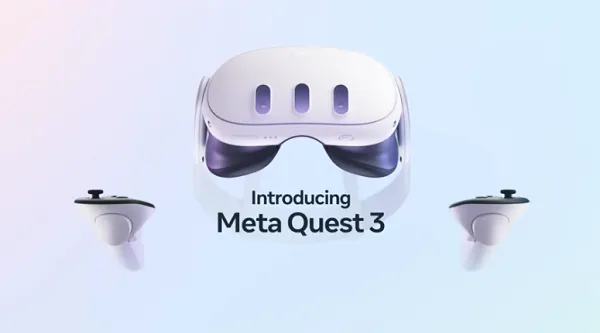
Meta Platforms Inc. has announced significant price increases for its latest virtual reality (VR) headsets, the Meta Quest 3 and Meta Quest 3S, with prices rising by between $50 and $100 per unit. The company attributes these adjustments primarily to escalating hardware production costs, particularly for critical components like memory chips. However, this move is also being widely interpreted by industry observers and analysts as a clearer indication of a broader strategic reorientation for Meta, signaling a discernible shift in focus away from its ambitious, multi-billion-dollar metaverse vision towards the burgeoning field of artificial intelligence (AI).
The price adjustments, detailed on Meta’s official blog, will see the Meta Quest 3 unit’s price increase from its original $500 to $599. Similarly, the Meta Quest 3S 128GB version, previously priced at $300, will now retail for $349, while its 256GB counterpart will climb to $449.99. These changes represent a substantial increase across the popular lineup, potentially impacting consumer accessibility and market adoption for devices that Meta once heavily subsidized to drive its metaverse aspirations.
In its official statement, Meta elaborated on the rationale behind the price hike: “We’re making this change because the cost of building high-performance VR hardware has risen significantly. The global surge in the price of critical components — specifically memory chips — is impacting almost every category of consumer electronics, including VR. To keep delivering the quality of hardware, software, and support you expect from the Quest platform, we need to adjust our pricing.” This explanation aligns with broader economic trends observed across the tech industry, where supply chain complexities, inflationary pressures, and increased raw material costs have affected manufacturing and retail pricing for a wide array of electronic goods. However, the timing and magnitude of these increases, particularly in the context of Meta’s evolving corporate strategy, suggest more than just a simple cost pass-through.
The Genesis of Meta’s Metaverse Ambition and Financial Realities
Meta’s journey into the metaverse officially began with its dramatic rebranding from Facebook in October 2021, a move that then-CEO Mark Zuckerberg described as aligning the company’s future with its long-term vision for immersive digital experiences. This vision, predicated on a persistent, interconnected virtual environment where users could work, socialize, play, and learn, was to be facilitated by advanced VR and augmented reality (AR) hardware. The Quest lineup of headsets, developed by Meta’s Reality Labs division, was central to this strategy, serving as the primary gateway to this nascent digital frontier.
Reality Labs, the segment responsible for Meta’s VR and AR hardware and software development, has consistently reported substantial operating losses since its inception. In 2022, Reality Labs reported an operating loss of $13.7 billion, followed by another $16.1 billion loss in 2023. These figures underscore the enormous financial investment Meta has poured into building the foundational technology and infrastructure for its metaverse. While Meta has repeatedly affirmed its long-term commitment to this vision, the escalating losses have drawn scrutiny from investors and analysts, particularly as the anticipated mass adoption of the metaverse has yet to materialize.
The company’s strategy initially involved aggressive pricing of its Quest headsets, often selling them at a loss, to accelerate adoption and establish a dominant market share in the nascent VR space. The Meta Quest 2, for instance, was lauded for its accessibility and relatively low price point, making it a popular entry-level device. However, even the Quest 2 saw a price increase in July 2022, rising by $100 due to similar "increased costs to make and ship our products." This prior adjustment set a precedent, indicating that Meta was not prepared to indefinitely absorb the rising costs of its hardware, especially as the path to metaverse profitability remained elusive. The current price hikes for the Quest 3 and 3S further solidify this trend, suggesting a more pragmatic approach to hardware pricing where profitability, or at least reduced losses, is gaining precedence over aggressive market penetration at any cost.
Chronology of a Strategic Shift: From Metaverse Hype to AI Realism
The narrative surrounding Meta’s strategic direction has undergone a noticeable transformation over the past year, moving from an almost exclusive focus on the metaverse to a more diversified approach heavily emphasizing AI.
- October 2021: Facebook rebrands to Meta, with Mark Zuckerberg proclaiming the metaverse as the "next chapter for the internet." Billions are committed to Reality Labs.
- July 2022: Meta announces a $100 price increase for its Quest 2 headset, citing rising manufacturing and shipping costs. This marks an early indication of Meta’s willingness to pass on increased costs to consumers.
- October 2022: Meta launches the Quest Pro, a high-end, productivity-focused VR headset, priced at $1,500, targeting enterprise users. While technologically advanced, its high price and niche focus limited broad appeal.
- June 2023: Apple enters the mixed reality space with the Vision Pro, priced at $3,499, setting a new benchmark for premium hardware and potentially influencing Meta’s strategy.
- September 2023: Meta unveils the Quest 3, aiming for a broader consumer market with improved performance and mixed reality capabilities, priced at $500 (initially).
- Late 2023 – Early 2024: Mark Zuckerberg increasingly emphasizes AI in earnings calls and public statements, outlining ambitious plans for AI development, including building "superintelligence" and investing heavily in AI infrastructure.
- February 2024: Meta reportedly begins to "shut down" its Horizon Worlds VR social element as a standalone product, indicating a shift away from its original vision for the metaverse’s social core. While Meta later clarified it would maintain support for existing users, it confirmed no new feature development, effectively placing the platform in maintenance mode.
- March 2024: Meta announces plans to invest an estimated $600 billion into AI infrastructure over the next three years, underscoring the immense financial commitment to this new frontier.
- April 2024: The current price hikes for the Quest 3 and Quest 3S are announced, directly linking to rising hardware costs but also coinciding with the accelerated AI pivot.
This timeline clearly illustrates a gradual but decisive recalibration. While Meta continues to develop VR hardware, the aggressive, no-holds-barred approach to building the metaverse as a singular future has given way to a more balanced strategy where AI now commands significant resources and strategic priority.
The Rise of AI and Meta’s New Frontier
Mark Zuckerberg’s pivot to AI is not merely a tactical adjustment but appears to be a profound strategic shift, driven by the rapidly accelerating advancements in artificial intelligence. He has openly expressed his belief that AI represents the next major technological wave, comparable to the internet and mobile computing. This enthusiasm has translated into massive investments. Meta’s commitment of an estimated $600 billion towards AI infrastructure over the next three years is a staggering sum, signaling an all-in approach to becoming a leader in AI research and development. This includes building vast data centers equipped with advanced GPUs and hiring top AI talent.
The focus on AI extends beyond theoretical research. Meta is actively developing AI-powered features across its family of apps (Facebook, Instagram, WhatsApp, Messenger), from generative AI tools for content creation to advanced recommendation algorithms and AI assistants. Furthermore, AI is becoming central to Meta’s hardware strategy, particularly with the development of "AI glasses" and upcoming augmented reality (AR) versions. These devices are envisioned not just as platforms for immersive experiences, but as intelligent interfaces that leverage AI to enhance daily life, offering real-time information, context-aware assistance, and seamless interaction with digital content overlaid onto the physical world. In this context, VR headsets might increasingly serve as development platforms or specialized interfaces for AI-driven applications, rather than being the primary, all-encompassing gateway to a fully realized metaverse.
Implications for the Metaverse and VR Market
The price increases, coupled with the strategic pivot to AI and the effective sidelining of Horizon Worlds, carry significant implications for Meta’s metaverse ambitions and the broader VR market.
For Meta’s Metaverse Vision: The adjustments signal a recalibration of Meta’s investment strategy within Reality Labs. While the company maintains its long-term commitment to VR, the immediate emphasis appears to be on financial prudence and a more sustainable growth model for its hardware division. This suggests that Meta is no longer willing to heavily subsidize VR hardware solely to accelerate metaverse adoption, especially when that adoption has been slower and more costly than anticipated. The metaverse, as originally conceived with Horizon Worlds at its core, is being deprioritized in favor of a more distributed, AI-centric approach to future computing. This doesn’t necessarily mean the metaverse is dead, but its evolution under Meta’s guidance is likely to be slower, more incremental, and potentially integrated with AI rather than existing as a separate, all-encompassing virtual world.
For the VR Hardware Market: The price hikes could have several effects.
- Consumer Adoption: Higher prices might deter new users, especially those considering VR for the first time. The Quest series has been a leader in making VR accessible, and increased costs could slow the expansion of the user base.
- Competitive Landscape: While Meta’s Quest 3 remains significantly more affordable than premium offerings like Apple’s Vision Pro, the price increase narrows the gap with other PC-tethered headsets or standalone devices from competitors. This could provide an opening for other manufacturers to gain market share, particularly in the mid-range segment. However, given Meta’s existing ecosystem and content library, it still holds a strong position.
- Content Development: A slower growth in the user base might impact the enthusiasm of developers to create new content for the Quest platform, potentially creating a feedback loop where less content leads to fewer users. However, Meta’s continued investment in developer tools and its stated long-term commitment to VR should mitigate this to some extent.
Analyst and Industry Reactions: Industry analysts generally view Meta’s actions as a pragmatic response to financial pressures and shifting technological priorities. Many have long questioned the sustainability of Meta’s multi-billion-dollar annual losses in Reality Labs. The pivot to AI is seen as a more immediate and potentially lucrative avenue for growth, leveraging Meta’s vast data resources and computational power. Some analysts suggest that Meta is effectively "de-risking" its future by diversifying its innovation portfolio, rather than putting all its eggs in the metaverse basket.
Meta’s Reaffirmed VR Commitment and the AI Integration
Despite the clear strategic shift, Meta has not completely abandoned its VR efforts. In its announcement, the company stated: “We remain committed to investing in VR and leading the category because we believe this is the future of computing. We have a long-term roadmap full of new hardware and experiences, and this adjustment helps us stay on track to deliver that future.” This statement highlights the ongoing tension between financial realities, strategic pivots, and the foundational belief in VR’s long-term potential.
The critical question then becomes: what role will VR play in Meta’s "future of computing" if that future is increasingly AI-driven? It’s plausible that VR will evolve from being a standalone gateway to a distinct metaverse into a powerful interface for AI-enhanced experiences. Imagine AI assistants that manifest as avatars in VR, or AI-generated environments that adapt dynamically to user preferences. VR could become a primary output medium for sophisticated AI applications, rather than an end in itself. Similarly, AR glasses, with their more direct integration into the physical world, might become the preferred hardware for AI-driven ambient computing, with VR serving more specialized, immersive use cases.
The price hikes for the Quest headsets thus represent more than just a reaction to rising production costs. They are a tangible manifestation of Meta’s ongoing strategic recalibration, a clear signal that the company is prioritizing financial sustainability and its massive AI investment over aggressive, loss-leading pushes into a still-nascent metaverse. While Meta’s long-term vision for the "future of computing" still includes immersive technologies, the path to that future is now decidedly AI-first, with VR hardware playing a crucial, but perhaps redefined, supporting role. The ultimate success of this new direction will depend on Meta’s ability to seamlessly integrate AI into compelling hardware and software experiences, convincing consumers and investors alike that its multi-billion-dollar gambles will eventually pay off.