Instagram Expands "Your Algorithm" Content Control to Explore Feed, Enhancing User Personalization

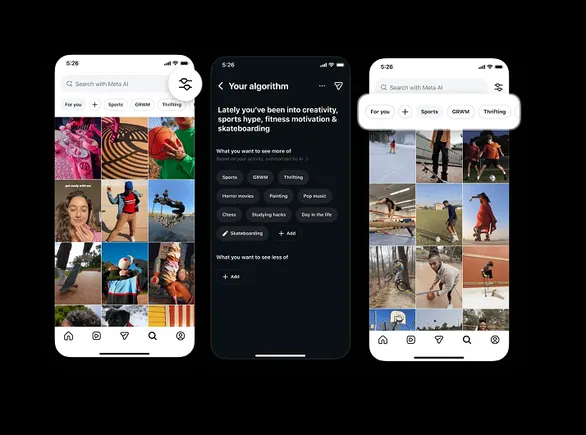
Instagram has officially announced a significant expansion of its "Your Algorithm" content recommendation control option, enabling a broader spectrum of users to actively manage the content they encounter within the Instagram Explore feed. This update builds upon the initial rollout of this feature for the Reels feed, providing users with more granular input into the platform’s powerful recommendation algorithms. The move signals Instagram’s continued efforts to balance highly personalized, AI-driven content delivery with user autonomy and preferences.
The "Your Algorithm" feature is designed to offer a direct input mechanism, allowing users to influence the topics and types of content displayed in their feeds. Through simple topic prompts, individuals can now express their interests, guiding the algorithm to show them more of what they desire and less of what they don’t. This represents a more proactive approach to content curation than simply "liking" or "hiding" individual posts, aiming to reshape the fundamental themes that populate a user’s digital experience on the platform.
Understanding the "Your Algorithm" Mechanism
At its core, "Your Algorithm" presents users with a list of topics that Instagram’s system has identified as being relevant to their interests based on their past interactions. Users can then actively adjust these topics, signaling a preference for seeing "more" or "less" of specific categories. This direct feedback loop is intended to refine the algorithmic model that underpins content discovery, moving beyond passive consumption to a more interactive and user-driven personalization. For instance, if the algorithm detects a strong interest in "cooking," a user might see options to specify "vegan recipes" or "baking techniques," allowing for a more nuanced feed experience.
Instagram’s official statement clarifies the unified nature of this control: "Just like on Reels, you can view the topics Instagram thinks you’re into and easily adjust them to see more or less of what you want." This emphasizes the seamless integration of user preferences across different content surfaces. The company further elaborated, "Type in the topics you want to see more or less of, and your Reels and Explore content will reflect your choices. It’s all one system, so changes you make in Reels or Explore carry across both. One algorithm, reflected across surfaces." This holistic approach means that a user’s input in the Explore tab will directly influence the content presented in their Reels feed, and vice-versa, fostering a consistent and coherent personalized experience across these key engagement areas.
A Chronology of Instagram’s Algorithmic Evolution and User Control
The journey towards "Your Algorithm" is part of a broader shift in how social media platforms deliver content and how users interact with those systems.
- The Shift to Algorithmic Feeds (Mid-2010s): Instagram, like many social media platforms, initially operated on a chronological feed, showing posts in the order they were published. However, as content volume exploded, platforms began adopting algorithmic feeds to prioritize "relevant" content, aiming to combat information overload and boost engagement. Instagram introduced its algorithmic feed in 2016, a move that, while increasing overall engagement, also sparked user complaints about a loss of control and transparency.
- Early Control Mechanisms (Ongoing): In response to user feedback, Instagram gradually introduced various minor control options, such as "See Fewer Posts Like This" or "Not Interested" buttons on individual posts. These were reactive measures, allowing users to signal dislike for specific content after encountering it.
- The Return of Chronological Options (2022): In a significant concession to user demand, Instagram reintroduced optional chronological feeds in 2022, offering "Favorites" and "Following" feeds alongside the default algorithmic "Home" feed. This provided users with a choice, though the algorithmic feed remained the default and most heavily promoted experience.
- "Your Algorithm" for Reels (October 2023): The first iteration of "Your Algorithm" was rolled out for testing within the Reels feed in October 2023. This marked a proactive step, allowing users to influence content before it appeared, rather than reacting to it. This initial test laid the groundwork for the broader expansion.
- Expansion to Explore (Recent Announcement): The current expansion to the Explore feed, rolling out to all English-language users, significantly broadens the scope of this direct input control. Explore is a crucial discovery surface, making this integration particularly impactful for user-driven content curation. Users can now add or remove interests directly from the "topic pills" at the top of the Explore page, providing an even more accessible entry point for customization.
Meta’s Broader AI-First Strategy and User Empowerment
This expansion of "Your Algorithm" aligns squarely with Meta’s overarching "AI-first" strategy, championed by CEO Mark Zuckerberg. Meta has consistently emphasized its multi-billion-dollar investment in artificial intelligence, viewing it as the primary engine for driving user engagement across its family of applications, including Facebook, Instagram, and WhatsApp. AI-powered recommendation systems are crucial for keeping users scrolling, discovering new content, and ultimately, staying on the platforms longer. These systems analyze vast amounts of data—from likes and shares to viewing duration and search queries—to predict what content a user is most likely to find engaging.
However, the proliferation of AI-driven feeds has also generated criticism regarding algorithmic transparency, echo chambers, and the potential for problematic content amplification. By introducing features like "Your Algorithm," Meta attempts to address these concerns by giving users a perceived, and in this case, a more direct, locus of control. It’s a strategic move to demonstrate responsiveness to user feedback while simultaneously refining the very AI systems that underpin their business model. The goal is to leverage AI for hyper-personalization while mitigating the perception of a "black box" algorithm dictating user experience.
The integration of this control across both Reels and Explore underscores the sophistication of Meta’s underlying AI infrastructure. Rather than disparate algorithms, Instagram operates on a more unified system, where user preferences and behavioral signals contribute to a comprehensive profile that informs recommendations across different content surfaces. This means that a user’s stated preference for "travel photography" will influence not just the Reels they see, but also the visual content and creators suggested in their Explore tab, creating a more cohesive and deeply personalized ecosystem.
The Paradox of User Control: Demand Versus Utilization
While the introduction of "Your Algorithm" is a significant step towards user empowerment, industry observations suggest a paradox: social media users frequently demand more control over their feeds, yet often fail to utilize the control options when they become available. This phenomenon has been observed repeatedly across various platforms and features, from privacy settings and security enhancements to chronological feed toggles.
Several factors contribute to this discrepancy:
- Cognitive Load: Actively managing an algorithm requires effort. Many users prefer the convenience of passive consumption, allowing the algorithm to do the "heavy lifting" of content discovery. The mental energy required to regularly adjust preferences, even through simple prompts, can be a barrier.
- Perceived vs. Actual Control: For some, the mere existence of control options provides reassurance, even if they don’t actively use them. It creates a sense that the platform is listening and that they could take action if needed, alleviating anxieties about algorithmic overreach.
- Algorithm’s Efficiency: Modern recommendation algorithms are incredibly sophisticated. For many users, the default algorithmic feed is already highly engaging, making the perceived benefit of manual tweaking seem marginal. If the algorithm is already doing a good job of showing relevant content, there’s less incentive to intervene.
- Lack of Awareness: Despite announcements, many users may simply not be aware of these features or understand their full potential impact.
The original article aptly notes this trend: "Social media users often complain about a lack of algorithm control, how they’d prefer to have a chronological feed and how they want more ways to control their experience. In reality, when they have these things, the majority of people don’t use them… For the most part, these features act as a reassurance, not as a real control and manual input option."
However, the integration of "Your Algorithm" directly into prominent engagement surfaces like Explore and Reels could potentially alter this trend. By making the control options easily accessible through "topic pills" at the top of the Explore page, Instagram is lowering the barrier to entry for active customization. This increased visibility might encourage a higher adoption rate compared to features buried deep within settings menus.
Implications for the Instagram Ecosystem
The expanded "Your Algorithm" feature carries several implications for various stakeholders within the Instagram ecosystem:
-
For Users:
- Enhanced Personalization: For those who actively use the feature, the experience could become significantly more tailored, reducing exposure to irrelevant or unwanted content and enhancing discovery of truly interesting material.
- Reduced Frustration: A sense of agency over content could lead to a more positive and less frustrating user experience, potentially increasing overall platform satisfaction.
- Filter Bubbles/Echo Chambers: While offering control, an over-reliance on highly specific preferences could, paradoxically, reinforce filter bubbles, limiting exposure to diverse viewpoints or unexpected content. This is an inherent tension in all personalization efforts.
-
For Content Creators:
- New Signals for Relevance: Creators might gain a clearer understanding of what topics resonate with their audience, or how users are categorizing their content. This could inform content strategy and help creators better align with user interests.
- Audience Discovery: If users actively curate their feeds, creators whose content aligns perfectly with niche interests could potentially see increased discoverability among highly engaged audiences.
- Adaptation Challenge: Creators will need to understand that their content’s reach is increasingly influenced by user-defined preferences, not just engagement metrics. Adapting to these nuanced algorithmic signals could be a continuous challenge.
-
For Advertisers:
- Refined Targeting: A more precisely categorized user base (based on their explicit topic preferences) could lead to even more accurate ad targeting. This means advertisers could reach users who have not only shown passive interest but have actively stated their desire for specific types of content, potentially increasing ad effectiveness and ROI.
- Brand Safety: By allowing users to opt out of certain topics, the feature could inadvertently contribute to brand safety by reducing the likelihood of ads appearing alongside content deemed undesirable by users.
-
For Meta/Instagram:
- Improved User Retention: A more satisfying and controlled user experience could lead to higher user retention and increased time spent on the platform, reinforcing Meta’s core business model.
- Data Refinement: User input into "Your Algorithm" provides valuable explicit data to further train and refine Instagram’s AI recommendation models, making them even more accurate and effective in the long run.
- Reputational Benefits: Offering greater user control can bolster Instagram’s image as a platform that listens to its community and cares about user well-being, potentially fending off regulatory scrutiny or public criticism regarding algorithmic opacity.
Industry Context and Future Outlook
Instagram’s move is part of a broader trend in the social media industry where platforms are constantly refining their recommendation algorithms while simultaneously seeking ways to empower users. Competitors like TikTok have built their success almost entirely on the strength of their highly personalized "For You Page," which uses sophisticated AI to deliver an endless stream of relevant content. YouTube also offers extensive controls over recommended videos, allowing users to fine-tune their suggestions. Instagram’s "Your Algorithm" is its attempt to compete in this personalization arms race, offering a distinct approach that blends automated discovery with explicit user guidance.
The rollout of "Your Algorithm" in Explore to all English-language users signifies a widespread implementation, suggesting confidence in its functionality and potential impact. While it remains to be seen how actively users will engage with these new controls, their availability marks a significant evolution in Instagram’s approach to content curation. By providing another option for direct input, Instagram aims to strike a delicate balance: maintaining the efficiency and engagement benefits of its powerful AI, while offering users a greater sense of agency over their digital experience. The success of this feature will ultimately depend on its ease of use, its visibility, and the tangible improvements it delivers to the daily scrolling habits of millions.