Decoding Social Media Algorithms: A Comprehensive Guide to Navigating Ranking Signals and Maximizing Content Visibility in 2026

Social media algorithms represent intricate collections of rules, ranking signals, and complex calculations that dictate the priority and display order of content for each individual user across various platforms. These sophisticated, AI-powered systems are fundamental to the modern digital experience, leveraging machine learning to continuously evolve and personalize content delivery. On average, users worldwide spend approximately 141 minutes daily immersed in social media, with algorithms meticulously curating the content they encounter during this significant portion of their day.
The Evolution of Content Curation: From Chronology to Hyper-Personalization
The landscape of social media content delivery has undergone a profound transformation since its inception. In the early 2000s, pioneering platforms such as MySpace and Facebook operated on purely chronological algorithms. Users would see posts from their connections and, subsequently, brands, ordered strictly from the most recent to the oldest. This straightforward approach, while transparent, eventually proved insufficient as social media gained unprecedented popularity. The sheer volume of content generated daily made a purely chronological feed overwhelming and often irrelevant for users.
By the mid-2010s, platforms began to grapple with information overload and the need to retain user attention in an increasingly competitive digital space. This necessity spurred the development of more complex algorithms designed to curate content based on individual user behavior, expressed interests, and network connections. Facebook’s EdgeRank algorithm, introduced in the early 2010s, was a significant milestone, marking a definitive shift away from pure chronology by incorporating affinity, weight, and time decay into its ranking. Instagram followed suit, moving from a chronological feed in 2016 to an algorithmically sorted one, prioritizing posts users were most likely to care about.
Today, in 2026, virtually every major social platform employs its own unique set of algorithms to rank and display content. The only notable exception is Bluesky, where a chronological feed remains the default. However, some established platforms like X (formerly Twitter), Facebook, and Instagram also offer users the option to switch to a chronological view, acknowledging a segment of their audience that prefers this traditional format.
Understanding the Core Mechanics: Ranking Signals and AI
At its heart, a social media algorithm functions by processing vast amounts of data to predict user preferences. Consider a user who watches three cooking-related Reels to completion on Instagram. The algorithm meticulously notes the watch time, cross-references this with past engagement with similar food content, and subsequently begins surfacing more cooking Reels within the user’s main feed and the Explore page. Concurrently, a friend who routinely skips cooking content in favor of liking travel photographs will receive an entirely different set of recommendations. This dynamic illustrates the power of personalization: the same platform, powered by the same underlying algorithmic architecture, delivers a bespoke experience to every individual user.
Key terms central to understanding this process include:
- Ranking Signal: Any attribute or factor utilized by social media algorithms to evaluate content quality, relevance, and potential user interest. These signals directly influence whether content is included in a user’s feed or search results, and its specific display order.
- Machine Learning (ML): A critical component of artificial intelligence systems, enabling them to interpret data, learn from patterns, react, and act on information without explicit human programming. ML models are heavily reliant on pattern recognition to make predictions and decisions.
- Artificial Intelligence (AI): A broader technological field that empowers computers to solve complex problems, emulate human reasoning, and automate tasks traditionally performed by humans. AI underpins the advanced personalization capabilities of modern social media algorithms.
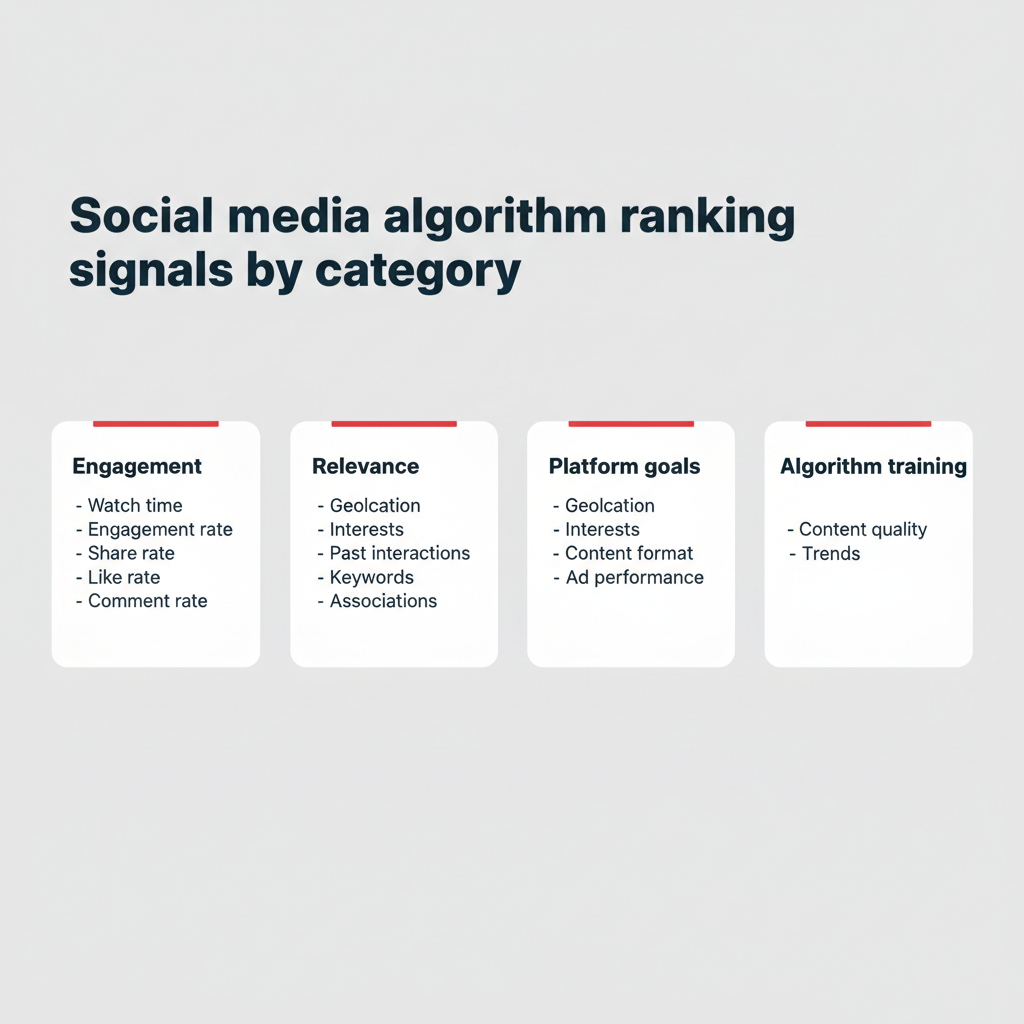
Social media algorithms leverage a multifaceted approach, combining engagement metrics, relevance signals, and platform-specific strategic priorities to rank content effectively. While each platform personalizes the user experience through its unique algorithmic blend, most draw from a common set of signal categories to achieve their objectives. These common ranking signals observed in 2026 typically include:
- Engagement-based Ranking: Metrics like likes, comments, shares, saves, clicks, and watch time.
- Relevance and Personalization: User’s past interactions, accounts followed, content consumed, expressed interests.
- Platform Goals: Prioritization of new features, specific content formats (e.g., video), or community health metrics.
- Algorithm Training: Data gathered from user feedback, A/B testing, and continuous model refinement.
A Platform-by-Platform Analysis of 2026 Ranking Priorities
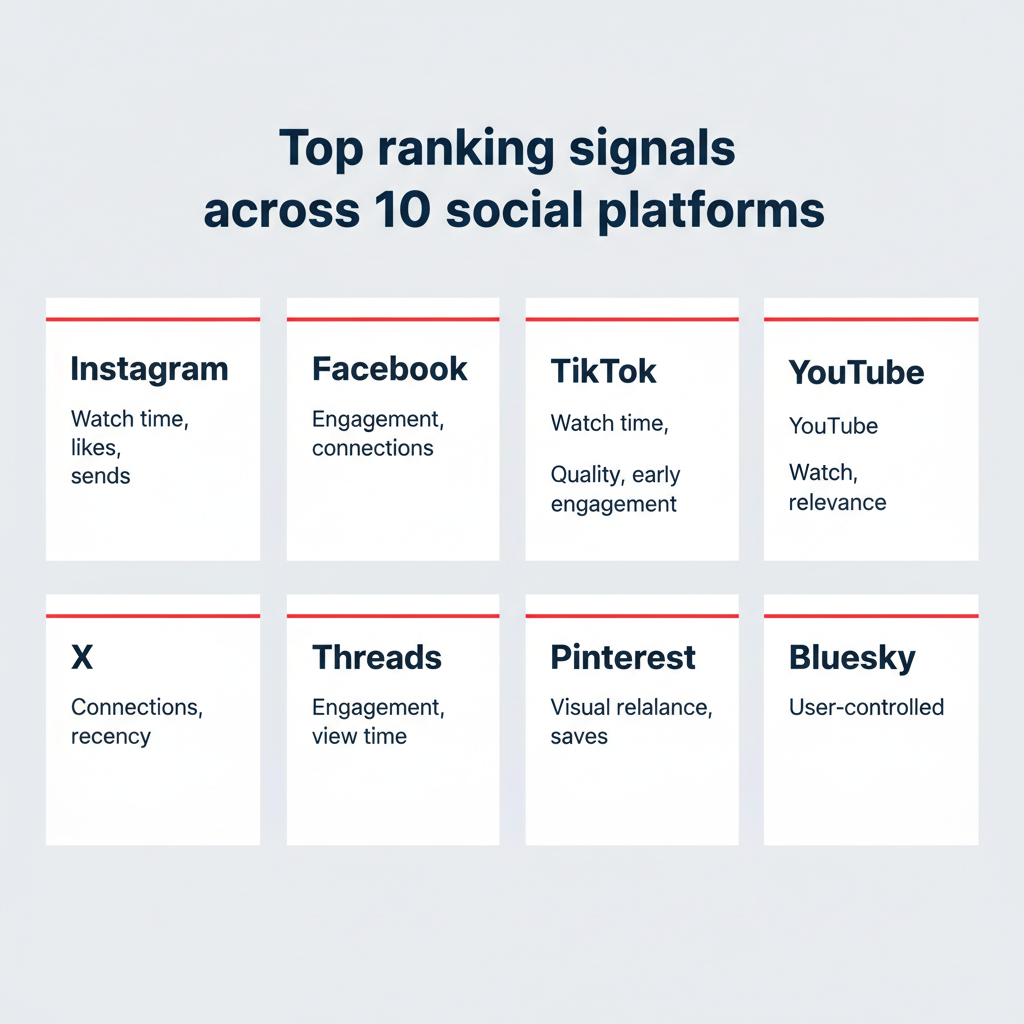
Each major social network employs distinct algorithms with varying ranking priorities, reflecting their unique user bases and strategic objectives.
| Platform | Top Ranking Signals | Preferred Format | Chronological Option? |
|---|---|---|---|
| Watch time, likes, sends | Reels, carousels | Yes | |
| Predicted engagement, connections | Video, photos | Yes | |
| TikTok | Watch time, user activity | Short-form video | No |
| Content quality, early engagement | Text, documents | No | |
| YouTube | Watch time, relevance | Long and short video | No |
| X | Connections, recency | Text, images | Yes (Following tab) |
| Threads | Predicted engagement, view time | Text | Yes (Following tab) |
| Visual relevance, saves | Images, Pins | No | |
| Bluesky | User-controlled, community | Text | Yes (default) |
| Upvotes/downvotes, comment quality | Text, images | Yes (New sort) |
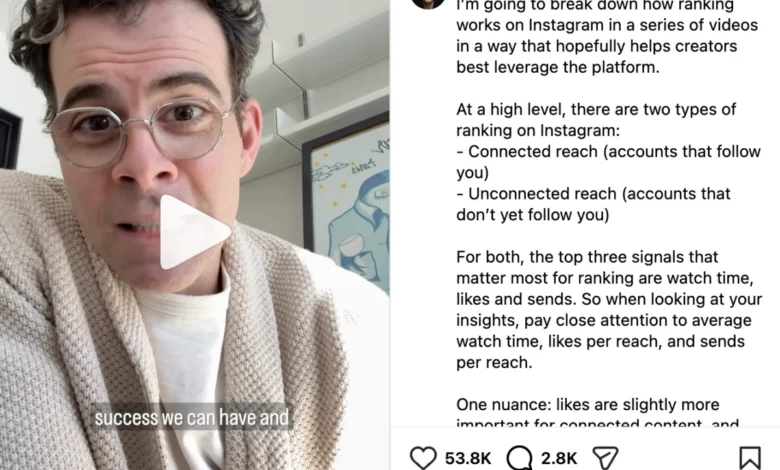
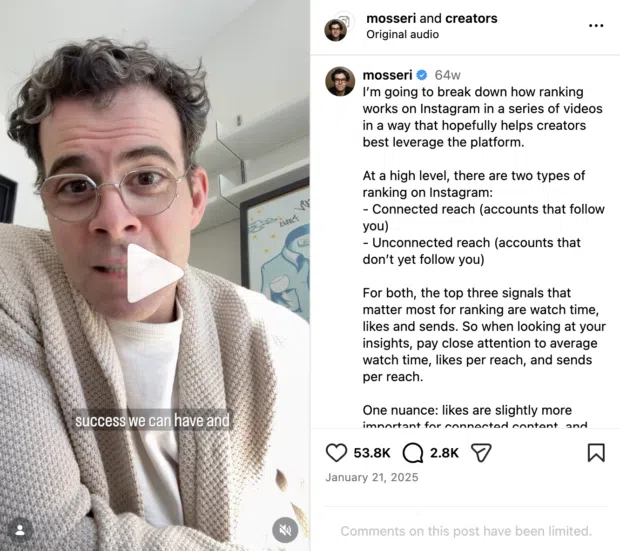
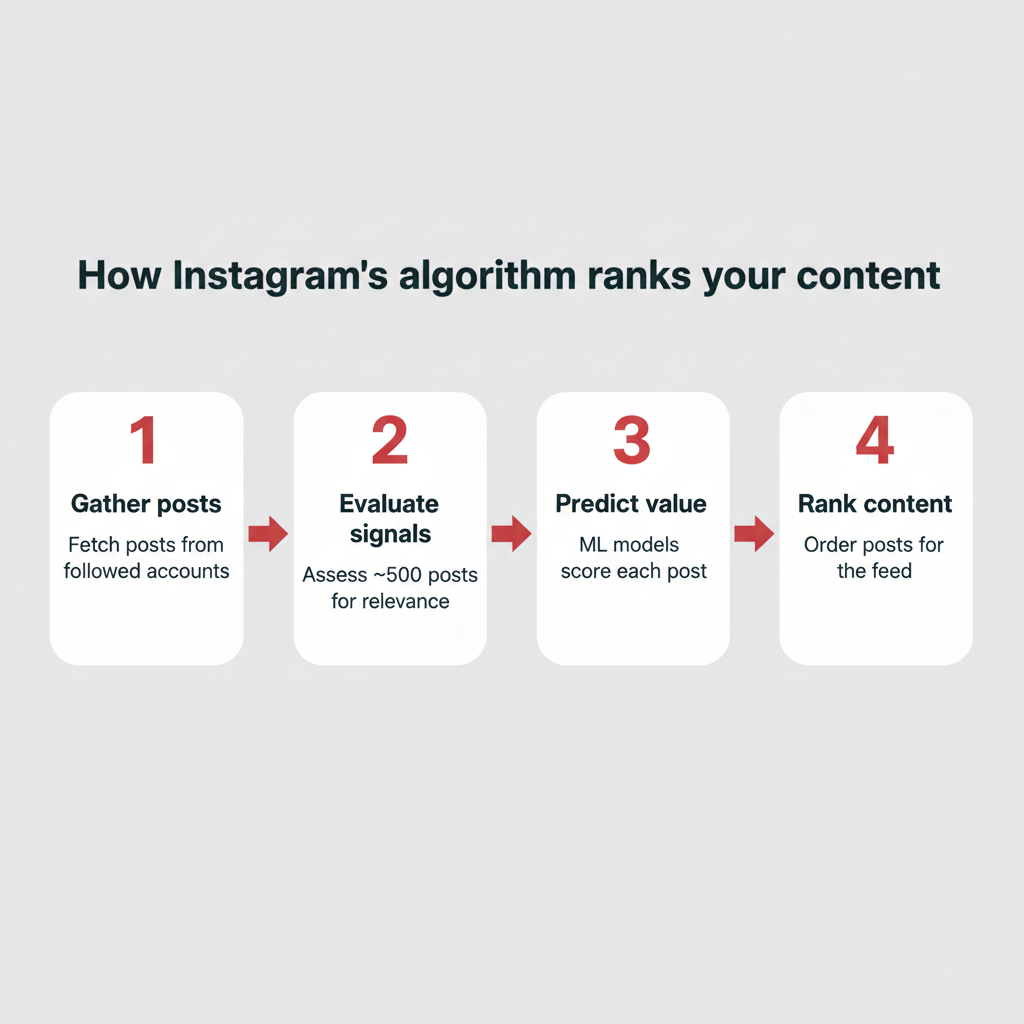
Instagram: According to Adam Mosseri, Head of Instagram, the primary ranking signals in 2026 are watch time, likes, and sends. Digging deeper, Instagram differentiates between "connected reach" (content from accounts a user follows) and "unconnected reach" (content from new accounts, often through Explore or Reels). Likes are more critical for connected reach, signaling approval within a known network, while "sends" (direct shares) are paramount for unconnected reach, indicating high value and shareability. Instagram’s algorithm analyzes content in four stages: building an inventory of available content, assessing signals, making predictions about user interaction, and finally scoring and ranking.
- Instagram Feed Algorithm: Prioritizes interaction with friends and family, timeliness, and content formats that encourage conversation.
- Instagram Stories Algorithm: Focuses on close connections, completion rates, and quick engagement.
- Instagram Reels Algorithm: Heavily weighted towards watch time, re-watches, and audio trends, pushing highly engaging, entertaining short-form video.
- Instagram Explore Algorithm: Emphasizes content from accounts similar to those a user already interacts with, aiming for discovery based on broader interests.
Facebook: Meta states that Facebook’s content ranking, driven by thousands of signals, often prioritizes predicted engagement and connections. This includes a strong emphasis on content from friends, groups, and pages a user frequently interacts with, alongside video content that typically garners higher watch times.
X (formerly Twitter): The "For You" tab on X blends content from followed accounts with recommended posts. Key ranking signals include connections (who a user follows and interacts with), recency (timeliness of posts), and the popularity of topics a user has shown interest in.
LinkedIn: For the professional networking platform, known ranking signals in 2026 include content quality (relevance, insightfulness), early engagement (how quickly a post gains traction), and the professional network of the poster. Text-based thought leadership and documents often perform well.
TikTok: The "For You Page" (FYP) is renowned for its hyper-personalized content, driven by watch time and user activity. TikTok’s algorithm prioritizes an "interest graph" over a "social graph," meaning it focuses more on what content a user engages with rather than solely who they follow.
YouTube: Watch time and relevance are paramount. YouTube’s algorithm aims to keep users on the platform longer by recommending videos they are likely to complete and enjoy, encompassing both long-form and short-form (Shorts) video content.
Pinterest: Key ranking factors for discovery on Pinterest revolve around visual relevance (high-quality images, strong aesthetics) and saves (indicating intent and inspiration). Pins that lead to valuable external content also perform well.
Threads: As a newer text-first platform, Threads’ algorithm prioritizes predicted engagement and view time, aiming to foster discussion and community around trending topics and user interests.
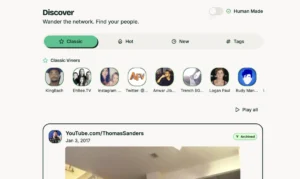
Bluesky: This platform stands out for its commitment to "algorithmic choice," allowing users to create and curate multiple algorithms or feeds to match their specific interests. For brands, this means engaging directly with communities and participating in user-generated feed initiatives.
Reddit: Reddit’s ranking signals are heavily influenced by community moderation. Upvotes and downvotes from users, combined with comment quality and the overall engagement within specific subreddits, determine a post’s visibility.
Optimizing Your Content for Social Media Algorithms in 2026
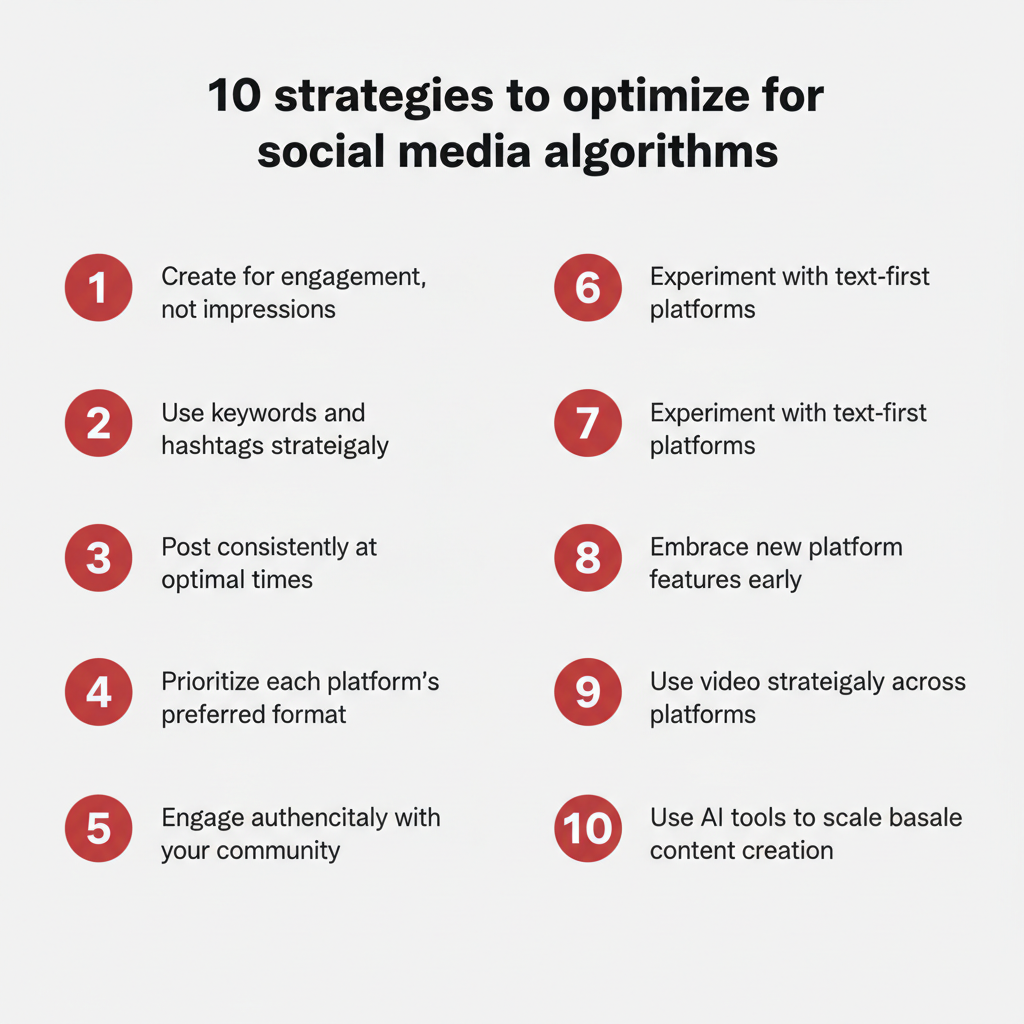
Understanding algorithmic mechanics is only the first step; effective content optimization is crucial for maximizing reach and engagement. Here are ten proven strategies:
- Create for Engagement, Not Just Impressions: Algorithms universally reward content that sparks genuine interaction. Focus on crafting posts that encourage comments, shares, and saves, as these indicate deeper value than mere views.
- Use Keywords and Hashtags Strategically: The rise of "Social SEO" is undeniable, with 46% of Gen Z reportedly using social media as their primary search engine. Integrate relevant keywords into captions, alt text, and profile bios to enhance discoverability.
- Post Consistently at Optimal Times: Regular posting signals to algorithms that your account is active and reliable, increasing the likelihood of content distribution. Utilizing analytics to identify peak engagement times for your audience is key.
- Prioritize Each Platform’s Preferred Format: Algorithms often favor the content formats platforms are actively promoting. In 2026, this translates to Reels and carousels on Instagram, short-form video on TikTok, and text-heavy discussions on LinkedIn and Threads.
- Engage Authentically with Your Community: Active participation, including responding to comments on your own posts and thoughtfully engaging with others’ content, signals community building and social value, which algorithms reward.
- Experiment with Text-First Platforms: Threads, X, and Bluesky offer unique environments for brands to refine their written voice, foster direct discussions, and build niche communities without heavy reliance on visual assets.
- Embrace New Platform Features Early: Algorithms frequently boost newly launched features to drive user adoption. Staying current with platform updates and being an early adopter can provide a temporary but significant visibility advantage.
- Use Video Strategically Across Platforms: Video content continues to dominate algorithmic feeds. Adapt your video strategy: short-form, punchy content for TikTok and Instagram Reels, and a mix of long-form and short-form for YouTube to cater to different viewing habits.
- Measure and Iterate Based on Analytics: Continuously track key social media metrics—such as reach, engagement rate, watch time, and click-through rates—to identify which content types, formats, and posting schedules yield the best results. Data-driven adjustments are vital.
- Utilize AI Tools to Scale Content Creation: AI content creation tools can significantly enhance efficiency, helping maintain a consistent publishing cadence and freeing up human creators for strategic planning and the creative ideation that algorithms value most.
The AI Revolution: Shaping the Algorithmic Future
Artificial intelligence has become the indispensable backbone of modern social media algorithms. In 2026, AI is transforming content ranking through:
- Advanced User Behavior Analysis: AI processes vast datasets to understand subtle user preferences, predicting what content will be most engaging.
- Enhanced Content Moderation: AI tools assist in identifying and flagging harmful, misleading, or inappropriate content, contributing to a safer platform environment.
- Dynamic Trend Identification: AI can rapidly detect emerging trends, topics, and viral content, allowing algorithms to push timely and relevant material.
- Hyper-Personalized Advertising: AI optimizes ad delivery by matching user interests with advertiser offerings, leading to more effective campaigns.
- Real-time Feed Optimization: AI constantly adjusts the feed in real-time, responding to new content and evolving user interactions to maintain engagement.
Implications for Brands, Content Creators, and Users
The pervasive influence of social media algorithms carries significant implications for all stakeholders.
For Brands and Content Creators:
The organic reach a piece of content garners is a direct reflection of its alignment with each platform’s algorithm. Without algorithmic distribution, content struggles to be seen, impacting brand awareness, lead generation, and community building. This dynamic necessitates a strategic approach, often integrating paid promotion to supplement organic efforts. Consistency and content quality are paramount; algorithms reward accounts that demonstrate reliability and professionalism. Adhering to brand guidelines, maintaining visual consistency, and publishing with a regular cadence signals trustworthiness and dedication. Above all, engagement is everything. It serves as a powerful signal to algorithms that content is valuable and worth promoting. While benchmarks vary, a strong engagement rate is a universal indicator of success.
For Users and Society:
Social media algorithms fundamentally shape the online experience, determining what content appears in feeds. While often criticized for potential negative impacts—such as shortening attention spans, inadvertently spreading misinformation through echo chambers, and contributing to negative mental health outcomes—algorithms also offer substantial benefits. They provide quick access to like-minded communities, fostering positive discussions and enabling connections with diverse individuals globally. The challenge lies in balancing personalization with exposure to new perspectives and mitigating the risks associated with unchecked algorithmic power. Discussions around algorithmic transparency, accountability, and user control are ongoing, particularly in regions like Europe with regulations such as the Digital Services Act.

The social media landscape of 2026 is defined by its dynamic, algorithm-driven nature. For brands and creators, success hinges on a deep understanding of these complex systems and a commitment to creating high-quality, engaging content tailored to each platform’s unique preferences. For users, navigating this environment requires critical engagement and an awareness of how their digital experience is continuously being shaped. Adaptability, strategic insight, and a focus on authentic value creation remain the cornerstones of effective social media presence in the algorithmic age.