Apple and Goldman Sachs Launch High-Yield Savings Account for Apple Card Users to Expand Financial Services Ecosystem

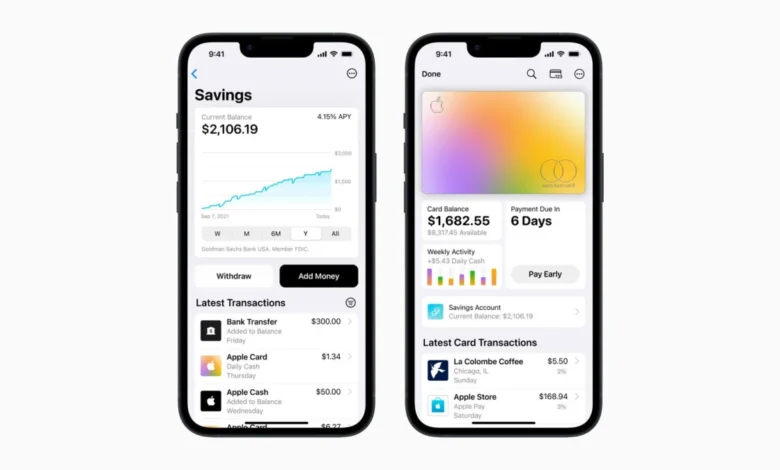
Apple has officially entered the high-yield savings market, marking a significant escalation in its ongoing strategy to embed financial services directly into the iPhone user experience. In a collaborative effort with banking partner Goldman Sachs, the tech giant announced on Monday the rollout of a new savings account feature for Apple Card holders. This offering allows users to grow their Daily Cash rewards and personal deposits at an annual percentage yield (APY) of 4.15%, a figure that positions Apple as a formidable competitor to both traditional banking institutions and specialized fintech firms.
The Evolution of Apple’s Financial Ecosystem
The introduction of this savings account is not an isolated event but rather the latest milestone in a calculated, multi-year expansion into the financial sector. Since the debut of the Apple Card in 2019, the company has methodically built out a suite of services designed to increase user retention and capitalize on the ubiquity of the Apple Wallet application.
The timeline of Apple’s financial trajectory highlights this steady progression:
- August 2019: The Apple Card launches in the United States in partnership with Goldman Sachs, introducing the concept of "Daily Cash" rewards.
- March 2022: Apple introduces "Tap to Pay on iPhone," allowing merchants to accept contactless payments directly on their mobile devices without additional hardware.
- March 2023: The company rolls out "Apple Pay Later," a buy-now-pay-later (BNPL) service that enables users to split purchases into four payments over six weeks, interest-free.
- April 2023: Apple launches the high-yield savings account, integrating it seamlessly into the Apple Wallet interface.
Each of these steps demonstrates a clear intent: to transform the iPhone from a communication and entertainment device into a comprehensive financial hub. By integrating savings, credit, and payment infrastructure, Apple is aiming to capture a larger share of the average consumer’s wallet, shifting the paradigm from banking as a destination to banking as a utility embedded in everyday technology.
Analyzing the 4.15% APY and Market Context
The 4.15% APY offered by the new Apple savings account is competitive, particularly when contrasted with the traditional retail banking sector. Many major national banks continue to offer interest rates on standard savings accounts that remain near 0.01% APY, a discrepancy that has become increasingly scrutinized in the current macroeconomic environment of elevated federal interest rates.
However, financial analysts note that while the Apple rate is attractive for a consumer-facing product, it is not the highest available in the current market. Numerous digital banks and credit unions currently offer APYs exceeding 4.50% or even 5.00%. Despite this, Apple’s value proposition lies not in being the absolute market leader in yield, but in the frictionless user experience. By allowing users to deposit funds directly from an external bank account or automatically route their Daily Cash—the rewards earned from using the Apple Card—into the account, Apple removes the barrier to entry for the average consumer who might otherwise find the process of opening an account at an unfamiliar digital bank daunting.
The account carries a maximum deposit limit of $250,000, which aligns with standard Federal Deposit Insurance Corporation (FDIC) coverage limits. This level of insurance is a critical component for establishing consumer trust, as users are technically depositing their funds with Goldman Sachs, which acts as the issuing bank for the Apple Card.
Official Stance and Strategic Goals
The strategic impetus behind this launch is centered on the concept of "financial health." Jennifer Bailey, Apple’s vice president of Apple Pay and Apple Wallet, underscored this in a recent statement, noting that the goal is to provide tools that help users manage their money more effectively.
"Our goal is to build tools that help users lead healthier financial lives, and building Savings into Apple Card in Wallet enables them to spend, send, and save Daily Cash directly and seamlessly—all from one place," Bailey stated.
By centralizing these functions, Apple is betting that users will prioritize convenience over hunting for the absolute highest yield in the market. The ability to track savings growth, monitor spending patterns, and manage credit debt within a single, native application creates a "walled garden" effect that is difficult for traditional banks to replicate.
Implications for Traditional Banking and Fintech
The entry of a tech giant with a massive installed user base into the savings market poses significant implications for the broader banking landscape. Traditional financial institutions are already facing pressure from the "neobank" movement, and the presence of Apple—which boasts over 2 billion active devices globally—amplifies that pressure.
For traditional banks, the primary risk is the loss of deposit share. If millions of iPhone users choose to move portions of their liquid assets into Apple’s ecosystem, commercial banks may find it increasingly difficult to retain the low-cost deposits they rely on to fund their own lending activities. This may force traditional players to raise their own interest rates or invest more heavily in their digital transformation efforts to remain competitive.
Simultaneously, the move places Apple in direct competition with fintech companies like Klarna, Affirm, and SoFi. While companies like SoFi have built their entire business model around being a comprehensive "financial super-app," Apple’s existing ecosystem of services gives it a massive distribution advantage. A user who already uses Apple Pay for daily transactions is exponentially more likely to use a savings account that is already present in their Wallet app than to download a separate, third-party application.
Regulatory and Security Considerations
As Apple expands further into financial services, it will likely face increased regulatory scrutiny. The Consumer Financial Protection Bureau (CFPB) and other federal regulators have been keeping a close watch on the "big tech" encroachment into banking. Issues such as data privacy, the handling of sensitive financial information, and the potential for monopolistic behavior are likely to become topics of discussion as the Apple Wallet grows in influence.
Security remains a cornerstone of Apple’s pitch. By utilizing the existing infrastructure of Apple Pay—which uses device-specific tokens rather than actual card numbers—and the security of the Secure Enclave on the iPhone, the company is attempting to differentiate its offering as safer and more private than traditional banking portals. Users manage their savings through the Wallet app, which requires biometric authentication (Face ID or Touch ID) for every significant action, adding a layer of security that many traditional banking apps struggle to implement with the same level of user friendliness.
The Path Forward: What Users Should Expect
For the individual user, the move represents a shift in how personal finance is managed. The automation of savings—specifically the ability to instantly sweep Daily Cash into a high-interest account—serves as a form of "nudge" economics, encouraging users to save money they might otherwise spend.
However, users should remain cognizant of the variable nature of these accounts. As with any high-yield account, the 4.15% APY is subject to change based on the Federal Reserve’s interest rate decisions and the strategic adjustments of Goldman Sachs. While it is currently a beneficial place to park cash, the lack of fixed-term guarantees means that consumers should treat it as a liquid savings tool rather than a long-term investment vehicle.
The success of this initiative will ultimately depend on adoption rates and the long-term stability of the partnership between Apple and Goldman Sachs. With the infrastructure now in place, the question shifts from whether Apple can build a bank-like product, to how deeply they can integrate themselves into the fundamental financial lives of their users. As the company continues to refine its financial suite, it is clear that Apple intends to remain a primary player in the personal finance landscape for the foreseeable future, fundamentally altering the relationship between consumers, technology, and their money.
Related posts: