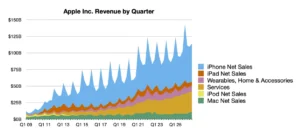
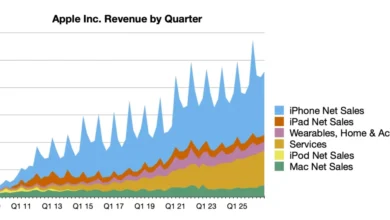
Apple Closes Fiscal 2026 with Record-Breaking Q4 Revenue of $114.5 Billion and $30.71 Billion in Net Profit

Apple has officially released its financial results for the fourth fiscal quarter of 2026, showcasing a robust period of sustained financial growth fueled by strong hardware sales, surging services revenue, and expanding active device ecosystems. For the quarter ending in September 2026, the technology giant reported total revenue of $114.5 billion, marking an impressive 12 percent increase year-over-year compared to the $102.47 billion reported during the same period in fiscal 2025.
Net profit for the quarter reached $30.71 billion, significantly outperforming the $27.47 billion recorded a year prior. Earnings per share also saw a notable upward trajectory, capping off what executives described as the company’s most successful fiscal year in history. The performance comfortably exceeded Wall Street expectations, which had projected year-over-year revenue growth between 9 percent and 11 percent, translating to an estimated range of $111.69 billion to $113.74 billion.
Main Financial Highlights of Q4 2026
The unprecedented financial surge was driven by stellar performances across multiple core divisions. Apple’s flagship product, the iPhone, reached an all-time September quarter record, propelled by the introduction of the company’s latest hardware lineup. Meanwhile, the Services sector—encompassing the App Store, iCloud, Apple Music, Apple Pay, and other digital offerings—achieved an all-time revenue high, demonstrating the continued success of Apple’s strategy to diversify its income streams beyond hardware.

For the entirety of fiscal year 2026, Apple accumulated an all-time record revenue of $479 billion, accompanied by double-digit growth in earnings per share. During the fourth quarter alone, the corporation generated $28 billion in operating cash flow, enabling a return of $28 billion to shareholders via share repurchases and dividends. Furthermore, Apple’s active installed base of devices reached new all-time highs across every major geographic region and product category, driven by high customer loyalty and satisfaction ratings.
Chronology and Strategic Context of Fiscal 2026
To understand the weight of Apple’s Q4 2026 performance, one must examine the strategic milestones achieved throughout the fiscal year. Apple entered 2026 facing mounting macroeconomic pressures, shifting global regulatory landscapes regarding app store policies, and intense competition in the artificial intelligence sector.

Earlier in the fiscal year, Apple focused heavily on integrating advanced machine learning architectures across its operating systems, paving the way for the deployment of next-generation AI functionalities. By mid-2026, supply chain stability had largely recovered from prior multi-year disruptions, allowing the company to build robust inventories ahead of its traditional autumn product launch window.
The culmination of these efforts arrived in September 2026 with the rollout of the company’s most ambitious hardware and software ecosystem updates to date. This included the debut of the iPhone Duo—touted by executives as the most transformational smartphone release since the original model—alongside the high-performance iPhone 18 Pro and iPhone 18 Pro Max. Additionally, Apple expanded its ecosystem footprint by introducing a completely overhauled line of smart home hardware and incorporating biometric Touch authentication into the Mac lineup for the first time. The simultaneous rollout of the all-new Siri AI cemented a unified technological ecosystem designed to capture consumer demand ahead of the crucial year-end holiday shopping season.

Official Leadership Statements and Executive Reactions
Apple Chief Executive Officer John Ternus emphasized the historical nature of the financial results during the earnings release, pointing to both hardware innovation and software ecosystem strength as primary catalysts.
"Today, Apple is proud to report a September quarter revenue record of $114.5 billion, up 12 percent from a year ago, with iPhone reaching a September quarter record and Services reaching an all-time high, capping off our best fiscal year ever," Ternus stated. "We’re closing the year with our most ambitious lineup yet. That includes the iPhone Duo, the most transformational iPhone since the original, alongside iPhone 18 Pro and iPhone 18 Pro Max, our most powerful iPhones yet. We also just introduced a whole new generation of hardware for the home and brought Touch to Mac for the first time. Together with the all-new Siri AI, it’s an incredible lineup to carry us into the holiday season."

Apple Chief Financial Officer Kevan Parekh provided further financial context, highlighting the company’s disciplined capital allocation and cash generation capabilities.
"Apple delivered September quarter records for net income and EPS. Our record September quarter capped off a strong fiscal 2026, with all-time record revenue of $479 billion and double-digit EPS growth," Parekh remarked. "We generated $28 billion in operating cash flow during the quarter, allowing us to return $28 billion to shareholders. Thanks to our very high levels of customer satisfaction and loyalty, our installed base of active devices reached a new all-time high across all major product categories and geographic segments."

Fact-Based Analysis of Market Implications
The double-digit revenue growth and record-breaking profitability of Q4 2026 carry several key implications for the broader technology and consumer electronics sectors.
First, the record-shattering performance of the Services sector underscores the long-term viability of Apple’s transition toward a recurring revenue model. As hardware upgrade cycles lengthen across the global smartphone market, robust services revenue acts as a stabilizing financial cushion, ensuring steady cash inflows regardless of seasonal hardware fluctuations.

Second, the successful market reception of Apple’s latest hardware iteration—particularly the iPhone Duo and the newly integrated Siri AI capabilities—suggests that consumer demand for advanced AI features is translating into actual purchasing behavior. Earlier market skepticism regarding the pace of Apple’s AI deployment has been largely tempered by concrete sales data, proving that the company’s hardware-software integration strategy continues to resonate deeply with its global consumer base.
Finally, the generation of $28 billion in operating cash flow in a single quarter reinforces Apple’s status as a dominant financial titan capable of sustaining heavy research and development investments while simultaneously rewarding investors. As Apple moves into the first quarter of fiscal 2027—traditionally its largest sales period due to the winter holidays—the company is exceptionally well-positioned to maintain its financial momentum, buoyed by an expansive device ecosystem and strong consumer brand loyalty.
Related posts: