Apple opens pre-orders for five new products as the company executes its most aggressive hardware rollout of the decade.

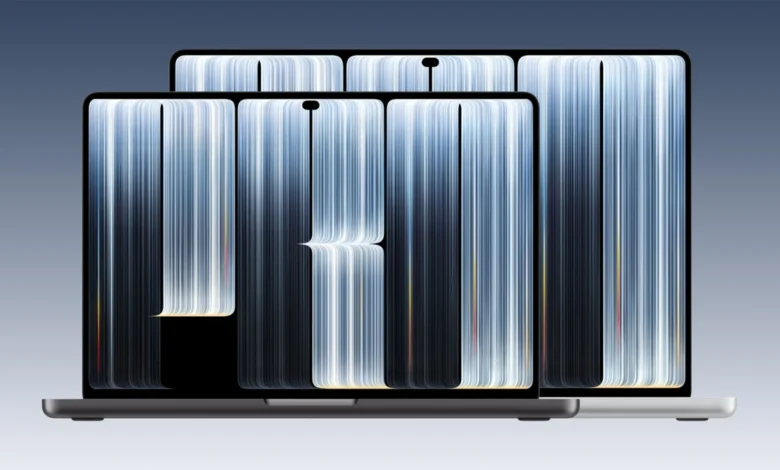
Following an intense month of announcements that have reshaped the company’s hardware portfolio, Apple officially opened pre-order windows for five of its latest devices at 10:10 a.m. Pacific Time today. This rollout, arriving on the heels of the iPhone 17 series and the initial launch of the iPhone Duo, marks a strategic consolidation of Apple’s ecosystem across mobile, computing, and home entertainment sectors. All products made available for pre-order today are scheduled for general availability on Friday, November 6.
A Rapid Succession of Hardware Launches
The sheer volume of releases in October 2026 has been described by industry analysts as a logistical milestone for the Cupertino-based tech giant. The current release schedule is staggered to ensure maximum market impact while managing supply chain bandwidth.
The chronology of this month’s hardware deployment began on October 23 with the release of the iPhone Duo, Apple’s foray into the high-end foldable market. This was followed by the announcement of the HomePod mini 2, which is set to arrive in consumer hands this Friday, October 30. Looking ahead, the company is preparing for a mid-November launch, specifically November 13, for the Apple HomeView smart home hub and the fourth-generation Apple TV 4K. By layering these releases, Apple is attempting to sustain consumer interest throughout the entirety of the fourth quarter.
Detailed Product Overview and Technical Specifications
The recent hardware announcements have focused heavily on silicon performance and display innovation. At the forefront of this refresh is the 14-inch MacBook Pro, which now integrates the M6 chip. This new architecture represents a significant shift in processing power, moving to a 12-core CPU configuration comprising two "super cores," four performance cores, and six efficiency cores. Coupled with a 12-core GPU, the M6 provides a measurable performance jump over the preceding M5 iteration. The integration of PROLED XDR display technology across the new MacBook Pro lineup suggests that Apple is prioritizing high-contrast, color-accurate professional workflows as a core differentiator for its portable computers.
Simultaneously, the iPad mini has received its most substantial update in years. The new model features an 8.5-inch OLED display, moving away from traditional LED backlighting to offer deeper blacks and improved energy efficiency. The device is powered by the A20 Pro chip, a silicon advancement that brings console-class gaming and machine learning capabilities to a compact form factor. Perhaps most notably, the new iPad mini introduces the "Acoustic Display" system, a design innovation that removes physical speaker grilles in favor of a vibrating display surface, contributing to an IP67-rated water and dust-resistant chassis.
The Home Ecosystem and Precision Connectivity
Apple’s investment in the home is further solidified by the release of the fourth-generation Siri Remote. While the remote is compatible with the second-generation Apple TV 4K and newer, its full potential is unlocked only when paired with devices supporting the Ultra Wideband-enabled ecosystem. The inclusion of "Precision Finding" capabilities allows users to locate their remote within a living space using the iPhone Duo, iPhone Air, or the iPhone 17 family. This integration highlights Apple’s ongoing commitment to "spatial awareness" as a utility, turning everyday household accessories into trackable, network-connected assets.
Furthermore, the company has diversified its lifestyle accessory catalog with a special-edition Beats Pill × Pokémon speaker and an updated World Travel Adapter Kit, ensuring that the company’s physical presence extends beyond core computing devices into the broader consumer electronics space.
Responding to Initial Market Challenges
While the product rollout has been largely met with enthusiasm, it has not been without technical hurdles. Following the October 23 launch of the iPhone Duo, early adopters reported issues regarding the durability of the inner foldable display, with some users noting structural cracks near the hinge area. Apple’s response has been swift, with a spokesperson acknowledging that a "small number of units" are affected.
Industry experts suggest that this level of transparency is a necessary byproduct of the company’s transition into more experimental hardware categories like foldables. Apple has emphasized that it is monitoring the situation closely, and the overwhelmingly positive response from developers—who are currently optimizing applications to take advantage of the dual-screen interface—suggests that the technical concerns have not significantly dampened market confidence in the device’s long-term viability.
Broader Economic and Strategic Implications
The synchronization of these launches provides a window into Apple’s current strategy: the creation of a seamless, hardware-agnostic experience. By integrating the N1 chip—with its support for Wi-Fi 7 and Bluetooth 6—into the latest iPad mini and other peripherals, Apple is future-proofing its devices against the impending infrastructure upgrades in global home and office networking.
From a macroeconomic perspective, this aggressive release cadence is designed to capture consumer spending during the critical holiday window. By spacing out the availability of high-ticket items like the MacBook Pro and the iPhone Duo alongside entry-level accessories like the Siri Remote and the updated iPad mini, Apple is effectively catering to a wide range of market segments.
The inclusion of the nano-texture display option on the new iPad mini also signals a move toward bringing professional-grade display features to the consumer tablet market, a trend previously reserved for the high-end Pro Display XDR and iPad Pro lines. This democratization of high-end features is a classic Apple strategy to maintain brand loyalty across the price spectrum.
Market Outlook and Consumer Guidance
As of today, consumers interested in the newly unveiled products can navigate to the Apple Store online to manage their configurations. Given the high demand for M6-powered computing devices and the novelty of the OLED iPad mini, shipping estimates are expected to fluctuate as the November 6 release date approaches.
For users currently utilizing older hardware, the upgrade path has never been more distinct. The transition from the M5 to the M6 chip in the MacBook Pro provides a compelling argument for professionals to upgrade, while the iPad mini’s new design, combined with the Acoustic Display technology, marks a generational leap in portable computing.
In summary, the next ten days are critical for Apple’s fiscal year-end performance. With the HomePod mini 2, HomeView, and the fourth-generation Apple TV 4K all poised to hit the market in November, the company is positioning its "Smart Home" and "Pro Computing" divisions to lead its growth narrative into 2027. The integration of proprietary silicon across all these platforms—from the A20 Pro in tablets to the M6 in laptops—remains the singular, most powerful asset in Apple’s competitive arsenal. As the pre-order window remains open, the market will continue to observe how supply chain management and consumer appetite balance against the rapid pace of this unprecedented hardware cycle.