Samsung Galaxy SmartTag 3 price slashes within a week of launch challenge Google Pixel Tag dominance

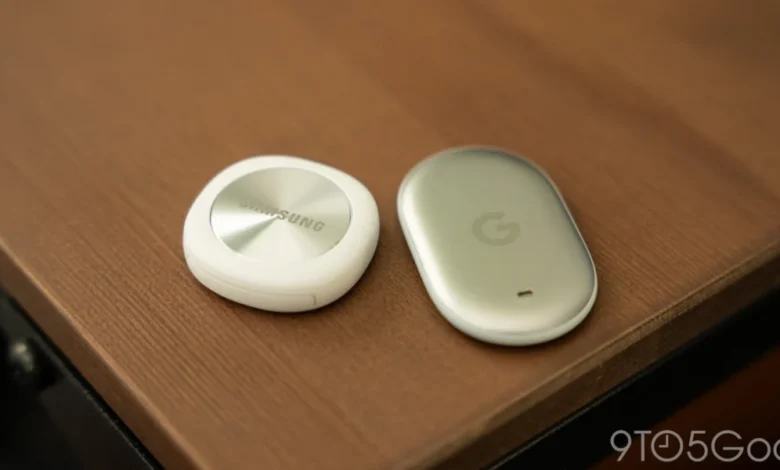
Barely seven days after its official retail debut, the Samsung Galaxy SmartTag 3 has already entered the promotional cycle with significant price reductions. Currently available for as little as $20 per unit when purchased in multi-pack bundles via select third-party retailers, the aggressive pricing strategy places immediate pressure on Google’s recently released Pixel Tag. While the Pixel Tag is marketed as the primary tracking solution for the broader Android ecosystem, the SmartTag 3’s early discount highlights the intensifying competition in the Bluetooth tracker market and underscores the fragmented nature of the current “Find My” landscape.
A Rapid Shift in Retail Strategy
The Samsung Galaxy SmartTag 3, which officially hit the market on November 6, 2026, launched with a standard MSRP of $29.99. However, within a week of its release, online retailer Woot began offering the device at a starting price of $23.99 for a single unit. The value proposition becomes more pronounced with volume purchases: a 2-pack is currently listed at $43.99, a 3-pack at $62.99, and a 4-pack at $79.99. This tiered structure brings the cost per unit down to $20, a significant 33% discount from the original launch price.
This swift pivot to discounted pricing is unusual for a flagship accessory so soon after a product launch. Industry analysts suggest this may be a deliberate move by Samsung to solidify its market share before the holiday shopping season, or a defensive maneuver to counter the momentum generated by Google’s Pixel Tag. While the older Galaxy SmartTag 2 remains available and is also seeing its own price adjustments at retailers like Amazon, the new model introduces hardware refinements that Samsung clearly hopes will entice both new customers and existing users looking to upgrade.
Technical Evolution: The SmartTag 3 Refined
The Galaxy SmartTag 3 represents the latest iteration of Samsung’s tracking technology. Despite a design shift that removed the integrated mounting loop—a feature that had become a hallmark of the series—the device introduces several functional upgrades. The most notable enhancements include extended battery longevity and a new NFC-based "Contact Info" feature.
This NFC functionality is a significant security and convenience upgrade. If a SmartTag 3 is discovered by a third party, that individual can tap their smartphone against the tag to view contact information provided by the owner, facilitating a quicker recovery of lost items. Furthermore, Samsung has introduced limited compatibility with Apple’s iOS, allowing the tag to be utilized in a more diverse mobile environment, though it remains tethered to Samsung’s proprietary ecosystem for full functionality.

The Network Rivalry: Find Hub vs. SmartThings
The core of the current conflict between Google and Samsung lies in the efficacy of their respective location-tracking networks. Google’s Pixel Tag relies on the Find My Device (FMD) network, an ambitious effort to create a crowd-sourced map of location data across billions of Android devices. However, early field testing and user reports suggest that the Google network still faces latency and coverage challenges as it scales to match the ubiquity of Apple’s Find My network.
In contrast, Samsung’s SmartThings Find network has been operational for several years and has developed a highly reliable reputation among Galaxy users. Many users report that the density of Samsung’s device network provides superior real-time tracking performance in urban environments. While Google’s network is designed to be universal across all Android devices, the current implementation of the "Find Hub" has struggled with consistency. For users who are already integrated into the Samsung ecosystem, the SmartTag 3 offers a more mature, battle-tested infrastructure, which effectively mitigates the appeal of Google’s universal solution.
Historical Context and Product Chronology
The tracker market has evolved rapidly since the introduction of the category by pioneers like Tile. In 2021, Apple entered the fray with the AirTag, setting a new standard for precision tracking via the Ultra-Wideband (UWB) chip. Samsung responded shortly thereafter with the first-generation Galaxy SmartTag, followed by the SmartTag 2 in late 2023.
The timeline of the current competition began in early 2026 when Google announced plans to overhaul its FMD network to compete directly with Apple and Samsung. Following a series of delays, the Pixel Tag was finally launched in late 2026. Samsung’s development cycle for the SmartTag 3 appeared to be timed specifically to anticipate the Google release, ensuring that Samsung had a hardware response ready as soon as the broader Android ecosystem began to adopt Google’s new tracking standards.
Implications for the Consumer
For the average consumer, the current market landscape presents a dilemma of ecosystem lock-in. If a user owns a Google Pixel or a non-Samsung Android device, the Pixel Tag is the most seamless option, despite the current limitations of the Find My Device network. However, for the millions of users committed to the Samsung Galaxy line, the choice is more complex. The SmartTag 3 offers better network reliability and, with these new discounts, a more attractive price point.
The broader implication of this price war is the commoditization of Bluetooth trackers. As the technology matures, the hardware itself is becoming less of a differentiator than the software network behind it. Companies are no longer just selling a plastic fob; they are selling the reach and density of their device-detection networks. The fact that Samsung is willing to drop prices to $20 within seven days suggests that they view the "Find My" space as a critical service that helps maintain user retention within the Galaxy ecosystem.

Industry Outlook and Future Trajectory
Industry analysts observe that as Google continues to iterate on its Find My Device network, the gap in performance between the FMD network and Samsung’s SmartThings Find will likely narrow. Updates to Google’s backend, improved Bluetooth Low Energy (BLE) protocols, and wider adoption by third-party manufacturers will eventually bolster the FMD network’s performance.
In the short term, however, Samsung’s aggressive pricing provides a compelling argument for brand loyalty. By lowering the barrier to entry, Samsung is effectively attempting to saturate the market with its hardware, ensuring that Galaxy users have little incentive to experiment with the Google ecosystem. The coming months, particularly the post-holiday period, will be critical in determining whether the Pixel Tag can overcome its early performance hurdles or if Samsung will continue to dominate the tracker market by leveraging the stability of its established network.
For now, the price reduction is a win for the consumer. Whether one chooses the Pixel Tag for its deep integration with Google’s services or the Galaxy SmartTag 3 for its robust network and current promotional value, the market for Bluetooth trackers is arguably more competitive and feature-rich than it has ever been. As manufacturers continue to balance hardware cost with network performance, the consumer can expect to see further innovations in battery life, privacy features, and cross-platform compatibility throughout the remainder of 2027.
Ultimately, the decision to purchase rests on the specific needs of the user. Those requiring maximum network density and long-term reliability in an established ecosystem will likely find the SmartTag 3, particularly at these discounted rates, to be the superior choice. Conversely, users seeking a forward-looking, platform-agnostic solution that is expected to improve over time through software updates may prefer to stick with Google’s Pixel Tag. The current market situation serves as a prime example of how healthy competition can lead to rapid price adjustments and increased value for the end user.