Apple Says Future Smart Glasses Could Help You Meditate Sleep And Navigate The World Around You
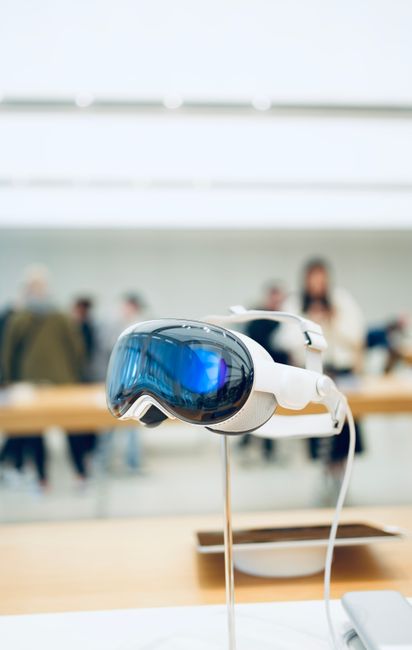
Apple’s Vision: Smart Glasses Poised to Revolutionize Meditation, Sleep, and Navigation
Apple’s long-rumored foray into augmented reality (AR) smart glasses represents a paradigm shift in how we interact with technology and, crucially, ourselves. Beyond mere information overlays, these devices hold the potential to fundamentally alter our approaches to mental well-being, sleep hygiene, and spatial awareness. The core of this revolutionary potential lies in the seamless integration of advanced sensor technology, sophisticated software algorithms, and Apple’s signature user-centric design philosophy. Imagine a future where a discreet pair of glasses acts as a personalized wellness coach, a sleep therapist, and an intuitive navigator, all while remaining aesthetically pleasing and unobtrusive. This article delves into the specific ways Apple’s smart glasses are anticipated to impact meditation, sleep, and navigation, exploring the underlying technologies and the profound implications for users.
The meditation capabilities of future Apple smart glasses are perhaps the most intriguing and immediately impactful. Traditional meditation practices often rely on guided audio or visual cues. Apple’s AR glasses can elevate this by creating immersive, personalized meditation environments. Imagine putting on your glasses and being transported to a serene digital forest, complete with ambient sounds and gentle visual stimuli designed to promote focus and relaxation. The glasses could incorporate biofeedback sensors, such as heart rate variability (HRV) monitors, and potentially even EEG sensors (though the latter is more speculative for early iterations). By continuously monitoring physiological indicators of stress and relaxation, the glasses can dynamically adjust the meditative experience in real-time. If the user’s heart rate spikes, the environment might subtly shift to introduce more calming elements. Breathing exercises could be visualized as gentle waves expanding and contracting, providing a tangible and intuitive guide. Furthermore, the glasses could offer personalized meditation programs based on an individual’s stress levels, mood, and stated goals. This goes beyond generic guided meditations, offering a tailored approach that adapts to the user’s evolving state. The integration with Apple Health will be crucial, allowing the glasses to draw data from other Apple devices, providing a holistic view of well-being and informing more effective meditation sessions. The potential for "micro-meditations" throughout the day, easily accessible through a glance or a simple gesture, could make mindfulness a practical and integrated part of daily life, rather than a dedicated, time-consuming activity. For individuals struggling with anxiety or stress, this personalized, responsive meditation experience could be transformative, offering a constant, accessible tool for mental recalibration.
The impact of Apple’s smart glasses on sleep is equally profound, promising to move beyond basic sleep tracking to active sleep improvement. Current sleep trackers provide data, but the intervention is often left to the user. Apple’s glasses, however, could actively influence sleep quality. During the day, the glasses can monitor light exposure, a critical factor in regulating the body’s circadian rhythm. By intelligently filtering out disruptive blue light in the evening, the glasses can help promote melatonin production, signaling to the body that it’s time to sleep. As bedtime approaches, the glasses could initiate a "wind-down" mode, gradually dimming the visual output and transitioning to calming ambient sounds or visualizations. For individuals with insomnia or disrupted sleep patterns, the glasses could offer personalized sleep hygiene recommendations, visually demonstrating proper sleep environments and pre-sleep routines. Imagine a subtle overlay guiding the user through a pre-sleep stretching routine or visualizing their optimal sleep window. In the future, more advanced features could include gentle somatosensory stimulation or even subtle temperature regulation within the eyewear itself to promote deeper sleep. The integration with Apple Health will allow the glasses to analyze sleep stages (REM, deep sleep, light sleep) and correlate them with daytime activities and physiological data, enabling highly personalized sleep optimization strategies. The concept of "sleep coaching" delivered directly through visual and auditory cues could revolutionize how we approach rest, making it a proactive rather than reactive endeavor. The ability to create personalized sleep environments, even within a shared bedroom, through the subtle visual cues of the glasses, could also be a significant benefit for couples with differing sleep needs.
Navigation, a core function for many AR devices, will be significantly enhanced and reimagined by Apple’s smart glasses. The current reliance on smartphone screens for directions can be distracting and take attention away from the environment. Apple’s glasses will offer a hands-free, heads-up navigation experience, seamlessly overlaying directional cues onto the user’s field of vision. This means looking at a street and seeing subtle arrows or highlights indicating the correct path. The integration with Apple Maps will be paramount, leveraging its extensive data and real-time traffic information. Beyond simple turn-by-turn directions, the glasses could provide contextual information about the surroundings. Imagine walking down a street and seeing historical facts about buildings, restaurant reviews overlaid on storefronts, or points of interest highlighted as you approach them. For tourists, this would transform their exploration experience, offering an interactive and informative journey. For everyday commuters, it could mean a more efficient and less stressful journey, with traffic updates and alternative route suggestions displayed discreetly without needing to pull out a phone. The glasses could also facilitate social navigation, allowing users to share their location or see the location of friends and family overlaid in their view. Indoor navigation within complex environments like airports or shopping malls, which has historically been challenging for GPS, could be vastly improved through the glasses’ sensors and pre-mapped data. The potential for "wayfinding" assistance for visually impaired individuals, guiding them through their environment with clear, unambiguous audio and visual cues, is also a significant and altruistic application. This intelligent overlay of information means that the world becomes a dynamic, interactive map, constantly providing relevant context and guidance.
The underlying technology powering these ambitious features is a complex interplay of hardware and software. High-resolution micro-OLED displays will be crucial for delivering crisp and vibrant AR overlays without causing eye strain. Advanced eye-tracking technology will enable intuitive user interaction, allowing the glasses to understand where the user is looking and respond accordingly. Wide-angle cameras and depth sensors will capture the surrounding environment, enabling the glasses to understand spatial relationships and create accurate AR experiences. Sophisticated spatial audio processing will ensure that sound cues are contextually relevant and immersive. On the software side, Apple’s expertise in AI and machine learning will be essential for interpreting sensor data, personalizing experiences, and ensuring seamless integration with the broader Apple ecosystem. The A-series or even a dedicated AR chip will likely power these devices, providing the necessary processing power for real-time AR rendering and complex algorithms. The development of an ARKit for these glasses will empower developers to create a vast ecosystem of applications, extending their utility beyond what Apple can envision alone. Security and privacy will also be paramount, with robust measures in place to protect user data, especially sensitive health and location information. Apple’s commitment to user privacy, as demonstrated with its existing products, will be a key differentiator in building trust for these deeply personal devices. The modularity of the hardware, allowing for potential upgrades or prescription lens integration, will also be a critical design consideration for long-term adoption.
The implications of Apple’s smart glasses extend beyond individual use, potentially influencing how we work, learn, and socialize. In the workplace, AR overlays could provide real-time data and instructions for complex tasks, enhancing efficiency and reducing errors. In education, immersive AR experiences could bring subjects to life, making learning more engaging and effective. Socially, the ability to share augmented experiences could lead to new forms of interaction and communication. However, the widespread adoption of such technology also raises important questions about digital etiquette, screen time management, and the potential for information overload. Apple’s challenge will be to create devices that augment human capabilities without overwhelming or distracting from the real world. The journey from concept to widespread adoption will undoubtedly involve iterative development, user feedback, and continuous refinement of the technology and its applications. The potential for Apple’s smart glasses to redefine our relationship with technology, and by extension, ourselves, is immense, promising a future where digital tools are not just extensions of our hands but extensions of our well-being. The continued advancements in computational optics, miniaturization of sensors, and power efficiency will be key drivers in realizing the full potential of these devices. The ethical considerations surrounding pervasive AR, including data ownership, consent, and the potential for manipulation, will require careful and ongoing attention. The success of Apple’s vision hinges not only on technological innovation but also on its ability to address these societal challenges and build a future where augmented reality enhances rather than detracts from the human experience.


