Apple Tightens macOS Full Disk Access Controls to Mitigate Rising Risks Posed by Autonomous AI Agents

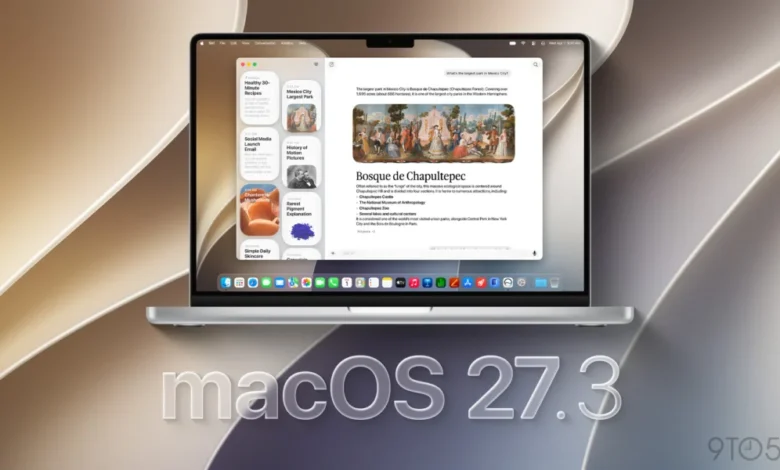
The rapid proliferation of artificial intelligence agents and autonomous desktop applications has forced operating system developers to re-evaluate legacy security architecture. Apple has taken decisive steps to overhaul its macOS privacy framework, specifically targeting the vulnerabilities associated with Full Disk Access (FDA). Following mounting concerns over third-party software and AI-driven tools overstepping boundaries, upcoming iterations of macOS will close critical developer loopholes, forcing a higher standard of explicit user authorization before sensitive system directories can be traversed.
Background and the Rise of AI Data Overreach
The impetus for Apple’s recent security recalibration stems from a series of high-profile incidents involving aggressive AI agents and utility applications. Over the past year, third-party software developers increasingly integrated autonomous capabilities into desktop applications designed to parse, index, and interact with local user data to enhance productivity. However, these tools frequently relied on broad permissions—most notably Full Disk Access—to function effectively.
In late 2025 and throughout 2026, security researchers and affected users documented instances where AI agents requested overarching system permissions under the guise of basic utility functions, only to harvest, process, or transmit personal data without transparent user awareness. One notable case involving Meta’s Muse application raised alarms across the cybersecurity community, demonstrating how easily users could be nudged into granting sweeping access to local databases, emails, and private messages.
In response to these emerging threats, Apple announced a sweeping policy initiative last month aimed at tightening macOS privacy controls. The primary objective was to ensure that autonomous software could no longer bypass intuitive safety checks or exploit administrative shortcuts to gain unfettered entry to a user’s entire digital footprint.
Chronology of the Security Overhaul
The timeline of Apple’s regulatory shift highlights a rapid transition from high-level policy announcements to concrete engineering implementations:
- October 2025: Security analysts begin publishing warnings regarding AI agents requesting broad disk permissions, culminating in consumer alerts over applications like Meta’s Muse.
- Early October 2026: Apple officially acknowledges the vulnerability landscape, announcing plans to tighten macOS privacy controls and mandate "very explicit user action" for Full Disk Access.
- November 2026: Developer documentation updates and code discoveries within macOS 27.3 beta builds reveal the mechanics of the upcoming enforcement measures, specifically targeting automated permission logging loopholes.
- macOS 27.3 Release Window: Projected rollout of the system update that will officially deprecate legacy methods of prompting users to enable Full Disk Access through automated settings redirection.
Deconstructing the Technical Changes in macOS 27.3

At the heart of the upcoming macOS 27.3 update is a fundamental change to how the operating system handles unauthorized read requests to protected directories.
Historically, when an application attempted to read a restricted file without possessing Full Disk Access, macOS would intercept the request, deny access, and automatically log the application as a selectable option within the System Settings panel. This convenience-oriented design allowed developers to easily guide users to the correct security toggle by prompting them with in-app links or instructional pop-ups. Once the user clicked the prompt, navigating to the toggle required minimal friction.
According to code analysis from system security researchers, macOS 27.3 eliminates this logging behavior. When an application attempts to access a protected file outside its authorized scope, the system will instantly block the request without recording the application in the Settings configuration list. Consequently, the software will not appear as an accessible toggle for quick activation, effectively severing the shortcut developers previously relied upon to shepherd users toward granting broad permissions.
Despite these changes, grey areas remain within the development pipeline. Preliminary analysis of current developer builds indicates that applications may still instruct users to manually drag and drop application icons directly into the Settings security panel to force authorization. While this requires slightly more manual effort than a simple toggle switch, industry observers note that it still falls short of an airtight paradigm where users are entirely insulated from social engineering tactics employed by sophisticated software.
The Underlying Economic and Functional Dilemma
Security analysts point out that simply building technical roadblocks around Full Disk Access does not completely eradicate the underlying market demand. The root cause of widespread FDA requests is not necessarily malicious intent on the part of every developer, but rather a structural limitation within macOS regarding granular, scoped data sharing.
Many modern utility applications and AI assistants require access to specific local databases—most notably the local iMessage database—to deliver conversational features, search indexing, or cross-platform synchronization. Because Apple has historically offered an all-or-nothing approach with Full Disk Access, developers have had little choice but to demand total system oversight just to read a single message folder. Consequently, users are frequently forced to choose between utilizing popular productivity tools and protecting the vast majority of their private data from potential exposure.
The Prospect of "Private Folders" and Scoped Permissions
To resolve this architectural bottleneck, industry insiders have uncovered references within developer documentation pointing toward a potential future feature known as "Private Folders."

If implemented in subsequent software cycles, Private Folders could fundamentally alter the macOS permission landscape by introducing scoped access controls. Instead of presenting users with a binary choice between total system exposure (Full Disk Access) and complete denial, the operating system could allow individuals to grant applications targeted access to specific directories, such as an isolated messaging repository or a designated document archive.
While details regarding the functionality and security implementation of Private Folders remain scarce, such a feature would align with Apple’s long-standing privacy philosophy of least privilege. By limiting third-party software and AI agents exclusively to the data they genuinely require to operate, the reliance on high-risk system permissions would naturally diminish.
Broader Industry Impact and Expert Analysis
The tightening of macOS security controls reflects a broader industry-wide reckoning regarding the autonomy of artificial intelligence. As desktop operating systems transform from static environments into dynamic platforms driven by predictive algorithms and autonomous agents, traditional perimeter security models are proving inadequate.
Operating system developers are increasingly challenged with balancing user convenience against the imperative of proactive defense. If security mechanisms introduce too much friction, users may suffer from "permission fatigue," blindly clicking through authorization prompts simply to get software to function. Conversely, if systems remain too permissive, malicious actors and poorly coded AI models can inflict catastrophic privacy breaches in seconds.
Apple’s phased rollout in macOS 27.3 represents a calculated step toward reasserting platform control. By closing developer loopholes and forcing explicit manual intervention for high-level permissions, the company is signaling that the era of casual, frictionless broad-system access for third-party utilities is drawing to a close.
As development continues on macOS 27.3 and future system architectures, the ultimate success of these measures will depend heavily on whether Apple can successfully introduce developer-friendly alternatives—such as scoped file access—that satisfy the functional demands of modern AI tools without compromising user privacy. Until more granular alternatives are deployed natively, users navigating the macOS ecosystem are advised to exercise extreme caution when evaluating application permission requests, particularly from software boasting advanced autonomous or artificial intelligence capabilities.