Controversial Nomination of Erica Schwartz as CDC Director Ignites Debate Over Scientific Autonomy and Political Influence

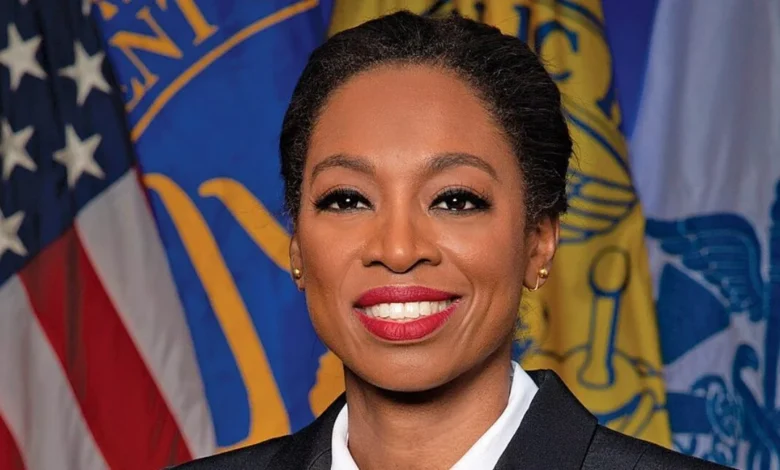
The nomination of Dr. Erica Schwartz as the new Director for the Centers for Disease Control and Prevention (CDC) has immediately sparked intense debate, drawing sharp criticism from public health advocates concerned about political interference and vehement opposition from anti-vaccine circles. Announced by former President Donald Trump on Wednesday, the selection has quickly become a flashpoint, highlighting deep divisions over the agency’s independence and the future direction of public health policy.
A Tumultuous Announcement and Immediate Backlash
Former President Donald Trump, in a social media post on Wednesday, heralded Dr. Schwartz’s nomination, describing her as "a STAR" and announcing three other key appointments to the agency. "These Highly Respected Doctors of Medicine have the knowledge, experience, and TOP degrees to restore the GOLD STANDARD OF SCIENCE at the CDC," Trump wrote, signaling an intent to reshape the institution.
However, the announcement was met with immediate and divergent reactions. Debra Houry, former chief medical officer at the CDC who had previously resigned in protest over what she perceived as political interference, voiced profound skepticism. "We saw what happened with Susan," Houry told Stat News, referencing a past scenario where a colleague reportedly faced severe limitations. "She couldn’t make staffing or policy decisions. What has changed? Kennedy hasn’t changed." Houry’s remarks underscore a persistent concern within the public health community regarding the potential for political influence to compromise the CDC’s scientific integrity, particularly under the purview of figures like "Sec Kennedy," understood to be Robert F. Kennedy Jr., whose past statements and actions have frequently challenged established public health consensus.
Further reporting by The Washington Post revealed that the search for a new CDC director had been fraught with tension. Well-qualified candidates reportedly sought explicit assurances of autonomy—the power to hire and fire staff without political meddling and a guarantee that scientific recommendations would remain insulated from political pressure. According to sources close to the selection process, these candidates, prioritizing scientific independence, were ultimately not chosen, raising questions about the administration’s true intentions for the CDC’s leadership.
Robert F. Kennedy Jr.’s Role and Aaron Siri’s Vehement Opposition
The reactions from figures aligned with Robert F. Kennedy Jr. provided a stark contrast, revealing the complex political landscape surrounding the nomination. "Sec Kennedy" responded with a notably measured statement on social media, congratulating Dr. Schwartz and the new leadership team. "I look forward to working together to restore trust, accountability, and scientific integrity at the CDC so we can return it to its core mission and Make America Healthy Again," he wrote, echoing campaign-style rhetoric that prioritizes a "restoration" of the agency. This message, while outwardly conciliatory, is viewed by many as strategically crafted, given Kennedy’s well-documented history of skepticism towards mainstream vaccine science and public health mandates.
However, Kennedy’s close anti-vaccine ally and former personal lawyer, Aaron Siri, held nothing back in his own social media post. Siri characterized Schwartz’s potential leadership at the CDC as "likely be a disaster," launching a scathing critique of her professional record. He specifically cited Schwartz’s leadership in nationwide COVID-19 vaccine deployment and her "long track record of directly issuing rights-crushing civilian and military vaccine mandates." Siri enumerated examples, including mandates for smallpox, anthrax, and flu vaccines for U.S. Forces, along with disciplinary actions against those who refused. He concluded that her history "reflects she lacks the basic ethics and morals to lead the CDC" and expressed "little hope she will objectively oversee CDC’s vaccine program." Siri’s aggressive denouncement clearly articulates the deep distrust many in the anti-vaccine movement hold for any individual associated with traditional vaccine policy and deployment, positioning Schwartz as an unacceptable choice from their perspective, despite Trump’s nomination.
Erica Schwartz: A Career in Public Health and Military Medicine
While the immediate controversy overshadows her full professional profile, Dr. Erica Schwartz’s career reflects extensive experience in public health and military medicine, a background that both qualifies her for the role and fuels specific criticisms. Prior to this nomination, Schwartz served as a high-ranking official within the U.S. Public Health Service and the Department of Defense. Her tenure included critical roles in public health preparedness, emergency response, and the implementation of health policies across various sectors.
Her career has been marked by a focus on health system readiness and the protection of public health, particularly within the uniformed services. This included responsibilities in managing disease prevention programs, overseeing healthcare delivery, and responding to health crises. Her involvement in the COVID-19 vaccine deployment, as highlighted by Siri, was a significant undertaking, requiring complex logistical coordination and policy implementation to ensure widespread vaccination efforts during an unprecedented global pandemic. Her experience in mandating vaccines for military personnel, as is standard practice for many diseases deemed a threat to force readiness, is a cornerstone of Siri’s critique. These mandates, common across military branches for diseases like smallpox, anthrax, and influenza, are designed to protect service members and maintain operational capabilities, but are viewed by critics as infringements on individual liberty. This dual nature of her experience – highly valued by mainstream public health for its rigor and discipline, yet fiercely condemned by vaccine skeptics – places her squarely at the center of the current public health debate.
The CDC’s Critical Mission and the Peril of Politicization
The Centers for Disease Control and Prevention stands as a cornerstone of global public health, tasked with protecting the health and safety of Americans through research, surveillance, and the development of health policy. Established in 1946, its core mission has evolved from combating infectious diseases like malaria to addressing a wide spectrum of public health challenges, including chronic diseases, environmental health, injury prevention, and global health security. The agency’s historical effectiveness has largely stemmed from its reputation as a science-driven, independent body, whose recommendations are based on rigorous data and scientific consensus, rather than political expediency.
Throughout its history, the CDC has played an indispensable role in eradicating smallpox, dramatically reducing polio, developing groundbreaking HIV/AIDS research, and leading responses to countless epidemics and public health emergencies. Its credibility is paramount, as public trust in its guidance directly influences vaccine uptake, adherence to health recommendations, and overall public health outcomes. When this trust is eroded, or when the agency is perceived as politically compromised, the consequences can be dire, potentially undermining national health security and global health cooperation.
The concern articulated by Debra Houry and reported by The Washington Post is not without precedent. The CDC has faced increasing pressures and criticisms in recent years, particularly during the COVID-19 pandemic. Reports of political interference in scientific communications, data interpretation, and policy decisions during that period led to significant drops in public trust and contributed to a perception of an agency struggling to maintain its independence. For example, during the early stages of the pandemic, there were instances where the agency’s guidance on masking, testing, and travel faced scrutiny and, at times, apparent alteration by political appointees, leading to confusion and diminished public confidence. The reference to "Susan" by Houry likely alludes to such historical or hypothetical scenarios where a director’s authority was curtailed, leading to a dysfunctional environment and a departure from science-based decision-making. The fear is that such interference could become institutionalized, further debilitating the agency’s ability to fulfill its critical mandate.
The Broader Implications for Public Health and Trust
The nomination of Dr. Schwartz and the contentious reactions it has generated carry significant implications for the future of public health in the United States and potentially globally.
- Erosion of Scientific Integrity: If the new CDC director is perceived as lacking full autonomy or being beholden to political agendas, it could further undermine the agency’s scientific credibility. This perception can lead to a "brain drain," where top scientists and public health experts, disillusioned by political interference, leave the agency, weakening its capacity for research and response.
- Impact on Public Trust: Sustained public trust is crucial for the success of any public health initiative, from routine vaccinations to emergency responses. If the CDC’s leadership is seen as politically compromised, public confidence in its recommendations—including those on vaccines, disease prevention, and health guidelines—could plummet. This can exacerbate vaccine hesitancy, complicate outbreak control, and make it harder to mobilize collective action during future health crises. Historical data from organizations like the Pew Research Center have shown fluctuations in public trust in government health agencies, particularly following periods of perceived politicization during the pandemic.
- Future Health Crisis Response: The ability of the CDC to rapidly and effectively respond to future pandemics, bioterrorism threats, or other health emergencies relies heavily on its agility, its scientific independence, and its clear communication channels. A leadership team constrained by political considerations could slow down responses, obscure critical data, and ultimately cost lives.
- Vaccine Policy and Programs: Given the intense focus on Dr. Schwartz’s past role in vaccine deployment and mandates, her directorship will likely face intense scrutiny regarding vaccine policies. While the CDC’s role is to provide evidence-based recommendations, political pressure could influence how these recommendations are communicated, funded, or implemented. Aaron Siri’s comments highlight the deep-seated opposition to vaccine mandates, and any perceived softening or hardening of the CDC’s stance on vaccines under Schwartz could trigger further polarization.
- International Standing: The CDC has historically been a global leader in public health, collaborating with international bodies and aiding countries worldwide. A weakened or politicized CDC could diminish America’s standing in global health, impacting collaborative efforts on infectious disease surveillance, vaccine development, and humanitarian health aid.
The Road Ahead: Senate Confirmation and Ongoing Scrutiny
Dr. Schwartz’s nomination will now proceed to the Senate for confirmation, where it is expected to face rigorous scrutiny. Lawmakers will undoubtedly probe her views on scientific independence, vaccine policy, and her approach to managing an agency that has been at the center of political storms. Democratic senators are likely to raise concerns about the potential for political interference and to press for assurances of the CDC’s autonomy. They may draw upon the Washington Post‘s reporting regarding the rejected candidates who sought guarantees of independence. Conversely, Republican senators are likely to support the nomination, aligning with former President Trump’s vision for "restoring" the CDC.
The confirmation hearings will serve as a crucial public forum to debate the fundamental principles guiding public health in the United States. The outcome of this process, and indeed Dr. Schwartz’s subsequent tenure if confirmed, will significantly shape the CDC’s ability to protect the nation’s health, its role in global health leadership, and the enduring challenge of insulating scientific endeavor from the pressures of partisan politics. The stakes are profoundly high, as the decisions made today will reverberate through future generations, impacting the health and well-being of millions.