A fundamental shift is underway in the landscape of digital discoverability, positioning Digital PR as the single most critical strategy for brands aiming to succeed in the era of AI-driven search. As artificial intelligence models increasingly mediate how users find information, the traditional focus on owned media and direct SEO tactics is being augmented, if not overshadowed, by the undeniable power of third-party validation and earned media. This paradigm shift demands a re-evaluation of marketing and communications strategies, placing authentic brand mentions and external endorsements at the forefront of AI visibility efforts.

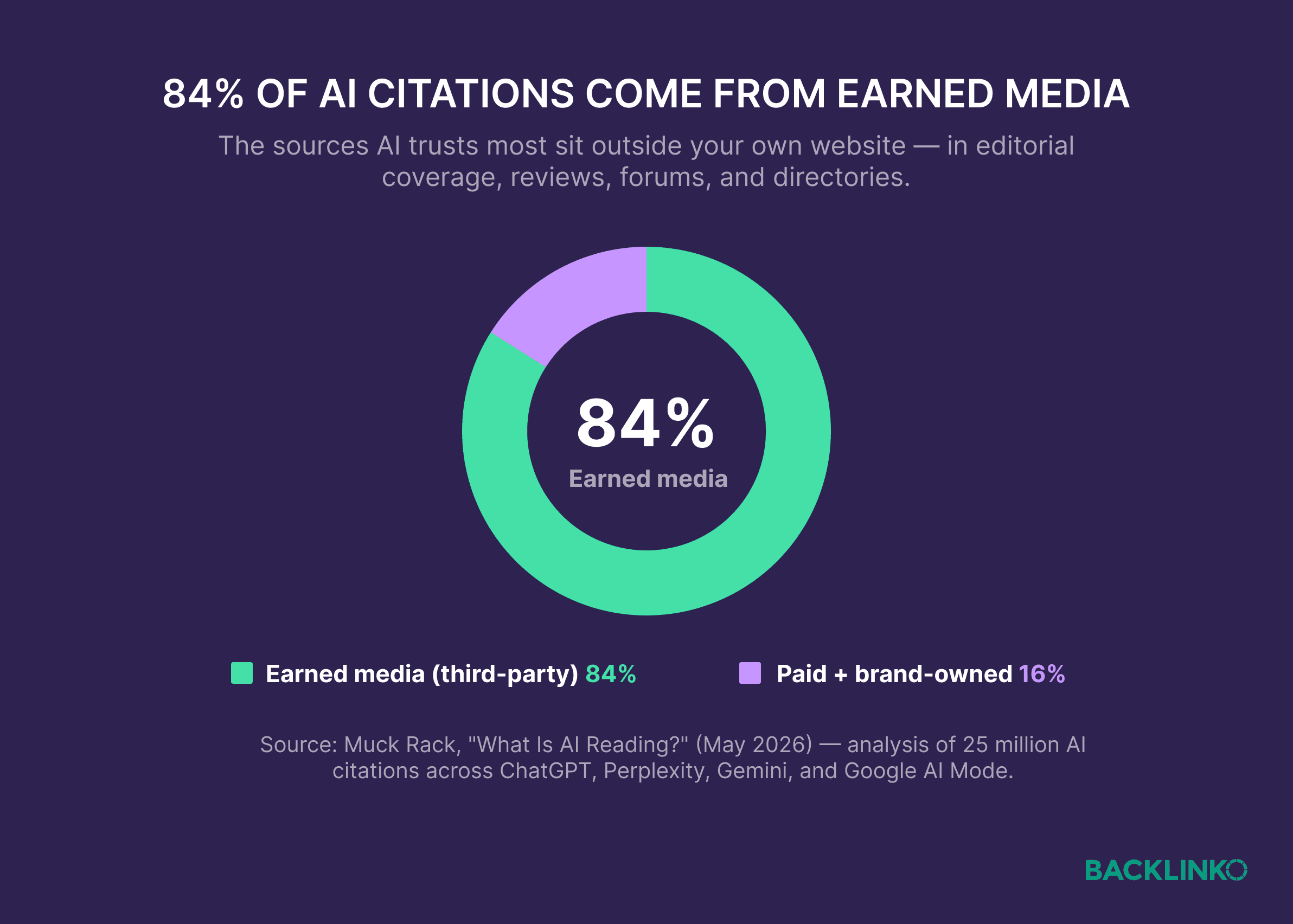
The evolving nature of search, moving from keyword-centric results to conversational AI answers, necessitates a deeper understanding of how these advanced systems gather, process, and ultimately present information. Unlike traditional search engines that primarily indexed and ranked web pages, Large Language Models (LLMs) and AI search interfaces synthesize data from a vast array of sources across the internet to formulate comprehensive, direct answers. A recent study by Muck Rack has provided compelling evidence of this transformation, revealing that a staggering 84% of AI citations originate from earned media. This category encompasses third-party sources such as editorial coverage, independent reviews, and community forums, underscoring AI’s preference for unbiased, externally validated information over self-promotional content.
This finding carries profound implications for businesses and marketers. It signals that in the nascent but rapidly expanding realm of AI search, credibility derived from external endorsements far outweighs the impact of content published directly on a brand’s own website. While onsite content remains vital for establishing a brand’s narrative and providing foundational information, a brand’s visibility within AI-generated answers is predominantly shaped by its footprint outside its digital domain. The more frequently and positively a brand name, its products, or its expertise appear across reputable, third-party web properties, the greater the likelihood that LLMs will recognize, trust, and subsequently recommend it to users.
This strategic imperative highlights an urgent need for brands to cultivate a robust offsite authority. Digital PR, by its very definition, is the discipline of securing these valuable external mentions and backlinks through strategic communication and content initiatives. It’s about earning media, not buying it, thereby building the kind of organic trust signals that AI models are designed to detect and prioritize. To navigate this new environment effectively, brands must embrace sophisticated Digital PR strategies aimed at earning more backlinks and brand mentions, strengthening their overall offsite authority, and ultimately increasing their visibility in the succinct, AI-generated answers users now expect. The following six proven Digital PR strategies offer a roadmap for achieving just that.
The New Paradigm: How AI Consumes Information
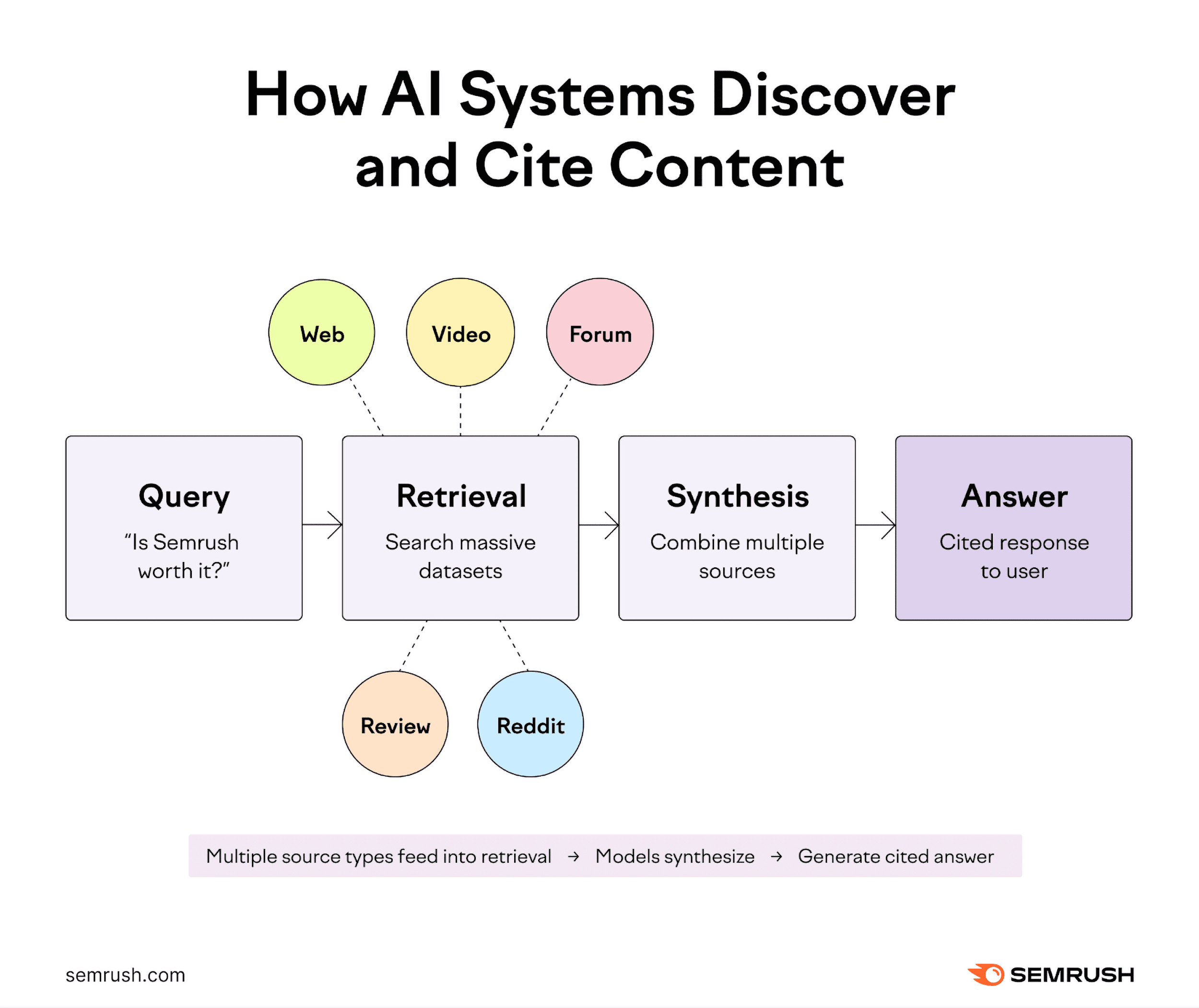
AI systems transcend the capabilities of traditional web crawlers by not merely indexing pages but by understanding and synthesizing complex information from diverse sources. When a user poses a query to an AI search interface like Google’s AI Overviews, ChatGPT, or Perplexity, the underlying LLM doesn’t simply retrieve a list of blue links. Instead, it pulls information from dozens, sometimes hundreds, of disparate web sources, processes them, and then combines them into a single, cohesive answer. This process inherently values breadth of coverage and cross-validation from multiple independent sources.
This preference for earned media is deeply rooted in AI’s foundational design principles, particularly the pursuit of E-E-A-T (Experience, Expertise, Authoritativeness, and Trustworthiness) as emphasized by Google. Self-published content, by its nature, can be perceived as biased. However, when a brand is consistently mentioned, reviewed, or cited by reputable editorial outlets, industry experts, or engaged communities, it signals to AI that the information is trustworthy and validated by external parties. This mechanism allows AI to filter out potential misinformation and present users with more reliable and objective answers. The Muck Rack study’s 84% figure acts as a stark indicator: if your brand isn’t being discussed and validated by others, it risks becoming largely invisible to the AI algorithms that are increasingly shaping digital discovery.
Beyond the Website: The Ecosystem of AI Visibility
The shift towards AI-driven search represents a significant evolution from the traditional SEO landscape where optimizing owned website content was paramount. While publishing high-quality, relevant content on a brand’s own site remains important for direct user engagement and establishing a content hub, its direct influence on AI visibility is becoming secondary to its offsite presence. The visibility of a brand in AI responses is now largely determined by what the broader internet says about it.
"This is not just another algorithm update; it’s a fundamental change in how information is validated and disseminated," explains Dr. Anya Sharma, a leading digital marketing strategist. "Brands must understand that AI isn’t just looking at what you say about yourself, but who else is saying it, and where. It’s a return to the core principles of public relations, amplified by algorithmic intelligence."
The continuous appearance of a brand name, key personnel, or unique data across a wide array of web properties acts as a powerful signal to LLMs. This pervasive presence fosters recognition and builds a cumulative layer of trust. As these models become more sophisticated, they learn to associate consistent, positive third-party mentions with authoritative and reliable entities. This makes it imperative for brands to diversify their digital footprint beyond their owned channels and actively engage in strategies that cultivate widespread, positive external validation.
Strategic Imperatives: Six Digital PR Approaches for AI Search
The challenge for brands today is to adapt their digital strategies to align with these new AI priorities. This involves a proactive and integrated approach to Digital PR, focusing on earning mentions and building authority in the places AI systems are actively scanning.
1. Data-Led PR: Becoming an Authority
Data-led PR centers on the creation and distribution of original research, industry studies, and comprehensive statistical roundups. This strategy is one of the most effective methods for building high-quality backlinks and establishing a brand as a thought leader, which are now critical for AI visibility. The intrinsic value of fresh, credible data makes it highly attractive to journalists, bloggers, and content creators who are constantly seeking authoritative sources to support their narratives.
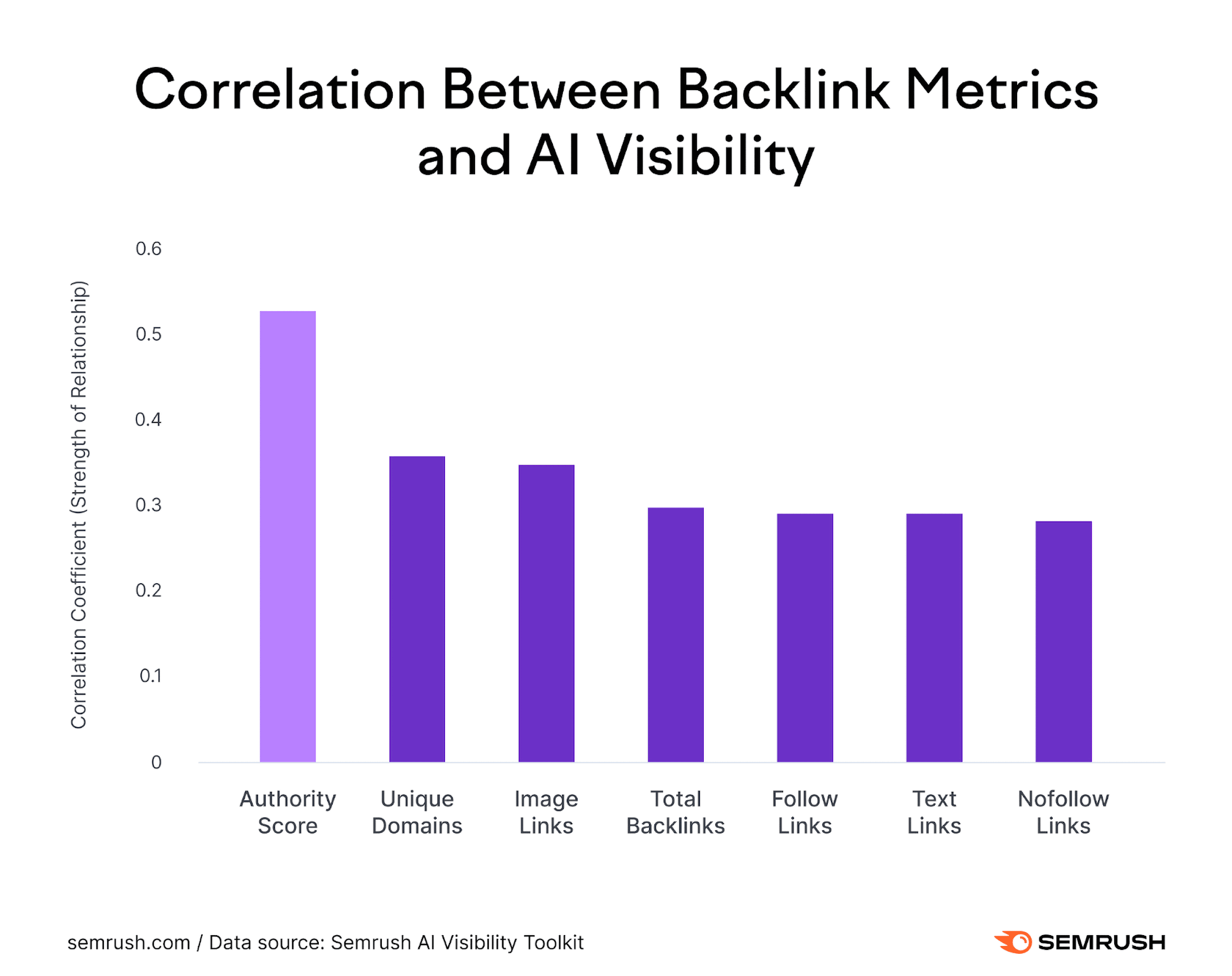
The reason for its efficacy in boosting AI visibility lies in the fact that backlinks continue to be a strong indicator of authority and relevance, even in the AI search era. A study by Semrush, analyzing 1,000 domains, confirmed a direct correlation between strong backlink authority and higher likelihood of appearing in AI-generated answers. Further reinforcing this, Seer Interactive’s research highlighted domain authority and high-quality backlinks (specifically from sites with a Domain Authority of 60+) as the top two metrics influencing AI visibility. Data-led content serves as a prime vehicle for acquiring these coveted, high-value backlinks. People are naturally inclined to cite and reference novel statistics and research that add substance to their own content.
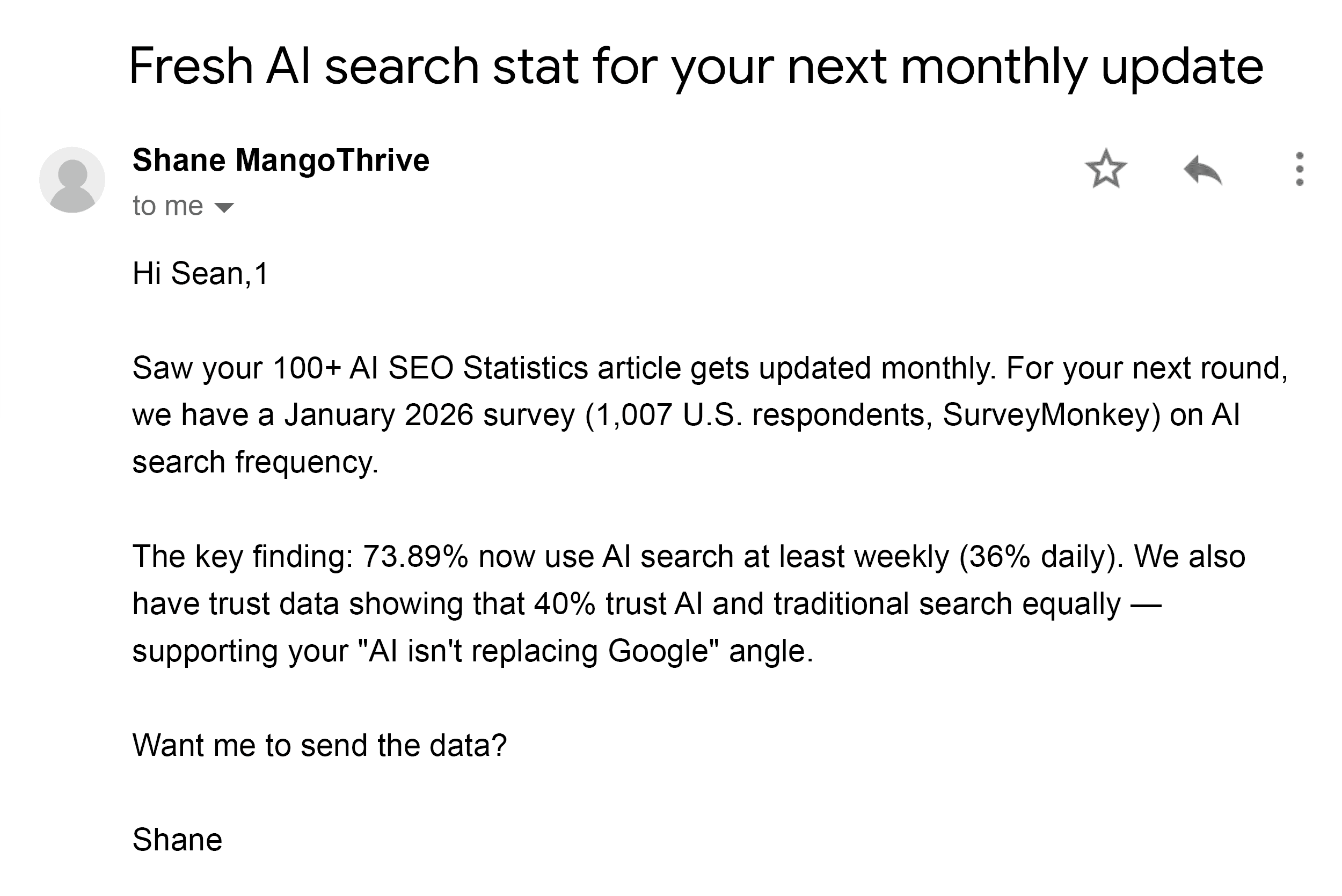
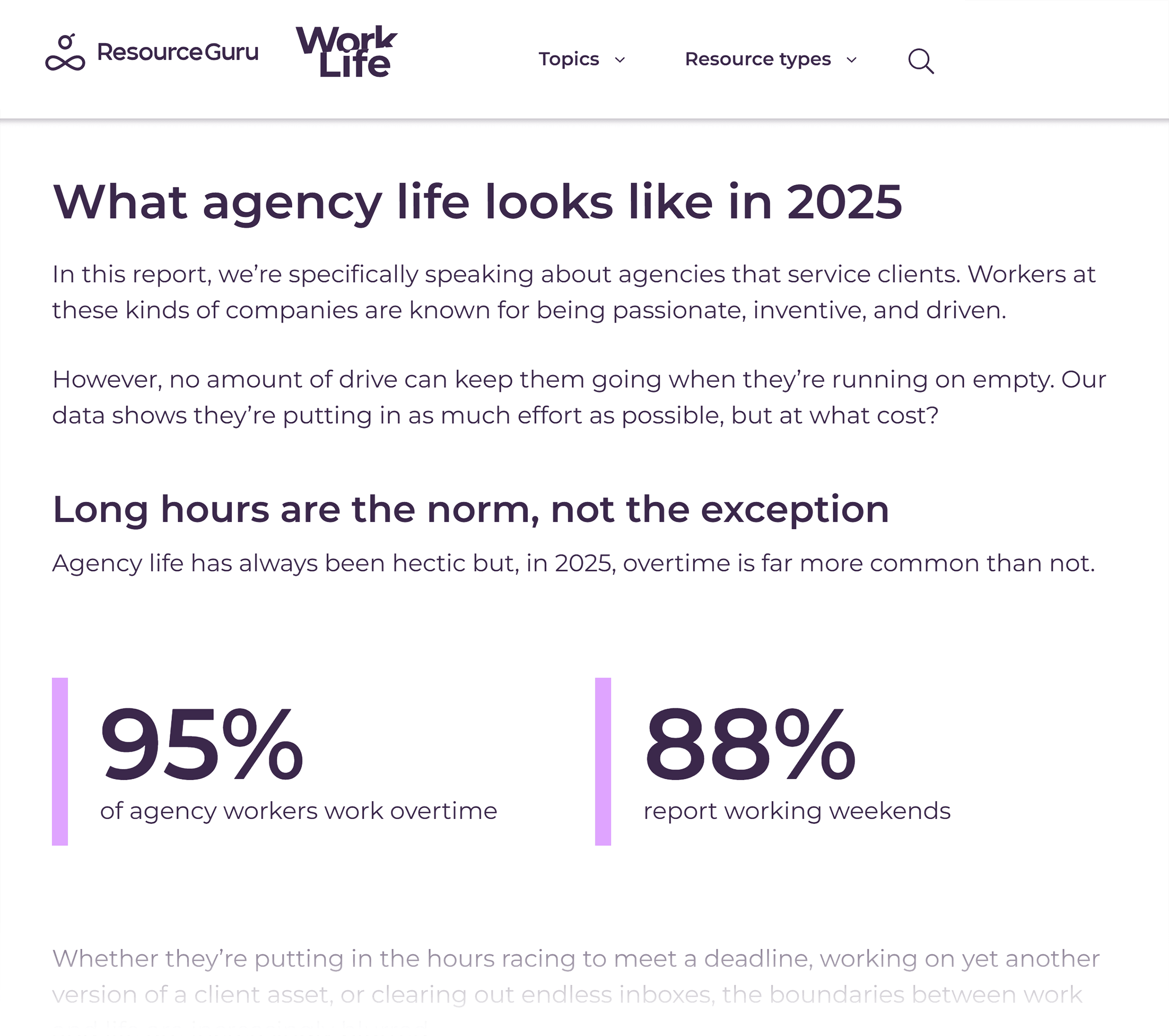
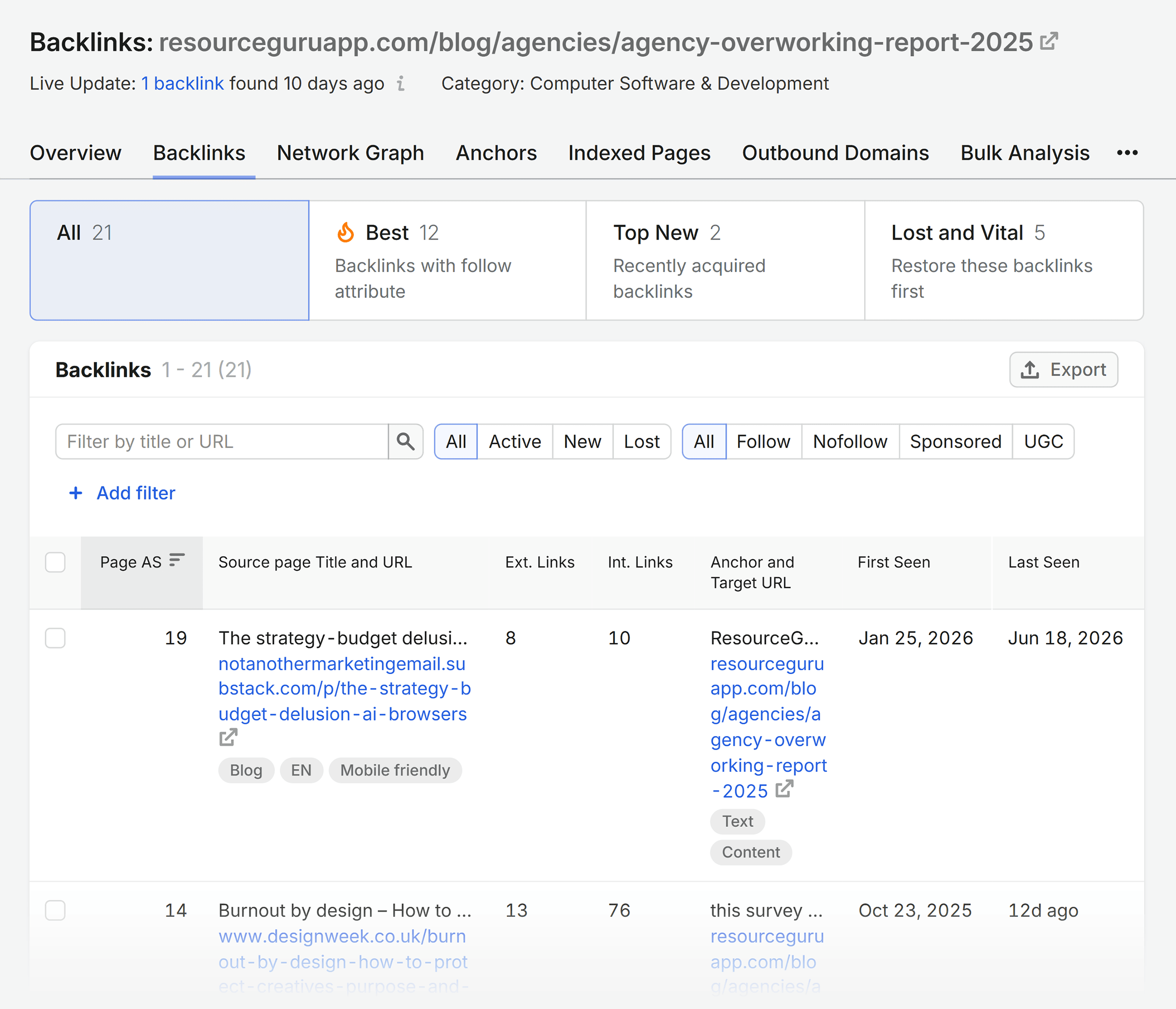
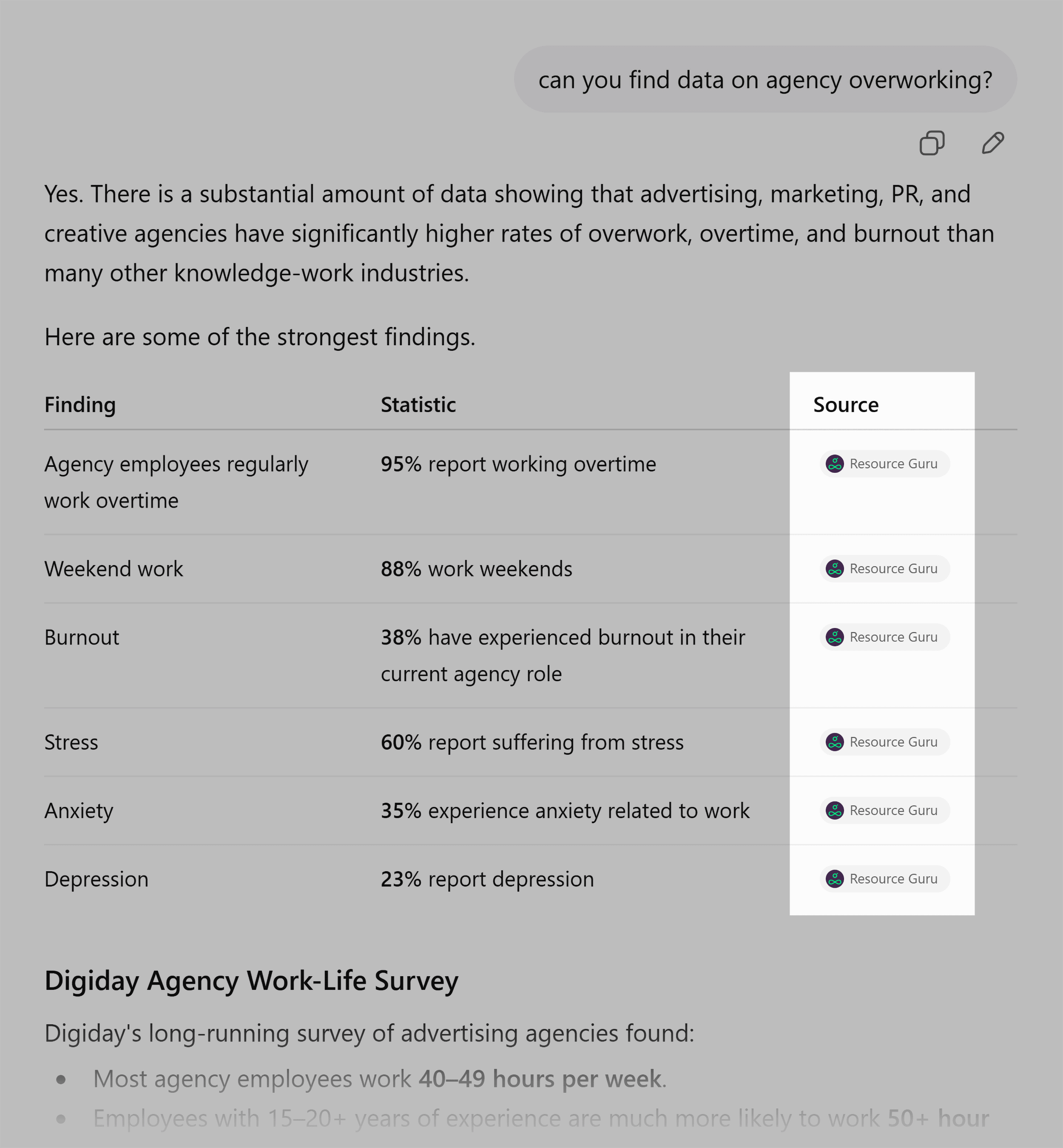
A practical example of this strategy’s success can be seen with Resource Guru’s "Agency Overworking Report 2025." This piece of original research, developed with expert assistance, addressed a pertinent industry issue. Since its publication, the report has organically generated 21 high-quality backlinks, including significant coverage in Forbes, thereby significantly boosting Resource Guru’s offsite authority. Crucially, this report is now consistently cited in AI answers when users query topics related to agency workload or employee burnout, demonstrating a direct link between data-led PR and AI visibility.
How to Execute Data-Led PR:
First, invest in producing high-quality, original data or insightful statistical compilations. This can involve proprietary surveys, in-depth analysis of existing datasets, or compiling comprehensive industry statistics. Options include:
- Original Research: Conducting your own surveys, interviews, or data analysis to uncover unique insights.
- Statistical Roundups: Curating and organizing existing statistics on a topic, adding your own analysis or commentary.
- Industry Reports: Producing detailed reports on trends, challenges, or forecasts within your sector.
Once your data-led content is live, a proactive outreach strategy is essential. Identify articles in your niche that reference outdated statistics or link to broken sources. Reach out to the authors with a polite, personalized pitch offering your fresher, more relevant data as a replacement. Additionally, target existing statistical roundups or "best of" lists in your industry, as these pages are frequently updated and their authors are often receptive to new, authoritative additions. A compelling pitch will highlight the novelty and relevance of your data, making it easy for the recipient to understand its value and integrate it into their content.
2. AI Citation Outreach: Targeting Direct Influence
AI citation outreach is a targeted Digital PR strategy focused on securing placements within the specific online sources that AI models already consult and cite. This is arguably one of the most direct and rapid ways to earn brand mentions within AI responses. If a brand can strategically position itself within the content that AI systems regularly reference, it gains a direct channel to influence the answers those AI systems provide.
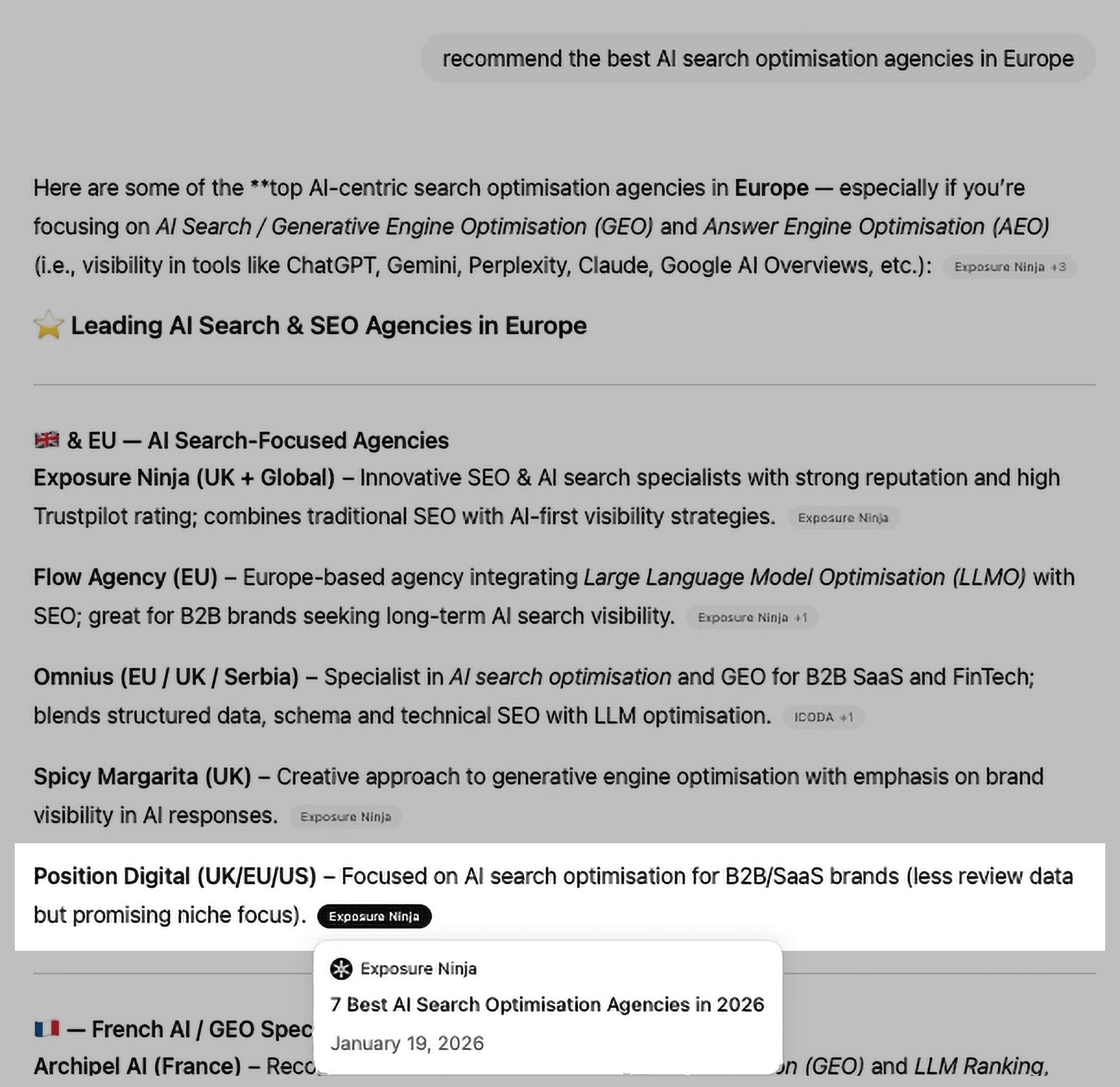
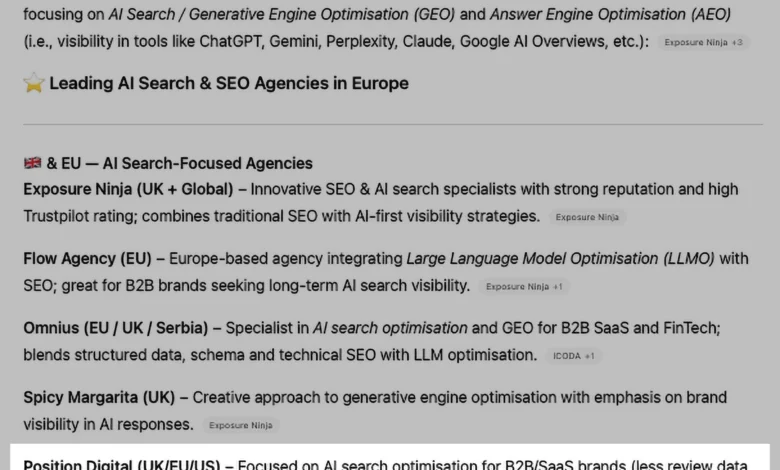
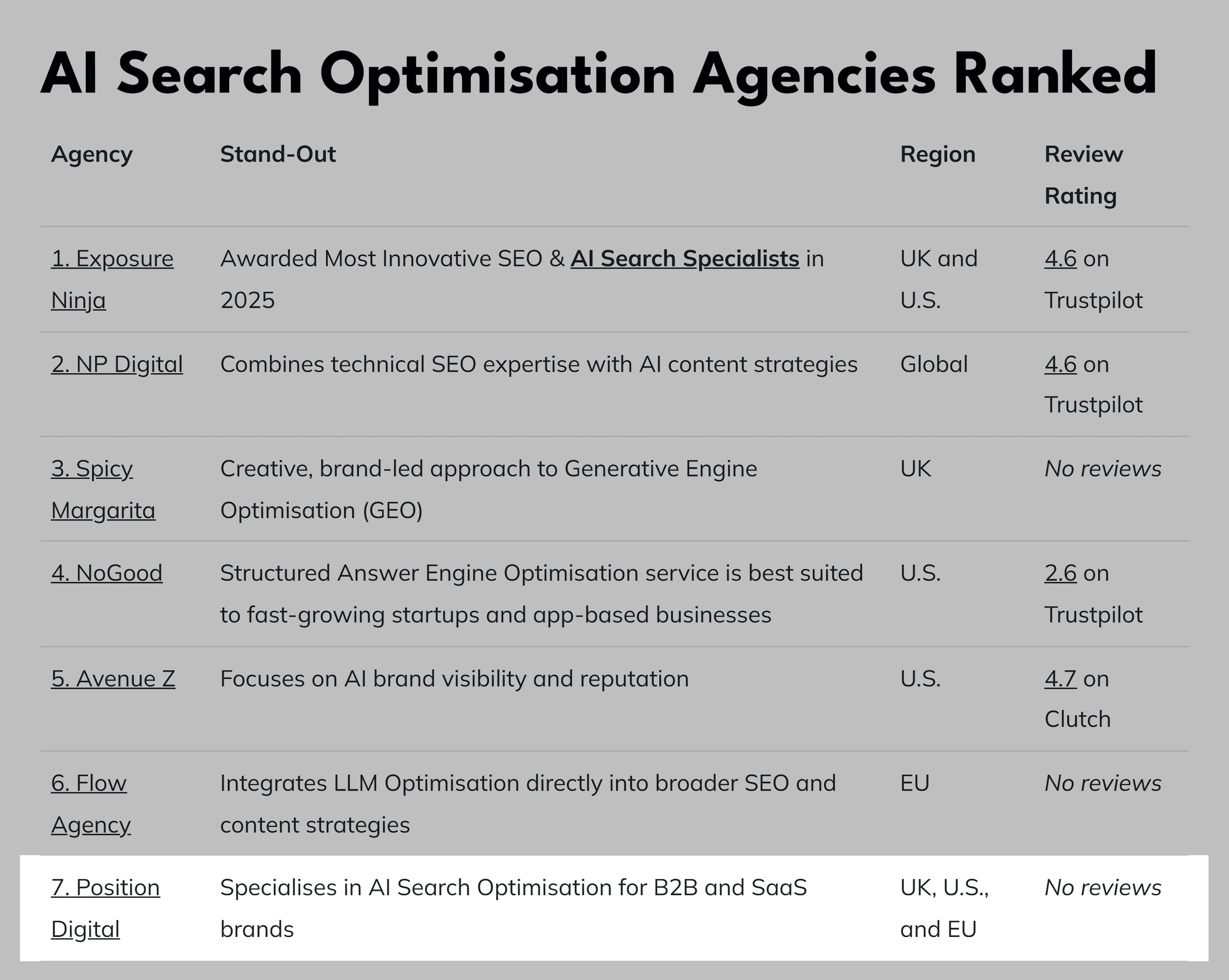
The efficacy of this approach is evident in cases where brands are explicitly recommended by AI. For instance, the agency Position Digital, through strategic outreach, secured inclusion in Exposure Ninja’s listicle, "The Best AI Search Optimisation Agencies in 2026." This placement proved invaluable: when ChatGPT cited Exposure Ninja’s listicle in response to a query about AI search optimization agencies, Position Digital was subsequently recommended in the AI-generated answer. This demonstrates a clear pathway from third-party inclusion to direct AI recommendation.
How to Execute AI Citation Outreach:
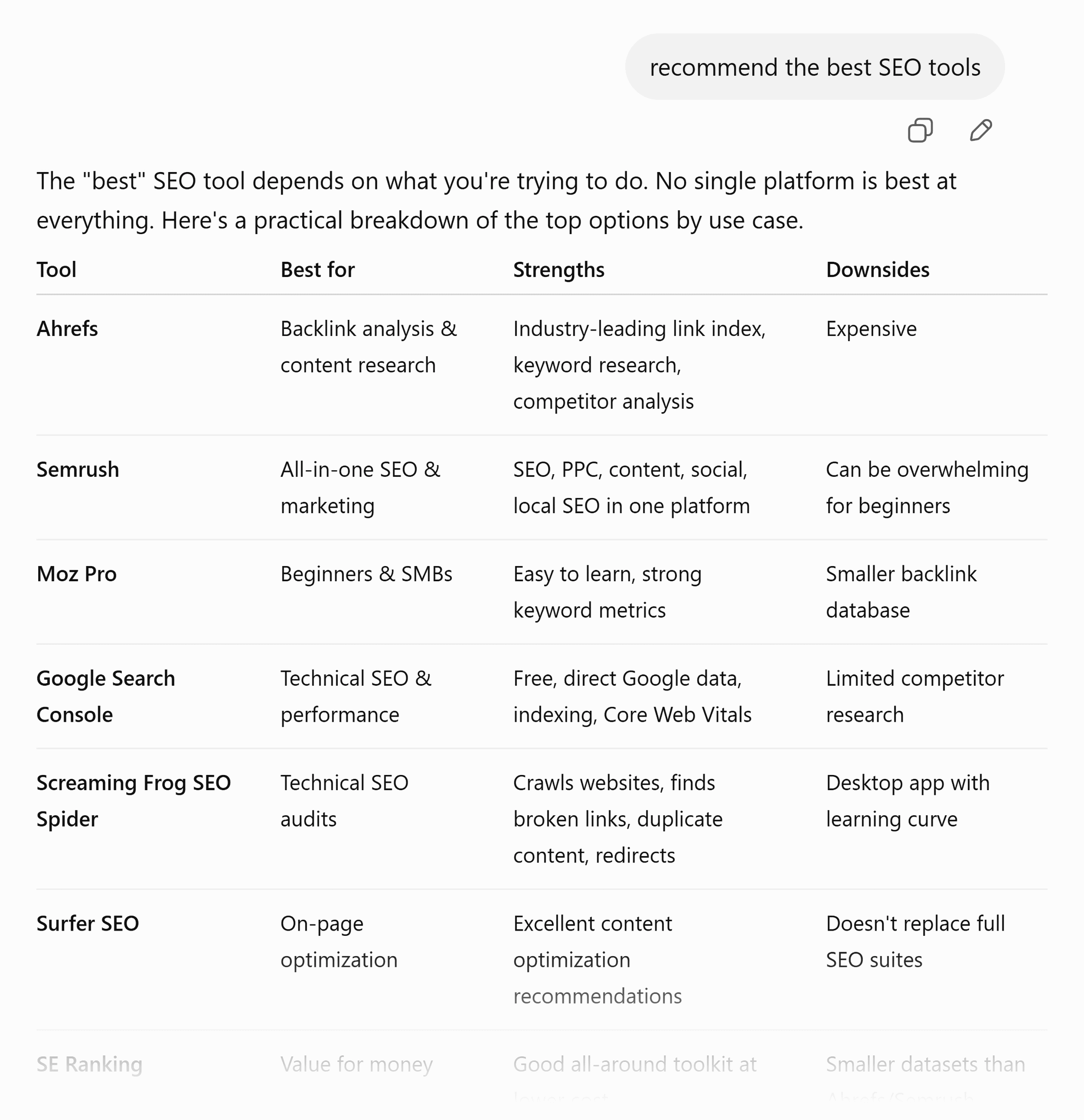
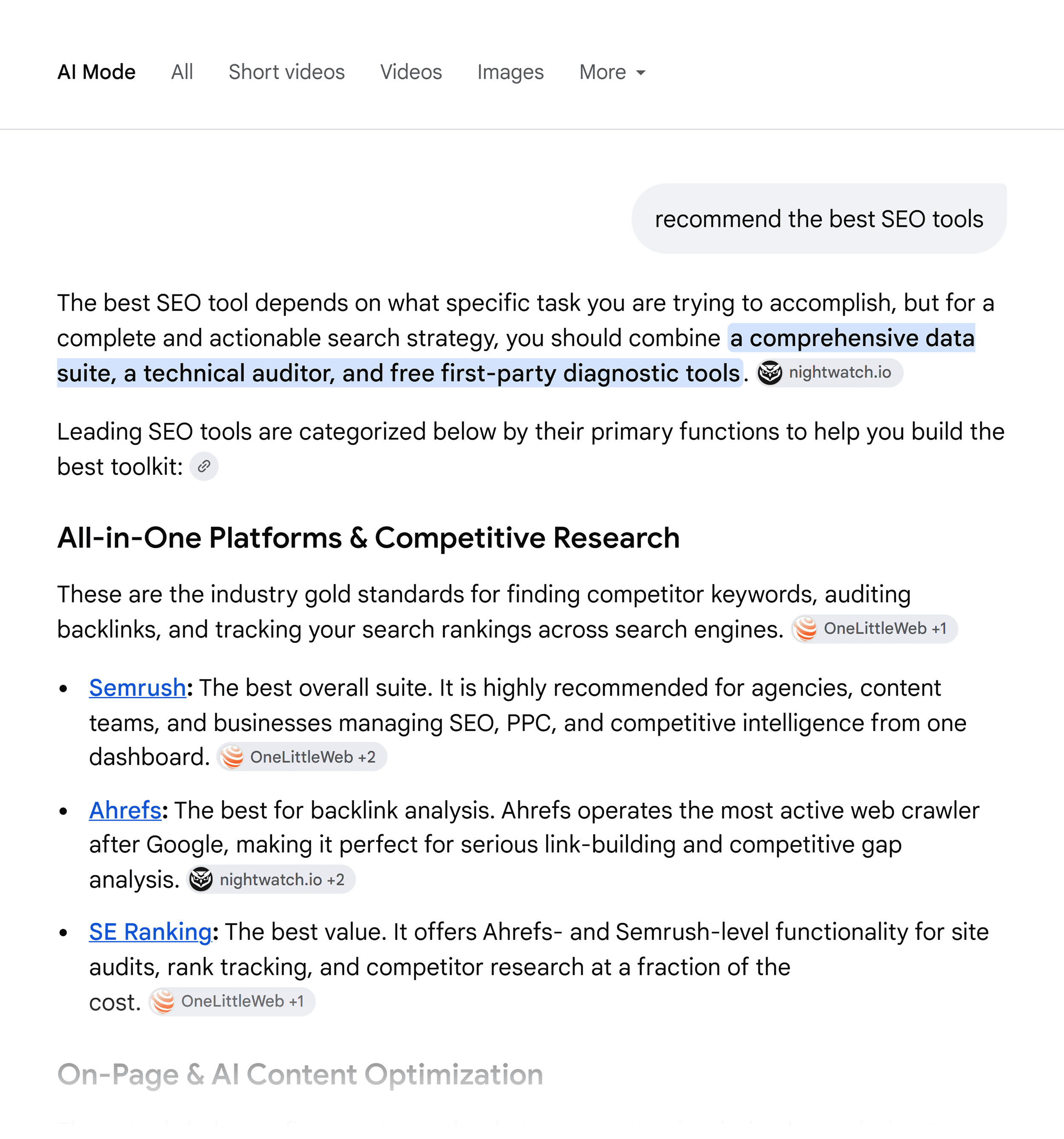
Success in AI citation outreach requires a nuanced understanding of how different LLMs curate and cite content. Each AI model possesses unique preferences and patterns in its citation behavior. For example, a comparative analysis of ChatGPT and Google’s AI Mode recommending "best SEO tools" often reveals similar answers but entirely distinct citation sources. Therefore, a tailored strategy for each target AI model is crucial.
-
Research User Prompts: Begin by identifying the specific prompts your target audience is likely to use when interacting with AI tools. Since direct AI prompt data is not yet widely available, marketers must rely on educated inferences. Useful sources for this include:
- User questions in sales calls: Document the exact language customers use to describe problems your brand solves.
- Google Search Console queries: Analyze your performance report for long-tail, conversational queries.
- "People Also Ask" (PAA) sections in SERPs: Utilize tools to extract common questions related to your niche.
- Keyword data in SEO tools: Filter for interrogative keywords (who, what, how, why, which).
- For more direct insight, tools like Semrush’s AI Visibility Toolkit can help uncover the specific prompts users are typing into LLMs that lead to your brand or competitors.
-
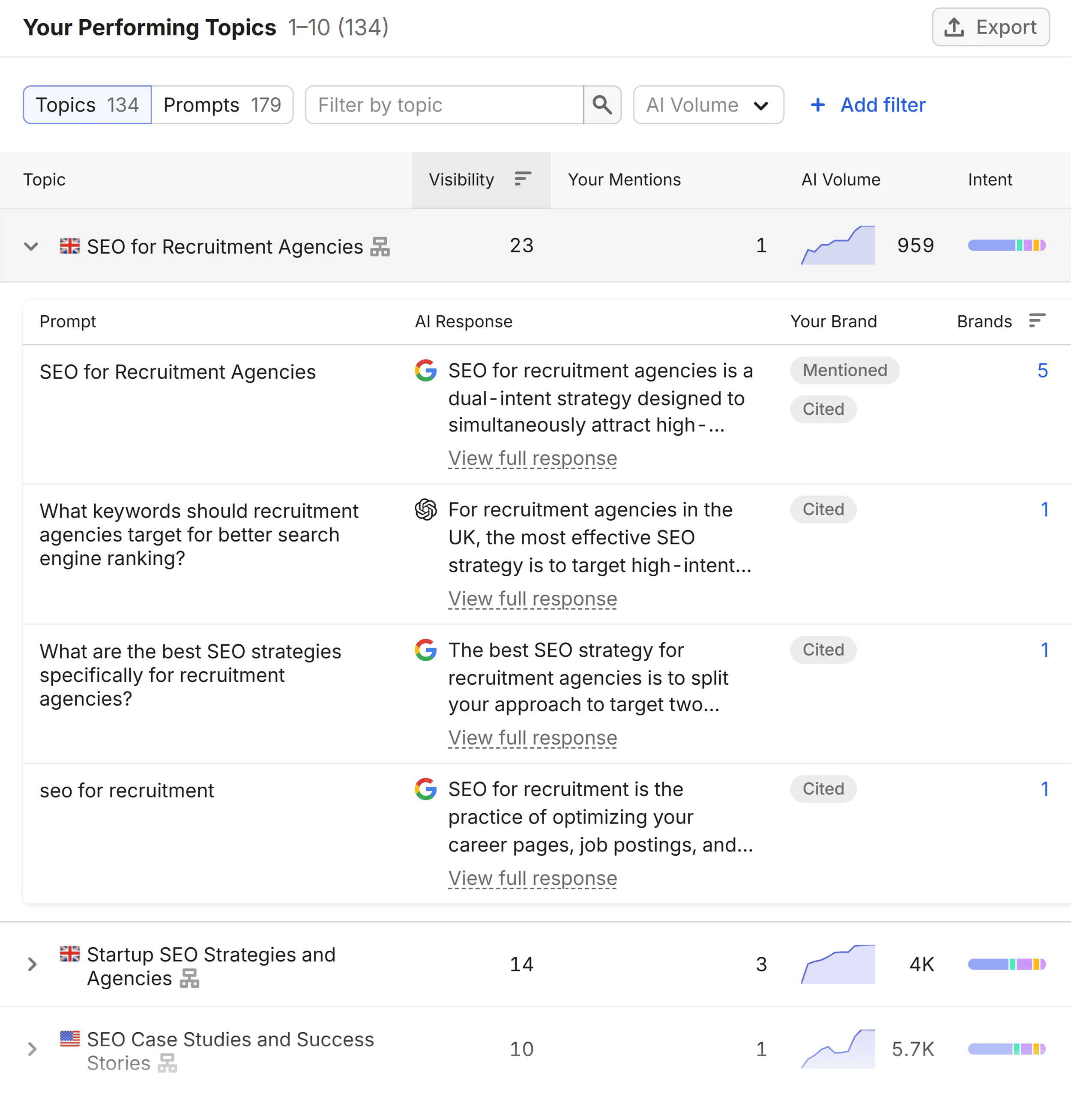
Monitor Cited Pages: Once you have a list of target prompts, systematically run each prompt through the AI models you wish to influence (e.g., ChatGPT, Google’s AI Mode, Perplexity) and meticulously record the pages cited in their responses. This manual process can be supplemented by specialized tools like Semrush’s AI Visibility Toolkit, which provides source data for prompts. Additionally, platforms like ListBrew can help identify "best X" listicles and comparison pages that are already frequently cited by AI for your target prompts.
-
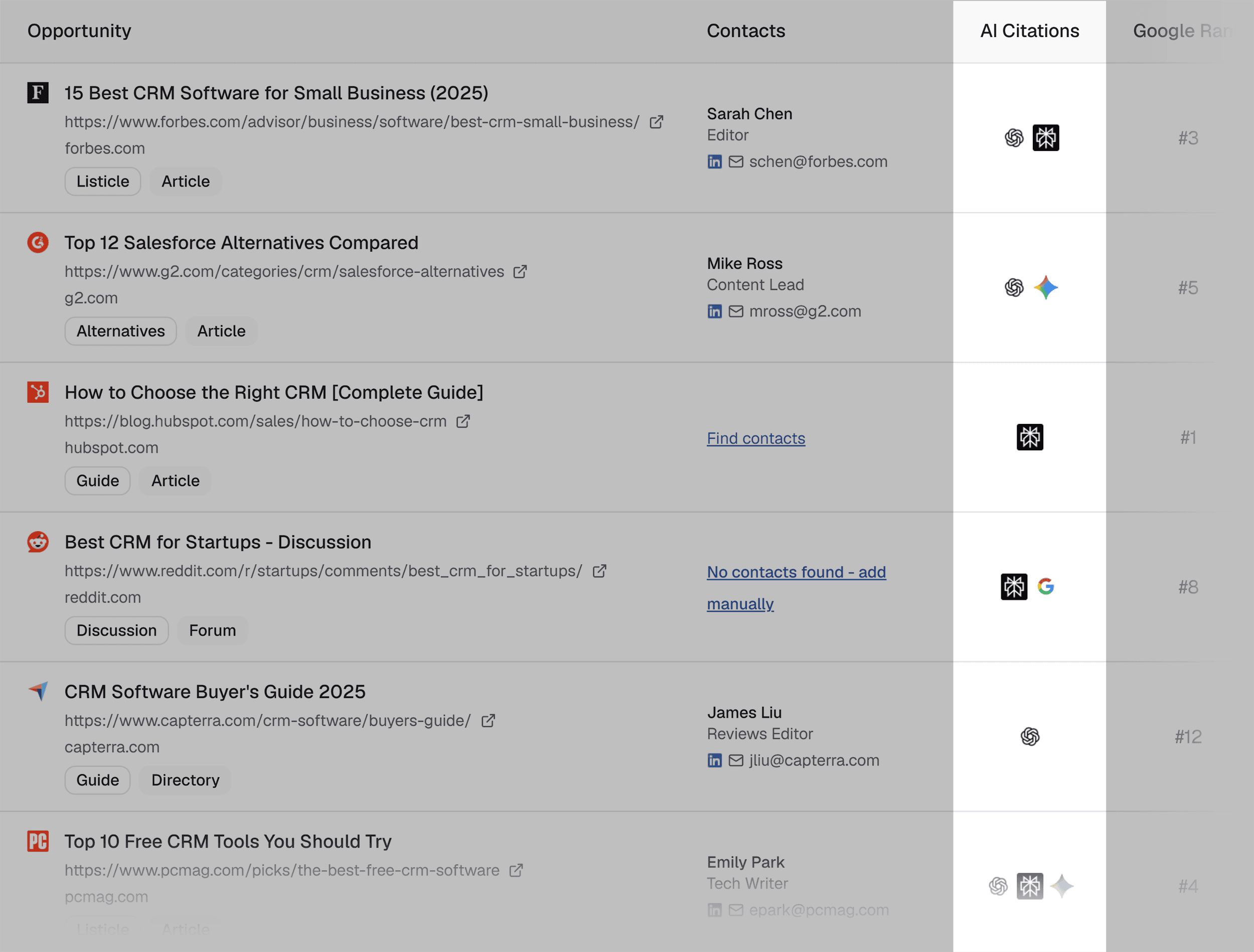
Find the Contacts: With a list of target publications and authors, use professional contact-finding tools (e.g., Hunter.io, Apollo.io) to identify the relevant journalists, editors, or content managers responsible for those cited pages.
-
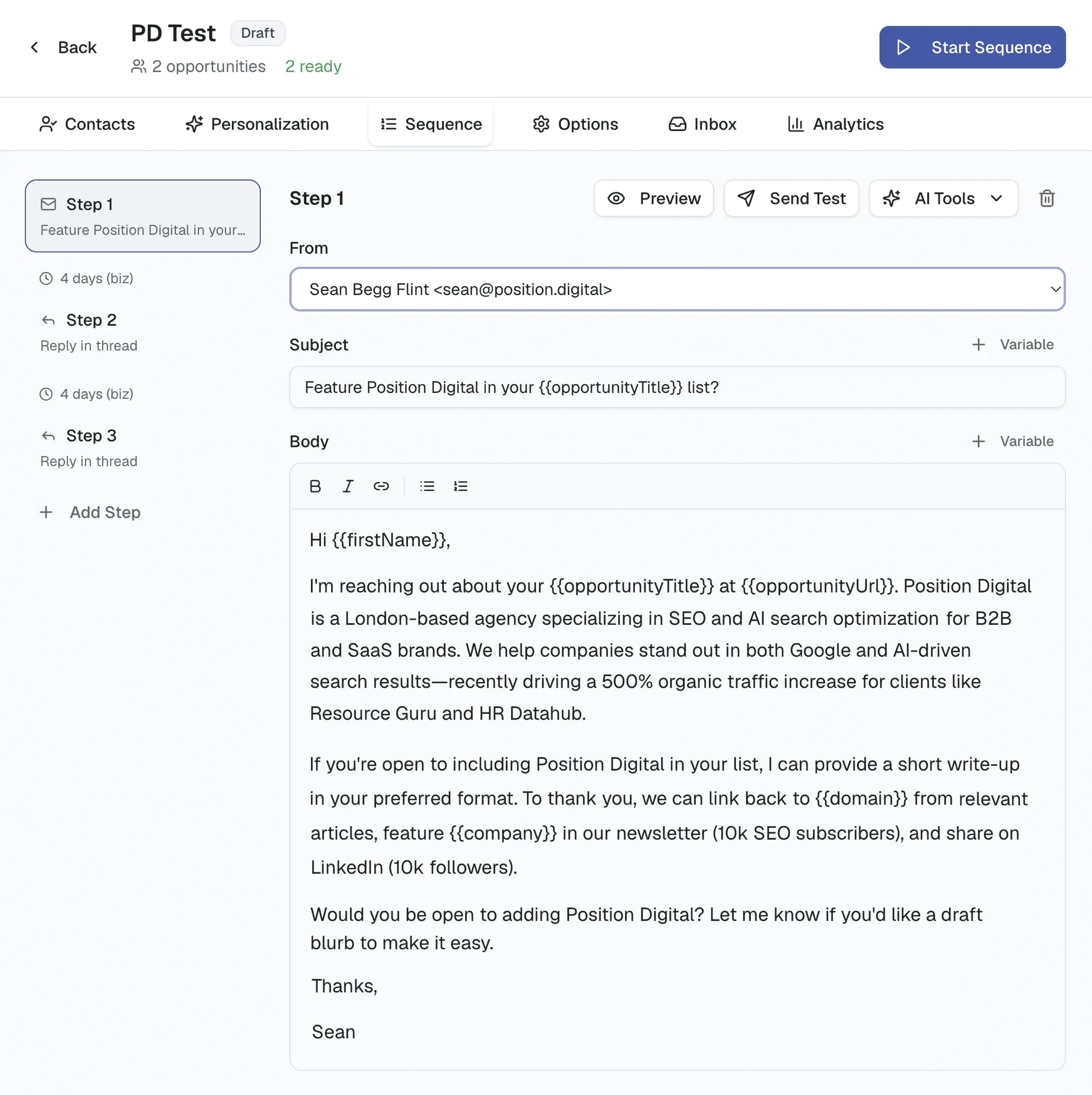
Send Personalized Pitches: Craft concise, highly personalized pitches for each prospect. Your pitch should clearly state why your brand is a valuable addition to their content. To increase success rates, offer a reciprocal benefit, such as:
- Sharing their content: Offer to promote their article across your social media channels or newsletter.
- Exclusive insights: Provide them with unique data or expert commentary they can’t find elsewhere.
- Content update suggestion: Point out any outdated information in their piece that your brand could replace or enhance.
Crucially, prepare a short, pre-written blurb about your brand that the author can easily copy and paste into their content. This reduces their workload and streamlines the inclusion process, significantly increasing your chances of success.
3. Reactive PR: Capitalizing on Real-Time Relevance
Reactive PR is a dynamic Digital PR strategy that emphasizes speed and timeliness. It involves positioning a brand as an authoritative voice by being among the first to respond to breaking news, viral trends, or emerging topics within its industry. Unlike long-term campaigns, reactive PR thrives on immediate relevance.
The unique advantage of reactive PR in boosting AI visibility stems from the inherent limitations of LLM training data. Most AI models have a knowledge "cutoff date," meaning they aren’t inherently aware of the very latest events. When a user asks about a current event or a newly developing story, the AI model is compelled to actively search the web for fresh, real-time sources to formulate its answer. This creates a critical window of opportunity. In the initial stages of a breaking story, there are typically only a limited number of credible sources covering it. If a brand can quickly publish useful commentary, expert analysis, or original reporting on such a topic, its content stands a significantly higher chance of being discovered, surfaced, and cited by AI systems seeking the most up-to-date information.
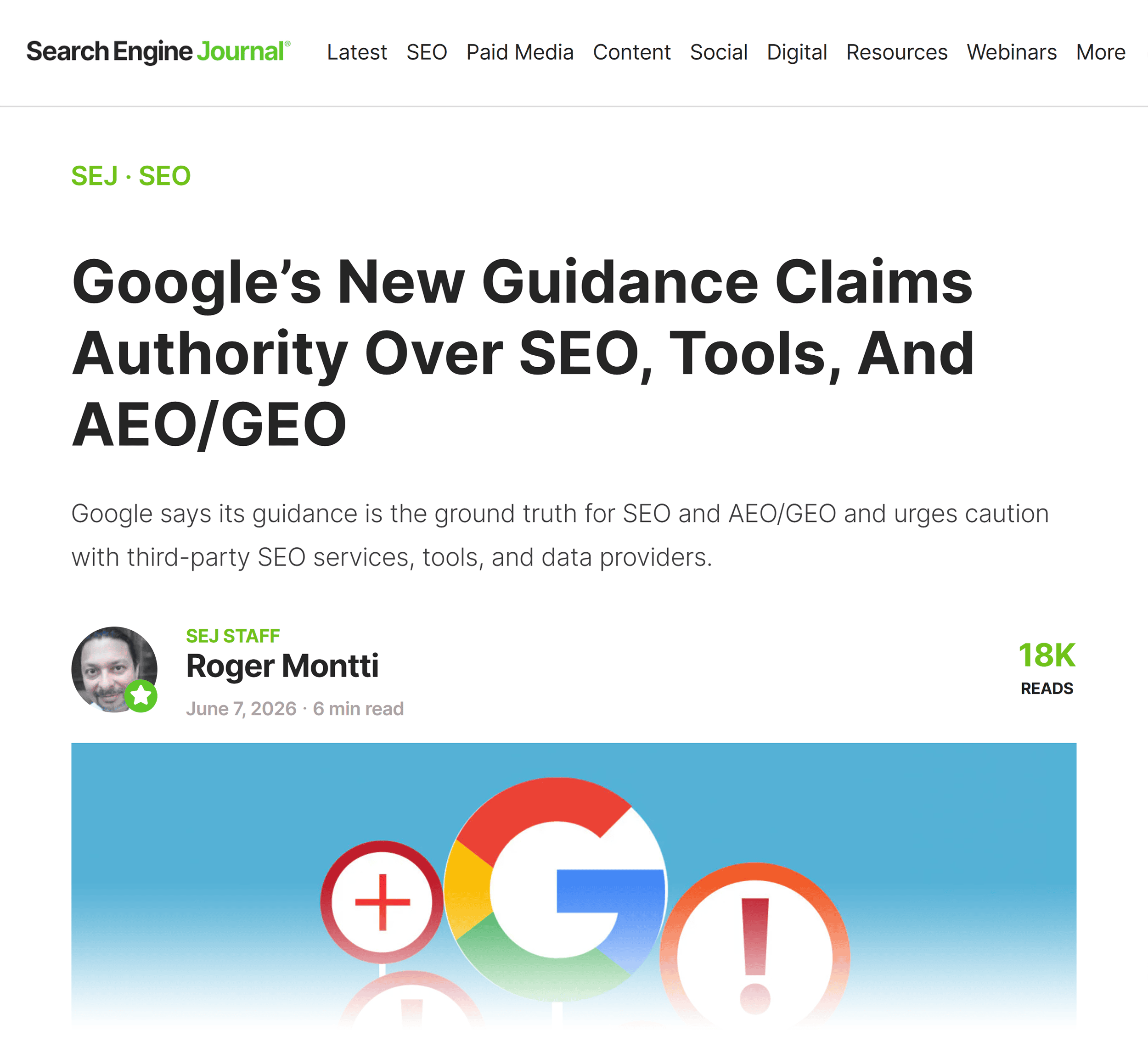
A compelling illustration of this is Search Engine Journal’s timely report on "Google’s New Guidance Claims Authority Over SEO, Tools, And AEO/GEO." By being one of the first authoritative media outlets to analyze and report on these crucial new SEO guidelines, the article garnered over 16,000 readers and an impressive 500 backlinks. More importantly for AI visibility, it has received multiple citations from various AI models when users query information about Google’s latest SEO updates. This demonstrates how being an early, reliable source for breaking news can directly translate into AI citations.
How to Execute Reactive PR:
The primary challenge of reactive PR is identifying emerging stories before they reach mainstream saturation. By the time a topic dominates headlines, the window for early citation opportunities has often closed. Success relies on identifying nascent conversations and positioning your brand’s response while the topic is still gaining momentum.
Key strategies for spotting and leveraging emerging trends include:
- Social Listening Tools: Monitor keywords, hashtags, and industry influencers on platforms like X (formerly Twitter), LinkedIn, and Reddit for early signs of trending discussions.
- Industry News Aggregators & Forums: Regularly check niche news sites, specialized industry forums, and expert communities where new ideas or developments often first surface.
- Google Trends & Alerts: Set up Google Alerts for specific keywords related to your industry to catch breaking news as it happens. Monitor Google Trends for sudden spikes in search interest.
- Expert Networks: Cultivate relationships with journalists, analysts, and thought leaders who are often privy to early information or developing stories.
- Proprietary Data Analysis: Be prepared to quickly analyze your own internal data in response to external events, offering unique insights that others cannot.
A secondary but equally important aspect is understanding how stories propagate. Many trends don’t instantly appear in major media but rather percolate through smaller blogs, niche publications, and social media first. Tracking this ripple effect allows brands to anticipate narratives and prepare a response while the topic is still evolving. Subscribing to specialized newsletters, such as "The SEOFOMO newsletter," can also provide early intelligence on industry shifts and breaking news.
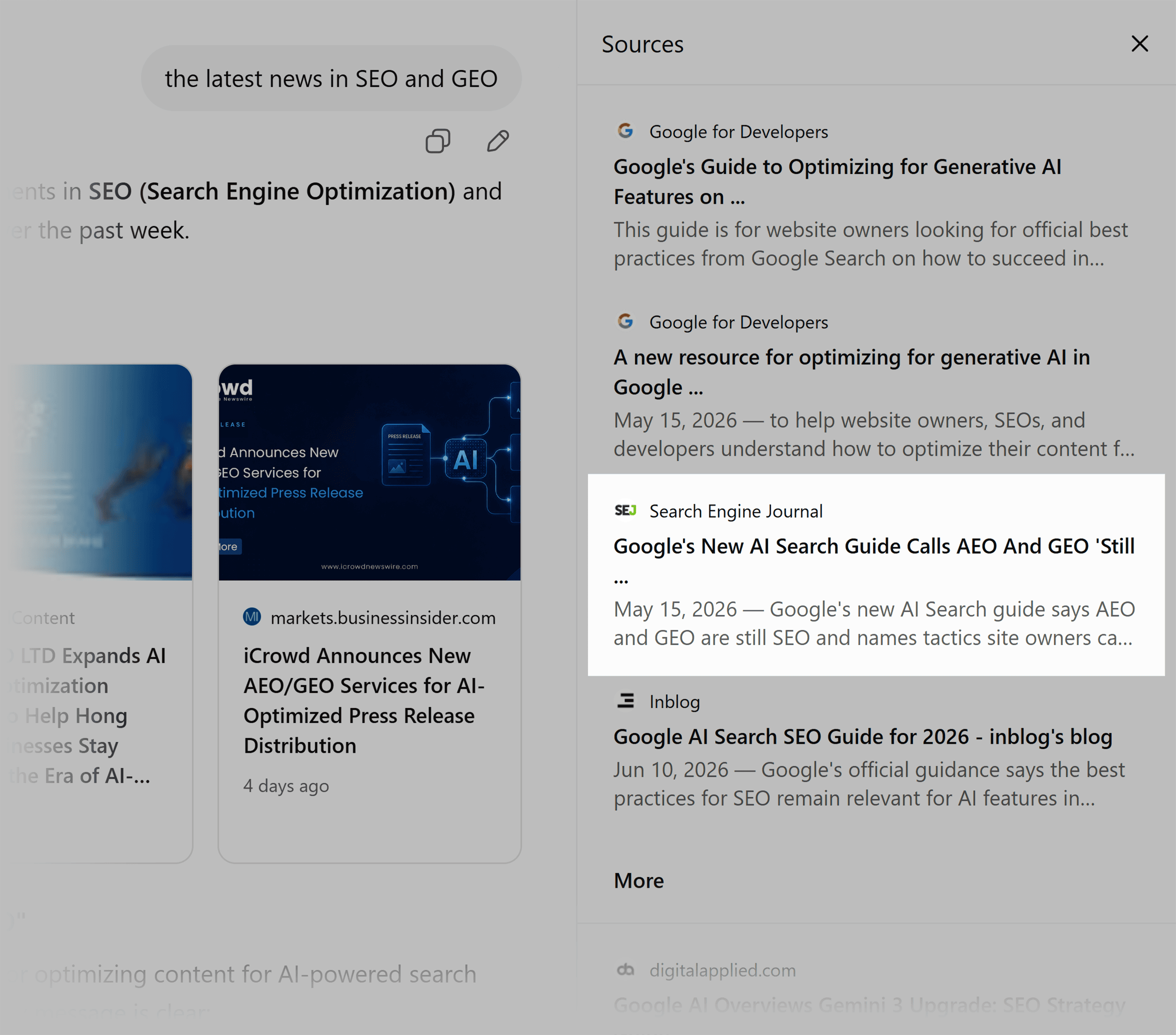
Once an opportunity is identified, speed is paramount. Publish a concise, insightful report, commentary piece, or expert opinion on your website and social media channels. Simultaneously, pitch the story to relevant journalists at major news outlets in your field, offering your brand’s unique perspective or data. Being quick, authoritative, and providing genuine value dramatically increases the chances of your content being picked up and, critically, cited by AI systems.
4. Ego Bait: Leveraging Expert Endorsement
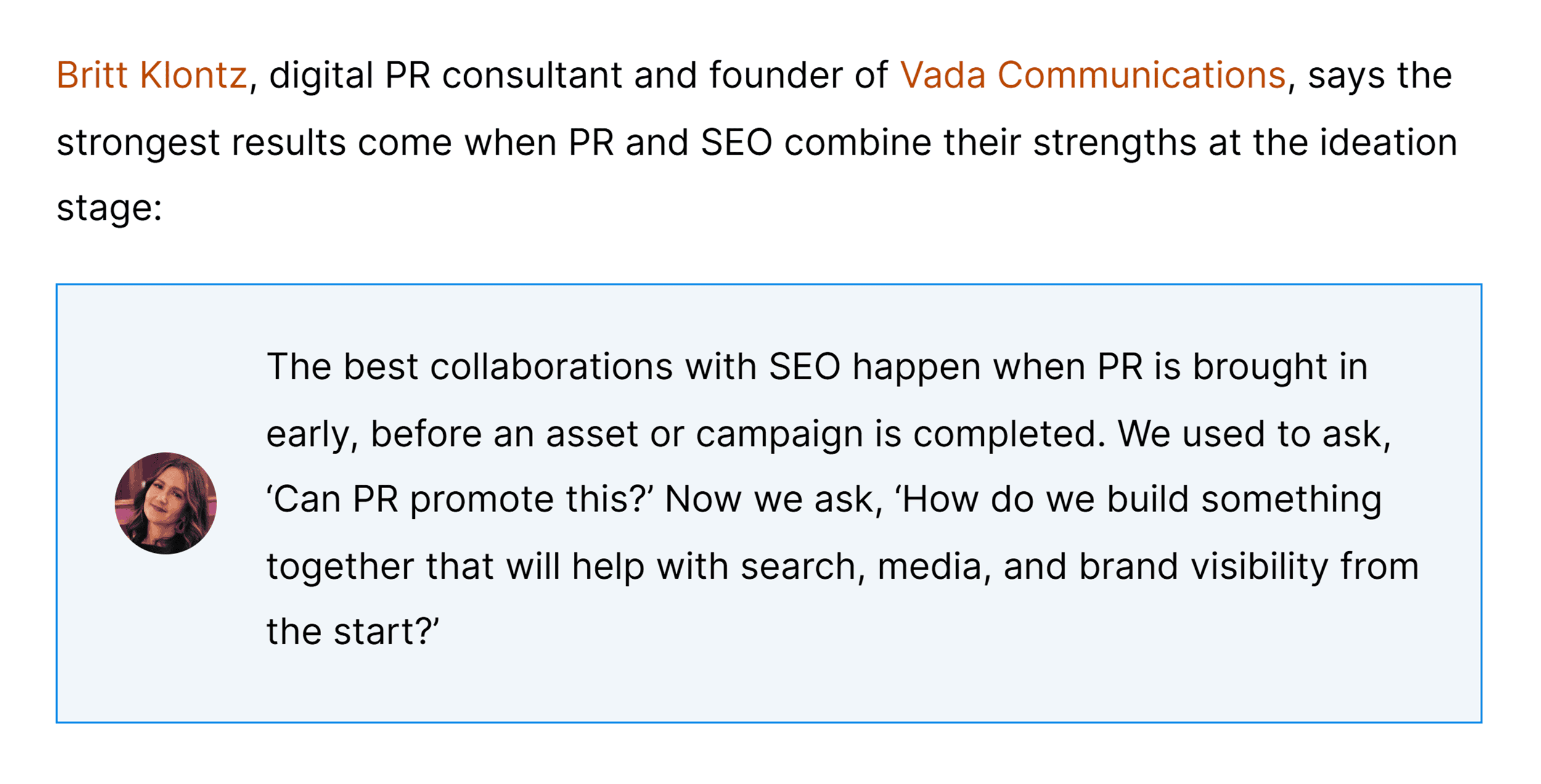
Ego bait is a Digital PR strategy centered on creating content that prominently features industry experts and influencers. The underlying principle is to appeal to their professional pride and self-interest, making them more inclined to share the content, mention your brand to their audience, or link back to your site. This strategy leverages the social capital of respected individuals to amplify your brand’s message.
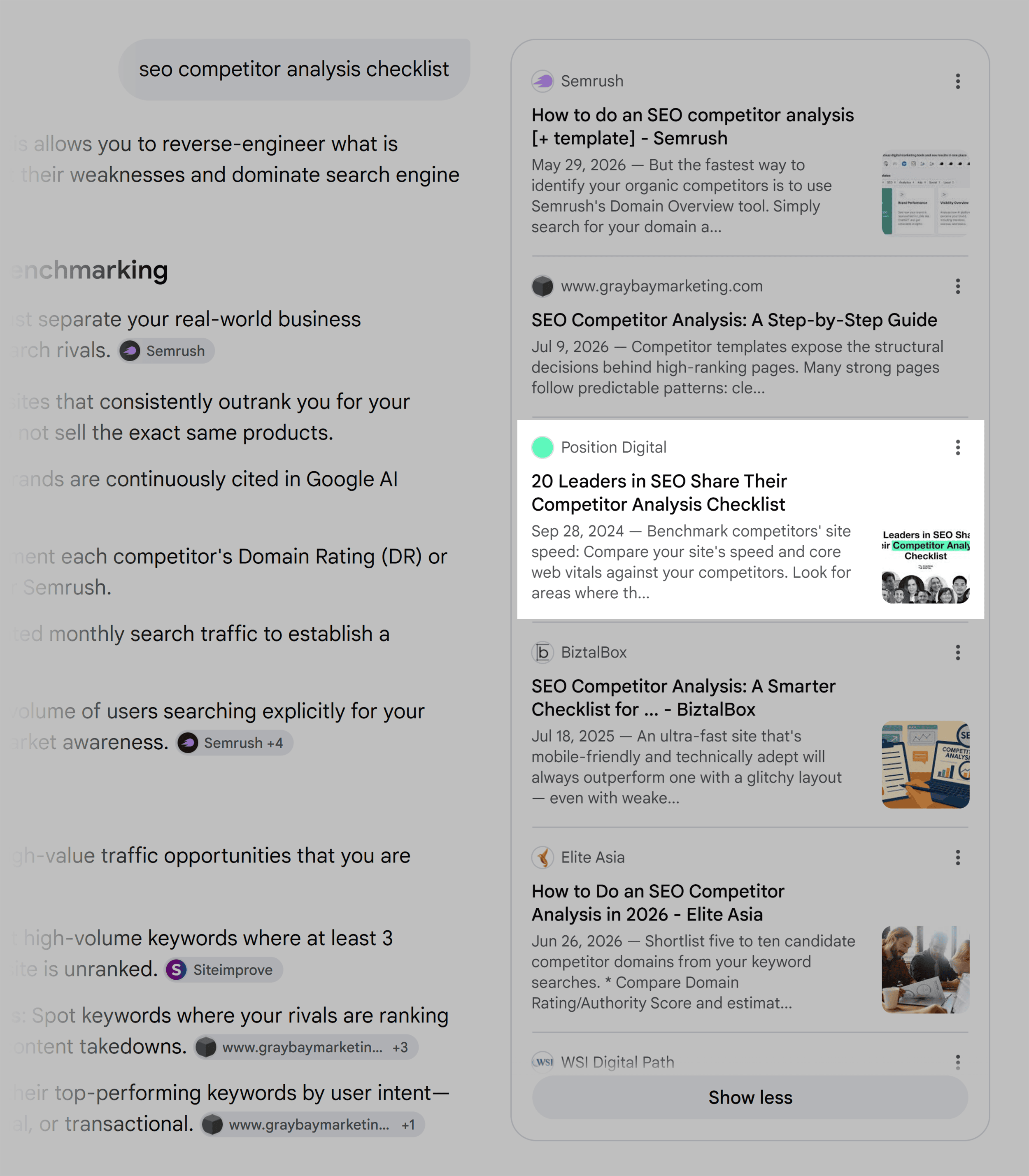
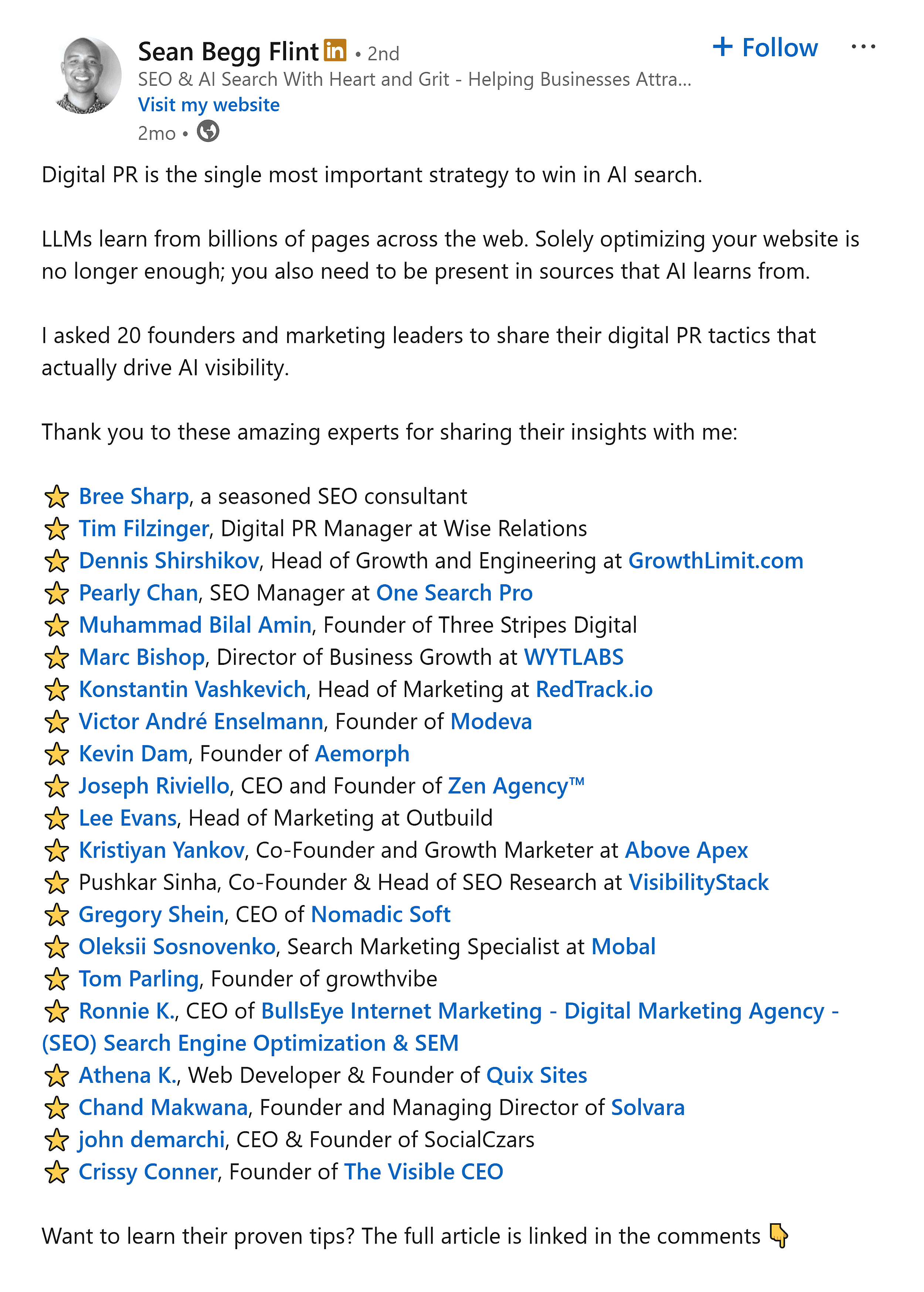
Featuring recognized experts boosts AI visibility in two significant ways. Firstly, it substantially increases the credibility and authority of your content. AI models are programmed to favor authoritative sources. An AI SEO study found that web pages incorporating expert quotes received an average of 4.1 citations in ChatGPT, compared to just 2.4 citations for pages without such contributions. This highlights expert commentary as a powerful trust signal that AI systems readily pick up on. For example, an article on SEO competitor analysis that featured insights from 20 industry experts was subsequently cited by both Google’s AI Overviews and AI Mode, demonstrating the direct impact of expert endorsement on AI-driven recommendations.
Secondly, ego bait naturally creates a robust distribution channel. When experts are featured in your content, they are often motivated to share it with their extensive networks—via social media, their websites, newsletters, or even other publications. As these mentions and backlinks accumulate across the web, your brand’s overall visibility and perceived authority grow. This enhanced brand visibility, in turn, directly correlates with stronger LLM visibility, as AI models detect this widespread recognition as a signal of importance and trustworthiness.
How to Execute Ego Bait:
There are several effective types of ego-bait content that can be developed:
-
Expert Roundups: Utilize journalist outreach platforms like MentionMatch, Featured.com, and Qwoted to solicit insights and quotes from multiple industry experts on a specific topic. Curate the most valuable contributions and feature them prominently in a blog post or article on your site. Once published, tag every contributor in your promotional posts on LinkedIn and other social media platforms. Most experts will then reshare, comment on, or otherwise engage with the content, significantly extending its organic reach beyond your own audience.

-
Case Studies and Success Stories: Develop in-depth case studies that highlight the real-world results achieved by your customers, partners, or collaborators. A well-crafted case study not only flatters the featured subject but also provides them with a valuable piece of content to share, while simultaneously adding a layer of objective credibility to your brand’s capabilities that generic marketing content cannot achieve.
-
Top Experts or Influencers Lists: Compile curated lists of highly respected individuals, companies, or influential voices within your industry. Examples include:
- "Top 10 SEO Experts to Follow in [Year]"
- "The Most Innovative Marketing Agencies of [Year]"
- "50 Women Disrupting the Tech Industry"
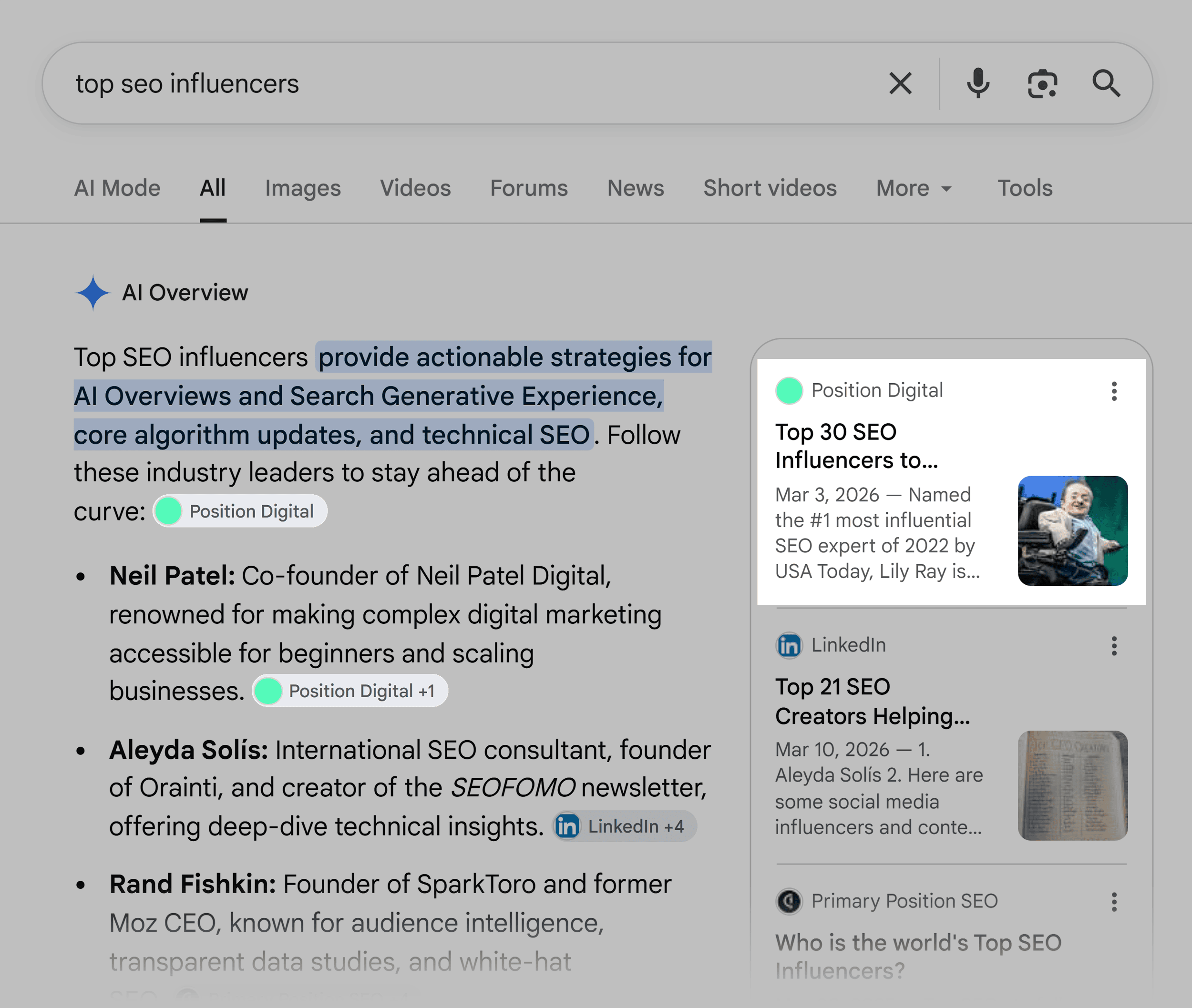
Being included in such a credible and relevant curated list often serves as a strong incentive for individuals to share it widely. This type of structured, list-based content is also highly conducive to being cited by AI systems, as it provides clear, categorized information that LLMs can easily extract and present in their answers. Google’s AI Overviews, for instance, frequently cites "Top SEO influencers" lists when asked about industry leaders.
5. Thought Leadership: Shaping Narratives and Brand Perception
Thought leadership content is designed with a distinct purpose: to establish an individual or a brand as a recognizable and authoritative voice within its industry, both among human audiences and, increasingly, for LLMs. Unlike SEO content, which is primarily optimized for keyword rankings, thought leadership aims to challenge assumptions, introduce novel perspectives, and spark meaningful discussion. When a brand consistently publishes insightful, original, and forward-thinking content, it builds a reputation for expertise and innovation, making it significantly easier to market its business and earn AI citations.
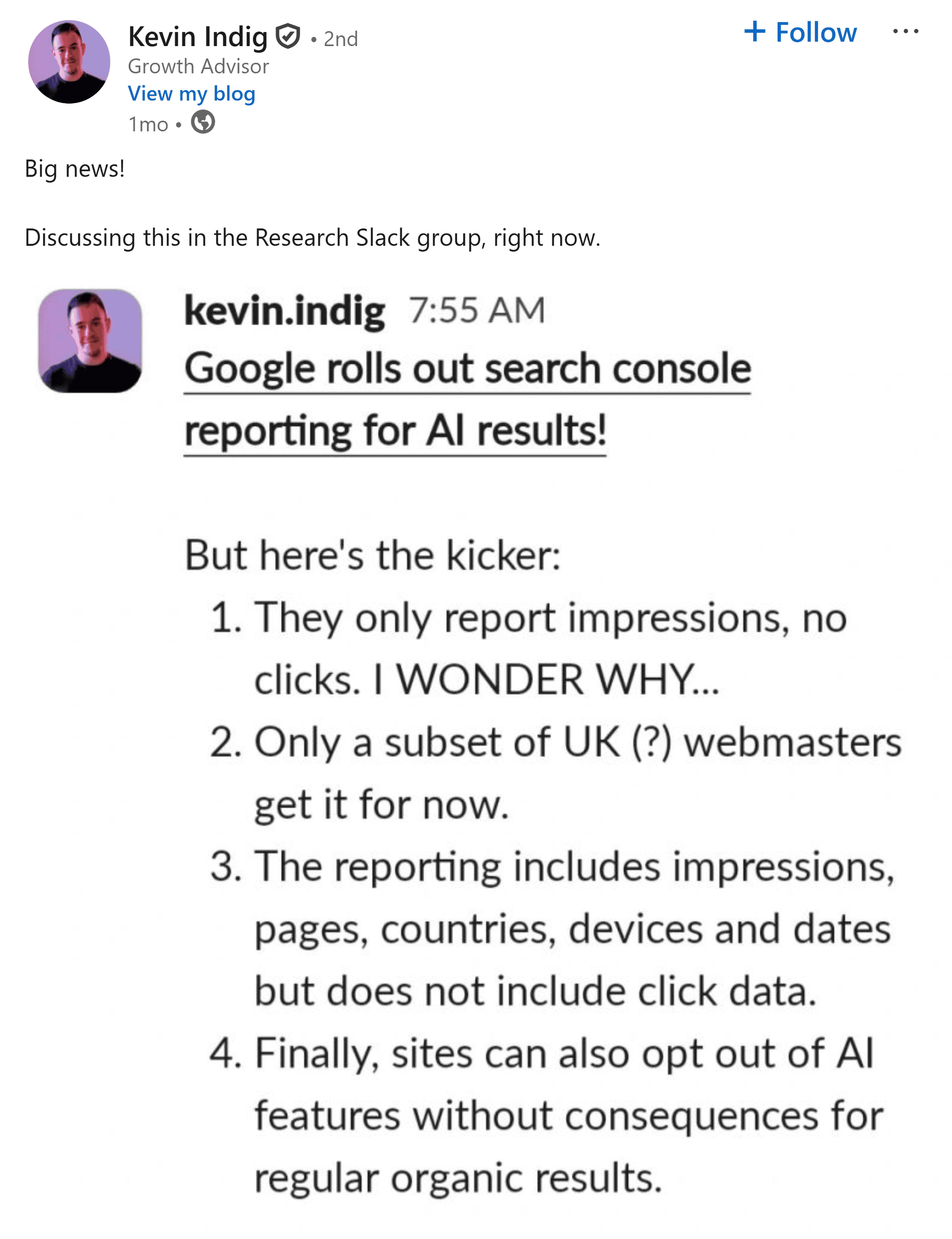
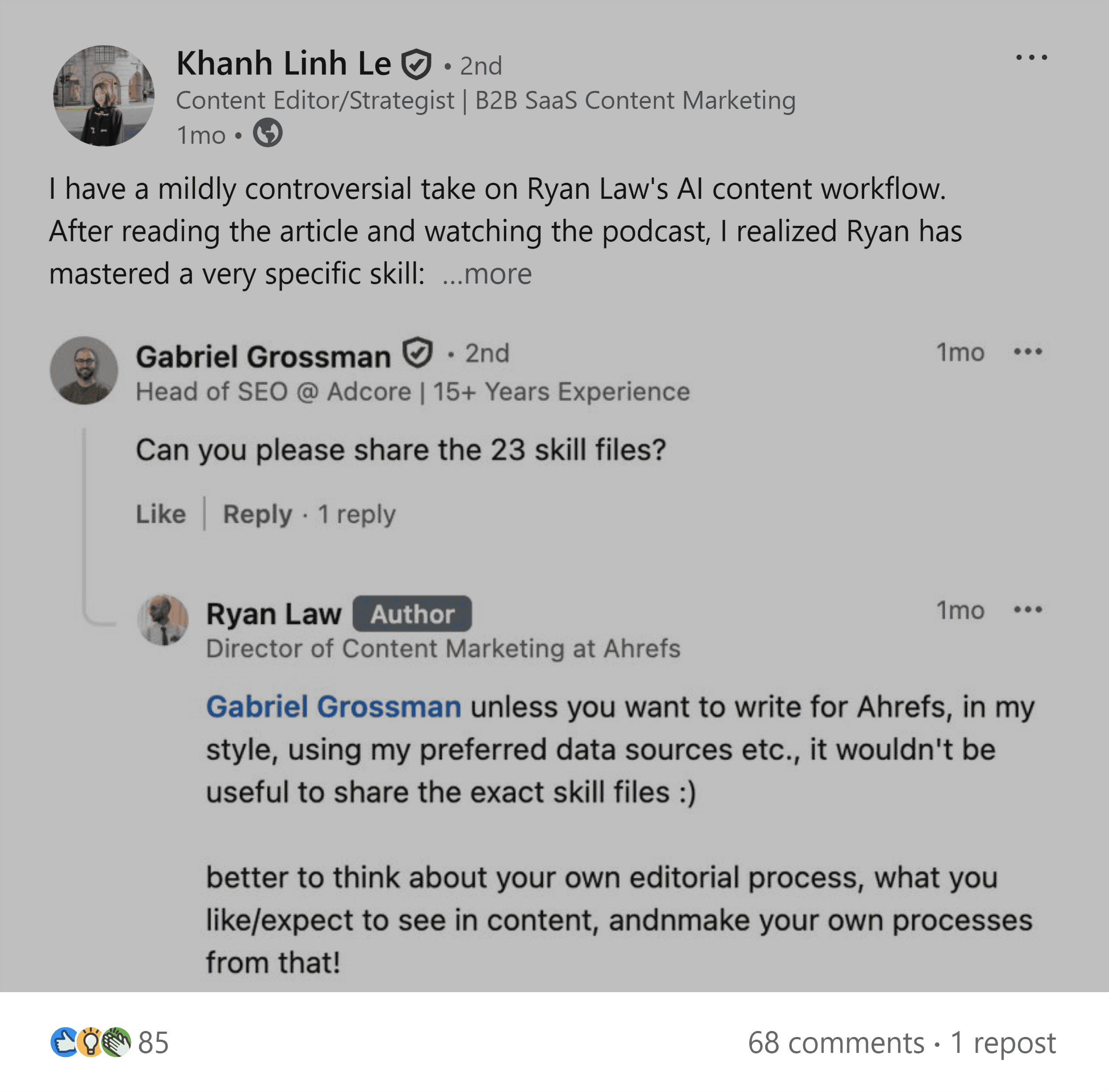
The core strength of thought leadership in boosting AI visibility lies in its ability to drive engagement. Much of the content published online today goes unnoticed because it fails to offer a compelling reason for engagement. Thought-provoking content, however, by its very nature, encourages interaction, debate, and sharing. Consider a "controversial take" post on LinkedIn by an industry figure like Khanh Linh Le. Such a post, designed to challenge conventional wisdom, can generate an unusually high volume of comments relative to its likes because it incites discussion.
This engagement is a critical signal. High engagement leads to more shares across various platforms—blogs, forums, social media, and traditional publications. When a significant volume of diverse voices and platforms discuss or reference a brand’s unique insights, AI systems begin to recognize that brand as a key contributor and authority on that subject. This widespread discussion and validation ultimately leads to increased AI attention and citation.
How to Execute Thought Leadership:
-
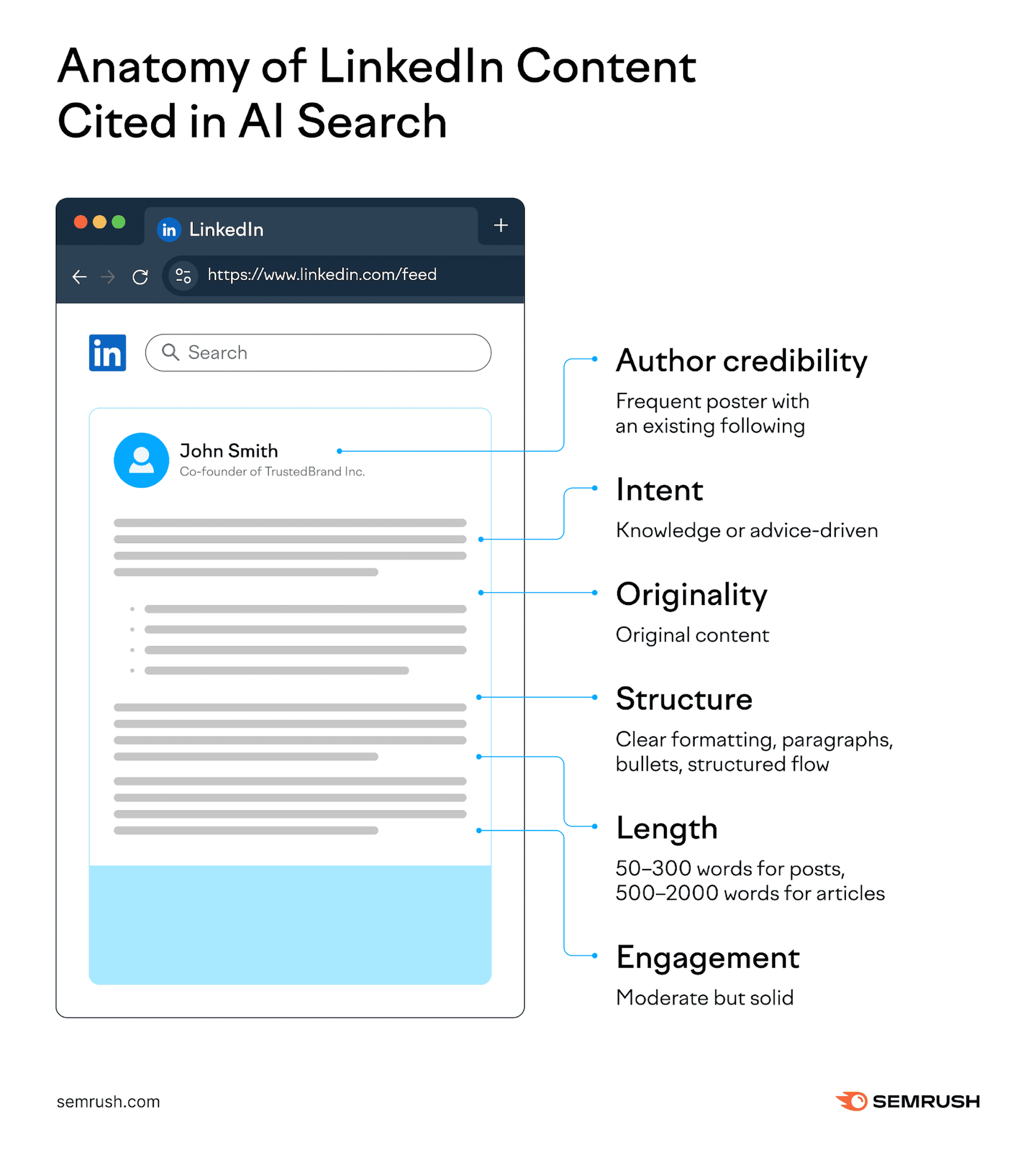
Build a LinkedIn Presence: LinkedIn has become an indispensable platform for thought leadership, particularly given that Semrush’s study identified it as the second-most-cited domain in ChatGPT, AI Mode, and Perplexity. To leverage LinkedIn effectively:
- Consistent Posting: Share original insights, analyses, and perspectives regularly.
- Engage with Comments: Actively respond to comments to foster discussion and build a community around your ideas.
- Utilize Diverse Formats: Experiment with short posts, longer articles, native videos, and polls to capture different audience segments.
- Focus on Value: Prioritize sharing genuinely valuable insights over overt self-promotion.
-
Write Guest Posts for Major Publications: Guest blogging remains a powerful strategy for distributing thought leadership and showcasing expertise on high-authority platforms. The "Guest Post (GP) Engine" framework, pioneered by Position Digital, illustrates this effectively. The strategy involves:
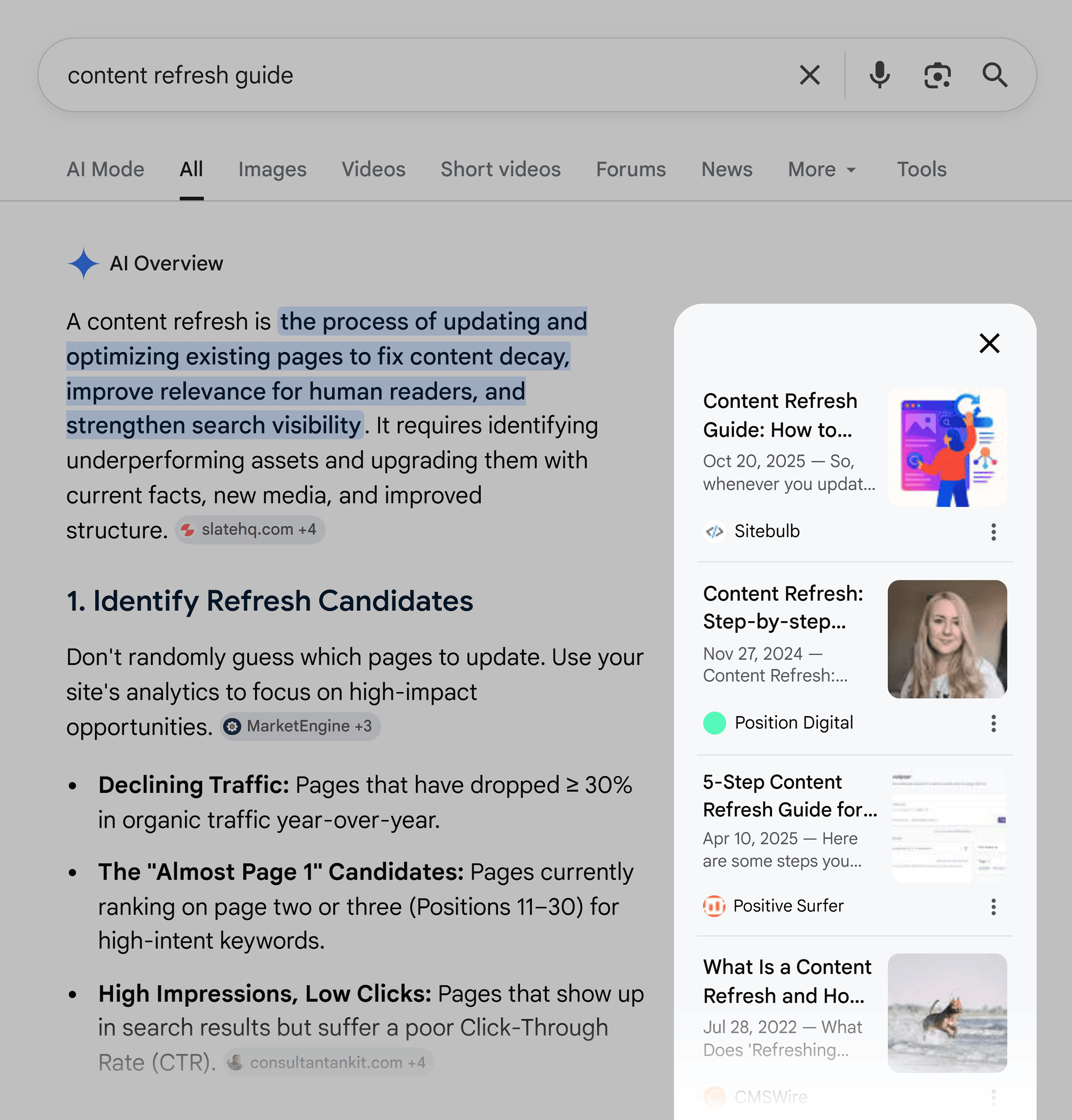
- Publishing Core Content: Create an in-depth, authoritative blog post on your own website (e.g., an article on "Content Refreshes").
- Syndicating Variations: Publish variations or complementary pieces on the same topic on other reputable industry publications with high domain authority (e.g., guest posts on Sitebulb and Surfer SEO discussing "Content Refreshes").
When multiple authoritative sources cover the same topic and consistently point back to your brand as the originating voice or a key expert, AI models are trained to recognize this pattern and establish your brand as the go-to authority on that subject. This multi-platform approach significantly increases the chances of your core ideas and brand being cited by AI Overviews, as seen with the "Content Refreshes" example.
-
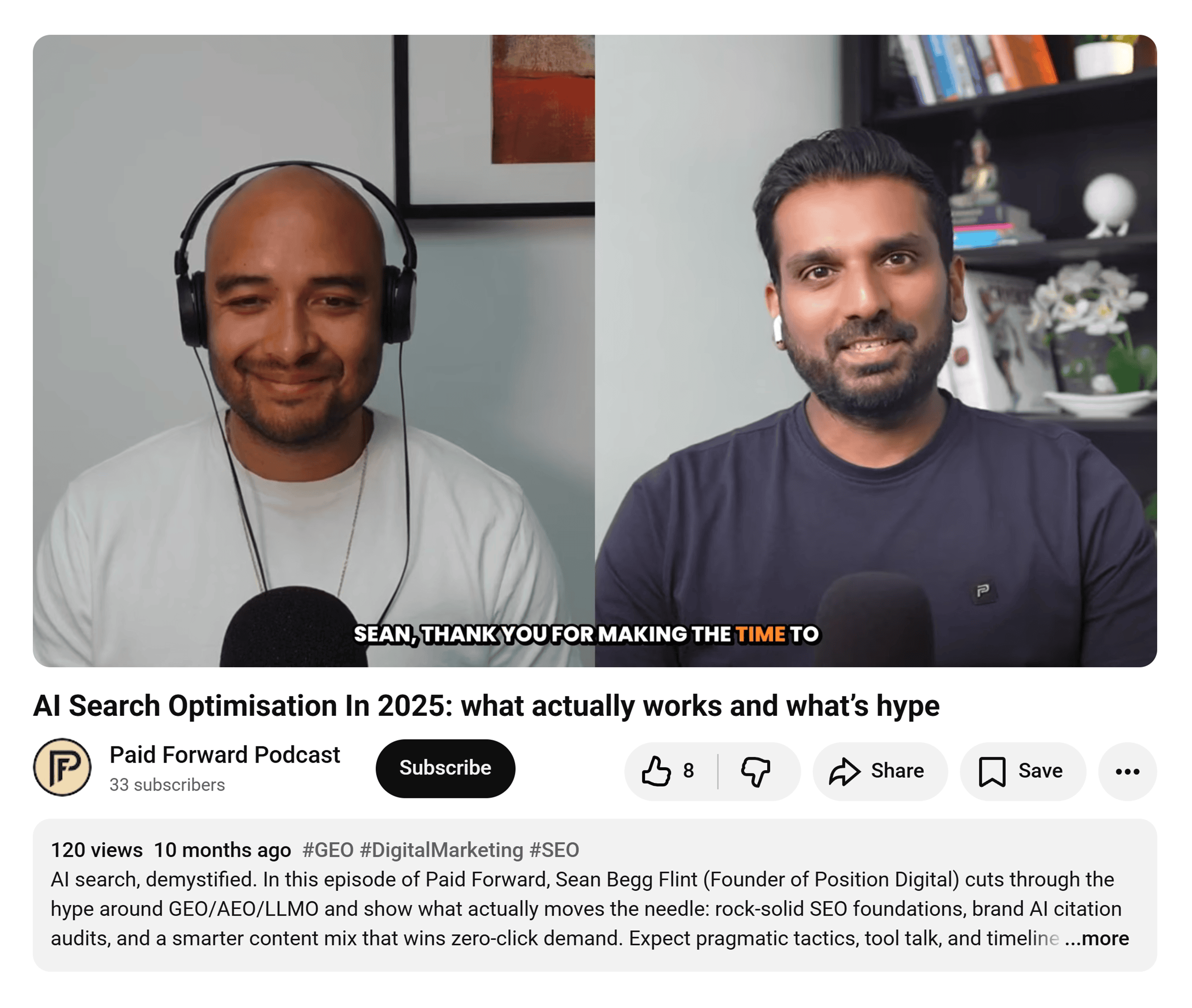
Appear as Podcast Guests: Podcasts are an often-underestimated channel for thought leadership. A single appearance can yield multiple benefits:
- Audio Content: Provides AI with diverse content formats to process.
- Brand Mentions: Direct verbal mentions of your brand and expertise.
- Backlinks: Show notes and episode descriptions often include links to your website.
- Audience Exposure: Reaches new, engaged listeners.
- Reputation Building: Positions you as an expert in your field.
If you’re just starting, prioritize building relationships with newer or smaller podcasts in your niche. These shows are generally easier to secure appearances on, their hosts are often more engaged, and the content still gets indexed by search engines and cited by AI. As your reputation and portfolio of appearances grow, opportunities on larger, more established shows will naturally follow.
6. Community Building: The Power of Peer Validation
Community building in the context of Digital PR for AI visibility involves strategically establishing and nurturing a brand’s presence on third-party forums, review sites, and customer rating platforms. These platforms are crucial because AI models increasingly treat them as independent, trusted sources of information. This strategy ensures that a brand is validated not solely by its own marketing messages, but by the authentic voices and collective opinions of its users and the broader community.
The rationale behind AI’s trust in community-driven sources is robust and backed by data. AI models are designed to identify and prioritize genuine, unbiased sentiment and information. Self-promotional content from a brand’s owned channels is inherently viewed with a degree of skepticism by AI, much like by human users. In contrast, community platforms offer raw, unfiltered perspectives. A groundbreaking AI visibility study by Semrush revealed that LLMs cite Reddit threads discussing Microsoft products far more frequently than Microsoft’s official blog. This astonishing finding underscores AI’s preference for genuine user discourse over corporate communications.
This phenomenon extends beyond forums. Review platforms such as Trustpilot and G2, where users share authentic ratings and detailed feedback, carry immense weight. Seer Interactive’s study, analyzing 800,000 AI responses, found a dramatic difference in AI citation rates for brands based on their presence on Trustpilot. Brands with no Trustpilot profile exhibited a median AI citation rate of just 1%. However, brands with even a minimal profile, featuring as few as 1 to 13 reviews, saw their citation rate jump to an impressive 53.5%. This clearly demonstrates that AI interprets social proof and peer validation as strong indicators of a brand’s reliability and reputation. The implication is undeniable: when confronted with a choice between a brand’s self-description and the collective voice of its users, AI will often favor the latter.
How to Execute Community Building:
-
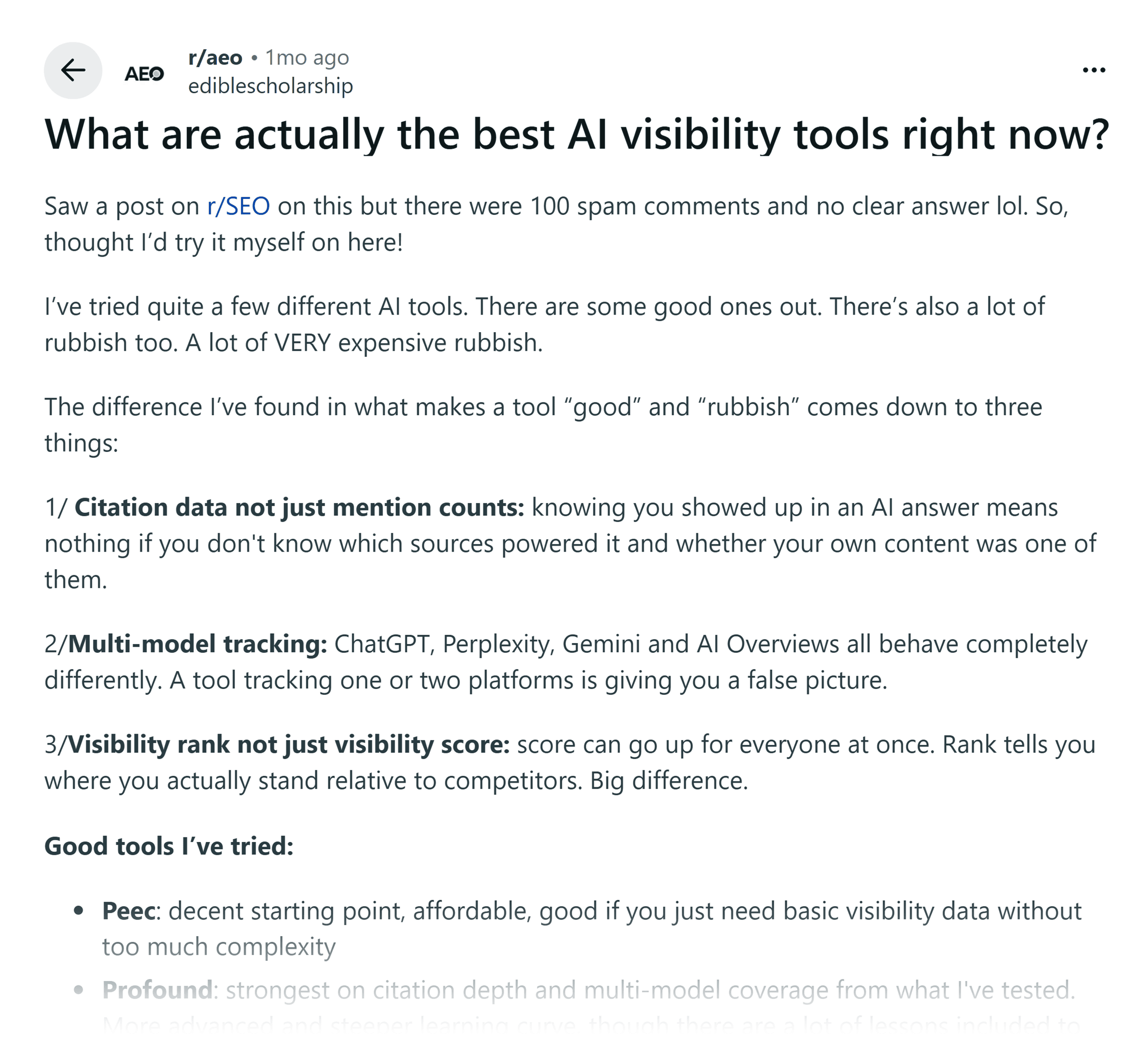
Contribute Insights on Q&A Platforms like Reddit and Quora: These communities are heavily scraped by AI models and are frequently cited in AI responses. To leverage them effectively:
- Authentic Participation: Engage as a genuine contributor, not solely as a marketer. Provide helpful, insightful answers to questions relevant to your industry.
- Transparency: Be open about your affiliation, but ensure your primary goal is to add value to the discussion. Overt self-promotion is often met with negative reactions (downvotes, bans).
- Consistent Engagement: Aim to contribute meaningfully to 3-5 relevant threads per week. Only mention your brand or products when genuinely relevant and when it adds direct value to the conversation.
- Host AMAs (Ask Me Anything): Consider hosting an AMA session in relevant subreddits or Quora spaces to share expertise, build brand awareness, and directly engage with potential customers or industry peers.
-
Create Optimized Profiles in Review Sites: Establishing and actively managing profiles on key review platforms is critical. Depending on your industry and target audience, consider platforms such as:
- Trustpilot: Widely recognized for customer reviews across various sectors.
- G2, Capterra, Software Advice: Essential for B2B software and service companies.
- Yelp, Google My Business: Crucial for local businesses and service providers.
Once profiles are set up, actively encourage existing satisfied customers to leave positive reviews and ratings. Implement a process to solicit feedback, as a growing volume of positive, authentic reviews significantly enhances your brand’s standing with AI.
-
Write Content on Medium: Medium is another platform that Semrush’s study identified as frequently cited by AI. Use Medium as a strategic extension of your content strategy:
- Republish Condensed Content: Share condensed versions or unique angles of your best blog posts.
- Original Perspectives: Publish original thought leadership pieces that complement your main blog content but are tailored to Medium’s audience.
Publishing your ideas on Medium provides them with an additional high-authority platform where they can be discovered and cited by AI, expanding your reach and solidifying your authority.
The Road Ahead: Adapting to the AI-First Search Landscape
The emergence of AI-driven search represents a watershed moment in digital marketing. The data unequivocally points to Digital PR as a foundational, rather than supplementary, strategy for brands seeking to thrive in this new environment. The era of simply optimizing owned web properties for keywords is evolving into a more complex, trust-centric landscape where external validation, authentic community engagement, and expert endorsement are the primary drivers of AI visibility.
For businesses and marketers, this necessitates a strategic pivot:
- Reallocate Resources: Shift budgets and team focus towards proactive Digital PR initiatives that generate earned media, high-quality backlinks, and widespread brand mentions.
- Prioritize Authenticity: Invest in genuine relationships with journalists, influencers, and community members. The quality and credibility of third-party sources are paramount.
- Embrace Offsite Authority: Understand that your brand’s reputation and visibility in AI search are largely built outside your direct control, through the collective voice