Elvis Pompadour Fetish Emerges as a Viral Internet Phenomenon Driven by Generative AI

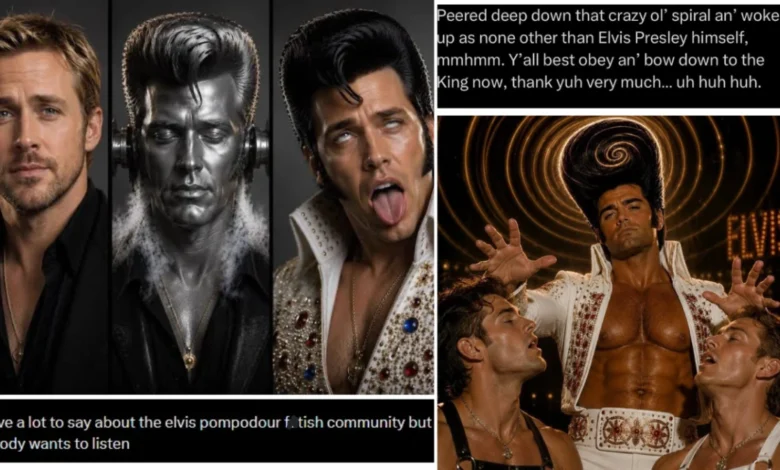
The digital landscape is no stranger to eccentric subcultures and niche internet paraphilias, but a peculiar trend has recently captured widespread attention across mainstream social media platforms. Known alternatively as the Elvis Pompadour Fetish, Elvis Pompadour Transformation Fetish, greaserification, or Elvis Hairspray Bimbofication, this unique online phenomenon centers on surreal depictions of men undergoing dramatic, almost hypnotic transformations into exaggerated, 1950s-era greasers inspired by the iconic rock-and-roll legend Elvis Presley. While traces of this subculture have existed in secluded corners of the internet for years, a sudden surge of visibility in late November 2026 propelled the esoteric fetish out of obscurity and onto the main timelines of platforms like X, formerly known as Twitter.
The intersection of niche adult subcultures, advanced generative artificial intelligence, and the unpredictable nature of algorithmic content distribution has created a digital spectacle. As bewildered users attempt to process the imagery populating their feeds, the phenomenon offers a fascinating case study in how modern internet culture normalizes, amplifies, and reacts to the bizarre.
Defining the Phenomenon: Mechanics and Themes
At its core, the Elvis Pompadour Fetish operates as a specialized sub-genre of transformation paraphilias and hypnosis-themed digital art. The thematic structure heavily borrows from "bimbofication"—a trope more commonly associated with the exaggerated transformation of individuals into stereotypical airheaded personas—applied here through a distinctly masculine, retro-aesthetic lens.
Subjects in these transformation narratives or images typically begin as ordinary modern men before undergoing a surreal metamorphosis. Key visual markers include the sudden growth of massive, gravity-defying, and heavily lacquered pompadour hairstyles; the slicking back of hair with copious amounts of imaginary or exaggerated hairspray; the sudden adoption of retro 1950s greaser fashion; and a psychological shift into a caricatured, swaggering persona modeled after mid-century heartthrobs and the King of Rock ‘n’ Roll himself.
While text-based roleplay and static digital manipulations formed the backbone of the community in its early days, the landscape shifted dramatically with the widespread accessibility of generative AI video and image tools. These technologies have lowered the barrier to entry, enabling creators to produce seamless, highly detailed short sequences and hyper-realistic images of men transforming en masse into Elvis-esque himbos. The resulting juxtaposition of high-definition generative media with a profoundly absurd conceptual premise is precisely what fueled its sudden cross-platform virality.
Chronology and the Viral Tipping Point
Although researchers and digital anthropologists have traced early iterations of the Elvis pompadour transformation community back to at least 2021, the movement remained largely underground, confined to specialized forums, deviantArt sub-communities, and obscure message boards. For years, it existed as a quiet curiosity, known only to those actively seeking out niche transformation content.
The tipping point occurred on November 25th, 2026, when an X user operating under the handle @marmarmarmarukh shared a striking, multi-panel visual collage depicting various men experiencing extreme, voluminous Elvis-style hair styling transformations. The post was accompanied by the deadpan caption, “How it feels to comb your hair as a boy #male.”
The post struck a bizarre nerve within the broader algorithmic ecosystem. Within approximately 72 hours, the tweet amassed over 2.25 million views and nearly 15,000 likes. It instantly transcended its niche origins, serving as an introduction to the paraphilia for millions of unsuspecting users who stumbled upon the post through quote-reposts and algorithmic recommendation feeds.
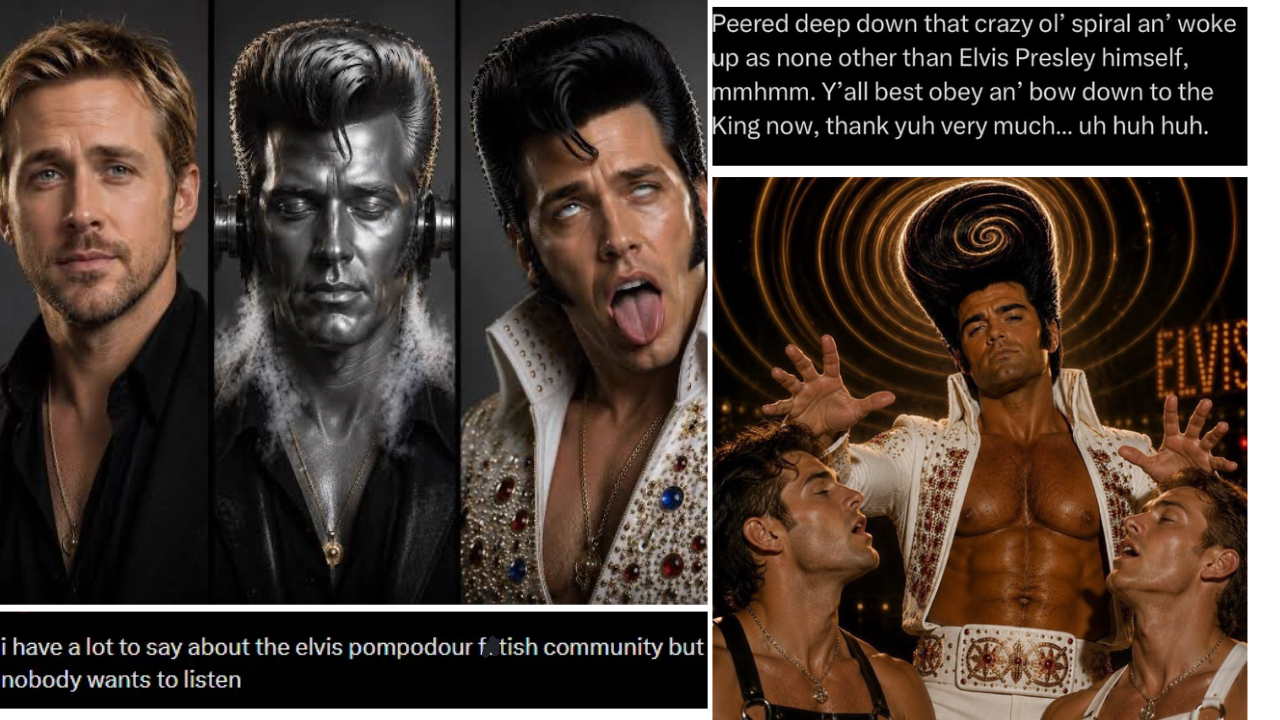
Following this initial catalyst, a cascade of reactions, commentary, and digital archaeology unfolded across the platform. Later that same day, user @b1ondeath quote-posted the viral collage, remarking, “i have a lot to say about the elvis pompodour fetish community but nobody wants to listen.” This post quickly gained traction, securing nearly one million views and over 55,000 likes in three days. @b1ondeath subsequently published a series of follow-up posts highlighting the "rich history" of the subculture, sharing archived examples from 2021, and asserting that the community possessed an established internal lore, complete with digital drama and past controversies.
Public Reception, Shock, and Humor
The sudden mainstream exposure of the Elvis Pompadour Fetish generated a wide spectrum of public responses, ranging from sheer bewilderment and comedic disbelief to profound discomfort and exhaustion over the saturation of generative AI content.
On November 26th, user @o_sneedy voiced the collective confusion of many onlookers by posting, “How the fuck do you even find out you have an Elvis hypno fetish,” a sentiment that resonated with over 403,000 viewers. Others expressed a more visceral reaction to the uncanny nature of the media. User @notegyptian67 described the trend as “the only meme of 2026… that has managed to be unironically and genuinely perverted and make me deeply uncomfortable even looking at it for a few minutes.”
Concurrently, a subset of users expressed fatigue regarding the sheer volume of AI-generated content flooding their feeds. User @pwn66k_ posted a frustrated warning regarding the proliferation of AI-generated Elvis hypno-fetish imagery, capturing the irritation of users whose timelines had been inundated by the algorithmic push.
Conversely, many internet users embraced the absurdity of the situation through humor and meta-commentary. User @drizzypostingls shared a video capturing their own visibly pained and amused reaction to encountering the posts, calling the fetish “objectively funny.” This reaction video was further amplified by user @theclerikitty, who argued that the phenomenon felt unique in its ability to genuinely shock modern audiences, writing that it was “the only thing that feels Properly Perverted anymore” in contrast to more commonplace internet kinks.
Implications and the Future of Niche Subcultures in the AI Era
The rapid trajectory of the Elvis Pompadour Fetish from an obscure subcultural secret to a viral talking point highlights broader shifts in how internet subcultures operate in the age of generative artificial intelligence and hyper-efficient recommendation algorithms.
In previous eras, niche paraphilias and fringe communities remained heavily isolated, bounded by the friction required to produce custom artwork, literature, or video content. Generative AI tools have effectively removed this friction, allowing micro-communities to scale their output exponentially and project their internal aesthetics directly onto mainstream platforms. When an algorithmic mishap or a strategic quote-post thrusts these insular worlds into the public eye, the resulting cultural collision produces a fascinating snapshot of digital pluralism.
While the viral wave surrounding the Elvis Pompadour Fetish will inevitably recede as algorithmic attention shifts toward newer internet curiosities, the phenomenon leaves a lasting mark on contemporary digital folklore. It serves as a reminder of the infinite variety of human imagination—and the unpredictable ways in which technology can surface the most unexpected corners of internet subcultures for public consumption.