Fitbit Sense & Versa losing 3rd-party watch faces this month, existing downloads remain

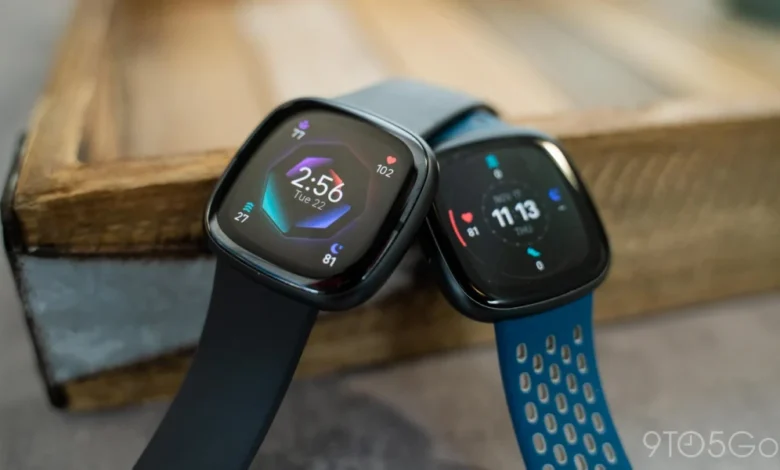
The affected devices include a broad range of legacy and recent trackers, specifically the Versa, Versa 2, Versa 3, Versa 4, Sense, and Sense 2. While users who currently have third-party software installed will be able to continue using these items, the removal of the ability to update or re-install them means that once a device is factory reset or an app is deleted, those tools will be permanently lost from the user’s library. Moving forward, the Fitbit App Gallery will be restricted exclusively to apps and clock faces developed internally by Google and Fitbit.
A Chronology of the Fitbit OS Wind-Down
The decline of Fitbit OS began in earnest following Google’s $2.1 billion acquisition of the wearable company, which was finalized in early 2021. Since that time, the integration process has been marked by a gradual migration of features and design philosophy toward the Wear OS platform.
The timeline of this transition highlights a deliberate move by Google to consolidate its wearable market presence:
- January 2021: Google completes its acquisition of Fitbit, pledging to prioritize user privacy and health-centric features.
- August 2022: Google launches the Sense 2 and Versa 4. Unlike their predecessors, these devices utilized a simplified, locked-down version of the Fitbit OS that intentionally lacked third-party app support, hinting at the company’s long-term software intentions.
- October 2022: The debut of the original Google Pixel Watch, powered by Wear OS 3.5, signals the company’s transition to a full-featured smartwatch experience.
- November 2024: Google officially announces the end of third-party developer support for all Fitbit smartwatches, setting the November 28 deadline for the final phase of the platform’s utility as a "smart" device.
By effectively rendering these devices as "dumb" fitness trackers rather than multifunctional smartwatches, Google is narrowing the utility gap between its high-end fitness bands and its flagship smartwatches.
Supporting Data and Device Context
The Fitbit Versa and Sense lines were instrumental in bridging the gap between basic activity trackers and feature-rich smartwatches. According to historical industry data, the Fitbit Versa 2 and 3 were among the most popular smartwatches globally during their peak, often cited for their exceptional battery life—a metric that often reached five to six days, significantly outperforming the original Pixel Watch’s 24-hour battery life.

However, the "smart" aspect of these devices was always hampered by a relatively small developer ecosystem. Unlike the Apple Watch or Wear OS devices, which have thousands of third-party apps ranging from music streaming services to productivity tools, the Fitbit App Gallery struggled to maintain high-quality, developer-backed software. By limiting the interface to first-party software, Google is prioritizing stability, security, and battery performance over the versatility offered by third-party integrations.
Implications for Developers and Users
For third-party developers, the November 28 deadline is absolute. Google has confirmed that it will no longer process new app uploads or push updates to existing software on the Fitbit Gallery. For developers who spent years building watch faces and niche health-tracking apps for the Fitbit community, this represents a complete loss of their distribution channel. Many small-scale developers have already pivoted to the Wear OS Play Store, which offers a much larger potential user base, but the loss of the Fitbit ecosystem closes a chapter on a platform that once prided itself on being accessible to hobbyist coders.
For the end-user, the implications are more nuanced. Users who rely on specialized third-party trackers—such as specific medical logging tools or niche fitness timers—will find their devices significantly less useful after the cutoff date. Furthermore, the reliance on factory resets for troubleshooting common bugs or syncing issues becomes a "point of no return." If a user experiences a technical glitch that necessitates a factory reset, their customized device experience will be wiped, forcing them to revert to the stock, Google-provided interface.
Strategic Rationale: The Wear OS Monopoly
The primary driver behind this decision is Google’s need to eliminate internal competition. Since the launch of the Pixel Watch, Google has effectively been running two competing operating systems: one optimized for fitness-first users (Fitbit OS) and one optimized for the "connected life" (Wear OS).
By stripping the Fitbit smartwatches of their third-party capabilities, Google is effectively demoting the entire Sense and Versa lineup to the category of "fitness trackers." This creates a clear hierarchy for consumers: if you want a basic, long-lasting, health-focused device, buy a Fitbit; if you want a smartwatch with an app store, navigation, and deep ecosystem integration, buy a Pixel Watch.
Industry analysts suggest that this strategy is intended to reduce development overhead. Maintaining an app store for two separate operating systems is resource-intensive. By focusing exclusively on Wear OS for "smart" features, Google can consolidate its engineering talent, streamline the user experience, and ensure that the Play Store remains the single source of truth for third-party software on its hardware.

Looking Ahead: The Future of Fitbit Hardware
The decision to limit the Sense 2 and Versa 4—two devices that were marketed as smartwatches at launch—raises questions about the long-term viability of the Fitbit hardware brand. While the fitness tracking capabilities remain industry-leading, the lack of third-party support makes the devices difficult to recommend to users who value smartwatch functionality.
Furthermore, the longevity of these devices is now officially capped. With no new software updates for the underlying OS, and no way to refresh the software library, these devices are essentially in "maintenance mode." For consumers currently holding these devices, the best path forward is to acknowledge their utility as specialized fitness tools rather than general-purpose smartwatches.
As Google continues to integrate its software stacks, the distinct lines between a "Fitbit" and a "Pixel" device will continue to blur. It is highly likely that future iterations of the Fitbit tracker line will abandon the "smartwatch" moniker entirely, leaning further into the form factor of the Fitbit Charge or Inspire, which are marketed primarily as health and wellness monitors.
Ultimately, this move serves as a reminder of the volatility inherent in the ecosystem of connected devices. When a user purchases a piece of hardware that relies on a centralized app store, they are effectively leasing the "smart" capabilities of that device. When the manufacturer decides to pivot, the user’s experience can be fundamentally altered, regardless of the hardware’s physical integrity. For the loyal Fitbit community, the shift toward a Google-only software experience marks the final step in the integration of the brand into the broader Google hardware ecosystem, leaving behind the open-platform experiment that once defined the early days of the Fitbit smartwatch.