Google Unveils Major AI Infrastructure, Developer Tools, and the Pixel 11 Series in Comprehensive August 2026 Roundup


As artificial intelligence continues to transition from theoretical research to practical, daily utility, Google has provided a comprehensive overview of its major technological advancements, software rollouts, and hardware releases throughout August 2026. Over the past two decades, the company’s sustained investments in machine learning, high-performance infrastructure, and developer ecosystems have steadily converged. Today, these efforts manifest across sectors as wide-ranging as enterprise software, consumer electronics, education, scientific weather prediction, and aviation climate impact mitigation.
The month of August marked a critical turning point for the tech giant. Rather than focusing solely on raw computational capability, Google’s latest cycle of updates emphasized accessibility, cost efficiency, edge computing, and real-time voice integration. Most notably, the consumer-facing Gemini application crossed an unprecedented milestone of one billion monthly active users, solidifying its position as one of the fastest-growing digital products in corporate history.
Expanding Hardware Ecosystem: The Pixel 11 Series and Tensor G6
A cornerstone of Google’s August announcements was the hardware showcase at the Made by Google 2026 event, where the company introduced the Pixel 11 device lineup. Comprising the Pixel 11, Pixel 11 Pro, Pixel 11 Pro XL, and the updated Pixel 11 Pro Fold, the new generation of smartphones is engineered from the ground up for native on-device artificial intelligence processing.
At the heart of the Pixel 11 series lies the Google Tensor G6, the company’s fastest and most energy-efficient mobile processor to date. The Tensor G6 has been meticulously optimized to run the latest iteration of Gemini Nano locally, enabling advanced on-device intelligence without relying exclusively on cloud infrastructure. This local processing capability allows for heightened data privacy, instantaneous response times for voice interactions, and sophisticated photo and video editing tools directly on the handset. Alongside the processing upgrades, the Pixel 11 series introduces reinforced structural durability and significant generational enhancements to low-light photography and computational videography.

Advancements in Developer Models: Gemini 3.7 Flash and Gemini 3.5 Transcribe
For software engineers, enterprise developers, and technical researchers, August brought significant updates to Google’s family of foundational models designed to optimize workflow efficiency and reduce operational overhead.
Just three weeks following the introduction of the 3.6 Flash architecture, Google released Gemini 3.7 Flash. Positioned as an exceptionally capable workhorse model for software engineering, web development, and autonomous agent orchestration, 3.7 Flash delivers noticeable performance gains across complex knowledge-work tasks. To encourage widespread enterprise adoption, Google introduced the model at an aggressive introductory price point set at half the cost per million tokens of its predecessor.

Complementing the developer suite is Gemini 3.5 Transcribe, a next-generation speech-to-text model built specifically to handle high-fidelity audio processing in real-time. Traditional transcription frameworks frequently struggle with overlapping dialogue, background environmental noise, and specialized industry jargon. Gemini 3.5 Transcribe overcomes these hurdles by converting raw acoustic inputs directly into accurate, context-aware text, making it an ideal foundation for voice-driven customer service agents, live broadcasting captioning systems, and automated post-call analytics platforms.
Transforming Multimedia Generation and Enterprise Productivity
Beyond text and code, Google expanded its creative toolkit with the launch of Gemini Omni 1.1 Flash. Aimed at digital artists, filmmakers, and marketing professionals, Omni 1.1 Flash provides granular creative control over professional-grade video generation. The model supports advanced production techniques, including scene extension, first-and-last-frame interpolation, high-resolution 4K upscaling, and rapid prompt prototyping. These capabilities have been integrated across Google Flow, Google AI Studio, the Gemini Enterprise Agent Platform, and the consumer Gemini app.

Concurrently, the Gemini app’s conversational interface evolved into a more proactive assistant via Gemini Live. Incorporating features such as Personal Intelligence, Daily Brief, Spark, and hands-free inbox management, the platform enables users to verbally delegate multifaceted organizational workflows rather than merely query information. Usage insights released alongside the one billion user milestone revealed shifting consumer habits: 63 percent of active users now interact with Gemini primarily through voice commands, with demographic spikes noted among busy parents and small business owners leveraging automated multimedia generation for localized marketing campaigns.
Education, Search, and Back-to-School Initiatives
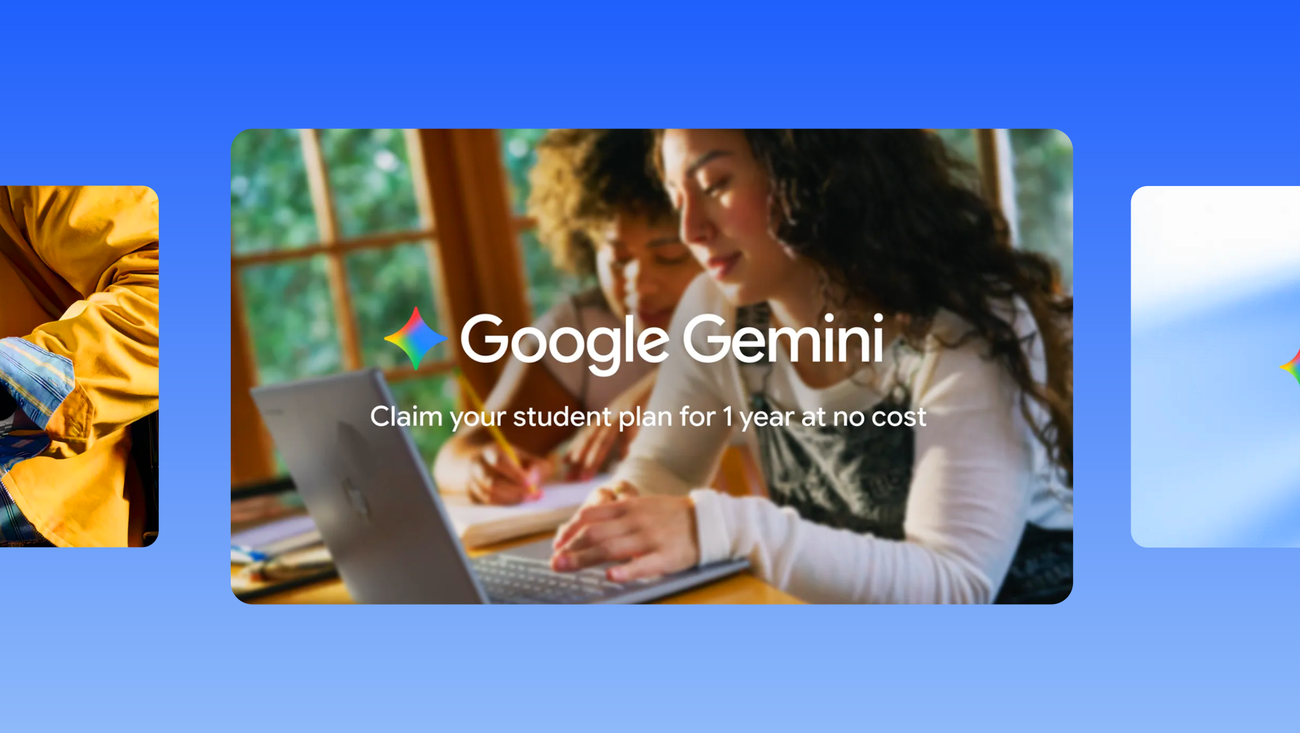
Aligning with the global academic calendar, August featured targeted rollouts designed to integrate artificial intelligence into modern learning environments safely and securely. Google announced a global initiative offering eligible college students one year of complimentary access to its advanced Google AI plans, accompanied by specialized study resources.

Within Google Search, newly deployed AI learning features allow students to visualize complex scientific concepts interactively, generate custom practice examinations for standardized tests such as the SAT, ACT, GRE, and LSAT, and utilize Google Lens for step-by-step problem-solving. These tools have been integrated with strict safety-by-design guardrails to ensure age-appropriate interactions and data protection for academic communities.
Scientific Frontiers: Climate Action and Weather Forecasting
While consumer and enterprise products dominated commercial headlines, Google’s research divisions achieved significant breakthroughs in climate modeling and environmental sustainability.

Through Project Blue Skies, Google expanded its artificial intelligence forecasting tools—previously utilized by flight crews to dynamically alter flight paths and prevent the formation of heat-trapping contrails—into a large-scale partnership with the United Kingdom Government and major international aviation stakeholders across the North Atlantic corridor. This initiative aims to systematically mitigate the aviation industry’s net climate footprint during normal commercial operations.
Furthermore, Google DeepMind published landmark research in the scientific journal Nature detailing WeatherNext 2, an advanced meteorological forecasting model capable of predicting cyclone tracks, intensity metrics, and wind structures with unprecedented accuracy. By compressing a decade of traditional meteorological progress into a single neural network, WeatherNext 2 represents a paradigm shift in disaster preparedness. Google has officially open-sourced the model to the global research community to accelerate worldwide climate resilience efforts.
Conclusion and Industry Implications

The breadth of Google’s August 2026 announcements underscores an industry-wide maturation. The strategic focus has pivoted away from isolated proofs of concept toward deeply integrated, cross-platform ecosystems. By harmonizing hardware developments like the Tensor G6-powered Pixel 11 series with cost-effective developer infrastructure, open-source scientific tools like Gemma, and consumer-scale applications serving over a billion individuals, Google has established a robust blueprint for the practical deployment of artificial intelligence in everyday life.