HP Omen Max 16 Review: A High-Performance Fusion of Mobile Workstation and Gaming Rig

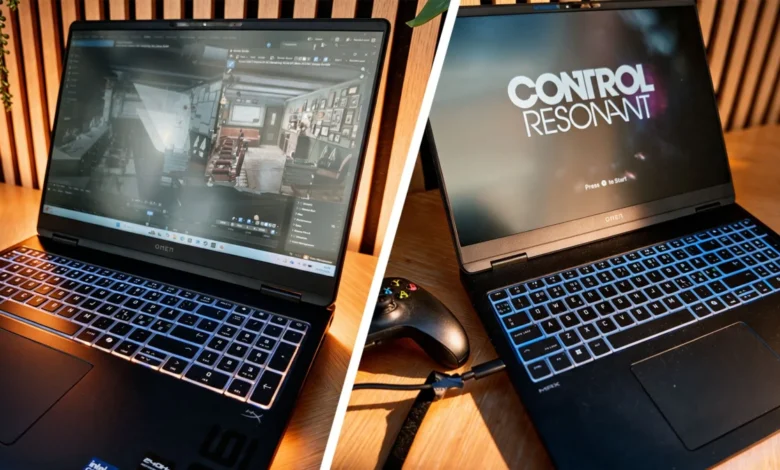
The laptop market has long forced creative professionals and gamers down two distinct paths, asking them to compromise between the raw rendering power of specialized workstations and the high-refresh-rate graphics capabilities of gaming rigs. Historically, blending these two demanding use cases meant enduring cumbersome, heavy chassis with notoriously brief battery life. However, the introduction of high-end mobile hardware powered by next-generation architecture is challenging this traditional dichotomy. At the center of this shift is the HP Omen Max 16, a machine equipped with an Intel Core Ultra 9 275HX processor and an NVIDIA GeForce RTX 5080 GPU, designed to test whether a single device can genuinely satisfy both the rigorous demands of 3D rendering artists and high-end competitive gamers.
Design and Portability: Balancing Gamer Aesthetics with Professional Elegance
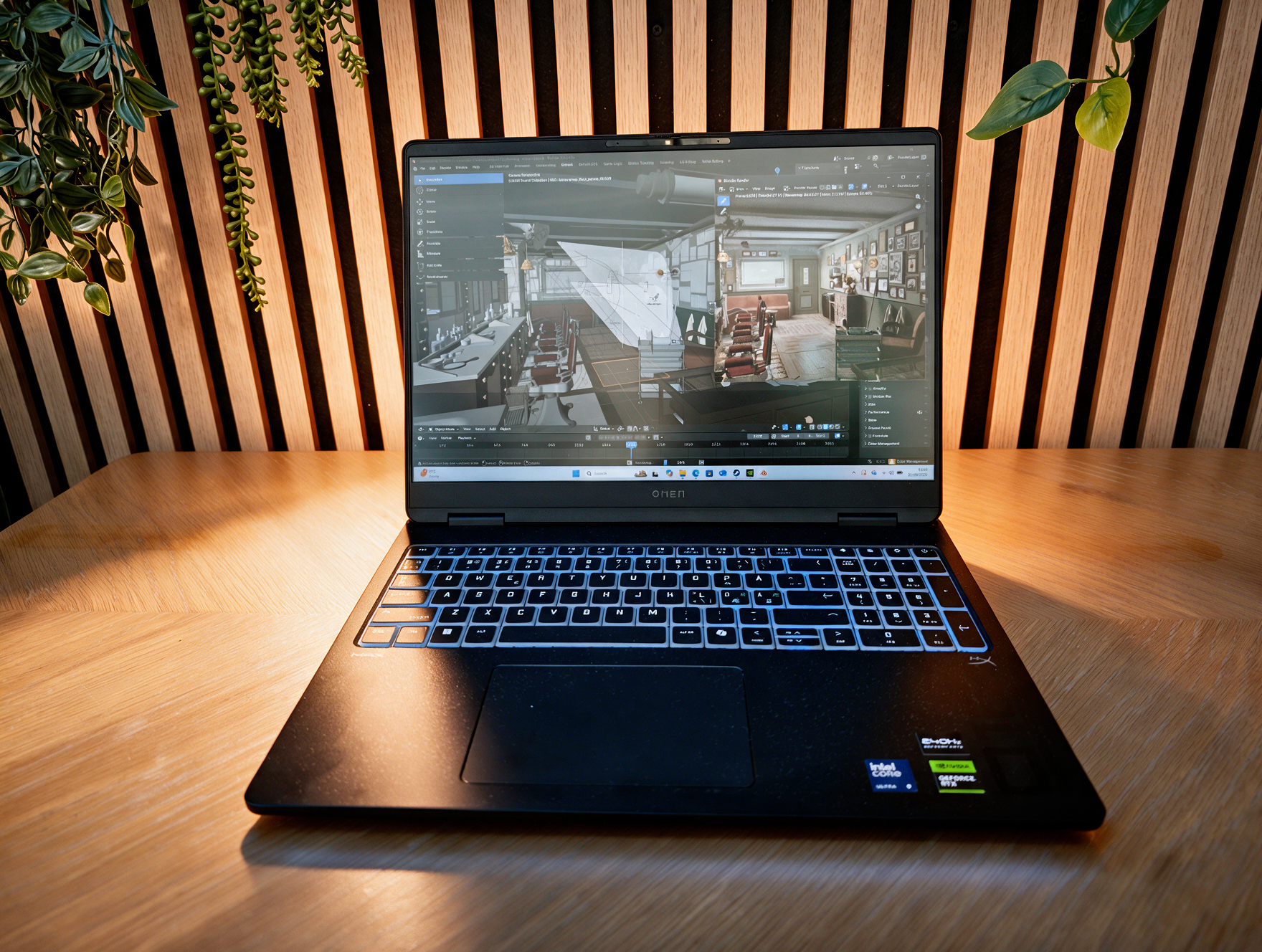
Upon opening the lid, the HP Omen Max 16 immediately reveals its gaming lineage through customizable keyboard LEDs that pulse with vibrant blue and purple hues. While this dynamic lighting system sets a dramatic tone suited for personal setups, it can easily be toggled off for professional or academic environments where a more subdued aesthetic is required.
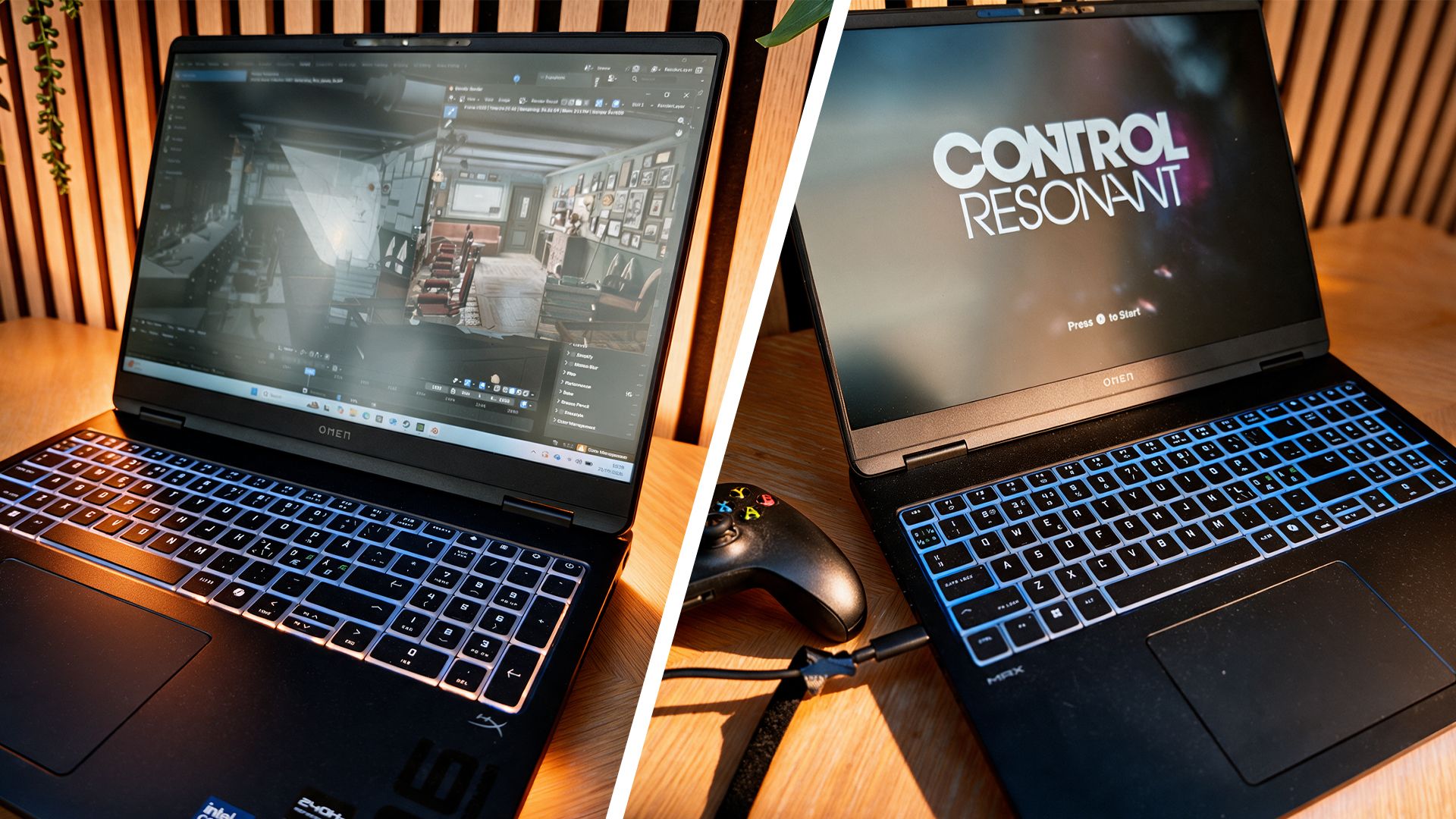
Beyond its customizable lighting, the chassis itself defies expectations regarding weight and form factor. Traditionally, laptops housing top-tier components like the RTX 5080 and high-core-count processors have carried the substantial heft of paving slabs, limiting their practicality for mobile professionals. Weighing significantly less than its raw performance specifications would suggest, the Omen Max 16 strikes a balance that makes daily transport—whether to a lecture hall, a client meeting, or a remote workspace—far more manageable. While it does not match the featherlight profile of entry-level ultrabooks, its portability ensures that its immense computing power can actually be utilized on the go.
Dual-Role Performance: Bridging Creative Workstations and Gaming Rigs
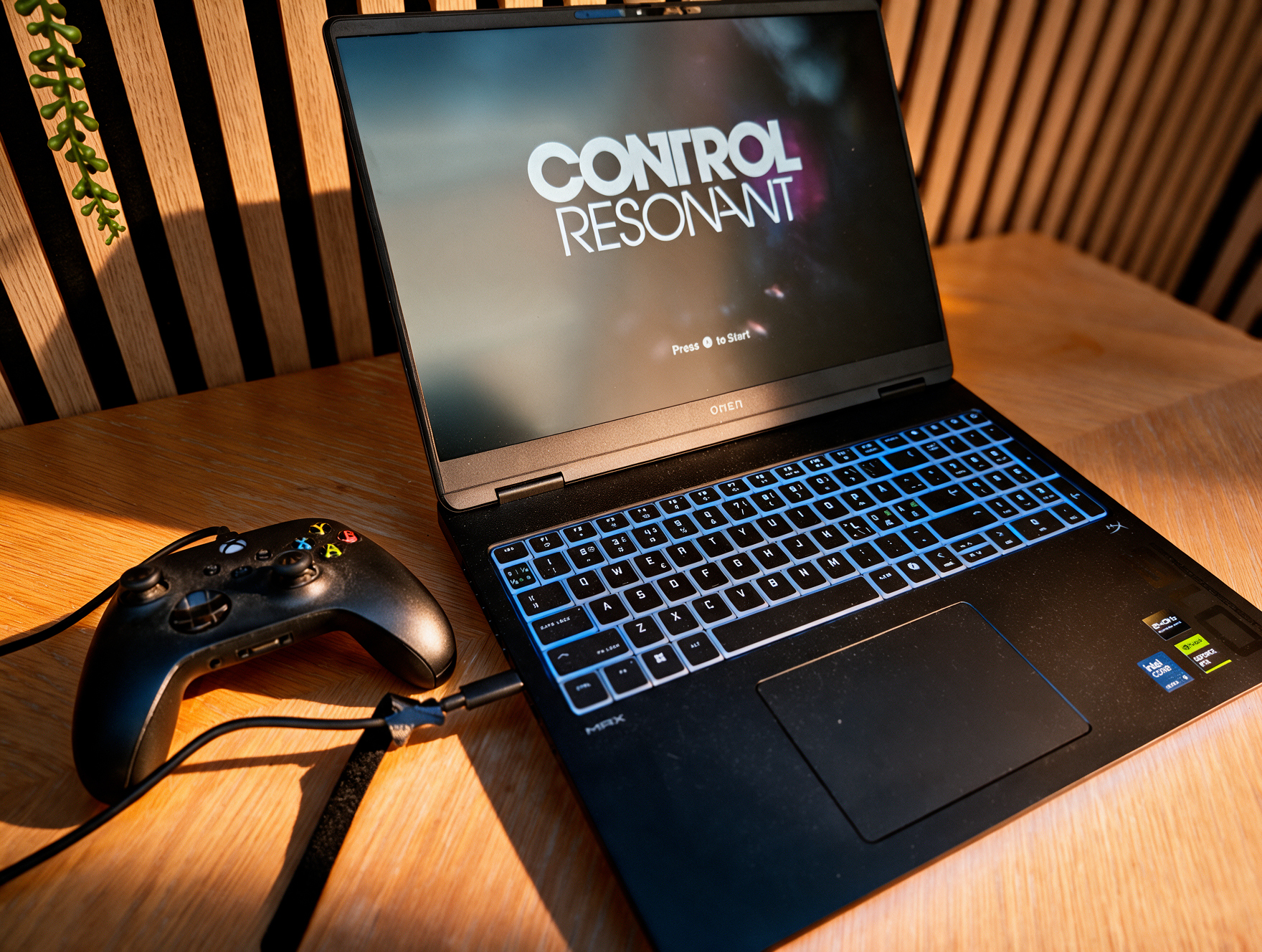
The core appeal of the Omen Max 16 lies in its dual capability, facilitated by NVIDIA’s software ecosystem. Users can seamlessly transition between "Game Ready" and "Studio" drivers via a straightforward interface, optimizing the hardware for either high-fidelity entertainment or professional content creation.
In creative workflows, the machine excels under heavy loads. Testing within Blender demonstrates a fluid viewport experience, while the Cycles rendering engine leverages the GPU’s 16GB of GDDR7 memory and dedicated ray-tracing cores to process complex scenes rapidly. This eliminates common bottlenecks related to texture streaming and software stalls. Conversely, shifting to the entertainment profile allows the laptop to handle resource-intensive titles—such as high-end builds of Control Resonant—with ray tracing fully enabled and frame rates remaining consistently smooth.
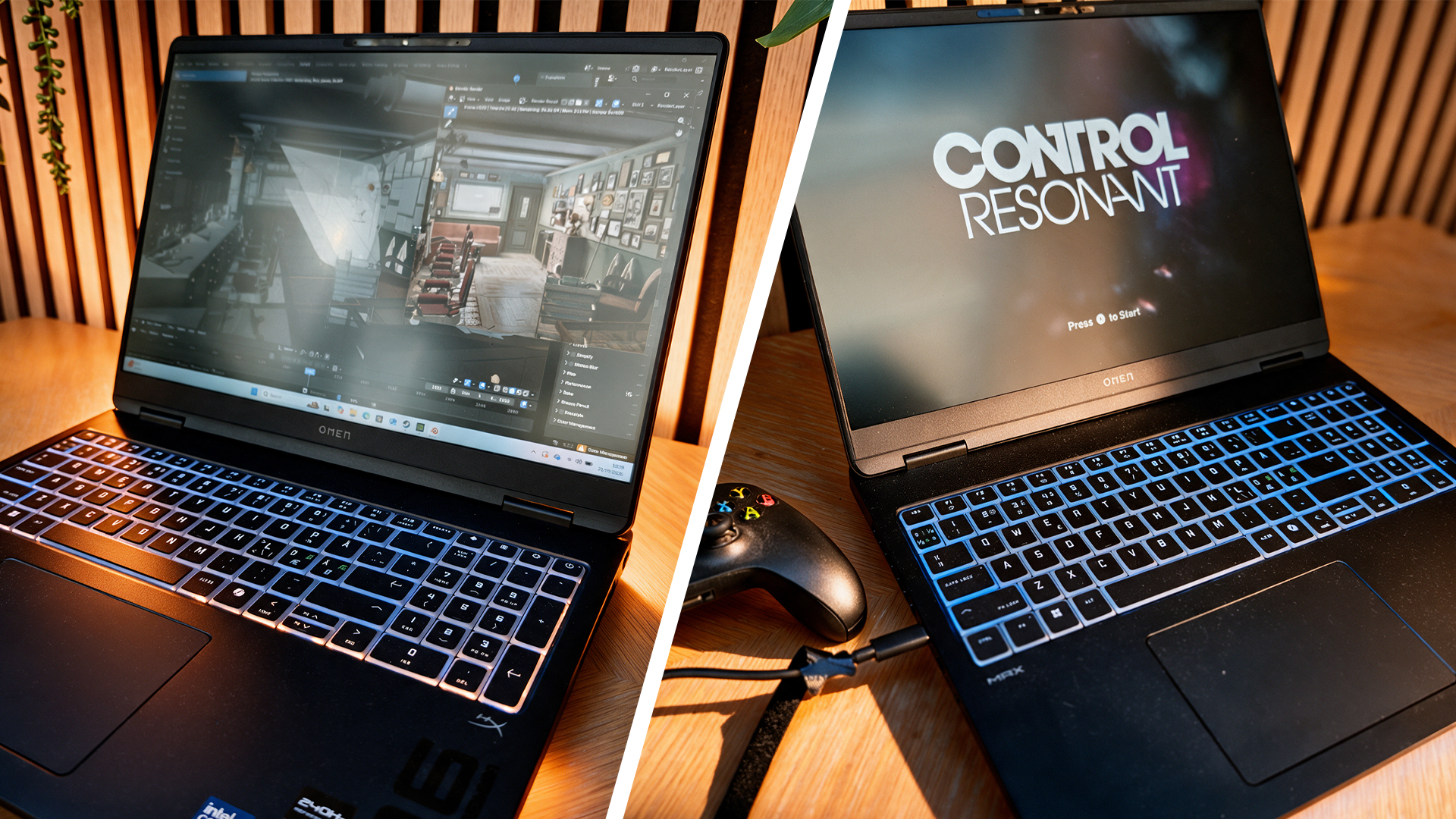
This versatility addresses a common hurdle for modern digital artists, game developers, and students who require robust hardware for both asset creation and performance testing. Rather than maintaining separate machines, users can rely on a single ecosystem, albeit one that demands careful management of its thermal output and power consumption.
Financial Implications and Market Positioning
Despite its technical achievements, the Omen Max 16 occupies a challenging space regarding pricing and accessibility. The top-tier configuration—featuring the GeForce RTX 5080, Intel Core Ultra 9 275HX, 32GB of RAM, and a 1TB solid-state drive—carries a manufacturer’s suggested retail price of £2,999, though promotional retail discounts have occasionally placed the hardware closer to £2,619.
This high cost of entry raises important considerations, particularly for student buyers and early-career professionals navigating promotional financing, student loans, or buy-now-pay-later schemes. Industry analysts frequently caution that premium technology purchases tied to high-APR financing can introduce significant long-term financial strain if repayment windows are missed.
When evaluating the market landscape, consumers are often tempted to weigh flagship devices against budget-friendly alternatives, such as entry-level Chromebooks or basic productivity laptops. However, industry experts note that such comparisons are fundamentally flawed, as low-end machines lack the processing overhead required for complex software environments like Unreal Engine 5 or advanced CAD programs.
A more realistic comparison exists within HP’s own product family. A lower-specced configuration of the Omen 16, featuring an RTX 5060, an eight-core processor, and 8GB of VRAM, is available at a significantly lower price point. While this mid-tier option is adequate for general tasks and moderate gaming, the hardware ceiling becomes apparent when handling dense polygon counts, extensive texture sets, and large-scale scene lighting. The additional investment in the Max configuration secures components—most notably double the VRAM and a 24-core processor—that prevent hardware obsolescence as academic or professional projects grow increasingly complex in later stages.
Industry Implications and Long-Term Value
The evolution of hybrid gaming and workstation laptops reflects a broader trend within the consumer technology sector: the convergence of professional and enthusiast markets. As software applications increasingly rely on GPU acceleration for AI-driven upscaling, real-time rendering, and complex physics simulations, the hardware requirements for creators and gamers have grown nearly identical.
Manufacturers are responding by engineering thermal solutions and power profiles that can sustain peak performance without sacrificing structural integrity or portability. For students and professionals entering fields such as game design, visual effects, and 3D modeling, investing in a robust hardware platform can eliminate the need for premature upgrades.
Ultimately, the HP Omen Max 16 demonstrates that high-end mobile computing no longer requires choosing strictly between a dedicated workstation and a gaming laptop. While the financial investment remains substantial, the underlying architecture provides a future-proof foundation capable of enduring the rigorous demands of modern digital creation and entertainment throughout an academic program and well into a professional career.