Loop Engineering for RAG Question Parsing: The Small Loop That Runs Before Retrieval


In the rapidly evolving landscape of artificial intelligence, the year 2026 has marked a definitive shift from static prompting to a sophisticated discipline known as loop engineering. This transition represents the third major era in how enterprises interact with Large Language Models (LLMs). While previous years focused on the wording of queries or the density of the provided context, the current frontier is defined by the iterative cycles built around the LLM to ensure precision, particularly within Retrieval-Augmented Generation (RAG) systems. As organizations move away from "naive" retrieval methods that often produce noisy or irrelevant results, the introduction of clarification loops within the "question parsing" stage has emerged as the critical differentiator for production-grade AI quality.
The Chronology of AI Interaction Models: 2023 to 2026
To understand the significance of loop engineering, it is necessary to trace the three-year trajectory of AI development. In 2023, the industry was dominated by "Prompt Engineering." During this phase, the burden of success rested almost entirely on the user. Techniques such as few-shot prompting and the "think step by step" heuristic were the primary tools used to coax better performance from what was essentially a stateless oracle. Quality was viewed primarily as a linguistic challenge; if the answer was wrong, the prompt was considered poorly written.
By mid-2025, the focus shifted toward "Context Engineering." Prominent industry figures, including Shopify’s Tobi Lütke and AI researcher Andrej Karpathy, redefined the practice as the delicate art of curating the context window. The engineer’s role became that of a librarian, ensuring the LLM was fed exactly the right information for the next specific step in a workflow. This era saw the rise of more sophisticated RAG architectures, but even these remained largely linear: a question was asked, data was retrieved, and an answer was generated.
The current era, beginning in early 2026, is the era of "Loop Engineering." This discipline acknowledges that an LLM call is most effective when it is wrapped in a bounded iteration. As framed by platforms like LangChain and MindStudio, the true potential of AI agents lies in the loops built around them—iterative cycles that repeat until a specific goal or data threshold is met. This approach closes the feedback gap, allowing the system to pause, ask for clarification, and refine its search parameters before committing to a final generation.

The Failure of Naive Retrieval in Enterprise Environments
The necessity of loop engineering is most apparent when examining the failures of traditional RAG systems, often referred to as "naive top-k" retrieval. In a standard enterprise scenario, such as an insurance analyst querying a fifty-page policy, a user might ask a vague question: “What is the premium?”
A naive system embeds the word “premium” and scans the entire document. Because the word may appear in exclusion clauses, endorsement boilerplate, or incidental references throughout dozens of pages, the system often returns a fragmented mess of irrelevant data. If the actual premium schedule is buried under a non-obvious heading like "General Information" on page 3, a standard retrieval algorithm may miss it entirely because the query lacked the specific structural hint required to find it.
This failure results in "hallucination by noise," where the LLM attempts to synthesize an answer from the irrelevant snippets it was provided. For an enterprise, this is more than a technical glitch; it is a liability that prevents AI from being deployed in high-stakes decision-making environments.
The Mechanics of the Clarification Loop
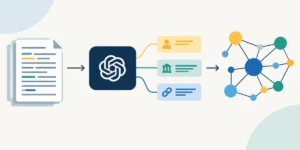
The loop-engineered pipeline addresses this by introducing a "small loop" within the second brick of document intelligence: question parsing. Unlike "agentic RAG," which involves complex multi-step planning and autonomous action, this small loop is a single ask-answer-continue turn designed to fill a fixed schema.
In the Enterprise Document Intelligence framework, question parsing writes into a strictly typed set of fields, including keywords, intent, section hints, and page hints. The loop’s only job is to fill one of these fields when the parser determines it cannot do so based on the initial query and the document’s profile.

The process follows a six-step flow:
- The system receives the raw question and the document context (TOC, metadata).
- The first parse attempt identifies missing critical fields.
- If a field like
section_hintis empty but the document is heavily sectioned, the system holds the pipeline. - The system sends a plain-language clarification question back to the user.
- The user provides a brief, even informal, response (e.g., "Look under general info").
- The parser re-runs, populates the missing field, and the pipeline continues deterministically.
Comparative Use Cases: Solving Ambiguity in Real-Time
The power of this mechanism is demonstrated through three distinct enterprise scenarios, each highlighting a different failure point in standard RAG.
1. The Missing Section Hint (Insurance)
When an analyst asks for the premium in a document where the Table of Contents (TOC) does not explicitly list a "Premium" section, the loop-engineered parser intervenes. It recognizes the discrepancy and asks: “I don’t see a ‘Premium’ section in this policy. Where should I look?” This single turn allows the user to point the AI toward the "General Information" section. By narrowing the scope of retrieval to page 3 rather than page 50, the system ensures a high-fidelity response.
2. The Multi-Position Topic (Legal Contracts)
In legal environments, a paralegal might ask: “What is the client’s name?” In a forty-seven-page contract, the client’s name typically appears on the cover, in the header of every page, and in the signatory block at the end. Without a pages_hint, retrieval is flooded with boilerplate mentions. The clarification loop detects this "trap" and asks the user whether it should prioritize the cover, the signatories, or the headers. A simple response of "page 1" or "cover" filters the noise immediately.
3. The Unstructured Long Document (Research)
When a researcher asks to “summarize the risk section” of a paper where the TOC extraction failed due to inconsistent styling, the system cannot bind the query to a section. However, it can still utilize a pages_hint. By asking the user for a rough page range, the parser salvages the query. Even a vague answer like "the last few pages" allows the system to focus its computational power on a relevant subset of the document, maintaining the integrity of the summary.

Loop Engineering vs. Agentic RAG: Defining the Scope
It is important to distinguish these "small loops" from the broader concept of Agentic RAG. While both involve iteration, loop engineering at the question-parsing level is characterized by its limited scope and deterministic nature.
In Agentic RAG, the LLM is often given the autonomy to decide the next tool to use or the next search to perform, which can lead to "agentic drift" and unpredictable costs. In contrast, the clarification loop described here lives entirely within the question-parsing brick. The rest of the pipeline—retrieval and generation—never sees the loop. They only receive a fully populated ParsedQuestion object. This modularity ensures that the loop is engineered, bounded, and predictable, making it suitable for enterprise applications where audit trails and consistency are paramount.
Supporting Data and Industry Impact
Early data from implementations of loop-engineered systems suggest a significant increase in retrieval precision. In a study involving the arXiv corpus and broker contracts—reproducible via the doc-intel/notebooks-vol1 repository—clarification loops reduced the volume of retrieved "noise" tokens by up to 70% in documents exceeding 30 pages.
Furthermore, the industry is seeing a convergence of thought among major AI infrastructure providers. LangChain has emphasized that the value of AI agents is found in the "loops you build around them," while MindStudio has framed loop engineering as the primary method for closing the "feedback gap" in AI systems.
The broader implications of this shift are profound. As enterprises realize that "more data" in the context window often leads to poorer results, the ability to "clarify once and learn the default" becomes a competitive advantage. This approach not only improves the accuracy of the current session but, through the use of audit trails and caching, allows the system to apply these learned defaults to future queries silently.

Conclusion
The transition to loop engineering represents a maturation of the AI field. It moves the industry away from the hope that a single, perfectly phrased prompt can solve complex data retrieval problems. Instead, it embraces a system-oriented approach where the AI is empowered to recognize its own uncertainty. By building small, efficient loops at the edge of the user interaction, engineers are creating RAG systems that are not just faster, but significantly more reliable. In the high-stakes world of enterprise document intelligence, the ability to ask the right question back to the user is proving to be just as important as the ability to provide the final answer.