The landscape of macOS security has encountered a significant shift in threat actor methodology as researchers at Kaspersky have uncovered a sophisticated evolution of the MacSync information-stealing malware. By leveraging the trusted infrastructure of public iCloud calendar events, attackers have developed a novel, evasive delivery mechanism designed to bypass traditional security perimeters. This development highlights a growing trend in which adversaries exploit legitimate, cloud-based productivity services to distribute malicious payloads, effectively camouflaging their activities within the standard traffic of the Apple ecosystem.
The Evolution of MacSync: From AMOS Origins to Advanced Stealth
First identified in April 2025, MacSync initially emerged as a derivative of the AMOS (Atomic macOS Stealer) family, a well-documented threat that targets sensitive user data. Over the past year, however, MacSync has undergone a series of modular upgrades that have transformed it from a relatively straightforward stealer into a multi-stage, persistent backdoor.
The malware is written in Swift, a programming language native to the Apple ecosystem, which allows it to integrate seamlessly with the macOS environment. By utilizing modular components, the developers have ensured that the malware remains agile, allowing them to push updates or deploy specific functionality without requiring a full re-infection of the host system. This modularity is a hallmark of modern, professionalized cybercrime, reflecting the increasing sophistication of macOS-focused threat actors who were once considered secondary to their Windows-targeting counterparts.

Chronology of a Campaign: The iCloud Delivery Chain
The discovery of the latest MacSync campaign reveals a highly engineered distribution strategy. Unlike legacy malware that relies on direct email attachments or suspicious downloads, the current iteration utilizes a two-pronged approach.
The first, and more traditional, method involves social engineering via "ClickFix" campaigns. In these instances, users are lured to malicious websites—often masquerading as legitimate tools such as Homebrew installers or macOS disk space analyzers—where they are instructed to copy and paste a command into their Terminal to "fix" an apparent error. This social engineering tactic relies entirely on the victim’s cooperation, turning the user into the unwitting executor of the malicious code.
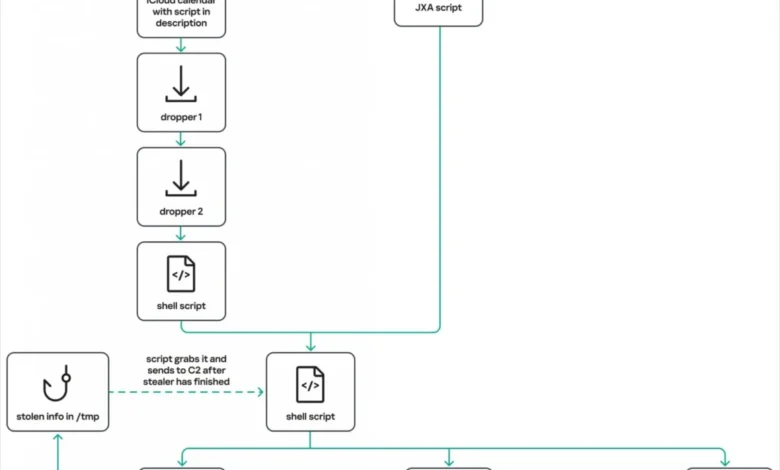
The second, more technically complex method, involves the exploitation of iCloud. The threat actors create public calendar events containing specific descriptions. When a victim’s system is compromised by the initial downloader, the malware periodically queries these public iCloud calendars. The description field of these calendar events contains obfuscated instructions. The downloader feeds this text directly into the macOS zsh shell. While the shell processes the majority of the text as harmless calendar data, the specific commands appended after the "DESCRIPTION:" line are executed with system-level permissions. This allows the attackers to fetch the next-stage payload—an "APP" bundle that acts as a dropper—directly from iCloud, effectively utilizing Apple’s own infrastructure to host and deliver their malicious code.
The Anatomy of the Backdoor Module
Once the secondary stage is deployed, the malware installs a new, Objective-C-based backdoor that exhibits significant persistence capabilities. This module is specifically designed to evade detection by disguising itself as "Finder," the core file management application on macOS.
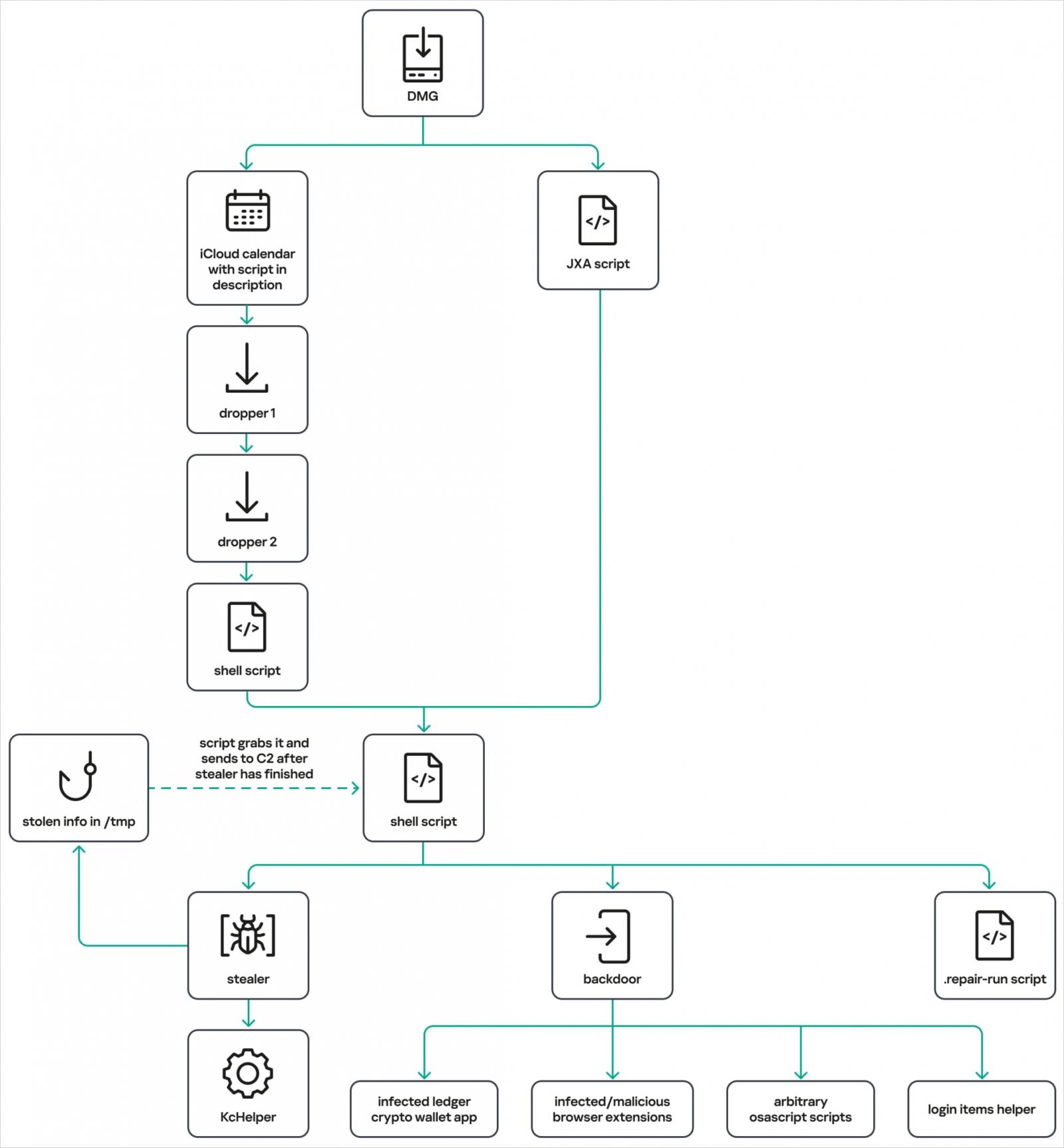
To maintain its presence, the backdoor implements several tactical maneuvers:
- LaunchAgents: It creates persistent entries in the user’s LaunchAgents folder, ensuring the malware restarts automatically every time the user logs in.
- Persistence via Configuration Files: By modifying the
.zshrcfile, the backdoor ensures that malicious commands are executed every time the user opens a new terminal session. - Git Hook Exploitation: It utilizes global Git hooks to trigger malicious processes whenever Git operations are performed on the machine.
- Notification Suppression: The malware actively monitors for and terminates macOS notification processes. By killing these services, the attacker ensures that the user is not alerted to system changes, installation progress, or security warnings that might otherwise reveal the infection.
The infostealer functionality remains comprehensive, targeting a wide array of data points: browser history, cookies, saved passwords, crypto wallet configurations, and session tokens for platforms like Telegram. Furthermore, it harvests sensitive development and infrastructure data, including SSH keys, AWS credentials, Kubernetes configurations, and various shell environment files. These targets indicate that the attackers are specifically interested in high-value environments, likely aiming to pivot into cloud infrastructure or software development pipelines.
Analysis of the "Mystery" Component
Kaspersky researchers have identified an unusual command within the backdoor’s repertoire designated as "live_browser." This command triggers the download and execution of a component identified as "sn_relay." While the precise purpose of sn_relay remains under investigation, the nature of the communication between the downloader and the relay suggests a potential real-time exfiltration or remote-access capability. Because the researchers were unable to capture the underlying AppleScript code responsible for executing these commands, they have relied on command names and status logs to infer their functionality. This lack of visibility into the final command-and-control logic underscores the difficulty in fully neutralizing these evolving threats.
Broader Implications for macOS Security
The emergence of MacSync as a modular, cloud-abusing threat signals a transition in the macOS threat landscape. For years, macOS users operated under the assumption that the platform’s "walled garden" approach and strict permission models were sufficient to prevent large-scale infections. However, the rise of ClickFix and the abuse of trusted services like iCloud demonstrate that the human element remains the weakest link in the security chain.
From an organizational standpoint, the targeting of SSH, Git, and Kubernetes configurations represents a significant risk. If an infected machine belongs to a software engineer or a DevOps professional, the malware could provide a gateway for attackers to inject malicious code into company repositories or gain unauthorized access to production cloud environments. This is no longer merely a "privacy" threat—it is a supply-chain risk.
Defensive Recommendations and Best Practices
Security professionals emphasize that protecting against MacSync requires a shift in user behavior and the implementation of robust endpoint detection. Key recommendations include:
- Terminal Caution: Users should never, under any circumstances, copy and paste commands from websites into their Terminal unless they have verified the source and understand the specific function of the code.
- Verify Software Sources: All applications should be downloaded directly from the Mac App Store or the official websites of known, reputable developers. Avoid "cracked" software or tools hosted on obscure forums.
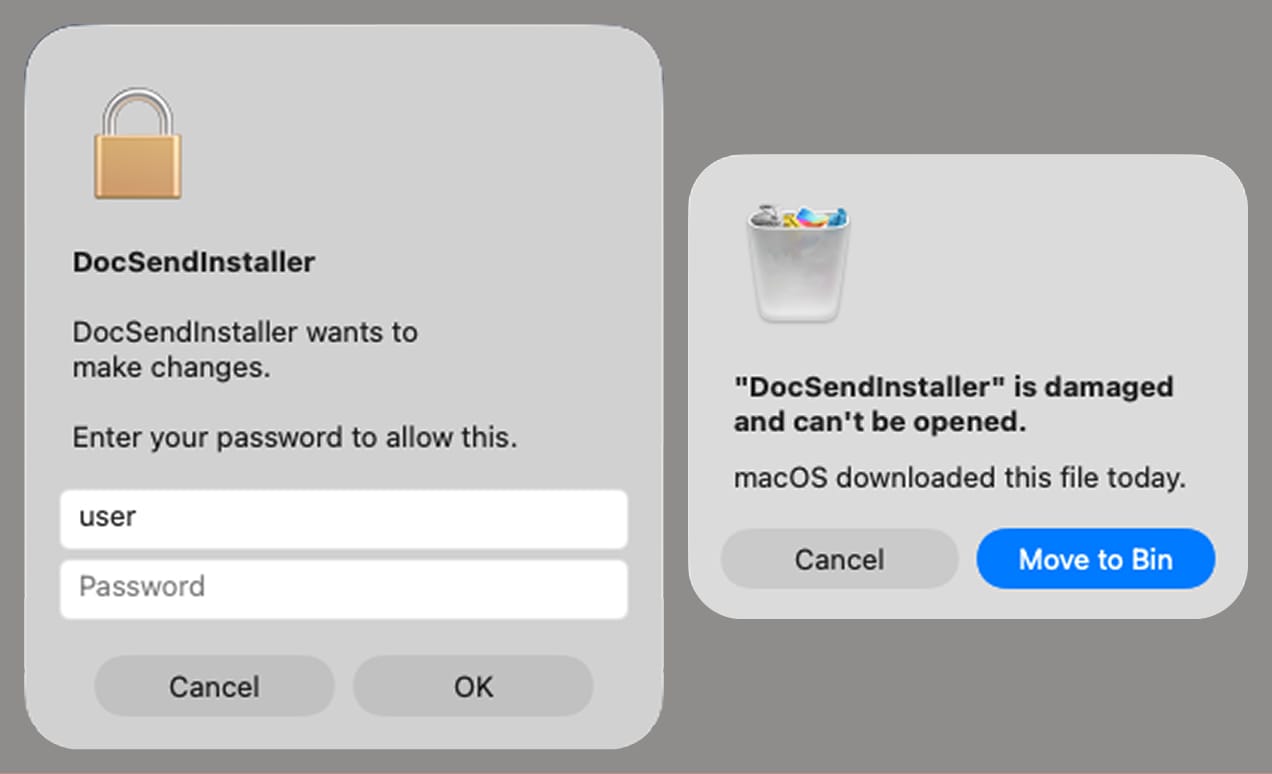
- Monitor System Prompts: When macOS displays a prompt for an admin password, users should stop to consider why that prompt is appearing. If a supposed "disk space analyzer" or "free tool" requests administrative privileges, it should be treated with extreme suspicion.
- Endpoint Security: Organizations should deploy Mobile Device Management (MDM) solutions that can restrict the installation of unauthorized apps and monitor for the creation of suspicious LaunchAgents or unauthorized modifications to shell configuration files.
- Network Awareness: As the malware relies on communication with external servers (and specifically iCloud for payload delivery), monitoring for unusual outbound traffic patterns can assist in identifying compromised systems.
The continued evolution of MacSync demonstrates that threat actors are moving quickly to adapt to the security measures implemented by Apple. As the platform matures, the sophistication of the attacks will likely follow suit, moving away from simple data-scraping toward more complex, persistent, and high-impact operations. For the average user, the primary defense remains a healthy dose of skepticism when interacting with online prompts, as the most effective security tool remains the informed, cautious, and vigilant user.
Related posts: