Maxon Brings Cinema 4D and ZBrush to Apple’s New Touchscreen MacBook Pro and Vision Pro Spatial Ecosystem

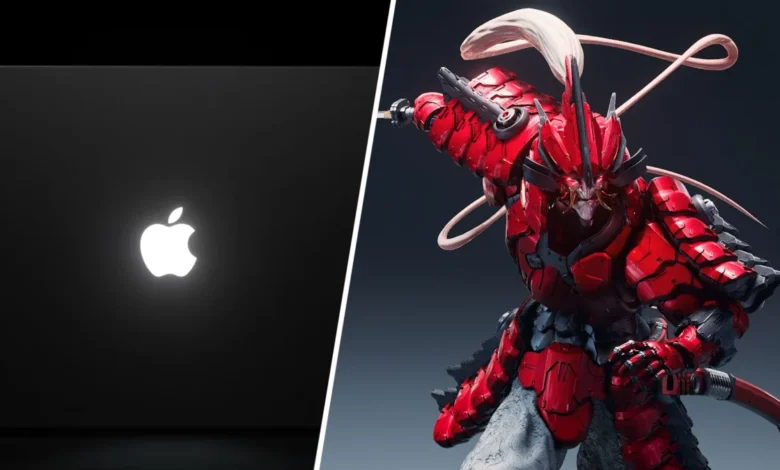
The landscape of professional creative software is undergoing a significant paradigm shift following Apple’s announcement of its highly anticipated MacBook Pro featuring the revolutionary PROLED XDR touchscreen display. Capitalizing on this major hardware advancement, software developer Maxon has officially confirmed that its industry-standard creative applications, Cinema 4D and ZBrush, will receive native touch input support. Scheduled for release in late November, this software update marks a major milestone for macOS hardware, introducing direct, tactile control to a lineup that has historically relied exclusively on traditional trackpads, mice, and external drawing tablets.
In addition to bringing touch capabilities to the desktop environment, Maxon is expanding its ecosystem with upcoming spatial preview integration for the Apple Vision Pro and the announcement of a dedicated Cinema 4D application for the iPad. These coordinated releases represent a strategic push toward a unified, multi-platform workflow designed to bridge the gap between traditional desktop computing, mobile digital sculpting, and immersive spatial design.
A New Era of Touch Input on macOS
For decades, Apple maintained a strict philosophical separation between its iOS-driven touch devices—such as the iPad and iPhone—and its macOS-powered laptops and desktops, famously arguing that vertical touchscreens on traditional computers lead to arm fatigue and poor ergonomics. However, the introduction of the MacBook Pro PROLED XDR changes this narrative entirely. Equipped with a breakthrough tandem OLED panel that delivers unprecedented brightness levels, staggering contrast ratios, and immaculate color accuracy, the new laptop has opened the door for hardware-software synergy that creative professionals have requested for years.
Maxon’s decision to integrate touch support into Cinema 4D and ZBrush is expected to fundamentally alter how artists interact with complex three-dimensional data. While precision tasks will undoubtedly continue to benefit from keyboards, mice, and graphic tablets, direct touch input offers a layer of intuitive fluidity previously restricted to mobile variants like ZBrush for iPad. Sculpting digital clay, manipulating organic shapes, adjusting camera angles, and navigating intricate scene hierarchies can now be executed with natural hand and finger gestures directly on the brilliant display.
Industry analysts note that this move mirrors the broader tech industry’s steady convergence of touch and desktop computing, though executed with Apple’s trademark emphasis on color fidelity and hardware optimization. By combining the processing horsepower of Apple’s latest M5 Pro and M5 Max silicon with a responsive touchscreen, Maxon aims to provide desktop-class rendering speeds alongside the tactile responsiveness of a tablet.
Spatial Computing Integration and the Apple Vision Pro
Beyond the boundaries of the MacBook Pro screen, Maxon is aggressively moving into spatial computing. Through the implementation of a new Spatial Preview API, Cinema 4D will soon allow artists utilizing the Mac Virtual Display on the Apple Vision Pro to preview, inspect, and interact with 3D creations in immersive, life-size detail.
This feature is poised to streamline pipeline efficiencies across numerous design-heavy industries. Historically, evaluating a 3D model or architectural render required rendering out flat, two-dimensional perspectives or utilizing complex, third-party conversion tools to view assets in augmented or virtual reality. With the new integration, artists running visionOS 27 and macOS 27 can seamlessly bridge their desktop projects into a spatial environment.
The implications for fields such as architectural visualization, retail interior design, and large-scale exhibition planning are profound. Designers will no longer need to rely purely on imagination or static 2D imagery to pitch concepts to clients. Instead, stakeholders can step directly into a digital twin of a proposed space, evaluating spatial proportions, lighting conditions, and structural layouts at a true 1:1 scale before a single physical material is manufactured or installed.
Furthermore, this spatial integration supports collaborative real-time reviews. Multiple participants equipped with Apple Vision Pro headsets can inhabit the same virtual space simultaneously, examining a model from an omnidirectional perspective, identifying potential design flaws, and communicating requested revisions directly within the context of the environment. This capability is anticipated to drastically reduce turnaround times during the early conceptual phases of production.
Chronology and Product Rollout
Maxon’s comprehensive update schedule is unfolding across a tightly coordinated multi-week timeline leading into the end of the year:
- November 6, 2026: Apple’s new MacBook Pro models featuring the PROLED XDR display officially begin shipping to consumers and enterprise clients worldwide. Current versions of Cinema 4D and ZBrush are immediately compatible with the hardware’s processing architecture.
- Late November 2026: Maxon rolls out its major software update, introducing native touchscreen support for both Cinema 4D and ZBrush on the MacBook Pro. Concurrently, the Spatial Preview functionality for the Apple Vision Pro (running visionOS 27 alongside macOS 27) becomes globally available.
- Late 2026 / Q4: A newly developed, standalone Cinema 4D iPad application is slated for official release, further cementing Maxon’s multi-device ecosystem strategy.
Industry Implications and Broader Market Impact
The convergence of high-end tandem OLED laptop displays, native desktop touch input, and spatial computing integration signals a maturation point for professional 3D content creation workflows. As hardware manufacturers push the boundaries of display technology, software developers face mounting pressure to adapt their interfaces to take full advantage of new interaction models.
For Maxon, these updates reinforce its competitive positioning within the digital content creation market. By ensuring that applications like Cinema 4D and ZBrush can fluidly transition from heavy desktop rendering to touch-based manipulation and finally to immersive spatial environments, the company is addressing the modern creator’s demand for flexibility. Artists are no longer tethered to a single desk setup; they can sculpt on an iPad during a commute, refine complex animations on a touchscreen MacBook Pro at the studio, and evaluate spatial proportions in a virtual environment with a client on the other side of the globe.
As these tools roll out in the coming weeks, the creative sector will be closely monitoring how effectively tactile desktop integration enhances productivity and whether these advanced spatial workflows become the new baseline for professional design pipelines.
Related posts: