The digital retail ecosystem has evolved far beyond the simple point-of-sale transaction, with product returns now cementing their status as a foundational pillar of the modern consumer journey. Far from representing a mere clerical inconvenience, the reverse logistics pipeline dictates corporate profitability, customer loyalty indices, and environmental footprints across the continent. Across the European Union and its neighboring trade partners, the management of returned merchandise has developed into a high-stakes operational discipline that demands strategic intervention from merchants of all scales.
Industry analysts note that the modern era of online retail has effectively trained consumers to expect frictionless purchasing coupled with equally frictionless reverse logistics. This consumer paradigm, however, collides directly with harsh operational realities. Retailers are increasingly forced to re-evaluate legacy policies that historically treated returns as a secondary consideration, pivoting instead toward holistic supply chain re-engineering.
The Scope of European Returns: Statistical Realities
Statistical assessments of the European e-commerce market reveal a widespread reliance on return privileges among online buyers. Industry-wide return rates consistently hover between 30% and 40% of all online transactions, though these figures mask stark geographical and sector-specific divergences.
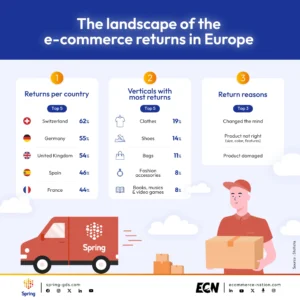
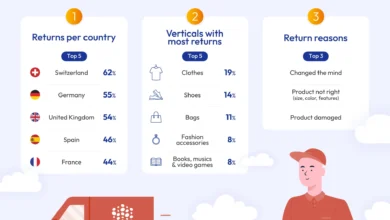
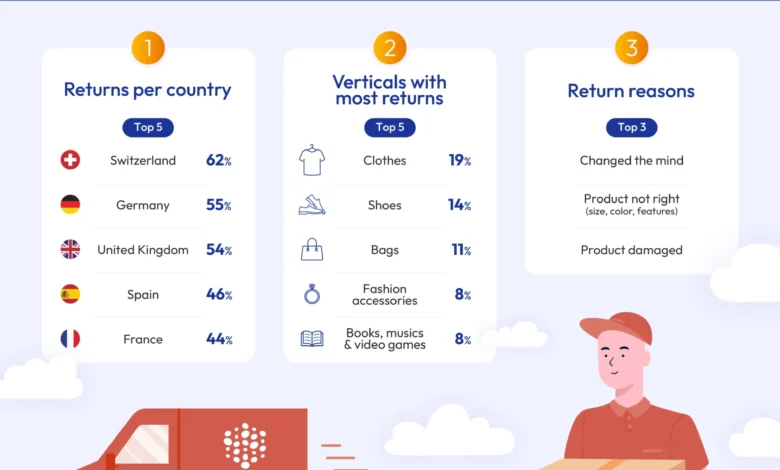
According to comprehensive market analyses from organizations such as Statista, Switzerland recorded the highest average return rate per online buyer in Europe at 62% during the 2023 retail cycle. Germany followed closely with a 55% return rate, while the United Kingdom completed the continental podium at 54%. These elevated percentages are largely attributable to deeply entrenched consumer expectations regarding product evaluation at home, particularly within apparel and consumer goods sectors.
The sheer volume of parcels moving backward through the supply chain introduces profound economic strains. Retailers face a cascade of expenses, including inbound shipping fees, labor costs associated with manual inspection and grading, restocking overhead, and the unavoidable revenue depreciation incurred when reselling returned items through secondary channels or liquidation outlets at heavily discounted prices.
Sector-Specific Vulnerabilities and Consumer Motivations
While nearly every retail vertical experiences some degree of reverse logistics, certain industries bear a disproportionate burden. The fashion and apparel sector consistently reports the highest incidence of returns, driven by the subjective nature of personal style, inconsistent sizing conventions across brands, and the pervasive consumer habit of "bracketing"—ordering multiple sizes or colors of the same item with the explicit intent of keeping only a single piece and returning the rest.
Beyond fashion, consumer electronics and household goods generate significant return volumes, typically ranging around 6% of total transactions within their respective categories. These returns are less frequently driven by aesthetic preferences and more commonly stem from technical compatibility issues, complex operational interfaces, manufacturing defects, or unfulfilled product expectations.
Consumer motivations for initiating a return generally center on several predictable catalysts:
- Sizing and fit discrepancies, which remain the primary driver in apparel and footwear.
- Products failing to match online descriptions, photographic representations, or promotional specifications.
- Impulse purchases followed by buyer’s remorse.
- The aforementioned bracketing phenomenon, particularly prevalent during seasonal sales peaks and promotional holidays.
Logistical and Regulatory Complexities in Cross-Border Trade
For merchants operating within the interconnected European market, managing returns extends far beyond domestic borders, introducing complex layers of logistical and legal friction. Cross-border commerce requires robust infrastructural support to manage disparate return destinations, extended processing windows, and stringent parcel traceability mandates.
Regulatory divergence among European Union member states complicates matters further. Retailers must navigate a mosaic of consumer protection laws, statutory warranty frameworks, and varying mandates regarding refund timelines and exchange procedures. A policy that complies seamlessly with commercial law in one jurisdiction may inadvertently violate consumer rights legislation in another, exposing businesses to legal liabilities and reputational damage.
Furthermore, international trade documentation adds administrative overhead. Customs regulations governing returned goods require meticulous record-keeping to prevent double-taxation on import duties and value-added tax (VAT) reconciliations. Companies failing to implement sophisticated cross-border return management systems frequently experience severe bottlenecks at customs checkpoints, resulting in delayed refunds and frustrated consumers.

The Environmental Imperative: Balancing Logistics and Sustainability
Beyond the immediate financial and operational hurdles, the ecological impact of e-commerce returns has emerged as a critical concern for regulators, corporations, and consumers alike. The continuous transit of parcels back and forth across national transport networks generates substantial carbon emissions, exacerbating the environmental footprint of online retail.
Compounding the transport-related emissions is the excessive utilization of packaging materials. Traditional return workflows often rely on single-use plastics, bubble wrap, and non-recyclable fillers. Moreover, varying national standards for packaging waste and mandatory labeling add compliance burdens for cross-border sellers.
Perhaps most alarming from a sustainability standpoint is the ultimate disposition of returned merchandise. Historically, a fraction of returned goods that cannot be immediately reintroduced to primary stock—due to minor packaging damage or sanitary considerations—has faced disposal via incineration or landfilling. While regulatory pressure and public scrutiny are gradually forcing brands toward second-hand resale, donation, and advanced recycling programs, the volume of waste generated by reverse logistics remains a formidable challenge for the industry.
Managing Consumer Expectations in a Competitive Market
Consumer psychology dictates that the ease of a return policy significantly influences initial purchasing decisions. Contemporary shoppers routinely evaluate a merchant’s return terms before finalizing a shopping cart, prioritizing transparency, clear cost structures, and accessible drop-off locations.
When retailers impose restrictive policies, high restocking fees, or cumbersome return procedures, consumer trust erodes rapidly. Delays in processing refunds or a lack of nearby return drop-off points generate measurable friction, frequently resulting in permanent customer churn and negative brand sentiment shared across digital review platforms. Consequently, customer retention strategies increasingly hinge on transforming the inevitable return into a seamless, positive brand touchpoint rather than an adversarial transaction.
Strategic Frameworks for Optimizing E-Commerce Returns
To mitigate the multifaceted challenges of reverse logistics, e-commerce merchants are deploying targeted optimization strategies designed to harmonize customer satisfaction with operational efficiency.
Transparent and User-Friendly Policies
Leading merchants are adopting clear, transparent return policies that remove ambiguity from the post-purchase phase. Providing prepaid return labels within the original shipment, offering extended return windows, and automating instant refunds upon parcel scan-in significantly enhance the consumer experience while fostering brand loyalty.
Advanced Technological Integration
The deployment of technology-driven return management platforms has become essential for scaling operations. Automated portal systems allow consumers to initiate returns effortlessly, while real-time parcel tracking tools provide visibility across the reverse supply chain. Furthermore, advanced warehouse management software (WMS) streamlines the grading, restocking, and reallocation of returned inventory, drastically reducing processing times and labor overhead.
Data-Driven Prevention
Mitigating returns at the source requires rigorous data analytics. By systematically categorizing the reasons behind returned merchandise, retailers can identify systemic issues. For instance, apparel brands utilizing granular return analytics can update size charts, refine fabric descriptions, or correct sizing inconsistencies with manufacturing partners. Similarly, electronics sellers can analyze defect trends to tighten quality control protocols upstream.
Sustainable Reverse Logistics
Addressing the ecological impact of returns requires a fundamental shift toward circular economy principles. Merchants are increasingly adopting biodegradable or reusable packaging materials, educating consumers on the carbon footprint associated with unnecessary returns, and implementing batch-shipping protocols to minimize transportation emissions. Consolidating returned goods prior to transit reduces the number of active delivery vehicles on the road, aligning environmental stewardship with cost-reduction objectives.
Conclusion
The landscape of e-commerce returns across Europe underscores a fundamental reality: reverse logistics is an unavoidable, permanent component of digital commerce. While the challenges—encompassing high operational costs, regulatory fragmentation, logistical bottlenecks, and environmental degradation—are substantial, they are not insurmountable. By embracing user-centric return frameworks, leveraging advanced technological infrastructure, and committing to sustainable business practices, forward-thinking merchants can successfully navigate the complexities of the European market, transforming a traditional operational liability into a distinct competitive advantage.