Navigating the Complex Landscape of European E-Commerce Returns: Challenges, Logistics, and Sustainable Solutions

The modern digital marketplace dictates that the consumer journey does not culminate with the successful authorization of a digital shopping cart. Rather, the post-purchase phase—specifically merchandise returns—has evolved into a foundational pillar of modern retail operations. Across the European Union and its neighboring economic zones, the management of product returns represents a complex intersection of logistics, consumer psychology, environmental stewardship, and corporate profitability. As e-commerce penetration deepens across the continent, online merchants face mounting pressure to balance seamless consumer experiences with the stark economic and ecological realities of reverse logistics.
The Scale of European E-Commerce Returns: Current Statistics and Market Behavior
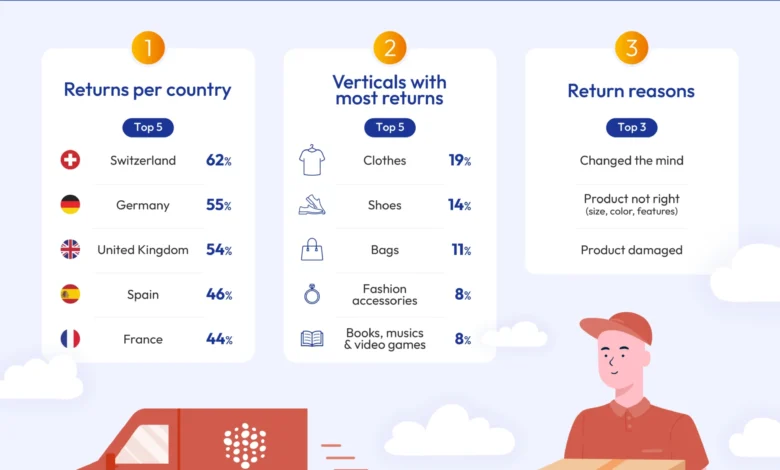
Recent market analyses indicate that the average return rate for online purchases across Europe consistently hovers between 30% and 40%. However, this macro-level statistic masks stark regional variations influenced by local consumer habits, cultural expectations, and prevailing legislative frameworks. According to comprehensive data compiled by Statista, Switzerland recorded the highest return rate per online buyer in Europe at 62% in 2023. Germany closely mirrored this trend with a 55% return rate, while the United Kingdom rounded out the top tier with 54% of online purchases being sent back to retailers.
These high figures are largely driven by specific consumer behaviors, most notably "bracketing." This practice involves consumers purchasing multiple variations of a single item—such as different sizes or colors of a garment—with the explicit intention of keeping only one and returning the rest. While bracketing minimizes buyer remorse and mitigates the limitations of digital shopping, it places an immense strain on supply chains.
Certain retail sectors bear the brunt of this phenomenon. The fashion and apparel industry consistently reports the highest volume of returns, propelled by subjective style preferences and sizing inconsistencies across different brands. Concurrently, consumer electronics and household goods experience notable return rates, often triggered by technical compatibility issues, manufacturing defects, or unmet product expectations. Industry analysts note that understanding the psychological and logistical triggers behind these returns is the first critical step for merchants aiming to protect their operating margins without alienating their customer base.
Logistical Complexities and Cross-Border Regulatory Hurdles
Managing the physical journey of a returned item is exponentially more complicated than fulfilling an outbound order. Reverse logistics requires a robust, agile infrastructure capable of handling fragmented return streams, verifying product integrity, and executing rapid restocking or refurbishment. For businesses operating cross-border within Europe, these logistical challenges are compounded by a labyrinth of regulatory and fiscal requirements.
The European single market facilitates the free movement of goods, yet cross-border returns introduce friction regarding varying national consumer protection laws, value-added tax (VAT) reclamation processes, and regional refund timelines. Merchants must navigate divergent legal mandates across EU member states regarding warranty periods, consumer statutory rights, and mandatory return windows. Furthermore, differing national standards for product packaging, environmental compliance labeling, and hazardous material disposal—particularly for electronics—force retailers to adopt localized compliance strategies.
Financial burdens naturally follow these operational hurdles. The total cost of a return encompasses outbound and inbound shipping fees, labor costs associated with inspection and repackaging, inventory depreciation, and the ultimate discounting or write-off of unsellable merchandise. Industry experts emphasize that unmanaged return flows can rapidly erode a retailer’s gross margins, forcing companies to reevaluate historically lenient return policies.
The Environmental Imperative: Ecological Consequences of Reverse Logistics
Beyond the balance sheet, the surge in European e-commerce returns has ignited severe environmental concerns. The physical transportation of millions of parcels back to distribution centers generates substantial carbon dioxide emissions, exacerbating the logistics sector’s carbon footprint. Additionally, the standard return process relies heavily on single-use packaging materials, including plastic mailers, non-biodegradable tape, and bubble wrap.
Compounding the carbon footprint is the fate of the returned merchandise itself. When items cannot be easily inspected, cleaned, and resold as new, the economic cost of restocking can exceed the value of the product. Consequently, a significant percentage of returned goods face secondary disposal fates, including liquidation, downcycling, or, in worst-case scenarios, destruction via incineration or landfill deposition.
Environmental advocacy groups and European regulatory bodies have increasingly scrutinized these practices. Emerging European Union directives focusing on the circular economy and sustainable product design are expected to hold retailers more accountable for the end-of-life lifecycle of their merchandise, compelling companies to overhaul their reverse supply chains in favor of eco-friendly alternatives.
Strategic Solutions for Optimizing E-Commerce Returns
To survive and thrive in the competitive European landscape, online merchants are transitioning from reactive damage control to proactive return optimization strategies. Industry leaders are deploying a multifaceted approach encompassing policy restructuring, technological integration, data analytics, and sustainable logistics.
Implementing Transparent and User-Friendly Policies
While some retailers have begun charging restocking or return fees to curb abusive return patterns, market data suggests that overly restrictive policies can severely damage customer trust. Successful merchants strike a balance by offering clear, transparent return policies paired with user-friendly interfaces, such as digital self-service portals and strategically located local drop-off points. Lowering the psychological and financial barrier to returning an item actually builds long-term brand loyalty, transforming a potentially negative customer service interaction into a positive brand touchpoint.
Leveraging Advanced Technological Solutions
Automation and artificial intelligence are revolutionizing reverse logistics. Modern e-commerce platforms now integrate sophisticated return management systems (RMS) that automate authorization workflows, generate prepaid shipping labels, and provide real-time parcel tracking. In warehouses, advanced inventory management software accelerates the inspection and restocking cycle, ensuring that returned items are quickly reintegrated into active inventory or routed to appropriate refurbishment channels, thereby minimizing holding costs.
Utilizing Data Analytics for Predictive Prevention
Mitigating returns at the source remains the most effective long-term strategy. Retailers are increasingly relying on granular data analytics to identify the root causes of product returns. By analyzing return codes, customer feedback, and product-specific metrics, businesses can pinpoint systemic issues—such as inaccurate sizing charts, misleading product descriptions, or recurring manufacturing defects. Armed with these insights, merchants can update their digital storefronts, refine product listings, and proactively resolve quality control issues before items reach the consumer.
Transitioning to Circular and Sustainable Practices
In alignment with broader corporate sustainability goals, European merchants are overhauling their packaging and transport methods. This includes adopting biodegradable, compostable, or reusable packaging materials that customers can utilize for the return journey. Furthermore, companies are implementing batch shipping and consolidated return transportation networks to reduce the number of transport vehicles on the road, effectively lowering carbon emissions while streamlining operational costs.
Conclusion
The evolution of e-commerce returns in Europe demonstrates that reverse logistics is no longer a peripheral operational concern, but a central determinant of business viability. As return rates remain stubbornly high across key European markets, merchants face a delicate balancing act. By embracing technological innovation, refining data-driven prevention strategies, and committing to sustainable practices, online retailers can successfully navigate regulatory and financial hurdles. Ultimately, transforming the returns process from a cost center into a strategic differentiator will define the market leaders of the European digital economy in the years ahead.