Payday Aces High Brings High-Stakes Cooperative Heist Action to Virtual Reality Platforms

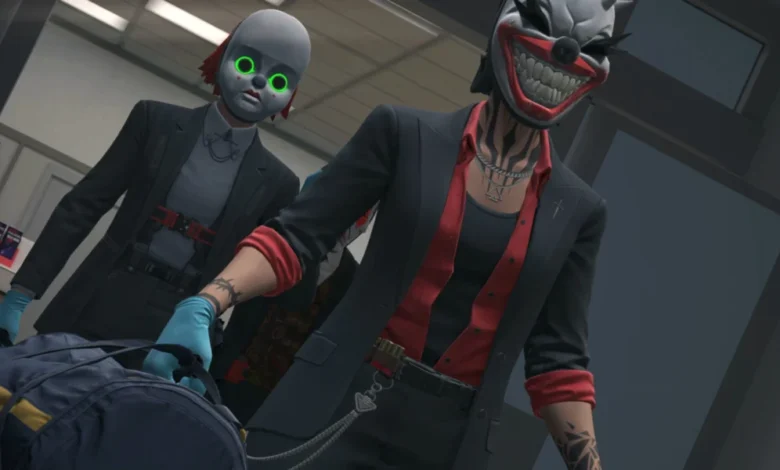
The virtual reality landscape has expanded its repertoire of cooperative tactical shooters with the release of Payday Aces High. Developed by Fast Travel Games, the title serves as a dedicated VR entry in the long-standing Payday franchise. Available now on Meta Quest, SteamVR, and Steam Frame, the game departs from the traditional desktop-based iteration of the series to focus on immersive, physics-driven heist mechanics. The core premise tasks players with assuming the roles of four distinct characters—the Ace of Hearts, Clubs, Diamonds, and Spades—as they orchestrate a revenge campaign against Warren Jupiter, a billionaire antagonist responsible for their wrongful incarceration.
Franchise Context and Development Evolution
The release of Payday Aces High arrives at a pivotal moment for the franchise. The series, originally created by Overkill Software, has long been defined by its intense, wave-based cooperative gameplay. However, the 2023 release of Payday 3 faced significant criticism from the community due to technical instability, server issues at launch, and a perceived departure from the mechanical identity that cemented Payday 2 as a cult classic.
Fast Travel Games, known for its expertise in the VR space with titles like Wraith: The Oblivion – Afterlife and Cities: VR, was tapped to steer this new project. By shifting the focus to virtual reality, the developers have sought to return to the series’ roots—emphasizing coordination, equipment management, and the high-tension atmosphere of professional theft—while leveraging the unique spatial interaction capabilities of modern VR hardware.
Gameplay Mechanics and Technical Implementation
Payday Aces High utilizes a combination of traditional objective-based progression and VR-native interaction systems. Unlike its predecessors, which relied on button-based inputs for every interaction, this title integrates physical mechanics. Players must manually handle equipment, perform skill-check minigames to interface with terminals, and engage in tactical shooting using physics-based weapon handling.

The on-body inventory system allows for a more tactile approach to gear management, requiring players to physically reach for ammunition or secondary equipment during the heat of a firefight. While the game strips away certain features present in earlier installments—such as the ability to take hostages—it compensates with a robust progression system centered on gun customization and character-specific perks.
The four playable archetypes, while aesthetically distinct, function as a blank slate for player progression. Statistics and ability sets are determined by the player’s advancement through the campaign rather than inherent character traits. This design choice encourages experimentation, allowing teams to balance their loadouts based on the requirements of specific missions rather than being tethered to a rigid class structure.
Launch Content and Roadmap
At launch, Payday Aces High features six primary missions, spanning environments ranging from high-security financial institutions to specialized research compounds. The narrative structure revolves around the systematic dismantling of Warren Jupiter’s operations.
Fast Travel Games has outlined a post-launch support schedule intended to maintain player engagement through the end of the year and into 2027. A seventh mission, titled "Coup de Grace," is scheduled for release on December 14. This content will be provided at no additional cost to existing owners. The studio has also confirmed plans for periodic community challenges. These initiatives are designed to encourage global participation, with rewards linked to the successful completion of milestones by the player base at large.
Full crossplay support is a cornerstone of the game’s infrastructure. By allowing players across Meta Quest and SteamVR ecosystems to play together, the developers are attempting to mitigate the fragmentation often seen in the VR multiplayer market. This functionality ensures that the player pool remains centralized, which is essential for maintaining the game’s four-player cooperative loop.

Performance and VR Integration Analysis
Performance testing on the Meta Quest 3 indicates that the game is optimized for standalone hardware while retaining visual fidelity comparable to PC-based VR counterparts. The use of spatial audio and haptic feedback plays a critical role in the game’s immersion.
However, the transition to VR has highlighted certain limitations in the current design. Technical critiques have noted that while the gunplay is responsive, the game lacks some of the environmental interactivity expected in modern VR titles. For example, the inability to interact with destructible glass or the absence of a manual distraction system—such as throwing objects to divert AI pathfinding—represents a missed opportunity to fully utilize the medium’s potential for stealth-based gameplay. Despite these omissions, the core loop of completing, failing, and refining heist strategies remains the primary draw for the target audience.
The Broader Impact of VR Tactical Shooters
The entry of an established intellectual property like Payday into the VR market signifies a broader shift in the industry. Historically, AAA franchises have been hesitant to commit full-scale, dedicated VR titles due to the limited install base compared to traditional consoles and PC.
Payday Aces High serves as a litmus test for the viability of the cooperative shooter genre in VR. If the title sustains a consistent player base, it may encourage other publishers to invest in "VR-first" iterations of their core franchises. The success of the game relies heavily on the "replayability factor." By offering procedurally variable scenarios and a deep progression system, the game aims to overcome the common pitfall of VR titles that suffer from short lifespans and limited content.
Future Implications and Studio Strategy
Looking ahead, the success of Payday Aces High will be measured by the retention rate following the December content drop. The inclusion of DLC missions and cosmetic mask collections suggests a long-term monetization strategy focused on live-service elements.

From an industry perspective, Fast Travel Games’ approach to this project demonstrates a maturation in VR game design. Rather than porting an existing game with minimal adjustments, the team built the game from the ground up to accommodate the spatial requirements of VR. This methodology—prioritizing physics-based interaction over sheer graphical fidelity—is increasingly seen as the gold standard for high-end virtual reality development.
The decision to focus on a four-player co-op structure also aligns with current market trends favoring "social gaming" experiences. As VR hardware becomes more accessible, the emphasis on cross-platform communication and shared objectives is likely to become a defining feature of the next generation of VR software.
Conclusion
Payday Aces High provides a significant, if imperfect, addition to the VR library. By stripping back the unnecessary complexities of its predecessors and focusing on the tactile satisfaction of a well-executed heist, the game succeeds in capturing the high-energy, high-stakes spirit that made the series a staple of the cooperative shooter genre. While it lacks some of the nuanced environmental interactions that could have elevated its stealth mechanics, its commitment to physics-based gameplay, robust progression, and consistent post-launch support positions it as a noteworthy title in the current VR landscape. As the developers continue to roll out the roadmap through late 2026 and into 2027, the game’s longevity will depend on the community’s engagement with its ongoing challenges and the developers’ responsiveness to player feedback regarding its mechanical limitations. For now, it stands as a compelling experience for players seeking a dedicated, cooperative heist simulator within the virtual reality medium.