Samsung Galaxy S27 Regulatory Filings Reveal Base Model Will Retain 25W Charging Speeds

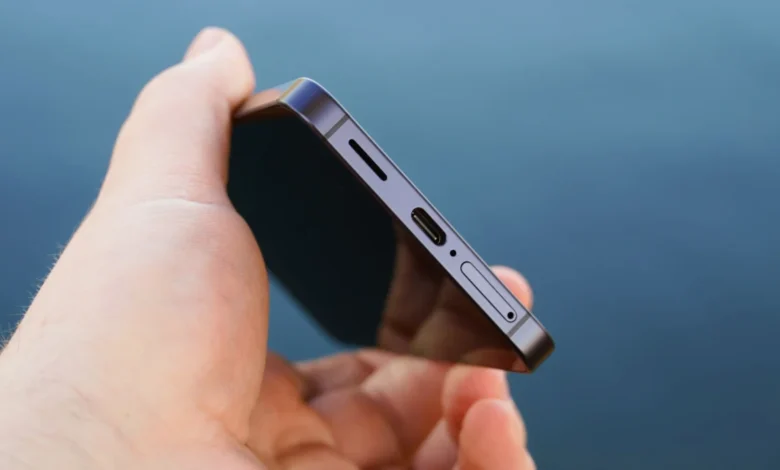
Recent regulatory documentation has shed light on the hardware specifications of Samsung’s upcoming flagship smartphone lineup, indicating that the base-tier device will not feature any improvements to its wired power delivery systems. According to certification filings processed by Denmark’s UL Solutions (Demko), the standard Samsung Galaxy S27 will remain capped at 25W wired charging. This specification preserves a charging ceiling that Samsung has maintained for its entry-level flagship offerings for half a decade.
The discovery stems from database entries dated October 23, which catalog multiple global iterations of the SM-S952 model family intended for release across North America, Europe, Asia, and domestic markets in South Korea. While tech enthusiasts frequently anticipate generational leaps in power management and charging capabilities ahead of major hardware unveilings, the latest compliance documents suggest that the consumer electronics giant has opted for continuity over innovation for its baseline model’s replenishment cycle.
Regulatory Discoveries and Global Model Consistency
The UL Solutions database entries detail two primary compliance certificates associated with the upcoming base flagship: DK-187425-UL and DK-187435-UL. Spanning approximately ten distinct regional identifiers—including the US-bound SM-S952U and SM-S952U1, the Canadian SM-S952W, the European SM-S952B, and the South Korean SM-S952N—the documentation confirms that Samsung’s charging limitation is not a regional restriction. Consumers across all major international markets will receive identical hardware limitations regarding wired power input.
The specific metrics listed in the regulatory filings indicate a rated output of 9 volts of direct current (9V DC) at 2.77 amperes. Mathematical translation of these electrical parameters yields an effective maximum delivery of approximately 24.93 watts, universally rounded to the commercial designation of 25W. This exact electrical profile mirrors the capabilities embedded within preceding base models, including the Galaxy S26 and its predecessors extending back several generations.
Chronology of Samsung’s Charging Constraints
To understand the industry significance of Samsung’s decision, it is necessary to examine the historical trajectory of the company’s charging standards. The 25W baseline charging limit for standard flagship devices is not a recent compromise; it has been a foundational element of Samsung’s smartphone engineering strategy since the introduction of the Galaxy S20 series in early 2020.
Throughout the intervening years—encompassing the Galaxy S21, S22, S23, S24, S25, and S26 generations—Samsung consistently restricted its base-tier models to this exact electrical output. While the company introduced higher tier-specific charging thresholds for select Plus and Ultra variants over the years, the entry-level flagship has remained static. This prolonged adherence to a 2020 charging benchmark stands in sharp contrast to the rapid iteration cycles typical of the broader mobile telecommunications industry, where rapid replenishment technologies have evolved aggressively.
The Competitive Landscape and Market Pressures
Samsung’s decision to maintain a 25W ceiling on the Galaxy S27 places the device in a unique position relative to its primary competitors, particularly original equipment manufacturers (OEMs) based in China. Over the past five years, competitors have systematically increased wired charging speeds across all market segments. It is now common for rival flagship devices to feature wired charging capabilities rated at 67W, 120W, or even higher, enabling complete battery replenishment in under half an hour.
By comparison, replenishing a baseline Galaxy S-series device via a 25W wired connection typically requires over an hour from a depleted state. While Samsung has historically prioritized battery longevity, thermal management, and cell degradation mitigation over sheer charging velocity—citing safety standards established after historical battery incidents—the widening gap between Samsung’s baseline offerings and competing flagships continues to draw scrutiny from industry analysts and consumers alike.
Discrepancies Within the Broader Galaxy S27 Portfolio
While the entry-level Galaxy S27 appears tethered to legacy charging speeds, leaked documentation and prior regulatory filings from China’s Compulsory Certification (3C) system indicate that higher-tier devices within the upcoming family may receive meaningful upgrades.
According to preliminary supply chain and regulatory intelligence, the Galaxy S27 Plus is anticipated to support 45W wired charging, aligning it with historical Ultra-tier capabilities. Furthermore, emerging data points suggest that advanced models—potentially designated as the Galaxy S27 Pro and Galaxy S27 Ultra—could push charging thresholds upward to approximately 60W. If these unverified specifications are confirmed upon official release, Samsung will further stratify its flagship lineup, creating a wider performance chasm between the base model and its more expensive counterparts.
Mitigation Through Silicon Efficiency and Power Management
To offset the lack of wired charging velocity improvements, Samsung is expected to rely heavily on advancements in processor energy efficiency and battery optimization. Industry reports indicate that the standard Galaxy S27 will be powered by the Exynos 2700 system-on-chip in select global regions, while North American markets will likely receive a variant equipped with Qualcomm’s Snapdragon 8 Elite Gen 6 architecture.
Advanced fabrication nodes for these next-generation processors promise lower power consumption during intensive workloads, idle states, and background operations. Increased silicon efficiency theoretically reduces the frequency with which users need to recharge their devices throughout the day. However, industry analysts note that while superior power efficiency extends overall battery endurance, it does not solve the fundamental inconvenience of extended tethering times when a full recharge finally becomes necessary.
Absence of Wireless and Capacity Data
It is important to note that the current disclosures from UL Solutions are strictly limited to wired power delivery parameters. The regulatory filings do not disclose wireless charging speeds, proprietary fast-charging protocols, or physical battery capacities for the Galaxy S27 family.
Samsung has not yet made any official public announcements regarding the Galaxy S27 lineup, and corporate policy dictates that pre-release regulatory documentation should not be interpreted as a definitive feature list until commercial launch events take place. Nevertheless, historical precedent strongly suggests that these early compliance certifications accurately reflect the final production hardware specifications.
Broader Industry Implications and Consumer Response
The persistence of 25W charging on Samsung’s baseline flagship highlights a broader strategic calculation within the mobile industry. Major manufacturers are increasingly balancing hardware specifications against manufacturing costs, thermal chassis design constraints, and long-term battery health guarantees. High-wattage charging introduces significant thermal stress, which can accelerate chemical aging within lithium-ion cells unless mitigated by complex cooling systems or dual-cell battery architectures—solutions that are more challenging to implement within the compact dimensions of a standard, entry-level flagship smartphone.
For consumers, the upcoming release of the Galaxy S27 presents a familiar dilemma. Those invested in the Samsung ecosystem who prefer a smaller form factor will continue to receive a polished, highly efficient device backed by extensive software support, but they will do so with charging technology that trails contemporary market standards. Unless consumer pushback forces a late-stage engineering pivot, buyers looking for rapid power replenishment in a base-tier flagship will likely need to look toward competing brands or wait another product cycle for Samsung to overhaul its entry-level charging architecture.