Samsung Galaxy S27 Series Camera Leaks Reveal A Controversial Strategy Of Hardware Consolidation And Stagnation

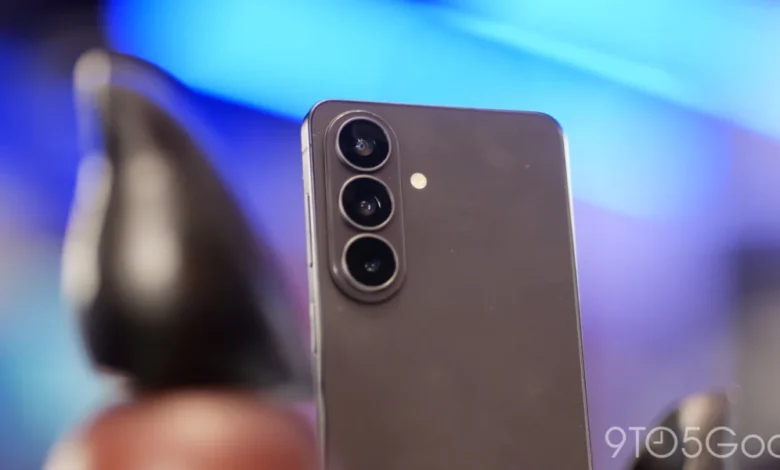
The upcoming Samsung Galaxy S27 series is currently the subject of intense industry scrutiny as emerging reports detail a significant shift in the company’s mobile imaging strategy. According to the latest data provided by industry analysts and supply chain leaks, Samsung appears to be prioritizing cost-efficiency and component consolidation over the iterative hardware leaps that have historically defined its flagship "Ultra" branding. While the lineup—consisting of the standard Galaxy S27, S27+, S27 Pro, and S27 Ultra—promises a high-end experience, the technical specifications suggest a calculated trade-off that may leave power users and photography enthusiasts questioning the direction of the Korean tech giant’s premium hardware development.
The Landscape of the S27 Camera Architecture
Recent technical disclosures indicate that Samsung is evaluating a bifurcated camera strategy for the upcoming generation. The entry-level devices, the Galaxy S27 and S27+, are poised to retain main sensors identical to their predecessors, alongside ultrawide hardware that has remained largely unchanged since the Galaxy S23 launch. This approach signals a departure from the "spec-first" philosophy, suggesting that Samsung is banking on software optimization and artificial intelligence to bridge the gap between hardware cycles.
Conversely, the S27 Pro and S27 Ultra models are slated to receive a more substantial overhaul, characterized by the inclusion of a 200MP primary sensor and a 50MP ultrawide shooter. However, the most contentious development is the reduction in telephoto capability. The Pro model is expected to feature a 3x optical zoom, while the Ultra model will utilize a 5x lens. This represents a structural shift, as the removal of a dedicated secondary telephoto lens—a staple of the Ultra experience—marks a departure from the versatile focal-length flexibility that previously distinguished Samsung’s top-tier devices from competitors.
Technical Specification Breakdown
The following data outlines the projected sensor configurations based on current supply chain reports:
| Model | Main Sensor | Ultrawide | Telephoto | Selfie |
|---|---|---|---|---|
| Galaxy S27 | 50MP (Sony IMX955 / S5KGNG) | 12MP (Sony IMX564) | 12MP, 3x | 12MP |
| Galaxy S27+ | 50MP (Sony IMX955 / S5KGNG) | 12MP (Sony IMX564) | 12MP, 3x | 12MP |
| Galaxy S27 Pro | 200MP (Samsung S5KHP6) | 50MP (S5KJN3 / IMX855) | 50MP, 3x | 16MP |
| Galaxy S27 Ultra | 200MP (Samsung S5KHP6) | 50MP (S5KJN3 / IMX855) | 50MP, 5x | 16MP |
Chronology of Samsung’s Imaging Evolution
To understand the weight of these leaks, one must view them through the lens of Samsung’s historical camera progression. Since the introduction of the 108MP sensor in the S20 Ultra, Samsung has consistently marketed its flagship phones as the definitive tools for mobile photography.

- 2020-2022: The era of the "Space Zoom" focus. Samsung prioritized high-resolution sensors and long-range periscope zoom capabilities, effectively setting the standard for mobile telephoto photography.
- 2023-2024: The pivot toward computational photography. With the Galaxy S23 and S24 series, Samsung began placing increased emphasis on AI-driven image processing, noise reduction, and low-light performance.
- 2025-2026: The current consolidation phase. As hardware costs rise and the marginal gains of physical sensor size diminish, Samsung appears to be standardizing components across its mid-to-high-tier devices to improve supply chain logistics and margin management.
This trajectory suggests that the S27 series represents a milestone in corporate strategy: a pivot away from hardware-intensive "megapixels wars" toward a more sustainable, if less exciting, manufacturing model.
Industry Implications and Competitive Pressure
The decision to limit hardware upgrades in the S27 series comes at a time when the smartphone market is experiencing significant stagnation. Global smartphone shipments have faced pressures from economic volatility, and consumers are increasingly holding onto their devices for longer periods—often exceeding three years.
Samsung is not operating in a vacuum. Competitors, particularly Chinese OEMs such as Oppo, Xiaomi, and Vivo, have been aggressive in their pursuit of imaging dominance. These firms have frequently partnered with legacy camera brands like Leica, Zeiss, and Hasselblad, integrating 1-inch type sensors that theoretically offer superior light-gathering capabilities compared to the standard sensors typically found in Samsung’s non-Ultra models.
When a brand like Samsung, which claims a dominant position in the Android ecosystem, chooses to recycle sensors from previous generations, it creates a "value gap." If the hardware remains static, the burden of justification for an annual upgrade shifts entirely to software features and the ecosystem. If these features fail to offer a tangible improvement in daily usage, the risk of customer churn to rival platforms increases significantly.
The Cost-Benefit Analysis of Modern Flagships
Market analysts suggest that the primary driver behind this move is the escalating cost of semiconductor manufacturing and high-end image sensors. With the cost of mobile processors (SoCs) and high-density memory (RAM) reaching record highs, Samsung is under immense pressure to maintain competitive price points without sacrificing profitability.
By utilizing the same sensor architecture across multiple models—a process known as platform sharing—Samsung can achieve economies of scale. For the consumer, this could mean a more stable pricing structure for the S27 and S27+; however, for the S27 Ultra, the lack of a secondary telephoto lens is a reduction in hardware value. For many professional users, the loss of the secondary zoom lens is a functional regression, as it eliminates a specific focal length that is vital for portraiture and candid photography.

Analyzing the "Pro" Tier Expansion
The inclusion of a "Pro" model in the leaked documentation is particularly noteworthy. Historically, Samsung has relied on the "Plus" model to bridge the gap between the base and the Ultra. The potential introduction of a Pro model suggests that Samsung may be attempting to segment its audience further. If the Pro model captures the features of the Ultra while maintaining a more approachable price point, it could cannibalize sales from the Ultra, or conversely, it could be a strategic attempt to capture the market segment that finds the Ultra too bulky but desires more than the standard model offers.
Expected Responses and Future Outlook
While Samsung has not issued an official statement regarding these leaked specifications, the industry expectation is that the company will lean heavily on the "Galaxy AI" suite during its upcoming Unpacked event. Samsung is likely to frame the S27 series not as a collection of hardware components, but as an integrated platform where the camera is merely one node in a larger, AI-driven ecosystem.
From a journalistic perspective, the implications are clear: the era of the annual hardware revolution is fading. In its place is an era of iterative refinement. For the average consumer, this may result in more reliable, predictable device performance. For the enthusiast, however, the S27 series appears to be a signal that the peak of mobile hardware innovation has hit a plateau, necessitating a new form of value proposition—one that Samsung is currently in the process of defining.
As we approach the official announcement, the focus for observers will be on whether the software improvements can genuinely compensate for the hardware limitations. The success of the Galaxy S27 will depend on whether the consumer perceives the device as a "new" product or merely an update in name only. Given the competitive landscape, the latter could prove to be a significant challenge for Samsung in the coming fiscal year. The market remains volatile, and while these leaks provide a comprehensive look at the upcoming lineup, final production decisions are often fluid, and the ultimate test will arrive when the devices reach the hands of reviewers and the general public.
Related posts: