The Shifting Search Landscape: A New Era of Visibility
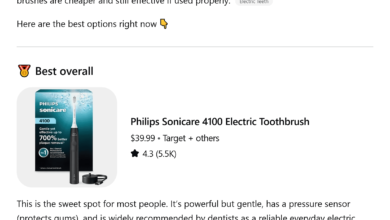
For decades, Search Engine Optimization (SEO) focused predominantly on securing top organic rankings on Google’s Search Engine Results Pages (SERPs). This involved meticulous keyword research, technical site audits, and on-page content optimization to signal relevance and authority to traditional crawlers. However, the introduction of large language models (LLMs) and generative AI into search has fundamentally reshaped this paradigm. Platforms like Google’s AI Overviews (AIO), ChatGPT, Perplexity, and Gemini are increasingly providing direct answers to user queries, often synthesizing information from multiple sources without requiring a click-through to individual websites.
This evolution marks a significant chronology in search:

- Early 2000s: Keyword-centric, focus on density and link quantity.
- Late 2000s – Early 2010s: Emphasis on content quality, user experience, and semantic understanding (Hummingbird update).
- Mid-2010s – Present: Mobile-first indexing, E-E-A-T (Experience, Expertise, Authoritativeness, Trustworthiness), core web vitals, and complex algorithm updates rewarding comprehensive, high-quality content.
- 2023 Onwards: The "Generative Search Era," where AI-powered answers complement or even supersede traditional organic listings. This new reality demands Answer Engine Optimization (AEO), a discipline focused on structuring content for AI consumption and citation.
The implication for SaaS businesses is immediate and profound. While the 702% average ROI from SEO for B2B SaaS remains compelling, achieving this ROI now requires a dual strategy: optimizing for both traditional SERP rankings and AI-generated answers. Data from industry reports suggests a growing percentage of queries are being answered directly by AI, especially for informational and comparison-based searches prevalent in the early stages of a SaaS buyer’s journey. If a SaaS brand’s content isn’t optimized for AI citation, it risks losing significant mindshare and potential leads to competitors who are.
Why SaaS Businesses Can’t Afford to Ignore Modern SEO Tools
Organic search has long been lauded as one of the most cost-effective and compounding channels for B2B SaaS growth. Unlike paid advertising, which ceases to deliver results the moment spending stops, organic traffic builds over time, creating a sustainable pipeline of qualified leads. This inherent advantage makes SEO a high-leverage investment, especially for SaaS companies under pressure to reduce customer acquisition costs (CAC) and improve lifetime value (LTV).
However, raw effort alone is insufficient. The complexity of modern SaaS websites—often featuring thousands of product pages, intricate knowledge bases, and rapidly expanding blog content—necessitates sophisticated tooling. Without dedicated SEO platforms, marketing teams resort to guesswork, manual audits, and fragmented data analysis, making it nearly impossible to connect organic efforts to tangible business outcomes like pipeline generation and closed-won revenue.
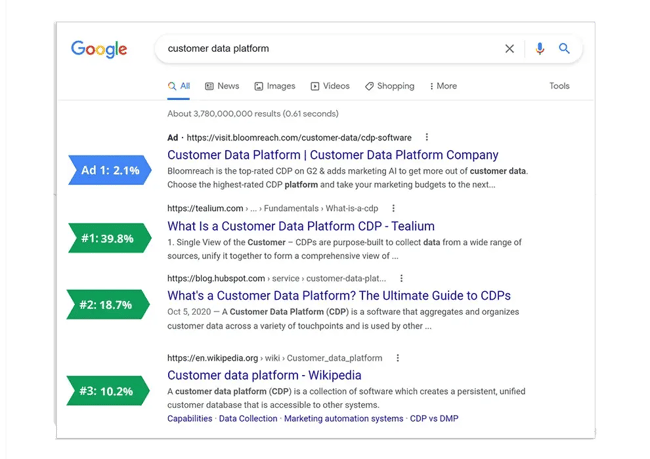
Consider the stark reality of traditional SERPs: click-through rates (CTRs) plummet dramatically after the top three organic results. Reports indicate that positions 4-10 often see CTRs fall into single digits, effectively rendering lower rankings almost invisible. In the highly competitive SaaS market, where numerous providers vie for attention, securing a top-tier position is paramount. Modern SEO tools provide the data-driven insights and automation necessary to claim and defend these coveted spots, while simultaneously preparing content for the emerging AI search landscape.
Key Pillars of an Effective SaaS SEO Tool Stack
The selection of SEO tools for a SaaS business should be guided by specific workflow needs, addressing the entire content lifecycle from ideation to attribution. While individual requirements vary, five core features stand out as essential for any modern SaaS SEO tech stack:
- Keyword Research and Competitive Intelligence: Beyond simple volume metrics, SaaS companies need to understand buyer intent across the entire funnel—from broad awareness to specific decision-making queries. Tools must identify not only what people search for but why, analyzing competitor rankings and uncovering strategic market gaps. This requires capabilities like long-tail keyword discovery, semantic keyword clustering, and sophisticated competitive analysis.
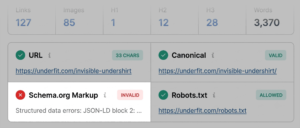
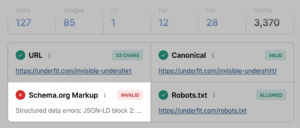
- Technical SEO Auditing: A robust technical foundation is non-negotiable. SaaS websites, with their dynamic content and frequent updates, are prone to issues like crawl errors, slow page speeds, broken links, duplicate content, and indexation problems. An effective tool stack must provide automated site crawling, intelligent issue prioritization, and actionable recommendations for resolution, ensuring search engines can efficiently access and understand content.
- On-page Content Optimization: As content scales, maintaining quality and relevance becomes challenging. Optimization tools analyze content against top-ranking competitors, offering real-time recommendations for improving semantic coverage, readability, and structure. They streamline the briefing process, ensuring writers are equipped with data-backed guidelines from the outset, thus enhancing content’s likelihood of ranking from its first draft.
- AI Search and AEO Visibility: This is the newest and most critical frontier. Tools are needed to measure and optimize content’s presence in AI-generated answers. This involves assessing how well content is formatted for citation by LLMs, implementing appropriate structured data (schema markup), and monitoring brand mentions in AI Overviews and conversational interfaces. AEO is now as vital as traditional on-page SEO.
- Reporting, Attribution, and CRM Integration: Demonstrating SEO’s return on investment is crucial for securing continued budget and stakeholder buy-in. Tools must offer customizable dashboards, track keyword performance, integrate with analytics platforms (Google Analytics, Google Search Console), and, ideally, connect directly with CRM systems. This enables marketers to attribute organic traffic, leads, and ultimately, closed revenue to specific content pieces, moving SEO from a perceived cost center to a verifiable growth engine.
Deep Dive: Essential SaaS SEO Tools for the AI Age
The modern SaaS SEO tech stack is a blend of integrated platforms, specialized analytics tools, and AI-driven optimizers. Here’s a detailed look at 13 leading tools, categorized by their primary strengths:
Integrated Platforms for Holistic SEO & CRM:
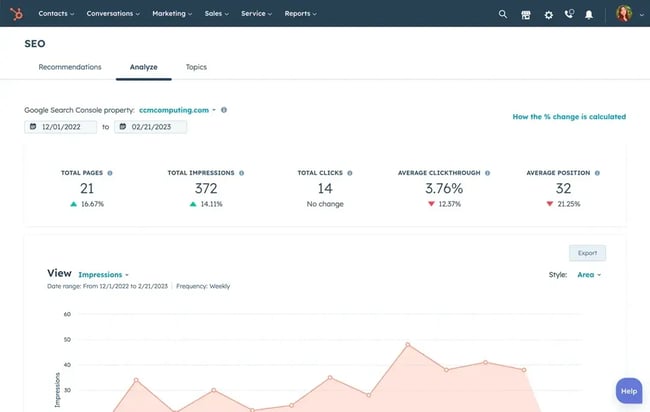
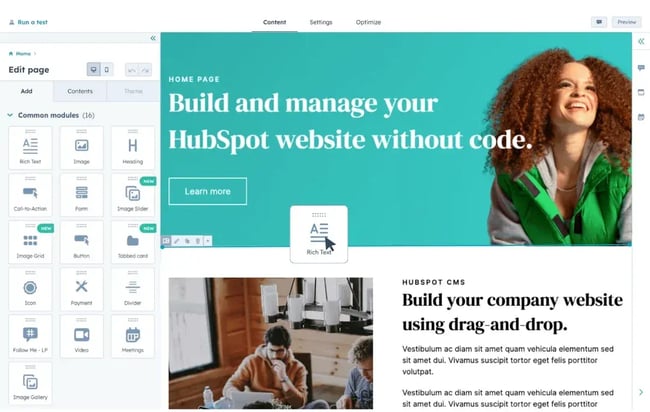
- HubSpot Marketing Hub: This platform offers built-in SEO tools for planning, optimization, and performance analysis, seamlessly integrated with HubSpot’s Smart CRM. Its SEO recommendations feature scans entire websites (even pages hosted outside HubSpot) to identify and prioritize technical, on-page, and accessibility issues, categorized by impact and difficulty. The native CRM integration is a significant advantage, allowing direct attribution of organic traffic to contacts, deals, and revenue—a common pain point for SaaS marketers. Its structured data recommendations also prepare content for AI citation.
- HubSpot Content Hub: Complementing Marketing Hub, Content Hub provides SEO guidance directly within the CMS. As writers create content, the platform offers real-time contextual SEO suggestions, eliminating the need to switch between tools. Its AI content writer assists with drafting while adhering to SEO requirements. Crucially for AEO, Content Hub facilitates the implementation of JSON-LD schema directly within templates and modules, ensuring content is schema-ready from the outset, a key factor for AI systems parsing information.
- HubSpot AEO Grader: A free, purpose-built tool for analyzing website performance in AI search environments like ChatGPT, Perplexity, and Gemini. It runs automated queries to benchmark brand visibility, assessing how AI engines mention and describe a SaaS brand relative to competitors. This competitive analysis for AI share-of-voice is a unique offering, providing critical insights into source credibility and messaging effectiveness for AEO strategies.
Research and Analytics Powerhouses:
- Semrush: An all-in-one platform renowned for keyword research, competitor analysis, and site audits. Semrush offers comprehensive features spanning SEO, content marketing, advertising, and social media. Its ability to identify content gaps, analyze backlink profiles, and track keyword performance makes it a cornerstone for strategic planning. Semrush is actively integrating AI visibility features, recognizing the shift in search.
- Ahrefs: Long considered the industry standard for backlink intelligence and competitor research. Ahrefs boasts one of the largest crawling infrastructures, providing highly accurate data on link profiles, organic traffic estimates, and keyword rankings. Its Content Gap tool is invaluable for uncovering keywords that competitors rank for but your site does not, directly informing content strategy.
- Google Search Console (GSC): An indispensable, free tool providing direct first-party data from Google. GSC offers insights into search performance (queries, impressions, clicks, CTR), index coverage, core web vitals, and mobile usability. It’s particularly powerful for identifying "zero search volume" keywords—highly specific, high-intent terms that often convert exceptionally well for SaaS companies, which third-party tools might miss.
- Bing Webmaster Tools: Often overlooked, this free tool is crucial for monitoring site health and indexation on Bing, especially as Bing integrates more AI-powered search experiences. Its recently expanded AI features offer first-party data on how AI-generated answers cite content, making it a valuable addition for understanding AI search visibility beyond Google.
Technical SEO Specialists:
- Screaming Frog: A desktop-based SEO spider widely regarded as the go-to tool for granular technical audits. Screaming Frog crawls every URL on a site, providing raw, unfiltered data on crawl errors, redirects, broken links, metadata issues, and more. While it requires technical expertise to interpret, its capabilities rival far more expensive cloud-based solutions, making it an exceptional value for deep-dive technical diagnostics.
Content Optimization & AI Integration:
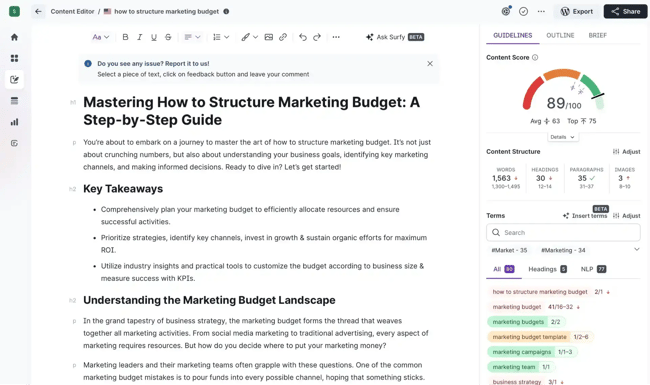
- Surfer SEO: Popular for on-page content optimization and brief generation. Surfer analyzes top-ranking pages for any keyword, generating a content score and term-based recommendations in real-time. It streamlines the editorial process, providing data-driven guidelines for writers and editors, and can even auto-generate outlines based on competing articles, boosting efficiency for scaling content production.
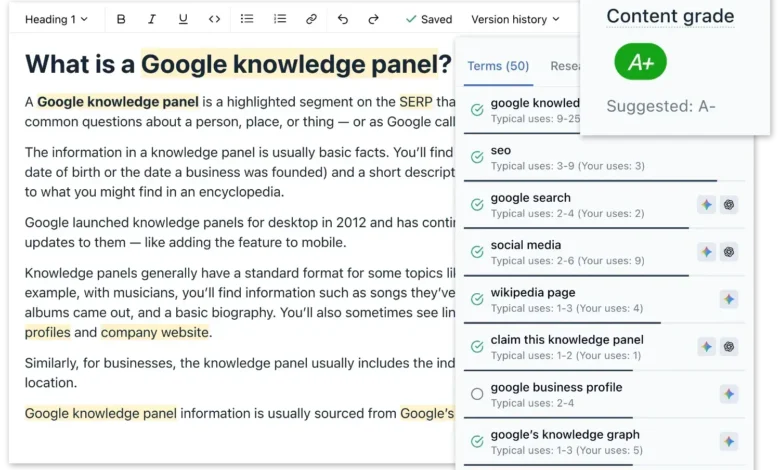
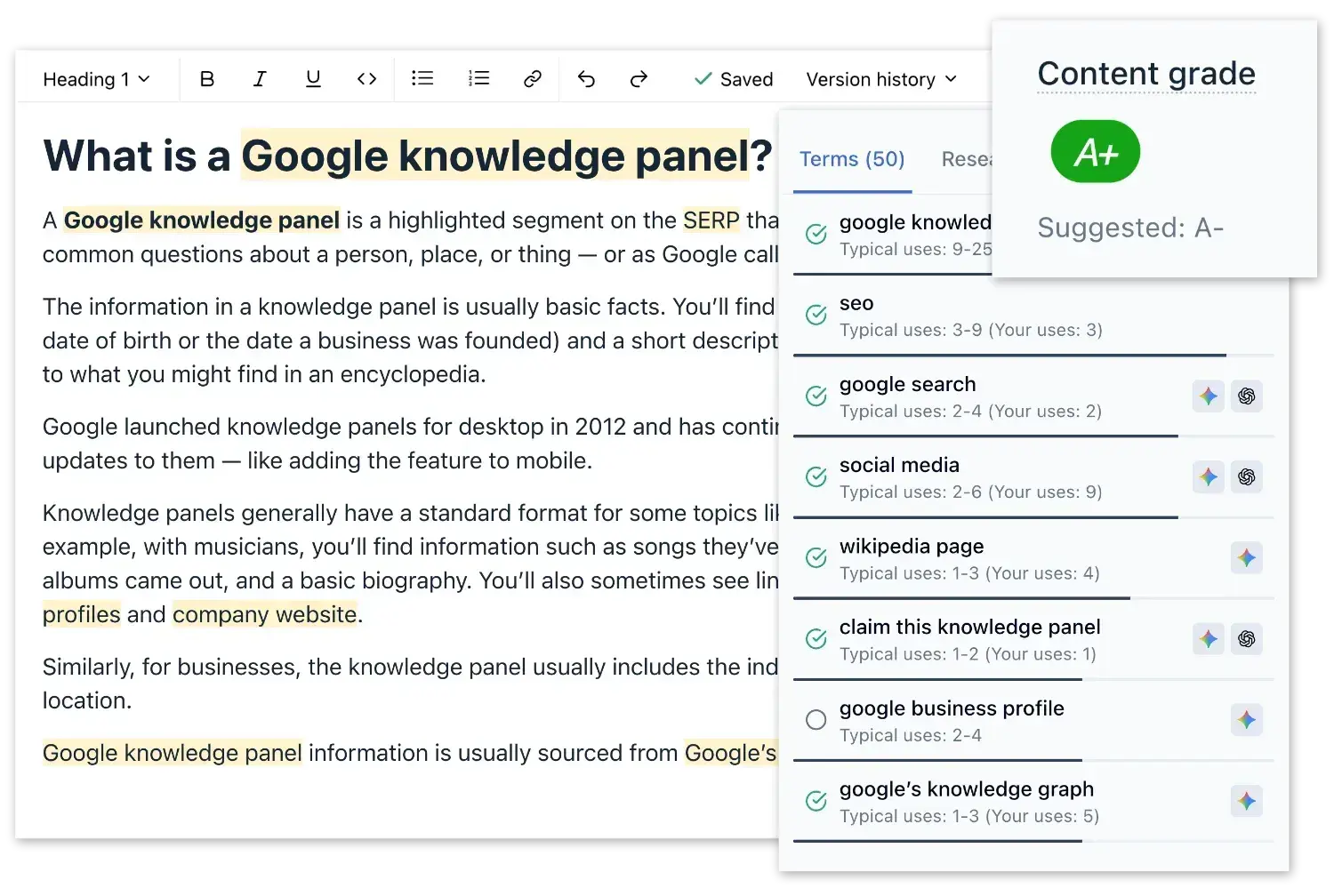
- Clearscope: Another robust content optimization tool focusing on term coverage and content grading. Clearscope helps SaaS teams ensure their pages comprehensively address all relevant topics associated with a target keyword. Its clean interface and reliable grading system make it effective for maintaining content quality across large libraries, translating established SEO expertise into AEO performance by guiding content structure.
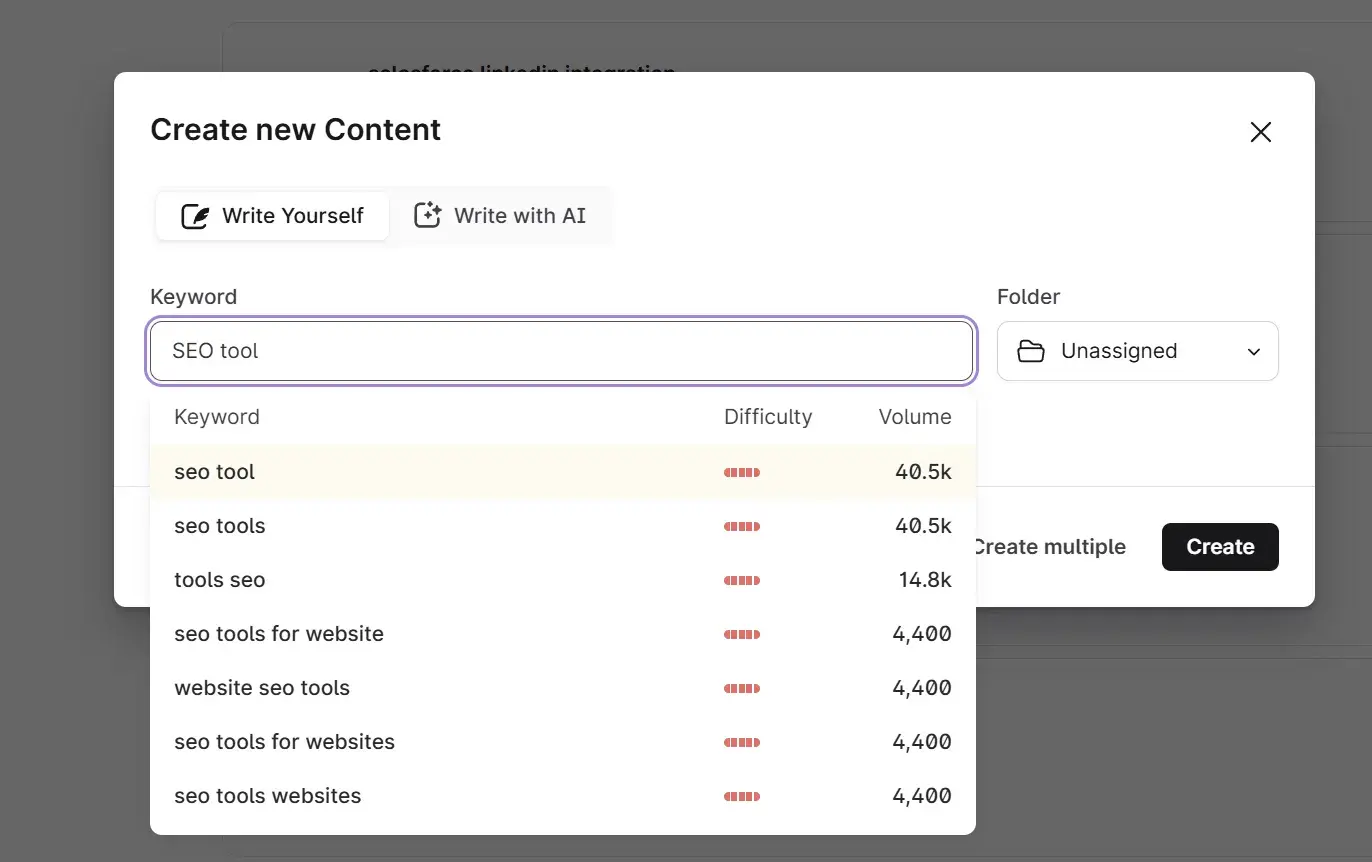
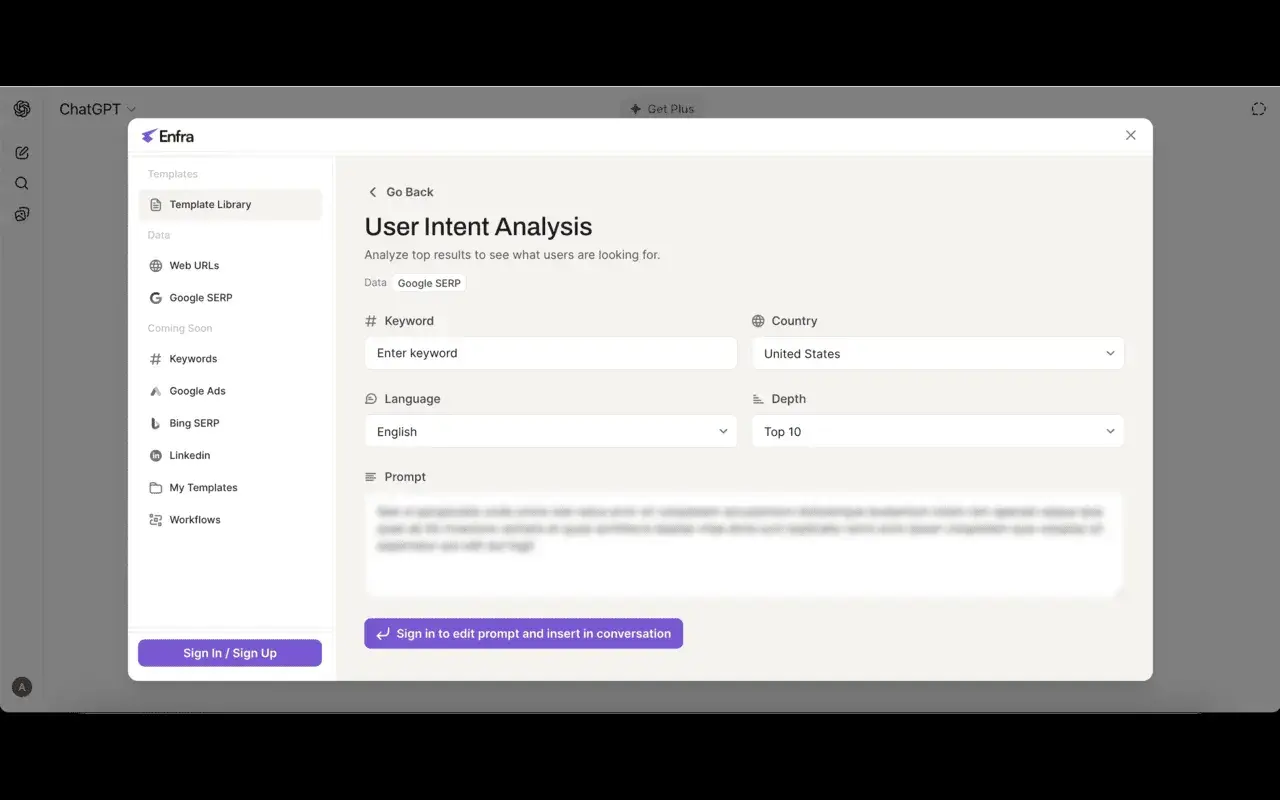
- Enfra Chrome Extension: For SaaS teams leveraging AI writing tools (ChatGPT, Claude, Gemini), Enfra acts as a crucial bridge, injecting live SERP data and Google Search Console metrics directly into the AI workflow. This ensures AI-assisted drafts are grounded in current search realities, rather than static training data. Features like "Compare Content to Top 10" and "Content Plan for ChatGPT" help identify information gaps and optimize for generative search.
Internal Linking Solutions:
- Link Whisper: A WordPress plugin that automates internal link suggestions, addressing a common pain point for large SaaS content archives. It surfaces relevant link opportunities across existing content, detects orphaned pages (those with no internal links), and provides bulk URL update capabilities, significantly improving site architecture and distributing link equity without manual effort.
- Yoast SEO: A foundational WordPress plugin covering on-page SEO fundamentals, metadata management, and basic internal linking suggestions. Yoast scans content in real-time, recommending relevant pages for internal linking and assisting with other SEO tactics like schema implementation and sitemap generation. It’s a lightweight yet powerful tool for maintaining SEO hygiene within a WordPress environment.
Tailoring Your Stack: A Guide by Team Size
Not every SaaS team requires the full suite of tools. The optimal stack depends on team size, budget, and content output goals.
- Solo to 2 Marketers: Prioritize free first-party data sources and a single core optimization workflow. Recommended: Google Search Console, Bing Webmaster Tools, HubSpot AEO Grader, and a foundational platform like HubSpot Marketing Hub (Free/Starter) for integrated CRM and basic SEO.
- Team of 3-5 Marketers: Requires more structured research, briefing, optimization, and reporting capabilities. Recommended: All tools for solo marketers, plus Semrush (for comprehensive research), Surfer SEO (for content optimization), and potentially Screaming Frog (for occasional deep technical audits if needed). Marketing Hub and Content Hub (Professional) become central for unified workflows.
- Team of 10+ Marketers: Needs a shared SEO system supporting multiple contributors, robust reporting, and frequent technical/content refresh cycles. Recommended: All tools for smaller teams, scaled versions of Semrush/Ahrefs for extensive competitive analysis, Clearscope for enterprise-grade content grading, Enfra for AI-assisted workflows, and dedicated internal linking tools like Link Whisper or Yoast SEO Premium for WordPress sites. HubSpot’s Enterprise offerings provide the necessary scalability and integration.
The Imperative for Adaptability and Integration
The rapid evolution of search, particularly with the advent of AI, underscores an imperative for SaaS businesses: adaptability and integration. Industry experts consistently highlight that siloed tools and fragmented strategies will hinder growth in this new environment. The ability to connect SEO efforts directly to CRM data for attribution, to embed SEO guidance directly into content creation workflows, and to proactively optimize for AI-generated answers are no longer optional but critical competitive differentiators.
Platforms that unify these functions, such as HubSpot’s integrated Marketing Hub and Content Hub, offer a significant advantage. By bringing SEO data alongside contact, pipeline, and content performance, businesses can draw clear lines between organic efforts and revenue generation. This strategic alignment empowers marketing teams to prove SEO’s value, secure investment, and navigate the complexities of the modern search ecosystem with confidence. The future of SaaS growth lies not just in recognizing the changing tides of search, but in equipping teams with the right tools to sail them.