The Definitive Guide to Social Media Data Collection Strategies, Metrics, and Compliance Standards


Social media data collection has evolved from a rudimentary marketing add-on into a sophisticated, highly regulated corporate discipline. As global platforms scale to accommodate billions of active users—with Meta properties alone crossing the three-billion monthly active user threshold—organizations face an unprecedented deluge of digital information. Navigating this vast sea of metrics requires a precise understanding of data taxonomies, advanced technological tools, and an uncompromising commitment to international privacy standards. Modern digital enterprises can no longer rely on intuition or superficial vanity metrics; instead, sustainable growth depends on systematically harvesting, analyzing, and operationalizing first-party analytics and publicly available conversations.

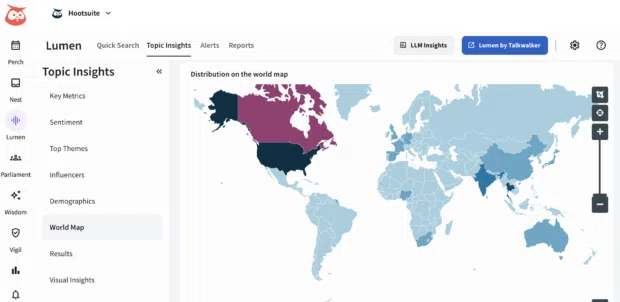
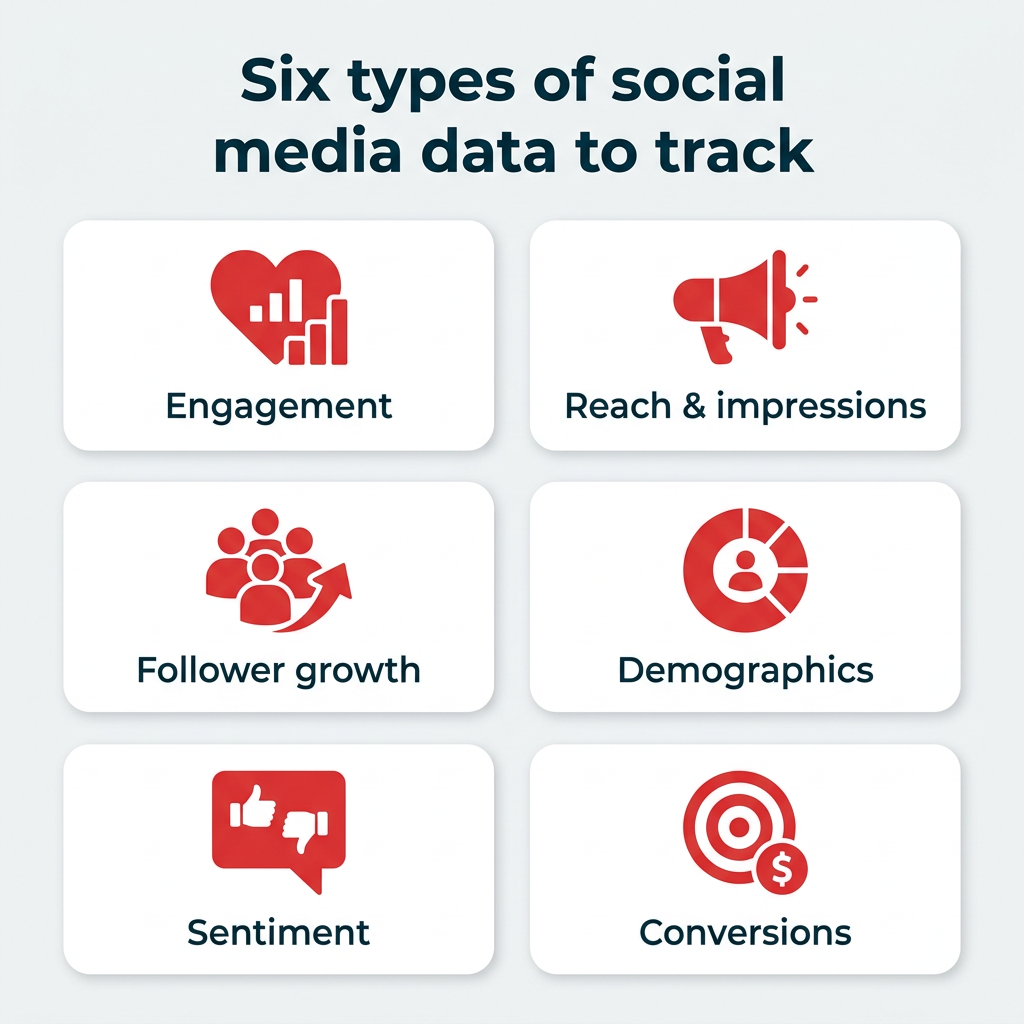
The foundational architecture of social media data collection rests upon two distinct pillars: first-party data and publicly available data. First-party data encompasses metrics derived directly from accounts owned and managed by an organization. This includes reach, impressions, click-through rates, and follower trajectories harvested via native analytics tools and enterprise dashboards, complemented by the aggregate audience parameters supplied by network operators. Conversely, publicly available data comprises the decentralized ecosystem of external consumer touchpoints: user-generated posts, commentary, public reviews, hashtag usage, and unsolicited brand mentions across the broader digital landscape. While first-party metrics measure internal channel performance, public conversations captured through specialized social listening frameworks offer an unvarnished window into consumer sentiment and market perception.
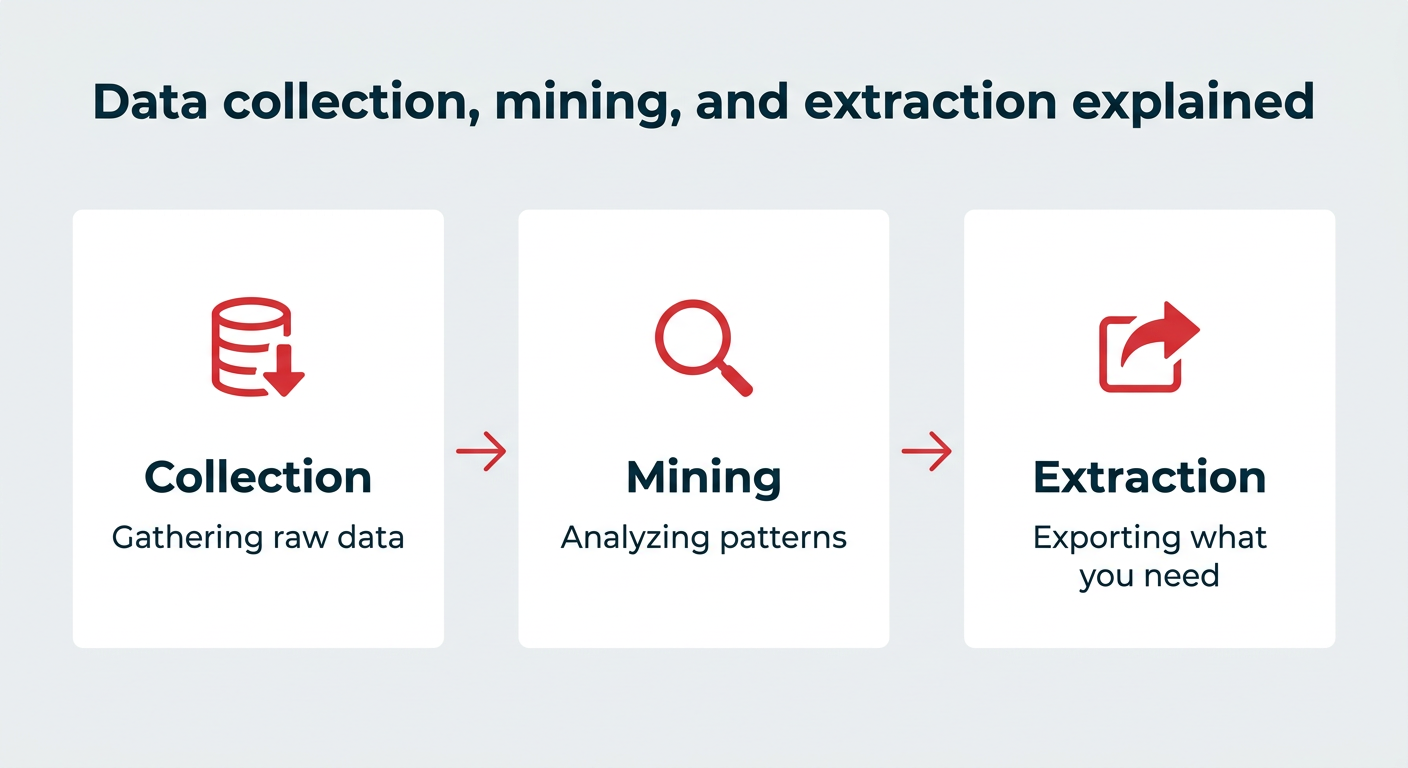
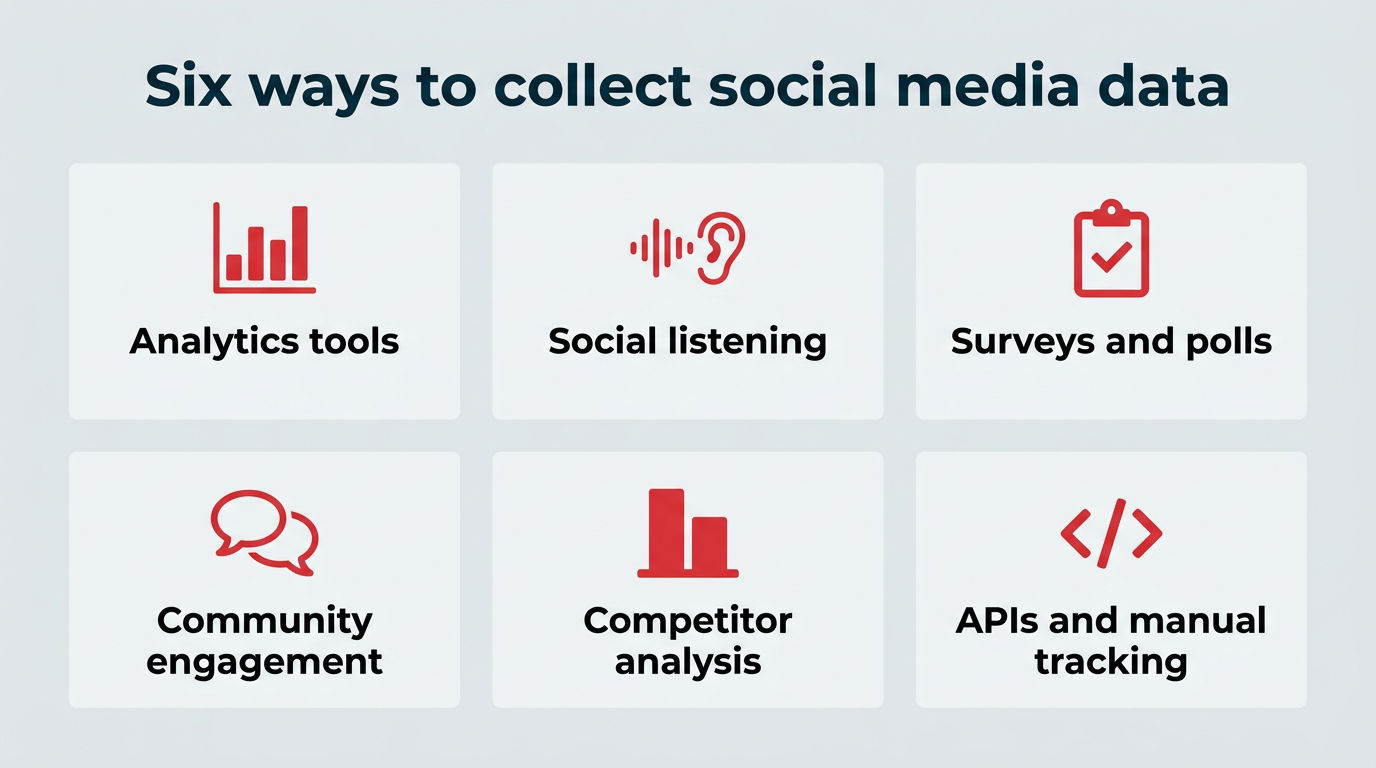
To transition raw digital metrics into actionable business intelligence, organizations must differentiate between three distinct operational phases: data collection, data mining, and data extraction. Data collection acts as the initial ingestion phase, gathering raw, unstructured metrics directly from various platform APIs and native dashboards—such as pulling engagement statistics from Instagram Insights. Data mining follows, utilizing advanced algorithms and analytical models to sift through accumulated datasets to identify recurring patterns, correlations, and behavioral trends, such as isolating which specific video formats drive the highest volume of content saves. Finally, data extraction involves isolating specific, mission-critical data points for export into executive reporting frameworks. Each sequential step is vital for converting abstract numerical quantities into strategic corporate decisions.
Different social media channels offer unique analytical strengths, requiring multi-platform collection strategies to yield a comprehensive market view. Meta platforms, encompassing Facebook and Instagram, deliver a robust consolidation of metrics, seamlessly tying reach, engagement, saves, and Stories performance to downstream ad conversions via advanced application programming interfaces. LinkedIn occupies a specialized niche within the B2B sector, providing professional demographic insights that categorize audiences by specific job functions, industrial sectors, corporate sizes, and seniority levels. TikTok focuses predominantly on attention economics, supplying granular watch time, completion rates, and traffic source distributions alongside trending audio and hashtag vectors. Meanwhile, YouTube remains the gold standard for long-term video analytics, offering exhaustive audience retention curves and traffic attribution, while platforms like X and Pinterest specialize in real-time conversational volume and visual search intent, respectively.
The historical timeline of social media analytics has progressed through distinct eras, shifting from simple manual tallying to automated enterprise integration. In the early 2010s, digital marketers relied heavily on native, platform-specific spreadsheets to track basic follower counts and post-level likes. As the social media landscape fractured across multiple competing networks in the mid-2010s, the industry saw the rise of unified third-party dashboards designed to aggregate disparate data streams into single-pane-of-glass interfaces. By the 2020s, the introduction of stringent global privacy regulations—such as the General Data Protection Regulation (GDPR) and the California Consumer Privacy Act (CCPA)—fundamentally altered collection methodologies. Platforms restricted direct access to individual-level user profiles, forcing marketers to pivot toward aggregated, anonymized audience insights and privacy-compliant server-to-server tracking integrations. Most recently, the integration of artificial intelligence and machine learning models has automated sentiment analysis, real-time anomaly detection, and predictive trend forecasting, reducing the manual labor burden on corporate analytics teams.
Industry professionals emphasize that data collection must be anchored to explicit business objectives rather than pursued indiscriminately. Taylor Knight, Social Media Manager at footwear brand Vessi, advocates for a purpose-driven metric framework. According to Knight, organizations must establish the primary objective of each piece of content before judging its performance, ensuring that resources are not wasted chasing irrelevant vanity metrics. By categorizing content objectives—such as brand awareness, direct engagement, or product launches—teams can evaluate success using tailored Key Performance Indicators (KPIs) like organic reach and share velocity rather than relying solely on follower counts or aggregate views. This disciplined approach minimizes analytical fatigue and ensures cross-departmental alignment.

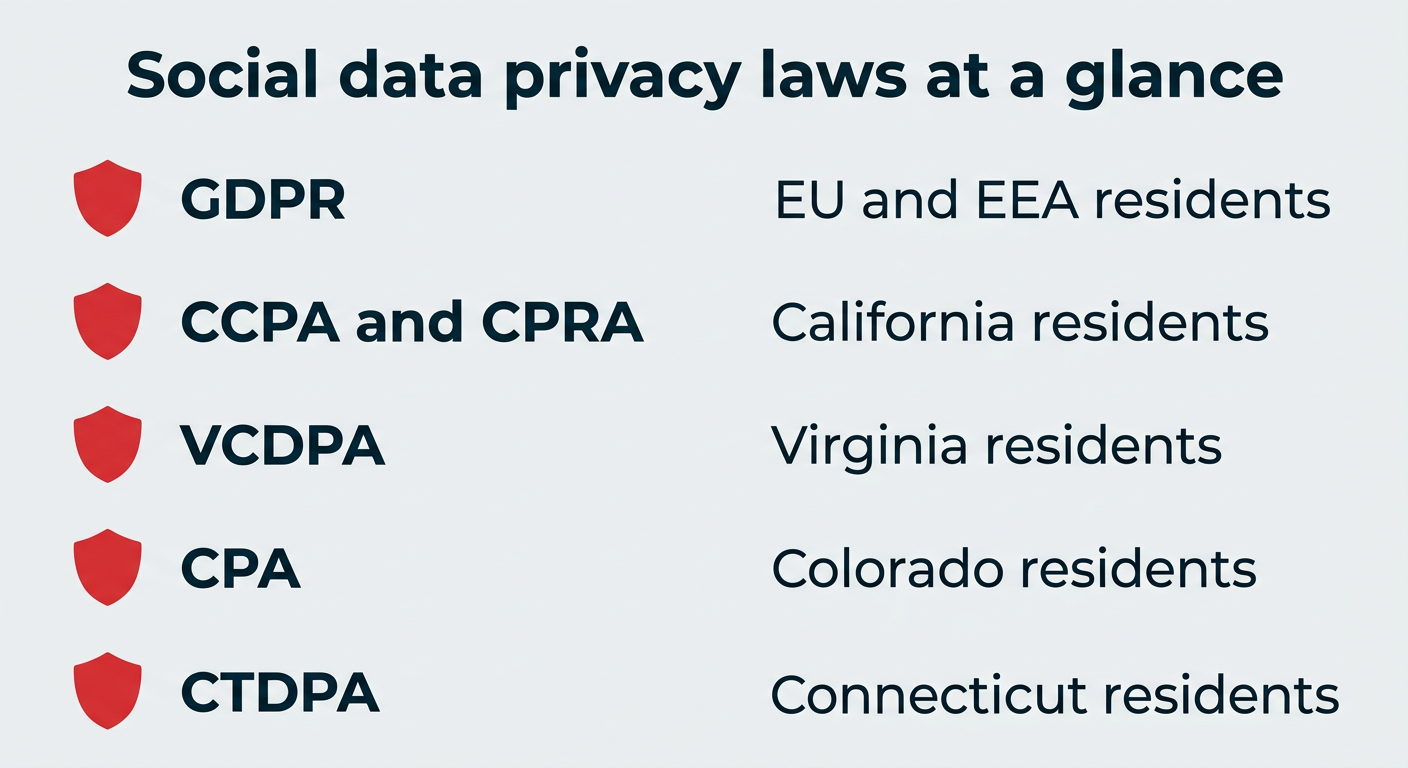
Legal and ethical considerations represent a critical boundary in modern social media data collection. Compliance with international and domestic privacy frameworks is non-negotiable for enterprise organizations. Regulatory standards, including the EU’s GDPR, the California Consumer Privacy Act (CCPA) alongside the California Privacy Rights Act (CPRA), and emerging state-level mandates in Virginia (VCDPA), Colorado (CPA), and Connecticut (CTDPA), impose strict obligations regarding transparency, lawful data processing, consent mechanisms, and consumer rights to data access and erasure. Importantly, regulatory jurisdiction is determined by the geographic location of the consumer rather than the physical headquarters of the enterprise. Consequently, legal and privacy teams must be integrated into data collection workflows from inception to prevent severe regulatory penalties, platform API revocations, and reputational damage.
Ethical data practices extend beyond statutory minimums to safeguard consumer trust. Best practices dictate that organizations must maintain strict data minimization principles, collecting only the information strictly necessary for defined business outcomes. Furthermore, businesses must transparently communicate their data collection policies, securely store aggregated datasets behind enterprise-grade access controls, and systematically purge obsolete information in accordance with defined retention schedules. AI-assisted collection tools, while powerful for processing high volumes of unstructured conversation data, must be rigorously audited to ensure compliance with privacy parameters and to eliminate algorithmic bias in sentiment classification.
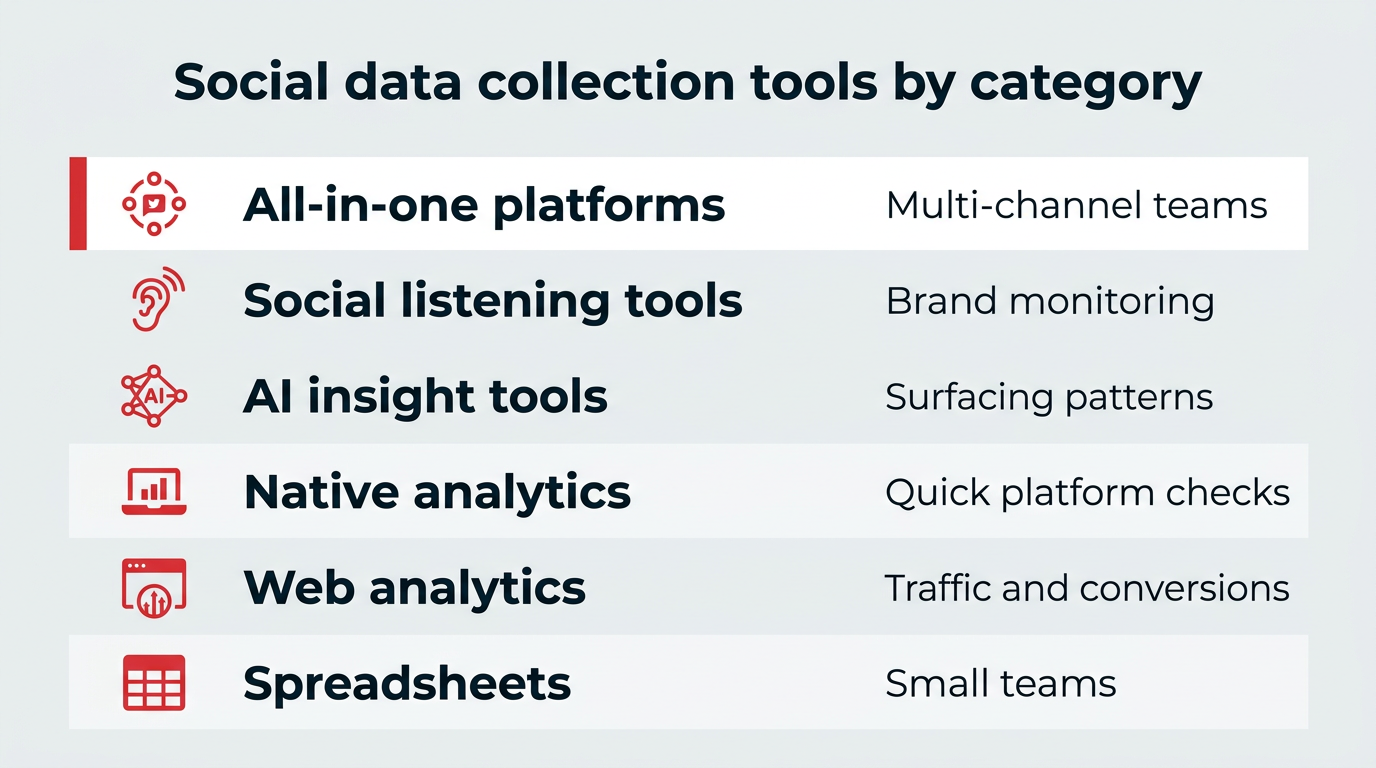
The broader market implications of sophisticated social media data collection are profound. Enterprises that successfully master cross-channel data aggregation and sentiment tracking consistently report superior return on investment (ROI), enhanced campaign targeting, and proactive crisis management capabilities. By unifying quantitative analytics with qualitative social listening insights, organizations can bridge the gap between abstract metrics and tangible corporate revenue. As artificial intelligence continues to refine the speed and accuracy of trend detection, the future of social media intelligence will increasingly depend on an organization’s ability to translate complex data stories into agile, consumer-centric business strategies.
Related posts: