Google Expands Family-Focused AI Assistant CC to Streamline Household Management and Coordination

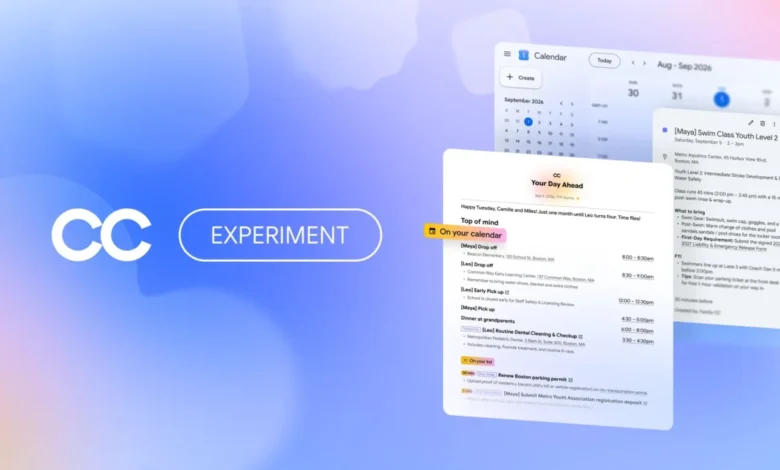
Google is intensifying its push into consumer-facing artificial intelligence with a significant update to CC, an experimental AI agent developed by Google Labs. Initially launched as a personal productivity tool to synthesize daily schedules, CC has pivoted toward group and household coordination. The new iteration allows up to six family members to connect their digital lives—spanning Gmail, Google Calendar, Google Chat, and Google Tasks—into a centralized, AI-managed hub designed to alleviate the cognitive load of modern family logistics.
The strategic shift addresses a rapidly expanding niche in the consumer tech market: agentic AI for households. As artificial intelligence models transition from passive chatbots to active autonomous agents capable of executing multi-step workflows, tech giants and startups alike are racing to capture the domestic market. Google’s latest deployment positions CC to tackle complex, collaborative domestic tasks, ranging from meal planning and grocery list generation to tracking children’s sports schedules and automating school permission slip processing.
Evolution from Personal Productivity to Household Management
The origins of CC trace back to Google’s broader initiatives in agentic AI, where the system functioned primarily as a single-user productivity assistant. Powered by Gemini and Google’s proprietary agentic harness, Antigravity, the tool was built to digest information from Gmail, Google Drive, and the broader web. It would then synthesize this data to deliver a customized "Your Day Ahead" briefing straight to a user’s inbox. By May, Google had integrated aspects of this technology into the Gemini app under the moniker "Daily Brief," signaling a broader rollout for individual users.
However, internal usage data and user feedback revealed a different consumer priority. Rather than utilizing the AI solely for professional or individual time management, testers consistently sought ways to apply the technology to collective household administration. Parents and caregivers expressed an urgent need for intelligent systems capable of tracking overlapping school calendars, extracurricular practices, recurring household bills, and dietary requirements.

Recognizing this demand, Google reengineered CC to function as a collaborative group agent. Instead of serving an isolated account, the updated system is assigned its own dedicated Google account, complete with isolated cloud computing resources and granular permission controls. This architecture allows multiple individuals—up to a current limit of six participants—to interact with the same centralized agent memory, effectively creating an automated chief of staff for the home.
Core Features and Data Synchronization
To operate effectively across multiple schedules, CC relies on a flexible, user-controlled data-sharing framework. Each participating family member retains autonomy over what information they choose to disclose to the agent. Users can selectively forward relevant emails—such as medical appointment confirmations, birthday party invitations, or club updates—directly to CC’s designated email address.
Alternatively, households can automate the data pipeline by designating specific institutional senders whose communications are continuously shared with the agent. This includes schools, athletic leagues, travel agencies, and community organizations. To simplify this configuration, CC actively analyzes communication patterns and suggests relevant email senders for inclusion on a weekly basis.
Once integrated, the AI agent parses incoming data to automate routine household chores. If the orthodontist sends an email confirmation regarding an upcoming appointment or a school district announces a localized closure, CC automatically extracts the relevant dates and timestamps, populating them into a shared family calendar. Beyond scheduling, the system can autonomously draft shopping lists based on newly devised weekly meal plans, calculate travel and drive times between consecutive afternoon activities, and assist in filling out complex paperwork such as activity registration PDFs and school permission slips.
When information is missing—such as dietary restrictions for a newly added potluck or emergency contact numbers for a sports league—the agent proactively prompts family members for the necessary details, updating its shared memory bank to ensure heightened efficiency in future interactions.

The Competitive Landscape of Family AI Agents
Google’s pivot with CC reflects a broader industry trend toward "agentic" software tailored specifically for domestic environments. Over the past year, several venture-backed startups have emerged with similar value propositions, betting that consumer privacy and specialized family workflows can carve out sustainable market share against general-purpose assistants. Products such as Ollie and Fambot have marketed themselves directly to parents as digital chiefs of staff, designed to mitigate the mental exhaustion associated with modern parenting.
The market demand is underscored by shifting demographic realities. Multi-generational households and extended care networks have become increasingly common, driven by economic pressures and housing market trends. Modern households frequently require coordination not just between two working parents, but among extended networks that may include grandparents, professional nannies, caregivers, and adult children who continue to reside at home. By accommodating up to six distinct users within a single operational framework, CC is explicitly engineered to address the communication silos inherent in these larger, complex domestic units.
Limitations, Eligibility, and Privacy Architecture
Despite its advanced capabilities, the current experimental rollout of CC comes with notable restrictions. Access is strictly limited to users aged 18 and older with personal U.S. Gmail accounts. This restriction creates a significant friction point for households with children, tweens, and teenagers. Because minors cannot officially utilize the service without misrepresenting their age on a Google account, families cannot fully integrate their older children into the agent’s workflow.
Compounding this issue is the exclusion of school-issued email accounts. Millions of students across the United States operate within educational ecosystems powered by Chromebooks and Google Workspace for Education, where their primary digital correspondence resides in school-managed inboxes. Because CC currently precludes these accounts due to institutional data policies and age-gating restrictions, families cannot leverage the agent to automatically capture school announcements, homework assignments, or athletic schedules originating from official educational domains.
From a technical and privacy standpoint, Google emphasizes that CC operates within an isolated cloud environment. This isolation is designed to ensure that private data shared with the family agent remains partitioned from broader advertising profiles and general model training pipelines, addressing potential privacy concerns that frequently accompany consumer-facing AI products.

Rollout Timeline and Future Outlook
The deployment of the updated CC agent is rolling out in phases. Existing users of the productivity agent will receive email invitations in the coming days to upgrade their accounts to the new family-centric configuration. Meanwhile, new users interested in testing the software can join an active waitlist via the Google Labs landing page.
As Google continues to refine Antigravity and its underlying Gemini models, the trajectory of tools like CC will likely depend on the company’s ability to navigate the complex regulatory and privacy landscape surrounding minor data, as well as its capacity to integrate seamlessly with institutional platforms like school districts and healthcare providers. If these barriers can be surmounted, agentic AI systems like CC could fundamentally alter how households manage administrative labor, transitioning from experimental novelties to essential household infrastructure.
Related posts: