The Hunt for the Fortnite Pirate Coin: How Epic Games Turned an Ultra-Rare In-Game Drop Into a Global Gaming Phenomenon

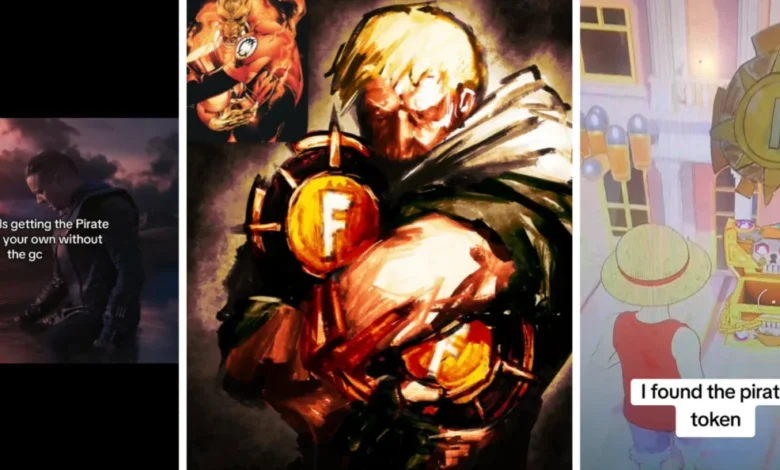
The gaming community has witnessed many rare drops, elusive achievements, and coveted cosmetic items over the years, but few have captured the collective imagination quite like the Fortnite Pirate Coin. Officially designated by Epic Games as Pirate Shop Access—and alternatively known by the player base as the Pirate Token or Pirate Shop Token—this digital artifact debuted at the start of November 2026 during the highly anticipated Treasure Hunters mini-season. Coinciding with a major crossover event featuring the universally acclaimed anime and manga franchise One Piece, the introduction of the Pirate Coin instantly transformed standard Battle Royale and Zero Build matches into high-stakes treasure hunts.
What began as a routine seasonal addition quickly snowballed into a viral social media sensation and a subject of intense debate regarding drop rates, player psychology, and the economics of digital storefronts. As millions of players logged on to scour the map for the elusive gold coin adorned with a compass design and a distinctive "F" emblem, the gaming industry was once again reminded of the powerful allure of scarcity.
Main Facts and Mechanics of the Pirate Coin
To understand the fervor surrounding the Pirate Coin, one must examine its unprecedented utility and the mechanics governing its acquisition. Unlike standard cosmetic items purchased directly with V-Bucks or earned through the seasonal Battle Pass, the Pirate Shop Access token represents a significant, albeit exceedingly rare, windfall for any player fortunate enough to secure it.
When a player successfully opens a chest in either a standard Battle Royale or a Zero Build match and encounters the ultra-rare drop, activating the coin grants two separate 14-day periods of completely free access to the Fortnite Item Shop. During these windows, the fortunate recipient can claim almost any cosmetic item available—including character skins, emotes, harvesting tools (pickaxes), and gliders—without spending a single V-Buck. Furthermore, any items claimed during this promotional period remain permanently affixed to the player’s account, offering substantial long-term value.
However, certain restrictions apply. Real-money starter packs, specialized bundles purchased with fiat currency, direct gifting to other players, and standard Battle Pass tier rewards are excluded from the Pirate Coin’s purview. Even with these limitations, the prospect of acquiring dozens of high-tier cosmetic items for free created an unprecedented incentive for players to engage with the game at a frenetic pace.
The exclusivity of the item is defined entirely by its astronomical rarity. Following widespread speculation within the community during the initial days of the event, Epic Games officially confirmed that the Pirate Coin possesses a staggering 1-in-137,500 chance of appearing inside any given chest during a standard match. Prior to this official disclosure, early community estimates—fueled by the sheer number of opened chests resulting in empty hands—had calculated the drop rate to be as low as 1 in 700,000. These punishing odds ensured that finding a Pirate Coin was less a matter of skill and more a lottery of epic proportions, setting the stage for a dramatic cultural wave across social media platforms.
Chronology and Timeline of the Event
The journey of the Pirate Coin from concept to global phenomenon followed a carefully orchestrated timeline managed by Epic Games, culminating in an organic, player-driven explosion of viral content.
The rollout began on October 27, 2026, when the official @Fortnite YouTube channel released a promotional trailer for the upcoming Treasure Hunters mini-season. The video, which quickly amassed approximately 1.5 million views, offered players their first glimpse of the One Piece crossover elements and the mysterious gold coin that would soon dominate community discussions.
On November 1, 2026, the Treasure Hunters mini-season officially went live across all supported platforms. Within hours, millions of players flooded the servers, dropping into popular locations solely to farm chests in search of the Pirate Token. The sheer volume of players searching for the item immediately set off a chain reaction across digital spaces.
By November 2, 2026, just 24 hours after the launch, early user-generated content began appearing on platforms like TikTok. User @ebihazul posted a reaction video captioned "how that pirate token got me feeling like," which struck a chord with the community and rapidly accumulated 1.3 million views and 228,600 likes within a week. This marked the beginning of a massive wave of creative expression centered around the psychological toll and exhilaration of the hunt.
As the days progressed, the tone of the community shifted from hopeful optimism to humorous exhaustion and mild desperation. On November 4, 2026, TikTok user @sahhyameiii shared a satirical clip falsely claiming to have found the token, playfully taunting fellow players who were still coming up empty-handed. The video matched the previous benchmark, pulling in 1.3 million views and 252,600 likes in five days.
The cultural peak of the phenomenon occurred around the weekend of November 7, 2026. Sleep deprivation and obsessive grinding became common tropes among content creators. TikTok user @tw.amnishi.legend posted a dramatic edit detailing a 24-hour continuous gaming session, captioned, "I HAVEN’T SLEPT FOR 24 HOURS WHERE IS MY TOKEN?" The visceral frustration resonated deeply with the player base, propelling the video to 4.9 million views and 1.1 million likes in a mere 48 hours. Simultaneously, other creators leaned into motivational framing; user @zqusk posted a meme-style video titled "We will succeed," which garnered 3 million views and 558,000 likes in the same timeframe.
By November 9, 2026, the movement had become self-referential. Compilations of player reactions flooded the internet, exemplified by TikTok user @denile_river, whose montage of triumphant and despairing hunters captured the ongoing excitement and pulled in over 650,000 views in less than a day.
Supporting Data and Quantitative Impact
The numbers associated with the Fortnite Pirate Coin highlight both the immense scale of Epic Games’ player base and the viral mechanics of modern gaming culture. With the initial YouTube reveal trailer drawing 1.5 million views within days of release, public interest was primed before the update even dropped.
Once the event was live, individual social media metrics demonstrated an extraordinary level of engagement. Content tagged with variations of the Pirate Token or Pirate Shop Token on TikTok regularly surpassed millions of views per prominent post. Videos by creators such as @tw.amnishi.legend (4.9 million views) and @zqusk (3 million views) indicate that tens of millions of impressions were generated organically by the community within the first week of November alone. Furthermore, engagement ratios—such as the 1.1 million likes garnered on a single frustration-themed edit—showcase a high degree of emotional investment from viewers who saw their own fruitless in-game grinding reflected in the content.
While Epic Games did not immediately release telemetry data regarding the total number of Pirate Coins discovered globally, the mathematical probability of a 1-in-137,500 chest drop rate guarantees that only a tiny fraction of the active player base ever successfully claimed the reward, maintaining its ultra-rare status throughout the mini-season.
Official Responses and Industry Context
Epic Games has long mastered the art of keeping its live-service title fresh through unexpected crossovers and temporary gameplay modifiers. The integration of the One Piece intellectual property during the Treasure Hunters mini-season was already expected to draw significant numbers, but the inclusion of the Pirate Coin elevated the update from a standard seasonal refresh to a masterclass in engagement marketing.
By refusing to alter the drop rate despite widespread public exhaustion and viral complaints about sleep deprivation, Epic Games reinforced the absolute value of true rarity in a digital landscape where cosmetics can often be bought outright. Industry analysts note that in modern free-to-play ecosystems, artificial scarcity and lottery mechanics serve as powerful drivers of daily active user (DAU) metrics. When players believe that a life-changing (or at least wallet-saving) drop is just one chest away, retention rates soar.
At the same time, the phenomenon sparked minor discussions regarding ethical game design and the psychological impact of encouraging marathon gaming sessions—exemplified by viral clips of players staying awake for 24 hours straight in pursuit of a digital token. However, these concerns were largely overshadowed by the playful, communal camaraderie that defined the event.
Broader Impact and Implications for Live-Service Gaming
The success of the Fortnite Pirate Coin offers several key takeaways for the broader live-service gaming industry. First, it demonstrates that randomness, when balanced correctly, can generate more organic marketing value than millions of dollars in traditional advertising. The millions of views accrued on TikTok and YouTube were entirely user-generated, born from shared experiences of triumph and despair.
Second, the event highlights the enduring appeal of blending external intellectual properties with deeply rewarding mechanical secrets. By tying a beloved franchise like One Piece to a mechanic that directly benefits the player’s locker room inventory, Epic Games bridged the gap between passive viewing (enjoying a crossover skin) and active participation (earning it through extraordinary luck).
As the Treasure Hunters mini-season progresses, the Fortnite Pirate Coin will undoubtedly be remembered as one of the most effective and culturally resonant engagement tools deployed in the game’s history. Whether future seasons attempt to replicate the 1-in-137,500 lightning-in-a-bottle magic of the Pirate Token remains to be seen, but the bar for community-driven gaming phenomena has undeniably been raised.