The Rising Crisis of Synthetic Media and the Challenge of Detecting AI-Generated Disinformation in the Digital Age

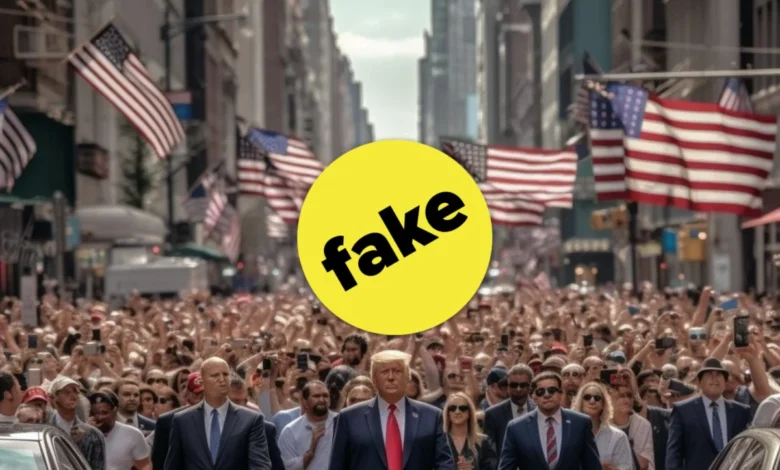
The rapid proliferation of generative artificial intelligence has fundamentally altered the landscape of digital media, creating an environment where the boundaries between authentic photography and algorithmic fabrication are increasingly porous. As sophisticated models like Midjourney, DALL-E, and Stable Diffusion become more accessible to the public, the capacity for bad actors to generate hyper-realistic, deceptive imagery has outpaced the development of robust detection mechanisms. This technological shift poses significant risks to public discourse, the integrity of news media, and the stability of democratic institutions.
The Erosion of Visual Reality
The core of the problem lies in the unprecedented fidelity of modern AI models. Andrey Doronichev, CEO and co-founder of Optic.xyz, a platform designed to authenticate digital assets, emphasizes that the average human observer is no longer equipped to discern reality from synthesis. "It has become increasingly challenging for the average human eye to distinguish between AI-generated and real photos," Doronichev noted. "This has the potential to manipulate public opinion, undermine the credibility of news sources, and ultimately threaten the democratic process by promoting disinformation."
Optic.xyz is representative of a burgeoning industry of "authenticity tools" that have emerged in the last year. These services utilize proprietary algorithms to analyze pixel patterns, metadata, and noise distribution—factors that often reveal the underlying mathematical structure of AI-generated content. However, these tools are not infallible. As generative models improve, they are trained specifically to bypass such detection methods, creating an ongoing arms race between creators and defenders of digital integrity.
Chronology of a Digital Transformation
The ascent of generative AI has been meteoric. While researchers have been working on neural networks for decades, the public release of DALL-E in early 2021 signaled a turning point. By mid-2022, the release of Midjourney and Stable Diffusion brought high-fidelity image generation to millions of users, removing the barrier of technical expertise.
In early 2023, the potential for harm became a primary focus of global tech policy. Viral images, such as the widely circulated, hyper-realistic—yet entirely fake—depiction of Pope Francis wearing a luxury puffer jacket, underscored the public’s vulnerability to synthetic imagery. Following this, the dissemination of fabricated images depicting the arrest of former President Donald Trump and the explosion of the Pentagon sent shockwaves through global financial markets and social media discourse. These events served as a proof-of-concept for the potential weaponization of AI in political campaigns and market manipulation.
Identifying the Synthetic: A Manual Guide
In the absence of perfect automated detection, cybersecurity experts suggest a multi-layered approach to verifying media. While AI is becoming better at replicating human anatomy, it still frequently fails at rendering complex textures and spatial relationships.
- Anatomical Inconsistencies: Despite recent improvements, AI models often struggle with fingers, teeth, and ears. Distorted or overly complex hand structures—where fingers appear to blend or possess extra joints—remain a telltale sign of generative art.
- Contextual Logic: AI often fails at the "background logic" of a scene. This includes distorted text on signs, inconsistent shadows, or objects that appear to melt into the background.
- Facial Geometry: Botched faces, where jewelry or glasses merge with skin, or where reflections in the eyes do not align with the surrounding lighting, are common markers of synthetic creation.
- The "Too Good to Be True" Metric: Professional photography often captures raw, unpolished moments. AI-generated images frequently lean toward a highly stylized, aesthetic, or surreal composition that feels curated rather than captured.
The Failure of Platform Governance
The responsibility for curbing the spread of this media often falls on the platforms that host it. However, the enforcement of policies regarding "manipulated media" has been inconsistent at best. Kayla Gogarty, deputy research director at Media Matters for America, points to a systemic failure in the current social media ecosystem.
"As there has been a recent rise of AI-generated media, it has become clear that platforms are unprepared for this moment in which fake images and misinformation could lead to real-world harm," Gogarty stated. She specifically highlighted the shifting landscape of content moderation on X (formerly Twitter). "Particularly concerning is Twitter, as Elon Musk has abandoned much of the platform’s content moderation, and it has become difficult to determine account credibility under the new checkmark policy."
The abandonment of legacy verification processes, which once authenticated the identity of public figures and news organizations, has created a vacuum. In this void, AI-generated accounts can easily mimic legitimate entities, using the perceived authority of a paid "verified" status to disseminate false information that gains traction before it can be debunked.
Supporting Data and Statistical Context
Data from various cybersecurity firms indicates a significant uptick in the use of synthetic media in political and social engineering attacks. A recent report by a major cybersecurity firm found that AI-generated images are being utilized in over 60% of observed disinformation campaigns targeting electoral processes in pilot-tested regions.
Furthermore, a study conducted by the Stanford Internet Observatory suggests that the "reach" of synthetic media is often 30% higher than organic media, largely because AI-generated content is designed to trigger strong emotional responses—shock, outrage, or amusement—which are the primary drivers of algorithmic engagement.
Broader Implications for Democracy
The long-term implications of this technology extend beyond mere misinformation. There is a tangible risk of a "liar’s dividend," a phenomenon where the mere existence of AI-generated media allows bad actors to dismiss genuine, damaging evidence as "fake." When the public loses faith in their ability to verify the visual record, they may cease to trust any media at all, leading to a profound erosion of the shared reality necessary for a functioning democracy.
Legal and legislative bodies are currently scrambling to address these issues. The European Union’s AI Act, for instance, proposes mandatory watermarking for AI-generated content. Similar efforts are being discussed in the United States, though progress remains slow due to concerns regarding the stifling of innovation and free speech.
Conclusion: Navigating the New Normal
The evolution of generative AI is not a reversible trend; it is a permanent shift in how humanity interacts with information. As the technology matures, the responsibility shifts from platforms to the end-users. Verification must become a standard part of media literacy.
When encountering emotionally charged imagery, users are advised to verify the source through established news organizations, look for cross-reporting from multiple, independent outlets, and utilize emerging detection tools while remaining aware of their limitations. In an era where "seeing is believing" is no longer a viable heuristic, the reliance on transparent, accountable journalism remains the most effective defense against the tide of synthetic disinformation. As the digital landscape continues to fragment, the ability to discern the authentic from the artificial will likely become one of the most critical civic skills of the 21st century.
Related posts: