The Shifting Landscape of Digital Search: How Answer Engine Optimization is Redefining Content Visibility and Brand Authority

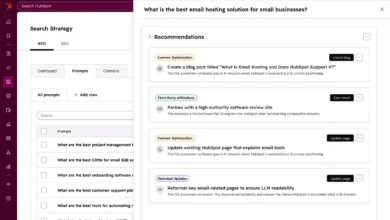
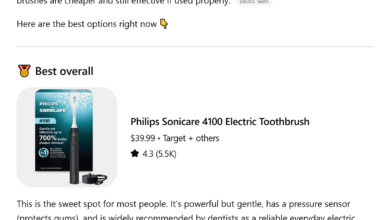
The digital search landscape is undergoing a profound transformation, moving beyond the traditional display of "blue links" to a more synthesized, answer-driven model powered by artificial intelligence. This seismic shift, spearheaded by platforms like Google’s AI Overviews, ChatGPT, and Perplexity, compels marketers to fundamentally rethink their approach to content, prioritizing what is now termed Answer Engine Optimization (AEO). The focus has irrevocably moved from merely ranking high in search results to ensuring content is precisely structured for AI systems to extract, understand, and cite directly.
The Genesis of the Shift: From Links to Answers
For decades, search engine optimization (SEO) revolved around optimizing content to appear prominently in a list of web pages. Users would input a query, and search engines would return a ranked list of relevant links. However, with the rapid advancements in natural language processing (NLP) and the widespread adoption of large language models (LLMs), user expectations have evolved. Today, users increasingly seek direct, concise answers without needing to navigate through multiple websites. This demand has spurred search engines and AI platforms to develop sophisticated answer engines capable of synthesizing information from various sources and presenting it as a single, coherent response.
This evolution is not merely a technological upgrade; it represents a fundamental change in how information is discovered and consumed. As early as 2023, technology giants began integrating generative AI capabilities into their search offerings, signaling the dawn of a new era. Google’s Search Generative Experience (SGE), for example, began offering AI-powered overviews directly within search results, providing instant answers and summarizing complex topics. Simultaneously, standalone AI chatbots like ChatGPT and AI search engines like Perplexity gained immense popularity for their ability to deliver comprehensive, conversational answers, often citing their sources. This rapid proliferation of AI-driven answer mechanisms has created an urgent need for content creators to adapt, lest their valuable information remain undiscovered in the new digital frontier.
The Urgency of AEO: A New Mandate for Marketers
The imperative for AEO is not a speculative future trend but a present-day reality for marketing professionals. According to HubSpot’s forward-looking 2026 State of AEO Report, a substantial 58% of marketers indicate that their businesses are already actively optimizing content for answer engines. This statistic underscores the rapid mainstream adoption of AEO, moving it from an experimental concept to a critical strategic priority within just a few years. Industry analysts project that this figure will continue to rise, potentially exceeding 80% by the end of the decade, as AI Overviews become the default search experience for an increasing number of queries.
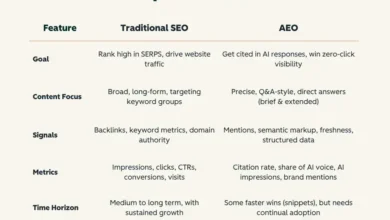
Marketing strategists are increasingly advising clients that traditional SEO, while still relevant for foundational visibility, is insufficient to secure citations and direct answers in the AI era. The goal has shifted: instead of aiming for the top of a ten-blue-link list, content creators must now design their material to be readily identifiable, extractable, and attributable by AI. This means understanding the unique ways in which AI algorithms parse, interpret, and synthesize information, and then structuring content accordingly.
How Answer Engines Process and Cite Content
Unlike traditional search engines that primarily index and rank pages, answer engines "read" content in a more sophisticated manner. Before a piece of content is cited in an AI Overview or a Perplexity answer, the engine undergoes a multi-stage process:
- Parsing: The engine breaks down the web page into logical, self-contained chunks or passages. This involves identifying headings, paragraphs, lists, tables, and other structural elements.
- Understanding: It analyzes each passage for its semantic meaning, identifying key entities, concepts, and the overall intent of the text. This helps the AI determine what question a particular passage might answer.
- Scoring and Relevance: Each passage is then scored for its relevance, accuracy, and comprehensiveness in relation to a user’s query. The AI evaluates how well a passage directly addresses a specific question.
- Synthesis: The engine combines relevant passages from one or multiple sources to formulate a coherent, synthesized answer.
- Attribution: Crucially, the engine attributes the information back to its original source, often providing a direct link or citing the brand and author.
This "parse-then-cite" pipeline is the defining characteristic of AI search. Visibility is no longer about occupying a high position in a link list; it’s about whether an answer engine can efficiently extract a clear, self-contained passage from your page and confidently attribute it to your brand. Page structure, therefore, becomes the fundamental mechanism that enables this precise extraction and attribution.
The Five Pillars of Citation-Worthy Content Structure

Content most likely to be cited by answer engines shares a handful of recognizable traits, primarily revolving around meticulous structure. These can be categorized into five key themes:
1. Question-Led Headings and Direct-Answer Summaries
These two elements are among the highest-leverage structural moves in AEO. They directly map a passage to a potential query, providing AI engines with ready-to-lift answers. A report by AirOps in their 2026 State of AI Search Report highlights the efficacy of this approach, noting that sequential heading structures can increase citation odds by a factor of 2.8.
- Question-Led Headings: These headings directly mirror the exact query a user, or an AI engine, would type. For example, instead of a heading like "Our Services," a more AEO-friendly heading would be "What Services Does [Your Company Name] Offer?" This explicit question-answer format makes it effortless for AI to identify the relevant content.
- Direct-Answer Summaries (TL;DR): Immediately following a question-led heading, a direct-answer summary provides the core answer in one or two concise sentences, preceding any further context or elaboration. This "Too Long; Didn’t Read" (TL;DR) approach ensures the AI can quickly grab the essential information.
- Q&A Blocks for Maximum Citation Potential: Pairing an explicit question with a tight, self-contained answer in a dedicated block is one of the most citable structures. These blocks should be formatted for clarity, ensuring the question is distinct and the answer is immediate and complete within the block.
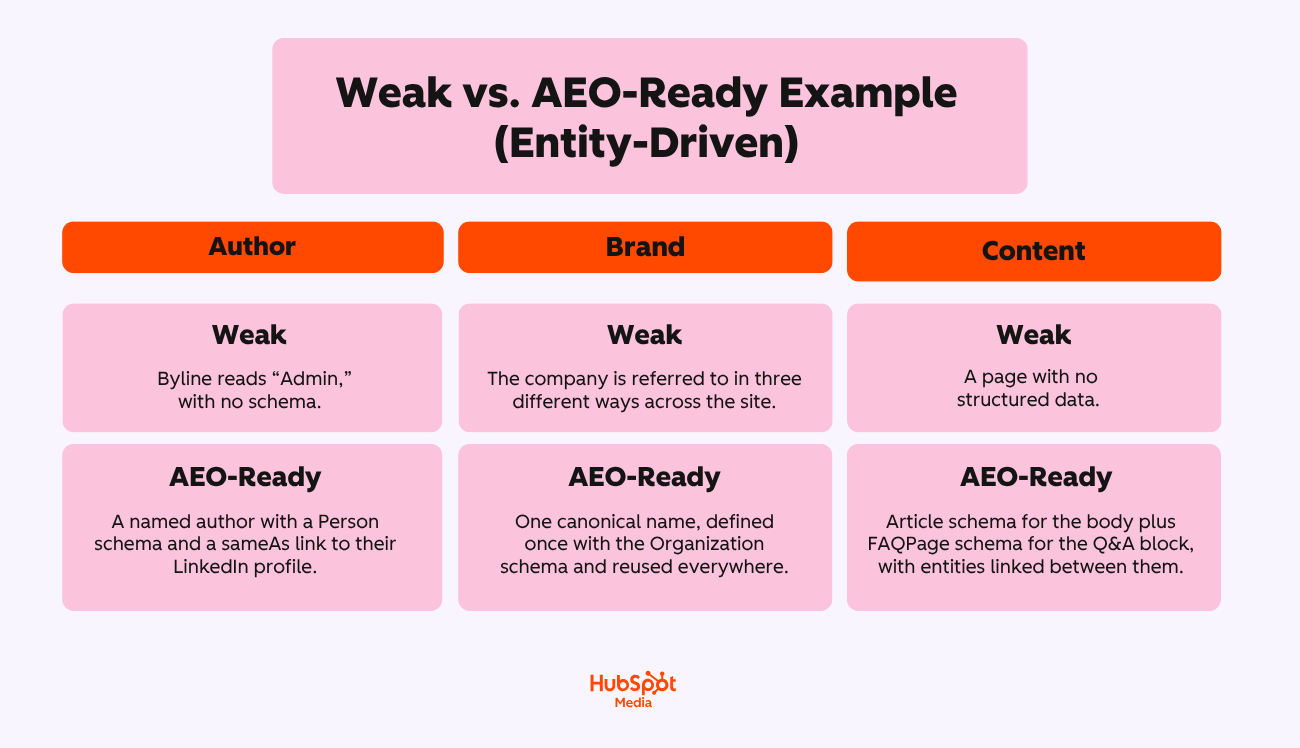
2. Semantic Schema and Entity Modeling
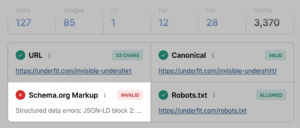
This constitutes the machine-readable layer of AEO, providing explicit factual information to answer engines about the page, its authors, and the brand behind it. Clear prose explains content to humans; schema explains the same to machines in a format they can directly act on. Without robust schema, even well-written content can be overlooked by AI due to a "weak-schema gap."
- Key Schema Types: The four schema types most critical for citations include:
ArticleSchema: Describes news articles, blog posts, and informational content.OrganizationSchema: Identifies the brand or company publishing the content.PersonSchema: Attributes content to specific authors, establishing expertise.ProductSchema: Details specific products or services, especially useful for B2B.
- Entity Modeling: This involves defining people, brands, and products on your site as consistent, interconnected entities rather than isolated words. A deliberate entity model strengthens brand, product, and author relationships, building confidence in your source over time. This includes:
- Consistently naming entities (e.g., "HubSpot" always, not "HubSpot Inc." then "Hubspot").
- Linking entities to their own dedicated profile pages (e.g., author bios, company "About Us" pages).
- Using
sameAsproperties in schema to link entities to their official profiles on social media or Wikipedia.
3. Authoritative Signals and Trust Markers
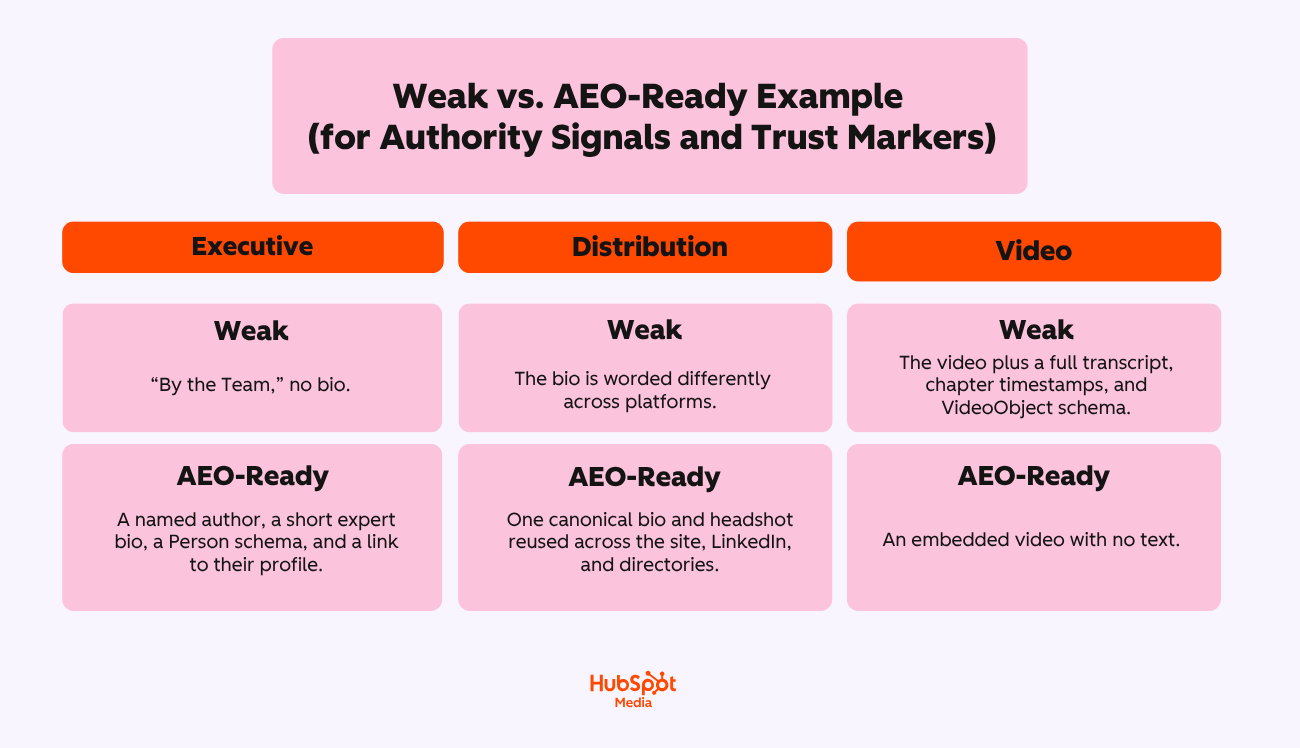
Answer engines prioritize trust before citing content. Two pages might answer a question equally well, but the engine will favor the source it can verify as authoritative and trustworthy. These "authority signals" are crucial for influencing mention quality.
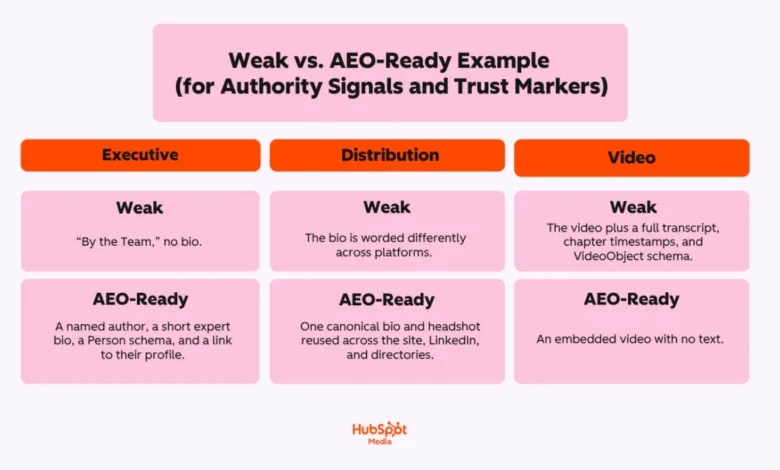
- Authoritative Brand, Executive, and Product Profiles: Strong, well-described profiles for brands, executives, and products are essential. These profiles should be explicit, verifiable, and consistent across the web. This includes detailed "About Us" pages, executive bios, and comprehensive product pages.
- Distribution Across Trusted Ecosystems: Where your content and entities appear beyond your own site also signals trust. Mentions, citations, and links from reputable third-party sources (e.g., industry publications, academic journals, news outlets) serve as corroborating evidence of expertise and authority to AI engines.
- Video Transcripts, Timestamps, and VideoObject Schema: Video content is often challenging for AI to parse. Providing comprehensive transcripts, segmenting videos with timestamps, and implementing
VideoObjectschema makes video content text-readable and hence citable.
4. Strategic Internal Linking Architecture
Internal linking represents the site-level expression of structure, helping engines crawl, group, and trust related content. Weak or random internal linking can leave valuable answers stranded and difficult for AI to associate with a broader topic.
- Hub-and-Spoke Structure and Topic Clusters: Organizing content around a central, authoritative "hub" page that links to more focused "spoke" pages (topic clusters) provides a clear hierarchical structure. This signals to AI engines a comprehensive coverage of a subject.
- Glossary Pages: Dedicated glossary pages that define key terms and link back to relevant content further reinforce entity consistency and semantic understanding.
- Clear Anchor Text and Early Link Placement: Anchor text should be descriptive and relevant, accurately reflecting the content of the linked page. Placing important internal links early in the content signals their significance to AI.
5. Passage-Level Optimization for Extraction
This involves writing each passage (paragraph, list, table row, definition) so it can be lifted and cited independently, without relying on the surrounding text for context. This "passage-first mindset" is core to AEO at the content level.
- Stand-Alone Paragraphs: Each paragraph should ideally answer a single question and be able to stand on its own. Avoid pronouns that refer back to previous text (e.g., "this," "that approach"), as they break the passage’s coherence if extracted.
- Lists, Tables, and Definition Boxes: Structured formats like bulleted lists, numbered lists, tables, and dedicated definition boxes are highly snippet-friendly. They present information concisely and are easy for AI to extract and present directly.
- Concise, Extractable Sentences: Sentence length and clarity directly impact how cleanly an AI can quote your content. Aim for clear, unambiguous sentences that convey a complete thought.
Ethical AEO: Aligning with Google’s Quality Guidelines
It is paramount to recognize that structural optimization earns citations only when the underlying content is genuinely helpful and high-quality. Google consistently rewards "people-first content," and AEO tactics that attempt to game the system while neglecting substance are likely to backfire. The structural themes discussed above are designed to amplify quality, not replace it.
Google evaluates content against core dimensions:
- Accuracy: Ensuring factual correctness and reliability.
- Quality: Adhering to high standards of writing, research, and presentation.
- Relevance: Directly addressing user intent and providing valuable information.
- User Context: Understanding the user’s journey and providing content that meets their needs at various stages.
Furthermore, transparency regarding AI-assisted content is crucial. Google accepts AI-generated content when it is helpful and not produced solely to manipulate rankings. Adding an editor’s note, such as "Reviewed and fact-checked by [Name], [Title]," signals accountability and builds trust with both readers and AI systems. The ultimate guardrail for helpful content is simple: if a page wouldn’t satisfy a human searcher even without an AI summary, its substance needs to be fixed before any structural optimization.
Measuring Success and Operationalizing AEO
The true challenge of AEO often lies in proving its efficacy. Marketers need to move beyond publishing structured content to quantifying its impact. This requires a robust measurement framework and operationalizing best practices into repeatable workflows.
Key Performance Indicators (KPIs) for AEO:
- Citation Volume: The total number of times your brand or content is cited by answer engines.
- Citation Quality: An assessment of whether citations are positive, accurate, and appear in prominent AI Overviews.
- Answer Engine Visibility Share: Your brand’s share of voice within AI-generated answers for key topics and queries.
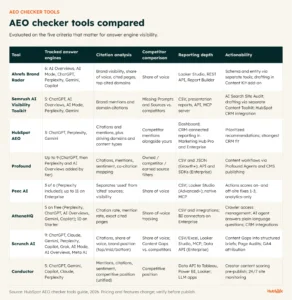
These KPIs are best tracked within a "Diagnose, Test, Measure, Iterate" loop. AEO should be treated as a series of testable hypotheses rather than a one-time fix. By continuously analyzing performance, testing new structural approaches, measuring their impact, and iterating based on data, teams can refine their AEO strategy for sustained success. Tools like HubSpot’s AEO Grader can benchmark a brand’s current representation, while HubSpot AEO can track performance over time.
To embed AEO principles consistently across content teams, organizations should implement:
- Role-Based Checklists: Assigning specific AEO tasks (e.g., schema implementation, heading review, internal linking) to clear owners ensures accountability.
- Content Templates: Developing reusable templates within content management systems (like HubSpot’s Content Hub) that embed question-led headings, direct-answer summaries, and schema guidelines as default structures. AI drafting tools like Breeze AI can even generate initial Q&A blocks that humans then review and refine, ensuring quality and efficiency.
Addressing Common AEO Challenges and Future Implications
The transition to AEO raises several practical questions for businesses:
- Optimizing Existing Content vs. New Pages: In most cases, optimizing existing content is sufficient. AI engines primarily look for well-structured information, not necessarily brand-new URLs. A content audit to identify high-potential pages for AEO updates is often the most efficient starting point.
- B2B Schema Types: For B2B content, prioritizing
Organization,Person,Product, andFAQschema types helps establish credibility, clarify offerings, and provide direct answers to common business queries. - Content Refresh Frequency: Content should be refreshed based on the volatility of the topic, not a fixed calendar. Evergreen content might need less frequent updates, while rapidly evolving topics require more agile refreshes to maintain accuracy and freshness, which AI engines value.
- Restricting LLMs: While possible to block AI crawlers via
robots.txt, it comes with a significant trade-off. The same structural optimizations that earn AI citations also benefit traditional SEO. Restricting LLMs sacrifices potential citation upside without necessarily improving classic search rankings. A more strategic approach is to compete on structure and quality. - Aligning AEO with CRM Funnels: AEO should be integrated with the broader marketing strategy by mapping content structure to specific funnel stages (awareness, consideration, decision). Tracking how AEO-optimized content contributes to lead generation and customer conversions via CRM integration connects citations directly to revenue impact.
Winning in the AI search era is not about magic, but about mastering a learnable discipline: structure. Large Language Models prioritize content that is clear, direct, and easily digestible. Every format that earns citations is simply a different expression of this fundamental principle. Content creators do not need to reinvent their entire strategy; rather, they must make their most valuable answers easy for AI to find, extract, and attribute. This systematic approach transforms AEO from a daunting challenge into a durable competitive advantage, ensuring brand visibility and authority in the evolving digital landscape.