South Korea Fair Trade Commission Opens Formal Proceedings Against Apple Over iPhone 16 Apple Intelligence Advertising

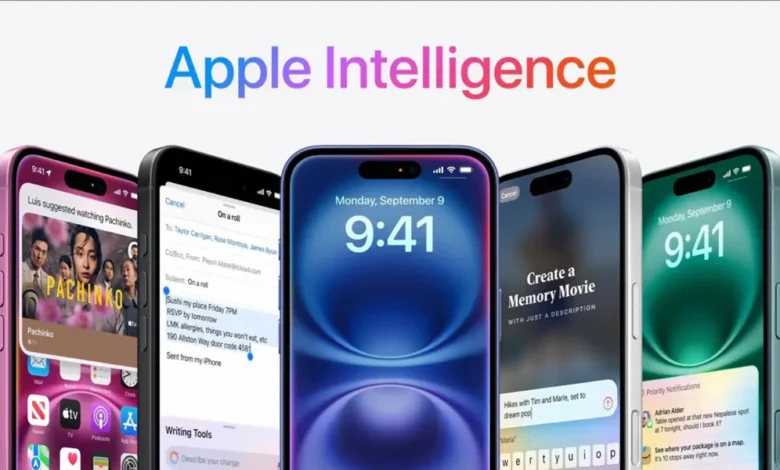
South Korea’s premier economic and consumer watchdog has escalated its scrutiny of American technology giant Apple, formally launching proceedings regarding the marketing campaign deployed for the iPhone 16 lineup. The Fair Trade Commission (KFTC) announced that its investigative arm has concluded a months-long probe and submitted formal recommendations for penalization, pointing to allegedly misleading advertisements concerning the availability and delivery timeline of heavily promoted artificial intelligence features collectively known as Apple Intelligence.
The regulatory move marks another milestone in a global wave of consumer skepticism and legal pushback faced by Apple regarding the staggered rollout of its next-generation machine learning and generative AI capabilities. What began as localized consumer advocacy in Seoul has blossomed into a multi-jurisdictional regulatory headache for the Cupertino-based company, testing the boundaries of how tech companies advertise software features that remain under development during hardware launches.
Origins of the Investigation: The Seoul YMCA Complaint
The roots of the KFTC’s current proceedings trace back to March 2025. Just months after the global rollout of the iPhone 16 family, South Korean consumer advocacy group Seoul YMCA filed an official complaint with the regulatory authority. The civic organization alleged that Apple had aggressively marketed cutting-edge AI features—such as deeply integrated Siri capabilities, text-generating tools, and advanced image generation platforms—knowing full well that these tools would face substantial internal developmental delays.
Seoul YMCA argued that these marketing campaigns heavily influenced Korean consumers into purchasing premium hardware under the false impression that advanced AI capabilities would be immediately accessible upon unboxing or within a reliably short timeframe. The organization initially pushed for consumer compensation, arguing that the marketing tactics constituted a material deception under South Korean consumer protection laws. This localized outcry mirrored growing global frustration. When Apple heavily promoted Apple Intelligence in late 2024—complete with high-profile global ad campaigns and major visual makeovers at flagship retail locations like New York’s Fifth Avenue—consumers worldwide anticipated immediate utility. Instead, foundational elements of the platform were pushed back significantly.

A Chronology of Delays and Regulatory Scrutiny
The timeline of Apple Intelligence’s deployment highlights the friction between aggressive corporate marketing and software engineering realities:
- September 2024: Apple launches the iPhone 16 lineup accompanied by a massive marketing blitz centered around Apple Intelligence, featuring high-profile commercials and global retail spectacles.
- March 2025: Following delays to core Siri AI tools, the Seoul YMCA formally files a deceptive advertising complaint with South Korea’s KFTC.
- April 2025: Regulatory pressure mounts internationally; consumer protection agencies in multiple regions begin questioning the phrasing of "available now" marketing materials tied to software updates.
- May 2026: Apple agrees to a massive $250 million class-action settlement in the United States addressing similar misleading advertising claims surrounding the timeline of Siri AI upgrades. Concurrently, consumer protection authorities in Brazil formally notify Apple regarding comparable advertising concerns.
- September 2026: Apple finally deploys critical personal context features for Siri in US English—nearly two years after the hardware they were designed for hit store shelves.
- October 2026: Korean-language support for advanced Siri features and localized Apple Intelligence tools finally rolls out to users in South Korea.
- November 2026: The KFTC announces it has concluded its investigation and submitted formal recommendations for corrective orders and financial penalties against Apple.
Findings of the KFTC Investigation
According to the KFTC’s official documentation released to the public, investigators thoroughly reviewed Apple’s domestic promotional materials, website copy, and regional launch strategies. The inquiry determined that Apple’s promotional campaigns for the iPhone 16 series systematically concealed, downplayed, or omitted material information essential for consumers making informed purchasing decisions.
Regulators pointed directly to major tools advertised prominently during the launch window—including Genmoji, Image Playground, contextual personal awareness for Siri, and step-by-step guidance features. While fine-print disclaimers or buried footnotes may have hinted at staggered releases, the overarching promotional narrative projected immediate or near-term availability.
For example, promotional material in global and regional markets indicated that Siri’s contextual awareness would roll out progressively, targeting early Korean language support by April 2025. In reality, the English-language variant of this capability did not launch until September 2026, with Korean language support pushed back further to October 2026.
Based on these discrepancies, KFTC investigators concluded that Apple violated South Korea’s Labeling and Advertising Act. This legislation stringently prohibits businesses from deceiving consumers through misleading, exaggerated, or omitted disclosures that alter the economic behavior of buyers.

Financial Exposure and Potential Penalties
The regulatory apparatus in South Korea now holds the responsibility of reviewing the submitted findings, after which a definitive penalty will be levied. While the KFTC’s preliminary announcement did not establish a fixed monetary fine, investigators calculated that the total corporate revenue associated with the contested advertising campaign sits at approximately 3.35 trillion South Korean won, which translates to roughly $2.5 billion USD.
Industry estimates regarding the potential fine vary based on statutory caps and the severity multipliers applied by the commission. Local news agency Yonhap reported that the penalty could climb as high as $48 million USD, while broadcasting network KBS estimated a fine range between $21 million and $42 million USD. Beyond financial penalties, investigators have recommended formal corrective orders that would mandate structural prohibitions against similar marketing practices in future product rollouts.
Apple has been granted a strict six-week window to submit a formal written defense to the commission. Following this submission, the KFTC will deliberate on the matter and issue a binding legal judgment regarding the alleged violations and the exact magnitude of the financial sanctions.
Corporate Response and Defense
Responding directly to inquiries regarding the KFTC’s formal proceedings, Apple issued a public statement maintaining its innocence while emphasizing its ongoing compliance efforts. A company spokesperson noted that Apple had fully cooperated with investigators throughout the duration of the probe, though it ultimately disagreed with the regulatory conclusions.
Apple defended its market position by highlighting that regional support for Apple Intelligence—specifically the complex integration of Korean-language capabilities—was successfully delivered to users, ensuring that local consumers ultimately gained access to the promised software ecosystem. The company argued that its forward-looking statements regarding software development roadmaps are standard industry practice and should not be misconstrued as deceptive commercial intent.

Broader Economic and Legal Implications
The ongoing battle in South Korea underscores a mounting systemic risk for multinational technology enterprises. As hardware cycles become increasingly decoupled from software capabilities, consumer electronics manufacturers face profound legal exposure when marketing upcoming software features as core selling points for physical devices.
This latest regulatory challenge compounds an already expensive pattern of legal fallout for Apple. The $250 million settlement in the United States set a formidable domestic precedent for accountability in AI marketing, while parallel inquiries in Brazil and South Korea demonstrate that international regulators are increasingly willing to scrutinize Silicon Valley product launches.
For consumers, the KFTC proceedings signal a tightening regulatory framework designed to protect buyers from pre-announcement hype cycles that fail to meet real-world delivery schedules. For Apple and its competitors, the South Korean case serves as a stern reminder that global marketing campaigns must precisely align with engineering realities—or face substantial financial and reputational consequences in key international markets.