This TikTokker jumps on a trampoline every night. Has she figured out the secret to happiness?

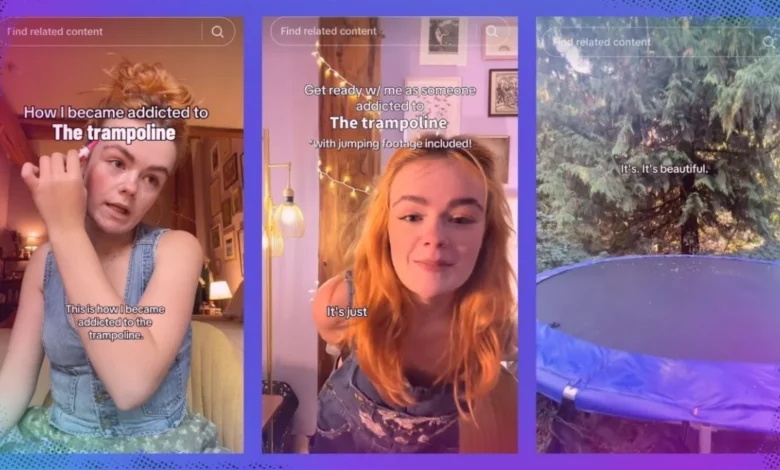
In an era defined by hyper-optimized morning routines, complex productivity hacks, and the constant pressure to monetize one’s leisure time, a singular habit has captured the attention of millions on social media. A TikTok creator operating under the handle @whatifimjustagirl has recently gone viral for a ritual that defies the conventional standards of modern adult life: jumping on a backyard trampoline in the dead of night. While the practice appears idiosyncratic, it has sparked a broader conversation regarding mental health, the importance of "unproductive" joy, and the evolving nature of digital-age hobbies.
The Anatomy of a Midnight Ritual
For the past seven years, the creator has maintained a remarkably consistent schedule, typically venturing out to her trampoline between the hours of midnight and 3 a.m. Far from being a fleeting trend or a performative stunt for engagement, this routine is deeply ingrained in her lifestyle. The creator reports that she looks forward to these sessions daily, utilizing them as a form of sensory decompression.
The logistics are simple: she dons comfortable attire—often leggings and a flannel shirt to accommodate nighttime temperature drops—and puts on headphones to listen to her preferred media or music. Unlike traditional fitness regimens that prioritize calorie burning or heart-rate optimization, the creator describes her motivation as purely experiential. She emphasizes that there is no professional trainer, no specific goal, and no intent to broadcast the activity for commercial gain, though the unintended virality of her videos has thrust the practice into the public eye.
Contextualizing the Obsession
The internet’s response to her nightly habit has been a study in modern social media discourse, oscillating between genuine curiosity and invasive psychological profiling. Commenters on her platform have frequently speculated about the reasons behind such an unusual behavior, with many suggesting the activity might be a manifestation of neurodivergence, specifically autism.
In a series of follow-up videos, the creator addressed these assumptions directly to clarify her position. While she acknowledges that she lives with Obsessive-Compulsive Disorder (OCD), she explicitly stated that her attachment to the trampoline is not a clinical symptom that requires medical pathologizing. "Yes, is my obsession with the trampoline a little extreme? Yes. Does my OCD play a factor in that? Yes, but that’s not why I jump," she explained. Her response highlights a growing trend in digital culture: the tendency of audiences to diagnose creators based on edited clips, and the subsequent pushback from creators seeking to reclaim the narrative around their personal habits.

The Science of Rebound Therapy
While the creator’s specific ritual is personal, the act of jumping on a trampoline—often referred to as "rebounding"—has long been recognized for its physical and psychological benefits. According to data from the American Council on Exercise (ACE), rebounding is a highly effective form of low-impact cardiovascular exercise. Because the surface absorbs a significant portion of the impact, it reduces stress on joints compared to running on asphalt or concrete.
Beyond the physiological, the rhythmic, repetitive motion of jumping can induce a state of "flow"—a psychological concept developed by psychologist Mihaly Csikszentmihalyi. Flow occurs when an individual is fully immersed in an activity, leading to a loss of self-consciousness and a distortion of time. For many, this state is a primary driver of happiness and stress reduction. By engaging in this rhythmic movement in the stillness of the night, the creator is essentially practicing a form of active meditation.
The Cultural Shift Toward "Non-Productive" Leisure
The popularity of this story can be attributed to the current cultural fatigue surrounding "wellness culture." In recent years, social media has been saturated with content focusing on high-performance morning routines—cold plunges, complex supplement stacks, and sunrise journaling. These routines are often marketed as essential tools for career success and mental clarity.
Against this backdrop, the sight of a woman jumping on a trampoline at 2 a.m. acts as a quiet rebellion. It is a hobby that yields no "return on investment" other than personal satisfaction. This lack of utility is precisely what makes it resonate with a generation of users who feel the weight of constant surveillance and the expectation to be productive at all hours. Experts in digital culture note that such "unproductive" hobbies are becoming increasingly rare, and when a creator displays a habit that is purely for their own enjoyment—devoid of branding or self-improvement metrics—it serves as a powerful, albeit unintentional, critique of the "hustle culture" ethos.
Navigating Privacy and Public Scrutiny
The timeline of the creator’s rise to notoriety is a testament to the speed of the TikTok algorithm. After seven years of relative obscurity, her decision to share her routine on the platform triggered a rapid dissemination of her content. This sudden transition from private individual to public subject brings with it the challenges of parasocial relationships.
The creator’s experience is not unique in the current media landscape. As platforms like TikTok continue to prioritize personal, authentic-seeming content, the boundary between the private home and the public square continues to erode. The creator has managed to maintain a boundary by speaking clearly about her motivations, yet she remains vulnerable to the assumptions of millions of strangers. Her ability to define her own joy without seeking validation from these observers is a critical component of her message: sometimes, an activity is just an activity.

Implications for the Future of Content Creation
The ripple effects of this story suggest a potential shift in what audiences are seeking from creators. For years, the gold standard of content was the "life hack" or the "aesthetic transformation." However, as these trends reach saturation, viewers are increasingly gravitating toward content that feels raw, unfiltered, and deeply idiosyncratic.
By refusing to frame her trampoline habit as a secret to weight loss, a sleep-optimization technique, or a mental health hack, the creator has carved out a niche of radical honesty. She provides a blueprint for a different kind of digital presence—one where the creator does not exist to serve the audience’s need for advice or entertainment, but rather exists as a person living a life that happens to be visible to others.
Final Considerations
Whether or not the creator has truly found a "secret to happiness" is, perhaps, beside the point. The value of her story lies in the reminder that the path to well-being is not universal. In a society that demands uniformity in how we work, sleep, and play, the decision to engage in a solitary, rhythmic, and joyful activity at an unconventional hour serves as a reclamation of agency.
As the digital age continues to evolve, we may see more creators pivoting away from the performative aspects of social media in favor of personal rituals that provide genuine comfort. The backyard trampoline, in this context, serves as more than just a piece of recreational equipment; it is a sanctuary. It represents the possibility of finding joy in the mundane, the quiet, and the decidedly unproductive. For those watching from their screens, the takeaway is not that they must also purchase a trampoline and start jumping at midnight, but rather that they are allowed to find their own version of that joy—regardless of whether it fits the mold of what the world considers "normal."