Mastering Multi-Account Social Media Management: Comprehensive Strategies for Enterprises and Agencies in 2026

The operational complexities of managing multiple social media profiles across diverse brands, regions, and target audiences have reached an inflection point for modern enterprises and digital marketing agencies. In a digital ecosystem where US social network ad spending is projected to surpass $121 billion, organizations can no longer rely on fragmented tools, manual publishing, or improvised workflows. Centralized multi-account social media management has transformed from a tactical convenience into a core enterprise necessity to mitigate compliance risks, protect brand reputation, and maximize return on investment.

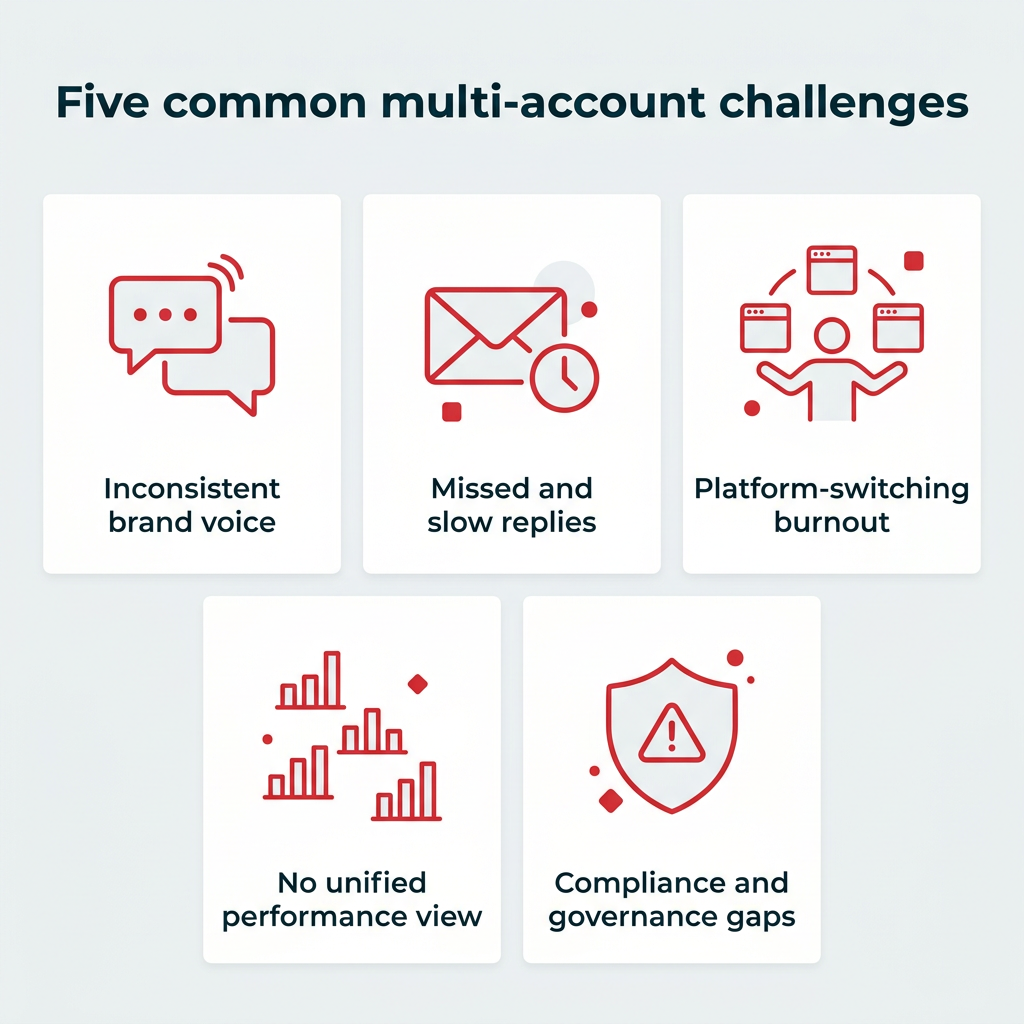
Without a unified operational framework, organizations frequently experience severe communication breakdowns. Brand messaging becomes inconsistent across channels, compliance vulnerabilities multiply, consumer inquiries go unanswered, and internal marketing teams face acute burnout from constant context switching. Industry experts emphasize that centralizing digital operations is the foundational step toward achieving sustainable growth and operational efficiency in modern corporate communications.
The Anatomy of Multi-Account Complexities

Operating across numerous social channels introduces predictable operational friction points. Marketing leaders generally categorize these systemic challenges into five distinct operational hurdles: fractured content planning, disjointed publishing schedules, fragmented customer service inboxes, inconsistent performance reporting, and complex approval governance. Recognizing which of these vulnerabilities poses the greatest threat allows organizations to deploy targeted interventions rather than applying generalized fixes.
Enterprise organizations, in particular, must navigate stringent regulatory requirements, especially within highly sensitive sectors such as financial services, healthcare, and government administration. A single mistimed post, unverified product claim, or regulatory misstep can instantly transform from a minor oversight into a severe legal and financial liability. Consequently, establishing rigorous governance protocols, multi-level approval hierarchies, and secure archiving systems has become standard operating procedure for global brands.
A 10-Step Blueprint for Centralized Social Operations
To eliminate the chaos associated with running multiple profiles, organizations must implement structured, repeatable systems that govern planning, execution, engagement, and analysis. Industry best practices outline a comprehensive ten-step framework for multi-account management:
-
Define a Clear Mission and Purpose for Every Profile: When managing multiple brand identities, overlapping content frequently confuses consumers. Every account must possess a clearly documented mission statement, specific target demographic, distinct budgetary allocation, and measurable key performance indicators.
-
Select High-Impact Platforms Strategically: Brands are not required to maintain a presence on every available social network. Demographics vary significantly across platforms; for instance, Pew Research Center data indicates that approximately 80% of adults aged 18 to 29 utilize Instagram, compared to just 19% of individuals aged 65 and older. Focusing resources where the core audience actively participates yields significantly higher returns than spreading efforts thin across ineffective channels.
-
Consolidate Operations Within a Unified Management Platform: Leading market research firms like Gartner increasingly view social media management and listening as a singular strategic software market. Enterprise teams rely on unified operating systems—such as Hootsuite Social OS—to integrate publishing, customer care, listening analytics, and security compliance into one connected environment, eliminating the inefficiency of navigating multiple applications simultaneously.
-
Develop Reusable Content Templates and Batch Workflows: Speed and consistency are vital for active social teams. Developing modular templates for recurring content formats—such as carousels, short-form video hooks, and infographics—reduces production time while ensuring brand guidelines are strictly maintained. Furthermore, practitioners advocate for task batching, grouping similar responsibilities like content creation or scheduling into dedicated focus blocks to minimize cognitive fatigue.
-
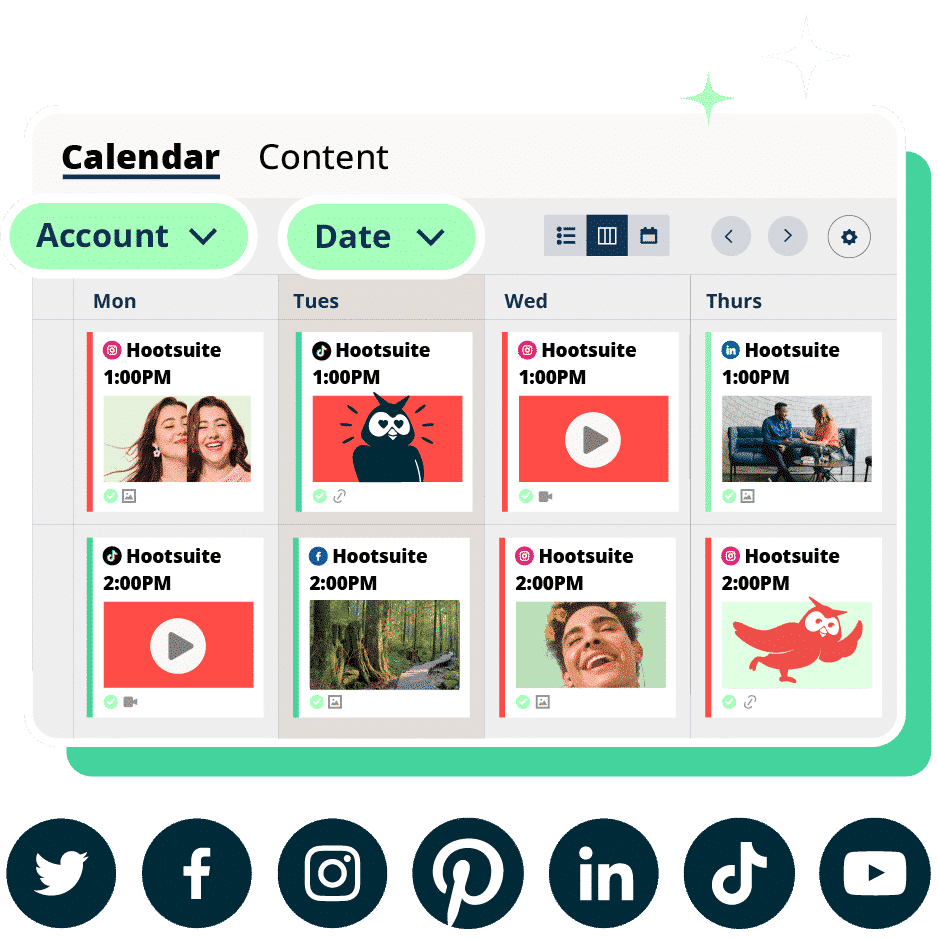
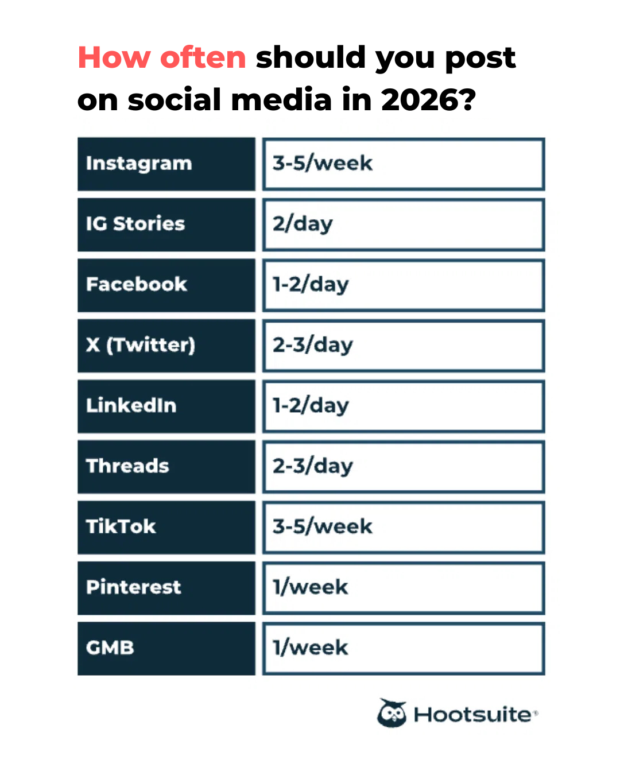
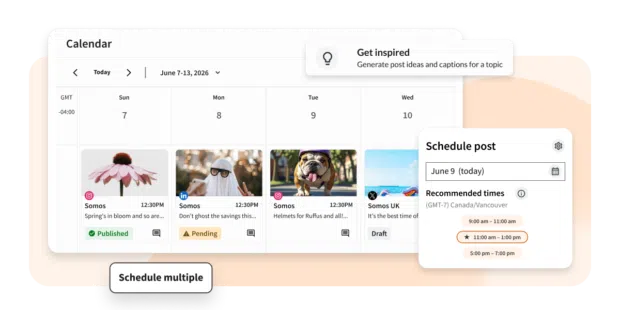
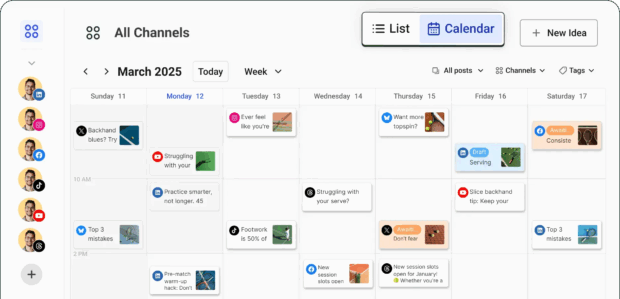
Establish Disciplined Scheduling Cadences: Maintaining a real-time, live-posting schedule across multiple accounts is unsustainable. Industry research recommends tailored publishing frequencies for each platform: three to five weekly posts for Instagram and TikTok, one to two daily posts for Facebook and LinkedIn, two to three daily updates for X and Threads, and approximately one weekly post for Pinterest and Google Business Profile. Forward-looking scheduling provides teams with strategic breathing room, provided they remain vigilant and pause automated queues during unexpected global events.
-
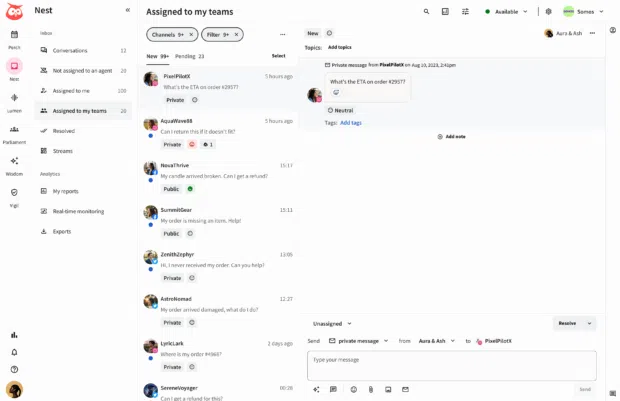
Streamline Inbox Management and Customer Care: Unmonitored direct messages and comment sections alienate consumers and harm brand loyalty. Enterprises mitigate this risk by utilizing unified inbox applications equipped with AI-assisted sentiment prioritization and automated response templates. Establishing dedicated daily response windows prevents customer service teams from being overwhelmed by continuous notifications.
-
Implement Robust Governance and Approval Workflows: Multi-user publishing environments require strict editorial controls. Documented social media policies paired with multi-stage approval workflows ensure that content undergoes appropriate legal, editorial, and brand compliance checks before publication. Automated archiving tools further ensure that regulated industries maintain permanent compliance records across all active digital properties.
-
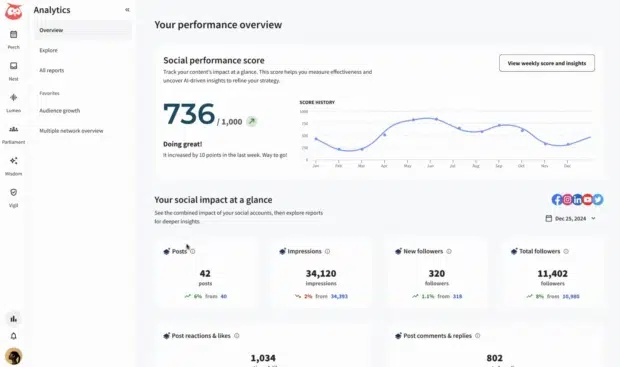
Conduct Regular Performance Audits: Sustained success requires continuous evaluation. Social media managers must regularly analyze critical performance metrics, including engagement rates, follower growth trajectories, click-through rates, and audience sentiment. Catching minor dips in engagement early allows teams to pivot content strategies before performance degrades significantly.
-
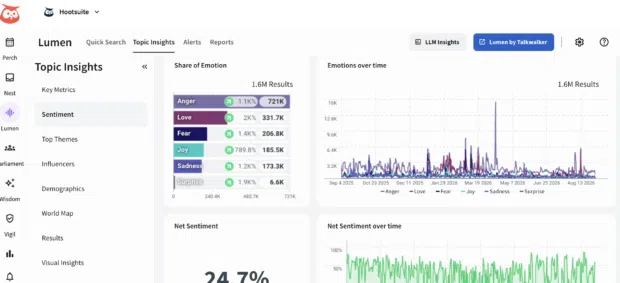
Dedicate Time for Social Listening and Engagement: While benchmark engagement rates typically hover between 1% and 5% depending on the industry, proactive engagement builds valuable brand equity and partnership opportunities. Integrating social listening tools enables organizations to monitor real-time public sentiment, identify emerging industry trends, and discover organic conversation opportunities without manual scrolling.
-
Communicate Clear Business Impact to Leadership: Social media must definitively prove its financial value to secure executive buy-in. Comprehensive reporting must connect social metrics directly to broader business objectives, illustrating lead generation, customer acquisition cost reduction, and direct revenue attribution through advanced analytics dashboards.
The Role of Artificial Intelligence in Modern Social Operations
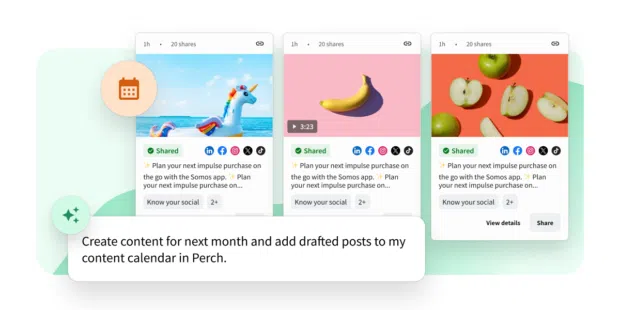
As generative artificial intelligence matures, its primary utility in multi-account management lies in eliminating repetitive, low-level administrative tasks. Industry professionals widely regard AI as an indispensable, always-on assistant capable of rapidly generating initial content drafts, summarizing listening data, resizing visual assets, and streamlining performance reporting.
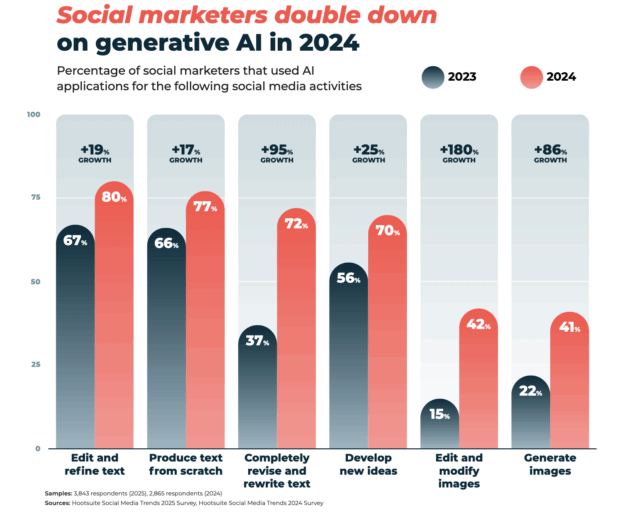
While artificial intelligence cannot replace human strategic judgment and brand nuance, utilizing advanced AI layers within social operating systems allows marketing teams to reclaim substantial weekly hours. Integrating context-aware AI tools empowers organizations to accelerate brainstorming sessions, optimize caption variations, and maintain consistent brand voice governance across dozens of concurrent digital properties.
Evaluating Social Media Management Software Solutions
Selecting the appropriate software infrastructure depends heavily on organization size, team structure, and account volume. Market alternatives cater to distinct operational scales:
-
Hootsuite Social OS: Engineered specifically for complex enterprises and multi-brand organizations. It offers advanced multi-level approval workflows, sophisticated customization options, integrated social listening capabilities via Lumen, robust customer care queues, and comprehensive AI integration across all operational modules.
-
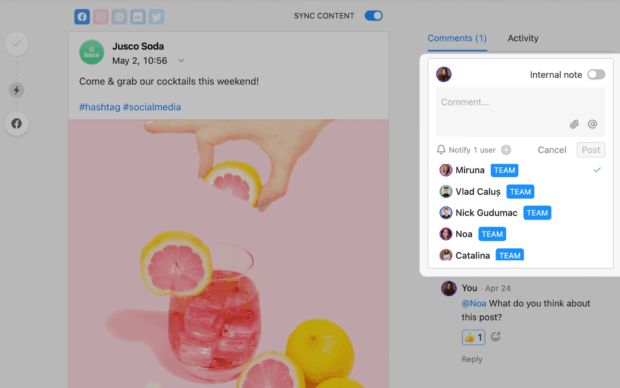
Planable: Positioned primarily for creative agencies and collaborative teams whose primary operational bottleneck centers around visual content reviews, multi-stage approvals, and client sign-offs, though it lacks deep enterprise analytics and listening tools.
-
Buffer: Designed primarily for freelancers, solo creators, and small businesses managing a limited number of channels. While excellent for basic publishing and scheduling, it lacks the multi-tiered governance, compliance archiving, and advanced listening capabilities required by large-scale enterprise environments.
Strategic Implications and Future Outlook
The trajectory of digital marketing indicates that the volume of social channels and the velocity of consumer communication will only accelerate. Organizations that successfully transition from fragmented, reactive social management to centralized, AI-supported, and governance-driven operations will maintain a distinct competitive advantage. By establishing rigorous internal structures, leveraging unified software platforms, and treating social data as a critical enterprise asset, businesses can transform multi-account complexity into a powerful engine for sustainable brand growth.
Related posts: