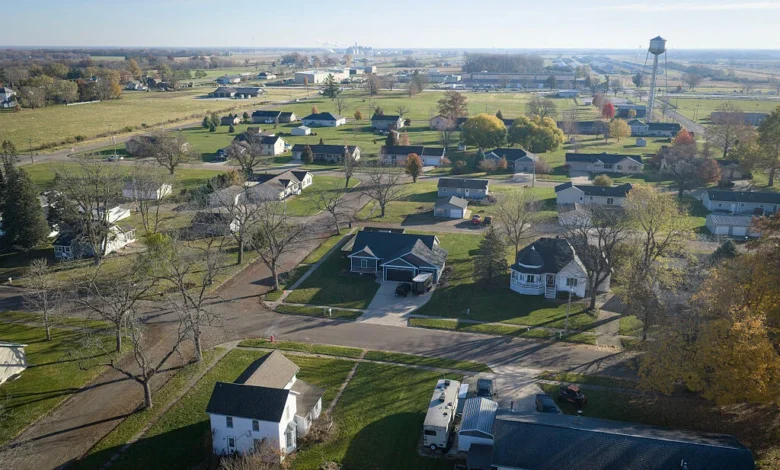
The situation surrounding the Iowa Army Ammunition Plant has reached a critical inflection point as the U.S. Army and state officials remain deadlocked over the disposal of volatile chemical compounds. Government lawyers, in a series of court filings submitted this past weekend, argued that the military is effectively absolved of the need for an Environmental Protection Agency (EPA) permit—which had been suspended by a judicial order—due to the exigency of the circumstances. The Army maintains that the lead azide, a primary explosive used in detonators, has reached a state of instability that constitutes an "immediate threat to human health, public safety, property, or the environment."
The Chronology of Escalating Risk
The timeline of the current crisis has been marked by shifting deadlines and mounting tension. Initially, military officials designated last Thursday as the final window for a controlled detonation, citing the necessity of performing the operation before ambient temperatures plummeted, which would further destabilize the material. However, the operation was subsequently postponed to Monday, then Tuesday, and eventually pushed back to Wednesday.
This shifting schedule has drawn scrutiny from environmental watchdogs and state political figures who question the engineering logic behind the delays. The military contends that these delays are necessitated by the need to ensure maximum safety for the surrounding community, yet the persistent nature of the postponements has fostered a climate of uncertainty regarding the actual shelf-life and stability of the hazardous materials stored on the site.
The Science of Lead Azide Stability
To understand the severity of the Army’s position, it is necessary to examine the chemical properties of the material in question. Lead azide ($Pb(N_3)_2$) is a highly sensitive primary explosive. Unlike secondary explosives, which require a significant shock or heat to initiate, lead azide is prone to spontaneous detonation if it undergoes crystallization, moisture degradation, or thermal shock.
Industry standards for the storage of such materials generally dictate strict climate control and regular inspections. The Army’s claim that the material is currently an "immediate threat" suggests that the chemical integrity of the stored lead azide has degraded beyond the point of safe handling or standard removal. If the substance were to detonate spontaneously, the resulting shockwave and fragmentation could result in a significant localized disaster, potentially breaching containment structures and releasing toxic lead particulates into the atmosphere.
Political Posturing and the Blame Game
The conflict has transcended logistical challenges to become a focal point of political theater. Former President Donald Trump entered the fray this week, stating via social media that while he views a controlled detonation as the "proper course," he is effectively transferring the burden of the decision to the federal appeals court and incoming Governor-elect Rob Sand, a Democrat.
In his statement, Trump framed the situation as a binary choice: either proceed with the Army’s controlled plan or risk a spontaneous catastrophe for which the current leadership would be held accountable. "If he or the Courts do not agree, we will have no choice but to not proceed with the controlled removal of these hazardous materials, and be forced to hold the incoming Governor responsible for any and all death or destruction caused by this very unfortunate, and longterm, situation," Trump wrote.
Governor-elect Rob Sand responded with a call for institutional accountability. In a social media post released Sunday, Sand challenged the narrative of the current crisis, focusing on the decision-making process that led to the present danger. Specifically, Sand questioned why the contract with MuniRem—a company specializing in the neutralization of hazardous energetic materials—was canceled. "Iowans deserve transparency over how we got here, then answers and accountability to stop this from ever happening again," Sand noted.
Implications of the EPA Permit Suspension
The core legal struggle involves the suspension of an EPA permit that was intended to oversee the disposal process. The Army’s argument that they can bypass this regulatory requirement hinges on the "emergency exception" clauses found in environmental law. These clauses allow federal agencies to take necessary actions to mitigate imminent threats without standard procedural compliance, provided the danger is genuine and unavoidable.
Legal analysts observing the case note that this sets a precarious precedent. If the court allows the Army to proceed without the EPA permit, it could signal a broader trend of federal agencies utilizing "emergency" status to circumvent environmental regulations in the future. Conversely, if the court upholds the permit suspension, it forces the military to find an alternative, likely more expensive and time-consuming, method for stabilizing the materials, which may increase the duration of the public safety risk.
Transparency and Public Safety Concerns
The residents of southeastern Iowa, particularly those in proximity to the ammunition plant, have expressed growing anxiety regarding the lack of clear, consistent communication. The facility, which has a long history of military production, is no stranger to the risks associated with explosive materials. However, the current situation is perceived as an outlier in terms of the urgency and the degree of public disagreement between federal and state authorities.
Transparency experts argue that the lack of an independent, third-party assessment of the lead azide’s condition has left the public relying solely on the Army’s internal reports. By failing to provide granular data on the state of the chemicals—such as degradation levels, moisture content, or thermal analysis—the military has inadvertently fueled skepticism regarding the necessity of a large-scale detonation versus other remediation strategies.
Broader Implications for Hazardous Waste Management
The Iowa situation serves as a microcosm of a larger challenge facing the Department of Defense: the management and disposal of aging munitions and energetic materials. As military stockpiles across the United States reach the end of their operational lifespans, the cost and logistical complexity of safe disposal are skyrocketing.
The cancellation of specialized contracts, such as the one previously held by MuniRem, highlights a systemic tension between cost-cutting measures and the specialized expertise required for hazardous material handling. If the military continues to prioritize administrative efficiency over the retention of specialized disposal contractors, incidents of this nature may become more frequent.
Future Outlook and Accountability
As the Wednesday deadline approaches, the situation remains fluid. The interplay between federal military authority, the judiciary, and state political interests has created a deadlock that could have lasting impacts on both environmental law and local governance.
Regardless of the immediate outcome—whether a controlled detonation proceeds or an alternative mitigation strategy is employed—the incident has prompted calls for a comprehensive audit of the facility’s management practices. For Governor-elect Sand and other state leaders, the priority is not merely the safe neutralization of the current threat, but the establishment of a robust oversight framework that prevents the repetition of this crisis.
The burden of proof remains with the Army to demonstrate that a controlled detonation is, in fact, the least harmful alternative. As the public awaits further developments, the demand for clear evidence, expert oversight, and transparent communication remains the primary concern for the affected community. The resolution of this event will likely serve as a case study for how federal agencies manage, communicate, and mitigate catastrophic risks in the face of intense public and political scrutiny.
Related posts: