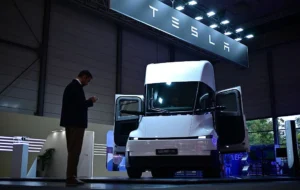
Tesla announced the launch of its Robotaxi service in Orlando and Tampa, Florida, a strategic move revealed on the company’s recent earnings day. This expansion aims to project growth in Tesla’s autonomous vehicle division, though the announcement was notably light on specific details regarding fleet sizes or immediate customer accessibility for hailing rides. The rollout comes amidst ongoing scrutiny of Tesla’s robotaxi ambitions, with independent tracking data suggesting a significantly smaller deployment of unsupervised vehicles compared to earlier projections made by CEO Elon Musk. The disparity between stated goals and operational reality continues to be a central point of discussion among investors and industry observers, particularly when benchmarked against competitors like Waymo, which boasts a substantially larger and more established driverless fleet.
The Genesis of Tesla’s Robotaxi Ambitions
Elon Musk first unveiled his ambitious vision for a "Robotaxi Network" during Tesla’s Autonomy Day in April 2019. At the time, Musk famously predicted that Tesla would have over a million robotaxis operating on the roads by 2020, generating substantial revenue for the company and its vehicle owners. This bold forecast positioned Tesla not merely as an electric vehicle manufacturer but as a future leader in autonomous ride-hailing services, a sector poised to disrupt traditional transportation models. The core of this strategy hinged on Tesla’s Full Self-Driving (FSD) software, which Musk asserted would evolve from an advanced driver-assistance system into a fully autonomous, Level 5 capability, requiring no human intervention. Owners, Musk suggested, could then opt to add their vehicles to a shared robotaxi fleet, earning income while their cars were not in personal use. This promise became a significant driver of investor enthusiasm and contributed to Tesla’s valuation, despite the technological hurdles and regulatory complexities inherent in achieving true full autonomy.
However, the 2020 deadline for a million robotaxis passed without significant deployment. Subsequent timelines offered by Musk also proved optimistic, with the company consistently facing challenges in moving from advanced driver-assistance features to truly unsupervised, commercially viable robotaxi operations. The development of FSD has progressed through various beta stages, offering increasing levels of automation to a limited set of customers, but always requiring a human driver to remain attentive and ready to take control. This distinction between FSD beta as a driver-assist system and a Level 4 or Level 5 autonomous robotaxi is critical and often a point of confusion.
The Florida Expansion: A Strategic Announcement
The decision to launch in Orlando and Tampa, Florida, holds strategic significance for Tesla. Florida has generally adopted a progressive stance on autonomous vehicle testing and deployment, with legislation designed to encourage innovation in the sector. The state’s warm weather and relatively flat terrain also present fewer environmental challenges compared to regions with harsh winters or mountainous topography, making it an attractive testing ground for AV companies. Orlando and Tampa are major urban centers with significant tourism and business travel, representing potentially lucrative markets for ride-hailing services.
The timing of the announcement, coinciding with Tesla’s earnings day, suggests an effort to reassure investors about the progress of its robotaxi initiative. Earnings calls are critical opportunities for public companies to present their strategic vision and operational achievements. By announcing new markets, Tesla aims to demonstrate forward momentum and commitment to a project that has, at times, faced skepticism due to its slower-than-anticipated rollout. However, the lack of specific details regarding the size of the initial fleet or immediate customer access underscores the nascent stage of this expansion. Unlike a full commercial launch, which would typically involve extensive public relations, app availability, and clear service parameters, this announcement reads more as an intent or a preliminary phase.
A Closer Look at Fleet Dynamics and Discrepancies
Independent tracking data, such as that provided by the Robotaxi Tracker, offers a stark contrast to the narrative of rapid expansion. This tracker, which monitors the presence and operational status of robotaxis in various cities, indicates that Tesla’s unsupervised fleet remains remarkably small and, at times, inconsistent. For instance, in May, the tracker reported five unsupervised Tesla robotaxis in Dallas, six in Houston, and 29 in Austin. By the time of the Florida announcement, these numbers had shifted considerably, showing only 17 unsupervised vehicles in Austin, four in Dallas, and zero in Houston. This fluctuation, with no public explanation from Tesla, raises questions about the stability and scalability of its current robotaxi operations.
The practice of introducing robotaxis with safety drivers, or "supervisors," is standard across the industry. Companies like Waymo and Cruise typically begin testing with human safety operators, gradually transitioning to fully driverless operations as their technology matures and accumulates sufficient real-world data. Tesla, too, has followed this pattern, sometimes moving the safety driver from the driver’s seat to the passenger seat, with access to a "kill switch" for emergency interventions. However, the inconsistency in deployment strategy—ranging from fully supervised to partially unsupervised, and the fluctuating fleet sizes—differs from the more structured and transparent rollout strategies observed in some of its competitors. This variability suggests that Tesla’s robotaxi development, at least in terms of commercial deployment, may still be grappling with fundamental challenges in achieving consistent, scalable, and fully autonomous operation.
The Competitive Landscape: Tesla vs. Waymo and Cruise
To fully appreciate the context of Tesla’s robotaxi progress, it is essential to compare it with other major players in the autonomous vehicle space. Waymo, a subsidiary of Alphabet (Google’s parent company), is widely considered a leader in fully driverless ride-hailing. Waymo’s approach involves a sophisticated sensor suite, including lidar, radar, and cameras, and extensive testing over more than a decade. The company is estimated to have over 3,500 fully driverless vehicles in operation across more than 10 cities, including commercial services in Phoenix, San Francisco, and Los Angeles. Their deployment strategy has been characterized by methodical expansion, robust safety protocols, and a clear progression from supervised testing to unsupervised commercial operation. Waymo’s vehicles operate without human safety drivers in designated operational design domains (ODDs), providing a ride-hailing service to the public.
Cruise, a subsidiary of General Motors, is another significant player, though it has faced recent setbacks. Prior to a temporary suspension of its driverless operations in late 2023 due to safety incidents and regulatory scrutiny, Cruise had a substantial fleet of fully driverless vehicles operating commercially in San Francisco and other cities. While Waymo and Cruise utilize a multi-sensor approach, Tesla has famously pursued a "vision-only" strategy, relying solely on cameras and artificial intelligence to perceive the environment. This approach is touted by Musk as more scalable and cost-effective, but it also presents unique technical challenges, particularly in adverse weather conditions or complex urban environments where lidar and radar can provide crucial redundancy.
The disparity in fleet size and operational reach between Tesla and its rivals is significant. Waymo’s 3,500+ driverless vehicles across multiple cities represent a commercial-scale operation that Tesla’s current numbers, even with the new Florida expansion, do not yet match. This gap highlights the different technological philosophies, development timelines, and regulatory compliance strategies adopted by each company.
Technological Approaches and Regulatory Hurdles
The choice of sensor suite—vision-only versus multi-sensor fusion (lidar, radar, cameras)—is a fundamental differentiator in the AV industry. Tesla’s vision-only approach, while potentially cost-efficient in mass production, places immense pressure on its AI and software to interpret visual data with human-like, or even superhuman, accuracy. Proponents argue that cameras provide richer semantic information, similar to how humans perceive the world. Critics, however, point to the limitations of cameras in fog, heavy rain, or direct sunlight, and the absence of direct depth perception that lidar and radar offer. The industry consensus among many experts leans towards sensor fusion for robust and redundant perception, especially for safety-critical applications like fully autonomous driving.
Beyond technology, regulatory hurdles are a significant factor in the slow pace of robotaxi deployment. Each state, and often each municipality, has its own set of rules and permitting processes for autonomous vehicle testing and commercial operation. The National Highway Traffic Safety Administration (NHTSA) provides federal guidelines but leaves much of the specific regulation to state authorities. Ensuring compliance with safety standards, obtaining necessary permits, and demonstrating a proven safety record are time-consuming and resource-intensive processes. The inconsistent rollout of Tesla’s robotaxis, with numbers going "up and down" and varying levels of supervision, could be partly attributed to the dynamic nature of testing, data collection, software updates, and regulatory interactions in different operational areas.
Investor Expectations and Market Reality
Tesla’s stock valuation has long factored in the potential for future revenue streams from its robotaxi network. The promise of a high-margin autonomous ride-hailing service is a key component of the company’s growth narrative and investor appeal. Consequently, announcements like the Florida expansion, particularly on earnings day, are crucial for maintaining investor confidence. However, the market is becoming increasingly sophisticated in differentiating between aspirational projections and tangible operational progress.
The fluctuating fleet sizes, the inconsistency in the ratio of supervised to unsupervised vehicles, and the reported long wait times for actual robotaxi services in existing markets present a "very different story" to the one often painted by the company’s most ardent supporters. While new city additions can generate positive headlines, investors are increasingly looking for concrete metrics: the number of fully unsupervised vehicles, the geographic area of operation, the number of completed revenue-generating rides, and transparent safety reports. The comparison with Waymo’s robust commercial operations highlights the gap between Tesla’s current robotaxi reality and the market’s expectation for a truly scalable, profitable autonomous ride-hailing service.
Expert Perspectives and Future Outlook
Industry experts generally acknowledge Tesla’s significant contributions to electric vehicle technology and its advanced driver-assistance systems. However, opinions diverge sharply on the company’s approach to full autonomy and its robotaxi timeline. Many analysts commend Tesla’s aggressive pursuit of a vision-only system and its rapid iteration through the FSD beta program, which provides a massive dataset from real-world driving. This "data flywheel" is seen as a powerful asset. Yet, the persistent challenges in achieving Level 4 or Level 5 autonomy, particularly without the redundancy of lidar and radar, are frequently highlighted.
The future outlook for Tesla’s robotaxi project remains a subject of intense debate. The Florida expansion, even if initially limited, signifies a continued commitment to this strategic pillar. For Tesla to truly compete in the robotaxi market, it will need to demonstrate sustained growth in its unsupervised fleet, consistent operational reliability, and a clear path to regulatory approval for widespread commercial deployment. This will likely involve not only further advancements in its FSD software but also a more transparent and consistent approach to scaling its operations. The success of robotaxis is not just a technological challenge; it is also a business and regulatory challenge, requiring robust safety frameworks, public trust, and a clear economic model. The journey from ambitious prediction to widespread commercial reality is proving to be a marathon, not a sprint, for all players in the autonomous vehicle race.