US Government Seizes $1.2 Billion in Crypto and Disrupts North Korean FaceStealer Infrastructure

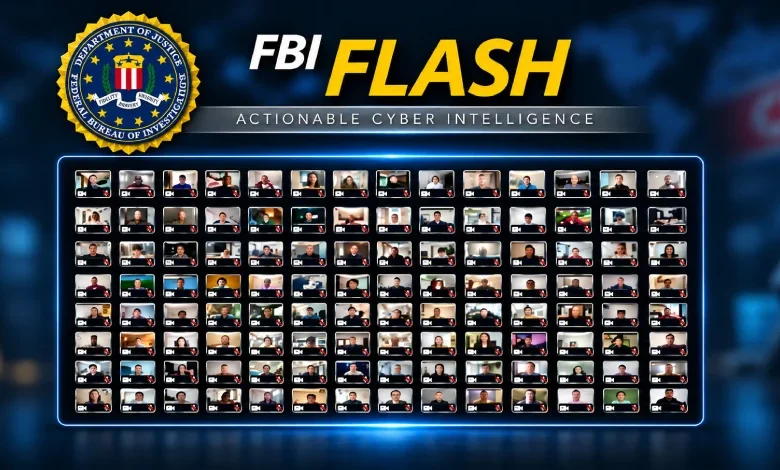
The United States Department of Justice, in coordination with the Federal Bureau of Investigation, has launched a sweeping series of enforcement actions to dismantle a massive, state-sponsored cybercriminal apparatus operated by North Korea. Federal authorities announced the court-authorized seizure and restraint of more than $1.2 billion in stolen cryptocurrency linked to the prominent threat cluster known as BlueNoroff, also tracked as APT38 or the Lazarus Group’s financial arm. Concurrently, the FBI announced the neutralization of the cloud-based infrastructure powering "FaceStealer," a sophisticated and hard-to-detect social engineering campaign that has siphoned more than $400 million from digital asset and Web3 sectors over the past 18 months.
The dual enforcement action underscores the escalating scale of Pyongyang’s cyber warfare operations. According to U.S. officials, the billions of dollars plundered through these elaborate social engineering and exchange-hacking schemes are funneled directly into funding North Korea’s illicit weapons of mass destruction and ballistic missile programs.
The Anatomy of the FaceStealer Campaign
The FaceStealer operation represents a significant evolution in cyber espionage and financial crime. Unlike conventional phishing campaigns that rely on generic emails or deceptive login pages, FaceStealer leverages deepfake video technology, generative artificial intelligence, and the hijacking of trusted communication channels to target high-net-worth individuals, startup founders, and C-suite executives.

Security researchers from firms like Arctic Wolf and JUMPSEC have mapped out the intricate lifecycle of a FaceStealer attack. The operation typically begins upstream, with threat actors compromising legitimate accounts on platforms such as Telegram, LinkedIn, Slack, and Discord. Rather than immediately burning these assets, the attackers squat on the accounts for extended periods, observing the victim’s professional and personal networks.
Once a high-value target is identified—frequently a cryptocurrency exchange executive, blockchain protocol founder, or core software maintainer—the attackers initiate contact using a stolen account belonging to a mutual professional acquaintance. The target receives an invitation to a video conference ostensibly hosted on standard platforms like Zoom or Microsoft Teams.
Upon joining the virtual meeting, the victim is met with a meticulously staged illusion. The hackers deploy prerecorded webcam feeds of previous victims or use advanced generative AI models—powered by tools such as ChatGPT, Google, Grok, and specialized content generation engines—to project hyper-realistic deepfake videos of well-known industry figures. This artificial presence is carefully calibrated to build immediate rapport and trust.
A few moments into the conference, the targets are subjected to a simulated technical failure. The synthetic participant or fake host claims they are unable to hear the victim and provides a URL to resolve the alleged audio issue. This link deploys a ClickFix-style lure, prompting the user to execute a seemingly routine system fix that actually installs fileless PowerShell malware or remote access trojans (RATs) onto the workstation. Once entrenched, the malware siphons digital wallet private keys, harvests credentials, and grants the hackers lateral movement across corporate and personal infrastructure.
A Chronology of Escalation and Global Reach

The origins of this multi-pronged financial threat trace back years, but the tactics have crystallized into an industrialized enterprise between 2025 and 2026.
In October 2025, cybersecurity researchers exposed campaigns like GhostCall, which foreshadowed the integration of real-time audio-visual manipulation in targeted attacks. By early 2026, the scope of BlueNoroff’s operations broadened dramatically. Security audits published by Arctic Wolf revealed that the threat cluster had expanded its target set from an initial cluster of 400 victims to 677 high-value targets across 58 countries, concentrating heavily in the United States, the United Kingdom, Singapore, South Korea, Hong Kong, and the United Arab Emirates. Crucially, 80% of these targets were found to operate directly within blockchain finance or adjacent investment sectors, with CEOs and founders accounting for nearly half of all targeted individuals.
By mid-2026, the tactics expanded beyond direct financial theft into software supply chain attacks. In April 2026, the FaceStealer vector was utilized to compromise the maintainer of the popular Axios npm package, pushing a trojanized version designed to deliver cross-platform remote access trojans. This methodology mirrored broader supply chain strategies aimed at software repositories and open-source ecosystems.
Official Responses and Enforcement Actions
The international community and domestic law enforcement agencies have responded with aggressive countermeasures. In late September 2026, a joint cybersecurity advisory issued by intelligence agencies in the U.S., Japan, Australia, and Germany revealed that related North Korean recruitment-themed campaigns had already compromised at least 30,000 devices globally.

In November 2026, the U.S. government brought its multi-agency strategy to a head. Brett Leatherman, FBI Cyber Branch Operations Director, emphasized the strategic importance of the operation in an official statement, noting that the North Korean regime relies heavily on large-scale cryptocurrency thefts to sustain its prohibited weapons infrastructure.
As part of the coordinated crackdown, the FBI successfully seized more than 900 victim webcam video recordings utilized by the threat actors to impersonate trusted individuals in follow-on attacks. Simultaneously, the Department of Justice announced the restraint of over $1.2 billion in cryptocurrency tied directly to the aftermath of the massive Binance exchange hack orchestrated by TraderTraitor actors.
The Convergence of FaceStealer and Contagious Interview Campaigns
While FaceStealer focuses heavily on Web3 leadership and executive compromise through simulated video conferences, security analysts have tracked parallel operations under the banner of "Contagious Interview" or "ClickFake Interview." These campaigns target job seekers and software engineers through fraudulent recruitment processes.
In October 2026, high-profile incidents brought these recruitment scams into sharp focus. Engineering managers and developers reported receiving elaborate technical take-home assignments or being instructed during video interviews to clone public repositories hosted by fictitious entities like the decoy company AccuraSoftHire. Security firms such as Sophos and JFrog disclosed instances where corporate macOS and Windows machines were compromised when developers opened weaponized Visual Studio Code workspaces. These environments silently executed multi-stage payloads, notably the BeaverTail JavaScript loader and the InvisibleFerret Python backdoor.

The establishment of fully realized decoy companies—complete with professional websites, verified LinkedIn recruiter badges, and client testimonials—demonstrates the operational maturity and financial backing of the state-sponsored groups behind these syndicates.
Broader Implications for Enterprise Security
The systemic targeting of cryptocurrency executives, open-source maintainers, and software developers highlights a fundamental vulnerability in modern trust-based digital workflows. Traditional security awareness training, which often instructs employees to be wary of generic phishing emails or unverified links, proves insufficient when adversaries weaponize trusted professional contacts, real-time deepfakes, and legitimate communication platforms.
Cybersecurity experts emphasize that enterprises and Web3 organizations must adopt zero-trust architectures to mitigate these threats. Recommendations from incident response firms include mandating that all technical interview assignments and code execution take place strictly within disposable, isolated virtual machines rather than corporate or personal endpoints. Furthermore, organizations must enforce strict verification protocols for out-of-band communications when handling sensitive wallet private keys, administrative credentials, or infrastructure deployment scripts.
As geopolitical tensions remain high and cryptocurrency markets continue to offer lucrative, decentralized avenues for capital flight, state-sponsored cyber units like BlueNoroff are expected to continually refine their synthetic media pipelines and social engineering vectors. The recent federal seizures mark a historic disruption in the disruption of North Korea’s illicit financial network, yet cybersecurity agencies warn that vigilance and structural defense reforms remain imperative for global digital infrastructure.