Russian Ministry Mulls Expanding Rescue Team To Aid Quake Stricken Turkey 68686
Russian Ministry Mulls Expanding Rescue Team to Aid Quake-Stricken Turkey
The Russian Ministry of Emergency Situations (EMERCOM) is actively considering a significant expansion of its search and rescue capabilities deployed to Turkey following the devastating earthquakes that have rocked the nation and neighboring Syria. This potential reinforcement underscores the gravity of the humanitarian crisis and Russia’s commitment to international disaster response. The initial deployment, comprising highly trained specialists and advanced equipment, has been instrumental in ongoing rescue operations, but the sheer scale of destruction necessitates a re-evaluation of resource allocation. EMERCOM’s decision-making process involves a meticulous assessment of the evolving needs on the ground, including the duration of effective rescue windows, the complexity of collapsed structures, and the availability of local infrastructure to support a larger contingent. Discussions within the ministry are reportedly focused on mobilizing additional personnel with diverse expertise, such as structural engineers, medical professionals specializing in trauma care, and specialized canine units trained for urban search and rescue. The logistics of such an expansion, including transportation, accommodation, and sustained resupply, are also under intense scrutiny. This proactive consideration of augmenting their presence signals a deep understanding of the prolonged nature of disaster relief efforts and the critical importance of sustained support in the face of immense human suffering.
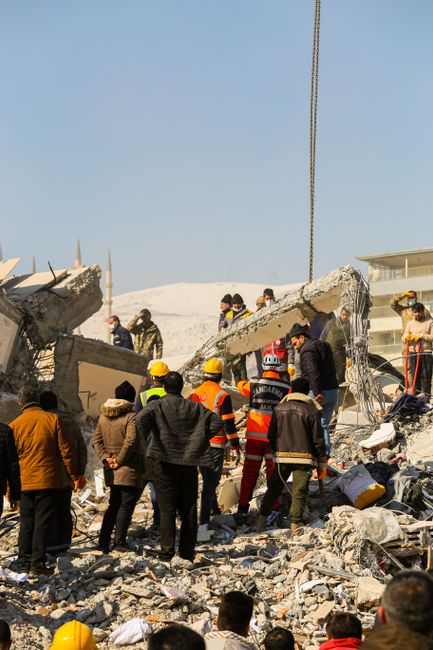
The ongoing earthquake disaster in Turkey, with a magnitude of 7.8 and subsequent powerful aftershocks, has resulted in widespread devastation across multiple provinces. Entire cities have been reduced to rubble, trapping an untold number of individuals beneath the debris. The humanitarian imperative is immediate and immense, requiring a coordinated and robust international response. Russia, a significant global player with a well-established track record in disaster management, has been among the first to offer substantial assistance. The initial contingent dispatched by EMERCOM has been working tirelessly since their arrival, facing challenging conditions and the emotional toll of witnessing such widespread destruction. Their presence is not merely symbolic; it represents the deployment of highly specialized skills and state-of-the-art equipment designed for the intricate and dangerous task of urban search and rescue. This includes advanced seismic detectors, thermal imaging cameras, specialized cutting and lifting tools, and medical support teams equipped for field operations. The sheer number of collapsed buildings, many of which are multi-story residential and commercial structures, presents an unprecedented challenge. The density of these collapsed areas, coupled with the ongoing risk of further structural instability and aftershocks, complicates every aspect of the rescue effort.
The Russian Ministry of Emergency Situations possesses a highly trained and experienced cadre of specialists. These individuals undergo rigorous training regimes that prepare them for a wide range of disaster scenarios, including earthquake response. Their expertise encompasses not only the physical act of searching for survivors and extricating them from debris but also the crucial skills required for assessing structural integrity, providing immediate medical aid, and ensuring the safety of both victims and rescue personnel. The canine units, often referred to as "search and rescue dogs," are particularly vital. These highly trained animals possess an acute sense of smell and are capable of detecting human life signs even when buried deep beneath rubble. Their ability to cover larger search areas and pinpoint potential survivor locations significantly enhances the efficiency of rescue operations. Furthermore, EMERCOM’s medical teams are equipped to provide life-saving interventions in austere environments, stabilizing injured individuals before they can be transported to more established medical facilities. The psychological resilience of these individuals is also a critical factor, as they operate under immense pressure and witness firsthand the tragic consequences of the disaster.
The decision to consider expanding the rescue team is a direct response to the evolving needs on the ground. Initial assessments by international aid organizations and the Turkish government have highlighted the overwhelming scale of the disaster, exceeding initial projections. The duration of effective rescue windows for buried survivors is a critical factor. While there have been remarkable instances of survival days after a quake, the chances of finding survivors diminish significantly with each passing hour. This urgency necessitates a sustained and potentially augmented presence of rescue teams to maximize the opportunity of locating and saving lives. The complexity of the collapsed structures also plays a significant role. Many of the destroyed buildings are large, complex edifices, making extraction incredibly challenging and time-consuming. Navigating these unstable ruins requires specialized equipment and techniques, and a larger team allows for more simultaneous operations in different sectors.
Logistical considerations are paramount in any large-scale international deployment. The Russian Ministry of Emergency Situations would need to meticulously plan for the transportation of additional personnel, their specialized equipment, and essential supplies. This includes securing air or sea transport, ensuring the availability of adequate accommodation and rest facilities for the expanded team, and establishing robust supply chains for food, water, medical provisions, and replacement equipment. The Turkish government, itself facing immense logistical challenges in managing the disaster and coordinating international aid, would need to provide the necessary support and facilitate the movement of additional Russian personnel and resources. Establishing secure and efficient communication channels between EMERCOM and their Turkish counterparts is also crucial for effective coordination and to avoid duplication of efforts. The ongoing security situation, while generally stable for humanitarian operations, is a factor that is always taken into account in such deployments.
The potential expansion of Russia’s rescue team signifies more than just an increase in personnel and equipment; it reflects a broader commitment to international humanitarian cooperation. In times of immense crisis, the global community relies on the collective efforts of nations to alleviate suffering and provide essential assistance. Russia’s willingness to consider augmenting its contribution demonstrates a recognition of the shared responsibility in addressing such catastrophic events. The presence of international rescue teams not only provides vital expertise but also offers a sense of solidarity and hope to the affected populations. It underscores the principle that human lives transcend national borders and that coordinated international action is indispensable in mitigating the impact of natural disasters. The technical expertise and specialized equipment brought by teams like EMERCOM can be game-changers in situations where local resources are overwhelmed.
The economic and social impact of the earthquakes in Turkey is profound and will be felt for years to come. Beyond the immediate rescue and recovery efforts, there will be a long-term need for reconstruction, humanitarian aid, and economic support. Russia’s continued engagement in the relief efforts, potentially through an expanded rescue team, is a crucial element of the broader international response. This commitment could extend beyond the initial rescue phase, potentially involving contributions to rebuilding efforts or providing long-term humanitarian assistance. The effectiveness of any disaster response is heavily dependent on the ability to adapt to changing circumstances and scale resources accordingly. EMERCOM’s proactive consideration of expanding its footprint in Turkey is a testament to this adaptive approach, aiming to maximize its positive impact on the lives of those affected by this devastating natural catastrophe. The ongoing situation in Turkey will continue to be monitored closely by international bodies and governments, and further updates on Russia’s response, including any decisions regarding the expansion of its rescue team, are anticipated as the crisis evolves. The focus remains on saving lives and providing much-needed assistance to the resilient people of Turkey.