In 2026, LinkedIn continues to solidify its position as an indispensable platform for Business-to-Business (B2B) marketers, offering unparalleled precision in reaching decision-makers within a professional context that remains unmatched across other digital channels. The platform’s foundation, built upon verified career data, empowers advertisers to target audiences with granular accuracy, leveraging criteria such as job title, company affiliation, seniority level, and industry—a stark contrast to the often speculative interest-based targeting prevalent elsewhere. This inherent precision is critical for B2B sales cycles, which frequently involve navigating complex buying committees rather than engaging with individual consumers. With broader B2B social trends in 2026 increasingly emphasizing first-party data strategies and demonstrable return on investment, LinkedIn’s advertising ecosystem has seen continuous investment and innovation.
The Strategic Imperative: Why LinkedIn Dominates B2B Ad Spend
The rationale behind sustained investment in LinkedIn advertising stems from its unique ability to connect businesses with high-value professional audiences. LinkedIn’s reported audience of over 1.3 billion members globally provides advertisers with substantial scale, yet it is the platform’s ability to combine this scale with exceptional targeting quality that forms the core of its appeal. For B2B organizations, the emphasis is consistently on the quality of engagement and leads rather than sheer volume.
Industry analysts highlight that LinkedIn’s professional data is its "crown jewel," enabling marketers to bypass much of the guesswork associated with other platforms. "LinkedIn’s ecosystem isn’t just about showing ads; it’s about facilitating meaningful connections within the professional sphere," noted Sarah Chen, a senior marketing strategist specializing in B2B digital campaigns. "The ability to pinpoint a specific job function or company size and then deliver tailored content dramatically reduces wasted ad spend and accelerates the sales funnel." This sentiment underscores a broader trend where B2B marketers are increasingly scrutinizing every dollar, demanding platforms that offer verifiable audience quality and direct pathways to influence buying decisions. The platform’s robust analytics, which allow for tracking beyond initial clicks to actual pipeline generation, further strengthen its case as a strategic investment.
Establishing a Presence: Setting Up a LinkedIn Ads Account
Initiating an advertising presence on LinkedIn through its Campaign Manager is a streamlined process, typically requiring only a few minutes to configure. The journey to launching a first campaign in 2026 involves a structured sequence of administrative steps.
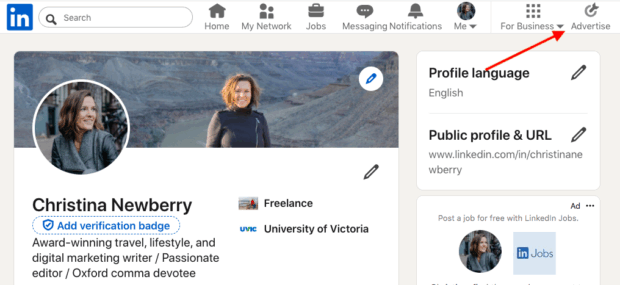
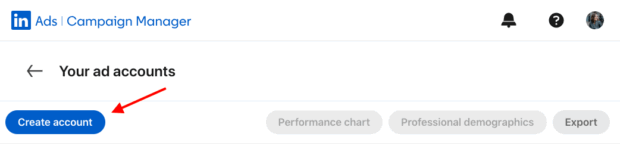
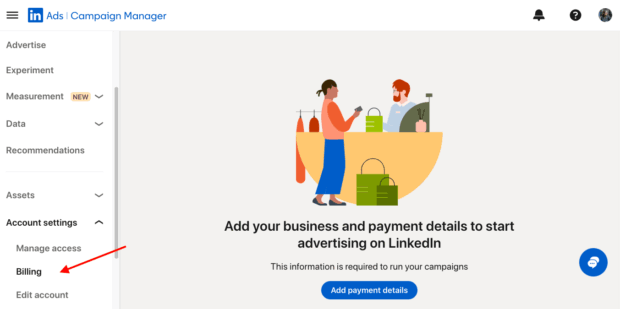
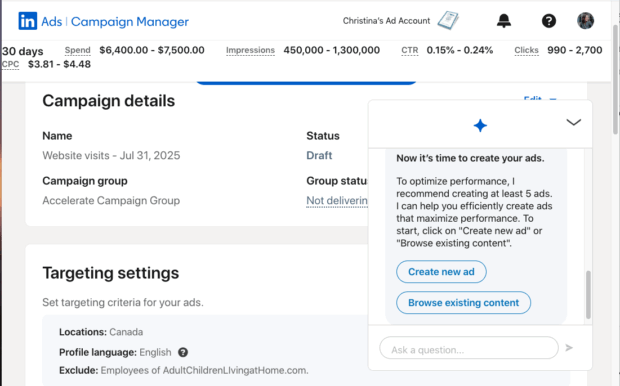
First, users access Campaign Manager by logging into their LinkedIn profile and selecting the ‘Advertise’ option within the top navigation bar. This action directs them to the advertising interface. The subsequent step involves creating an ad account, a process that entails specifying an account name and selecting the preferred billing currency. Following account creation, essential administrative configurations are addressed. Advertisers are required to link the LinkedIn Company Page from which campaigns will be run, though some ad formats offer flexibility in this regard. This stage also includes setting up a payment method and assigning appropriate permissions to team members who will manage the account, ensuring secure and collaborative operation. The final preparatory step involves initiating the first campaign directly from the account dashboard, where advertisers define their campaign objective and choose between "Accelerate" or "Classic" campaign modes, tailoring the setup to their specific control and automation preferences.
Understanding the LinkedIn Ad Auction Mechanism
LinkedIn’s advertising system operates on a dynamic auction model, which dictates when an advertisement is displayed to a user and the associated cost. In this competitive environment, an advertiser’s bid is weighed against those of other campaigns targeting similar audiences and utilizing comparable ad formats. The winning advertisement is selected based on its ability to maximize value for both the LinkedIn member (through relevance and quality) and the advertiser. This mechanism, typically a second-price auction, ensures that advertisers pay only what is necessary to outbid the next highest competitor while also incentivizing the creation of highly relevant and engaging content.
Advertisers select from several bid strategies, each designed to optimize for different objectives:
- Maximum Delivery (Automated): This strategy delegates bid management to LinkedIn’s algorithms, which autonomously adjust bids to efficiently spend the allocated budget and maximize results aligned with the campaign’s objective. It is often favored for campaigns prioritizing scale and operational simplicity.
- Cost Cap: Under this strategy, advertisers establish a target cost per result. LinkedIn’s system then automatically adjusts bids to maintain the average cost at or below this specified cap, while simultaneously striving to maximize volume. This approach is ideal for marketers seeking cost control without fully manual intervention and is applicable for objectives such as brand awareness, website visits, engagement, video views, and lead generation.
- Manual Bidding: Offering the highest degree of control, manual bidding allows advertisers to precisely specify their bid amount. This strategy is typically employed for highly targeted tests, niche audiences, or situations where strict budgetary control is paramount, necessitating active monitoring and adjustment.
Regarding budgeting and pacing, campaigns can be set with either daily or lifetime budgets. Lifetime budgets enable LinkedIn’s system to distribute spend over the campaign duration, optimizing for efficiency in achieving objectives. Advertisers are generally advised to avoid frequent, reactive changes to settings, as consistent parameters allow the platform’s learning algorithms to perform optimally and stabilize campaign performance. Initial campaigns often benefit from starting with Maximum Delivery, transitioning to Cost Cap or Manual Bidding once a performance baseline has been established.
Analyzing LinkedIn Ad Costs in 2026
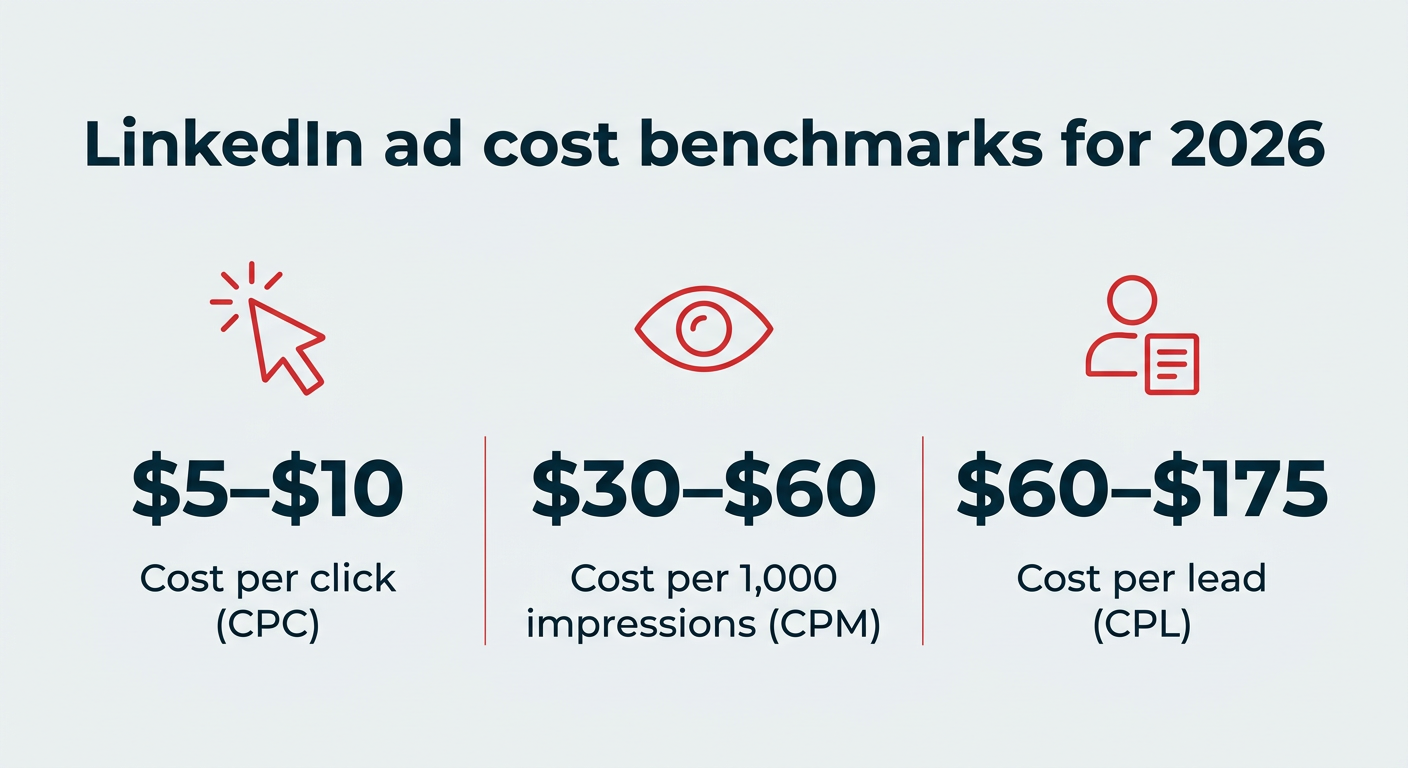
The cost of advertising on LinkedIn generally surpasses that of other major social media platforms, a reflection of its specialized audience and B2B focus. While LinkedIn does not publish fixed rates due to its auction-based pricing model, third-party benchmarks for 2026 consistently indicate typical ranges. Costs per click (CPC) commonly fall between $5 and $10, while costs per 1,000 impressions (CPM) are estimated to be between $30 and $60. For lead generation, costs per lead (CPL) typically range from $60 to $175. It is crucial to consider these figures as directional, as actual costs are subject to significant variability based on the specific audience targeted, campaign objective, industry sector, and chosen bid strategy.
Several factors exert influence over LinkedIn ad costs:
- Audience Size and Competition: Highly specific or niche audiences, particularly those with high purchasing power, often command higher bids due to increased competition.
- Ad Relevance Score: LinkedIn’s algorithm prioritizes ads deemed highly relevant to the target audience, leading to lower costs and better placement for high-quality, engaging creative.
- Bid Strategy: Automated strategies might optimize for cost efficiency over time, while manual bidding offers direct control but requires careful management to avoid overspending.
- Objective: Different campaign objectives inherently have varying cost structures; for instance, lead generation typically costs more per action than brand awareness.
- Industry: Certain industries with higher average customer lifetime values may experience greater competition and thus higher ad costs.
- Ad Format: Some formats, like video or sponsored messaging, might have different cost dynamics compared to single image ads.
Despite the higher per-click or per-lead costs compared to platforms like Facebook or Google, the value proposition of LinkedIn ads for B2B marketers lies in the quality of the leads delivered. These leads are often closer to the ideal buyer profile, possessing the professional context and decision-making authority that translates into a more qualified sales pipeline. Therefore, evaluating the true value of LinkedIn advertising necessitates looking beyond raw click prices to the downstream quality of opportunities generated and their conversion into revenue.
Campaign Modalities: Accelerate vs. Classic
LinkedIn provides two distinct pathways for building advertising campaigns, both supporting the full spectrum of objectives and ad formats. The fundamental difference lies in the balance between automated assistance and granular manual control, catering to varying advertiser needs and expertise levels.
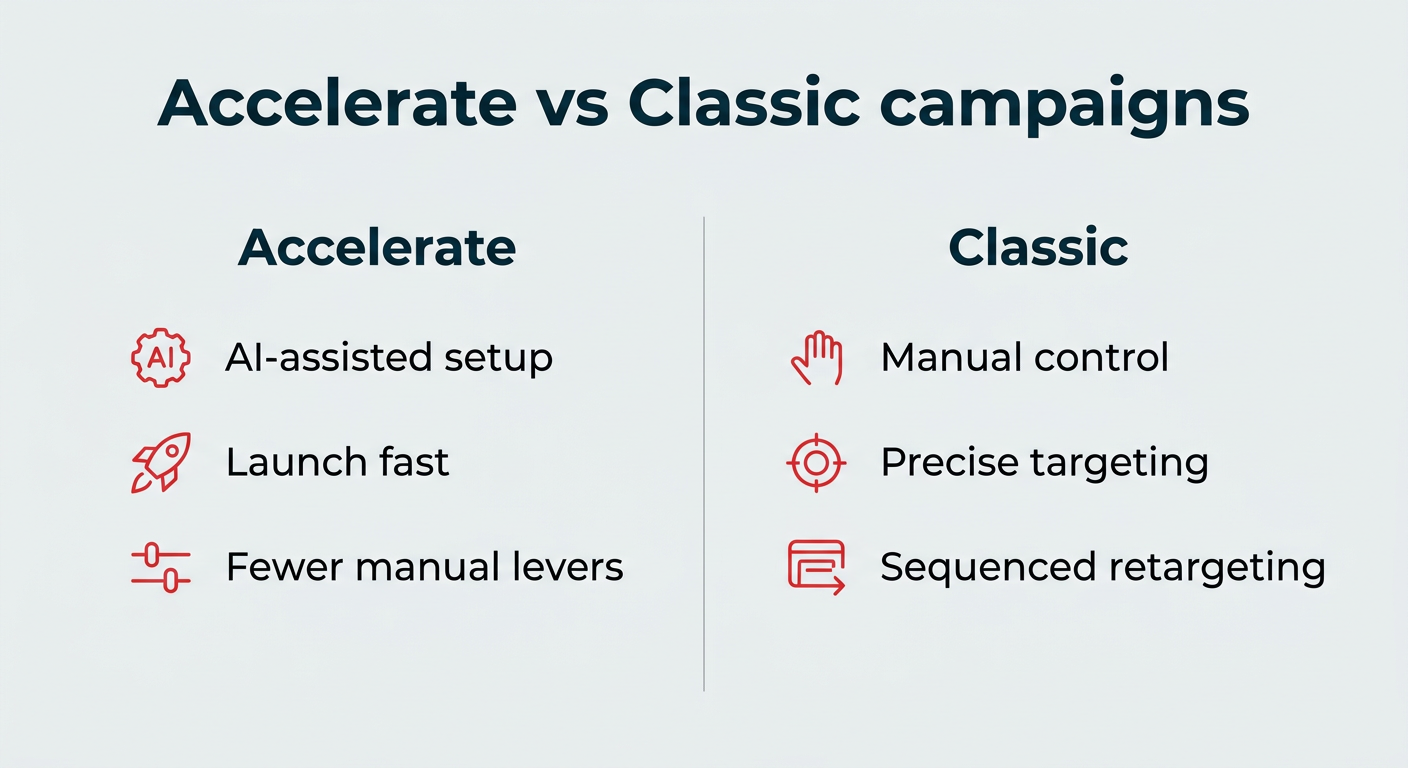
Accelerate (AI-assisted) Campaigns: This mode is designed as a guided experience, leveraging LinkedIn’s advanced AI to intelligently identify optimal combinations of targeting parameters, creative assets, bidding strategies, and placements. Based on the advertiser’s objective and initial inputs, Accelerate continuously optimizes the campaign to achieve its stated goal. Upon launch, these campaigns typically undergo an optimization period of 10 to 14 days, during which machine learning algorithms refine delivery for maximum effectiveness. Accelerate campaigns are particularly well-suited for marketers seeking rapid deployment, those with limited time or expertise for manual optimization, or campaigns prioritizing broad reach and efficiency. While offering fewer manual controls, it is advised that advertisers review the suggested audience before launch and set clear budget caps.
Classic (Manual Control) Campaigns: Representing LinkedIn’s traditional ad builder, the Classic mode offers advertisers comprehensive manual control over every facet of their campaign. This includes meticulously defining audiences through attributes, custom lists, and exclusions; specifying ad placements; setting precise bidding parameters; and scheduling campaign durations. Classic campaigns are ideal for experienced advertisers requiring intricate control over targeting, those implementing complex exclusion strategies, or campaigns focused on highly specific retargeting efforts. Many B2B marketing teams adopt a hybrid strategy, often initiating campaigns with Accelerate to cultivate qualified remarketing pools, then transitioning to Classic mode for precise retargeting and lead capture, thus maximizing efficiency across the sales funnel.
Precision Targeting: Engaging the B2B Buying Committee
LinkedIn’s core advertising strength lies in its sophisticated targeting capabilities, enabling advertisers to meticulously define their audience using professional attributes, matched audiences, and exclusion criteria. This ensures that advertising budgets are concentrated on the most relevant ideal buyers, a critical advantage in the B2B landscape. As Gabe Feingold, Product Marketing Leader at LinkedIn, articulated, "LinkedIn is the only platform purposefully built for B2B advertisers and the most powerful platform to influence B2B decision-makers. On LinkedIn, you can engage the full buyer group, from the C-suite to daily practitioners, in a trusted, professional environment." This emphasis on the entire buying committee, rather than a single decision-maker, is a cornerstone of effective B2B strategy.
Professional Attribute Targeting: This method allows advertisers to construct audiences directly from members’ continuously updated career data. Initial targeting often begins with a broader scope to allow LinkedIn’s algorithms room for optimization, progressively narrowing down with attributes that precisely define the ideal buyer. Common attributes include:
- Job Title and Function: Targeting specific roles (e.g., "VP of Marketing," "Software Engineer").
- Seniority: Focusing on management levels (e.g., "Director," "C-Suite," "Entry-level").
- Industry: Reaching professionals within specific sectors (e.g., "Healthcare," "Financial Services," "Technology").
- Company Size: Targeting organizations based on employee count.
- Skills: Identifying individuals possessing particular professional skills.
- Groups: Engaging members of relevant professional groups.
- Education: Targeting alumni of specific institutions or fields of study.
Matched Audiences and Retargeting: This advanced capability allows advertisers to reach individuals who have already demonstrated a connection or interest in their brand. Options include:
- CRM Contact Lists: Uploading existing customer or prospect lists to target them directly.
- Company Lists: Targeting employees of specific companies for Account-Based Marketing (ABM) initiatives.
- Website Visitors: Retargeting users who have visited an advertiser’s website, facilitated by the LinkedIn Insight Tag.
- Video Viewers: Creating audiences from individuals who have watched specific video content.
- Lead Form Openers/Engagers: Targeting users who interacted with lead generation forms.
- Lookalike Audiences: Expanding reach by identifying new users who share similar characteristics with existing high-value customers.
Crucially, effective targeting also involves exclusions. Advertisers can exclude current employees, competitors, existing customers, or recent converters to ensure that campaign budgets are focused exclusively on generating new demand. The strategic combination of precise professional attributes and sophisticated matched audiences ensures that messages resonate with the entire buying group, minimizing wasted ad spend and maximizing campaign efficacy.
A Comprehensive Overview of LinkedIn Ad Formats and Specifications
LinkedIn offers a diverse portfolio of over 12 ad formats, each designed to serve specific campaign objectives. Selecting the appropriate format is critical for maximizing impact. Below is a summary of key formats, their primary objectives, and essential specifications.
-
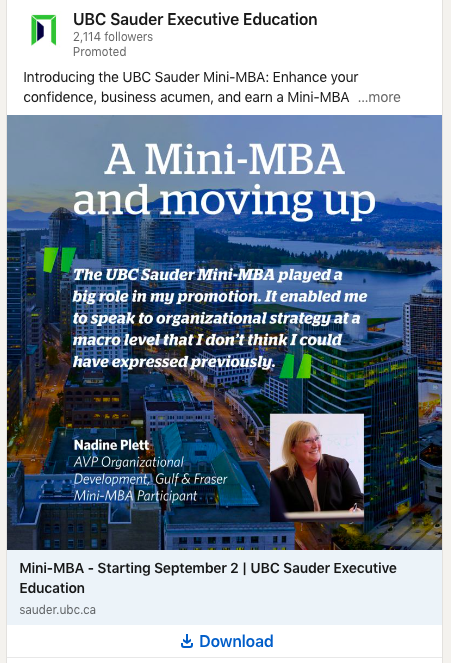
Single Image Ads: Highly versatile and effective across most objectives, these ads combine a clear visual with a concise value proposition. They are ideal for product launches, clear value propositions, and retargeting. Recommended image dimensions are 7680 × 4320 px (up to 5 MB, JPG/PNG/GIF), with aspect ratios of 1.91:1, 1:1, or 4:5. Text limits are 150 characters for intro and 70 characters for headlines.
-
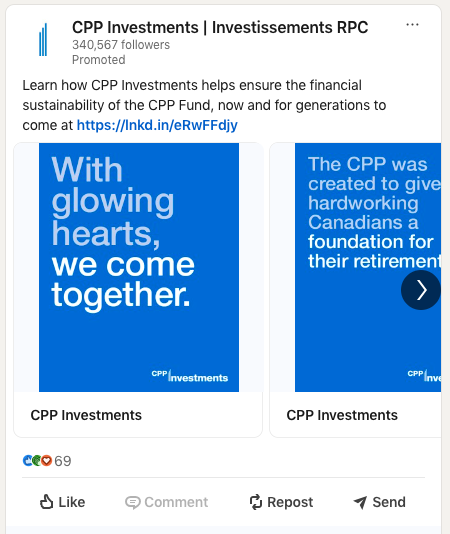
Carousel Ads: These ads present a swipeable series of 2-10 images, perfect for narrating multi-feature stories, step-by-step guides, or product comparisons without directing users off-platform. Each card can have its own headline and link. Images should be 1080 × 1080 px (1:1 aspect ratio, up to 10 MB per card, JPG/PNG). Intro text can be up to 255 characters, and card headlines up to 45 characters.
-
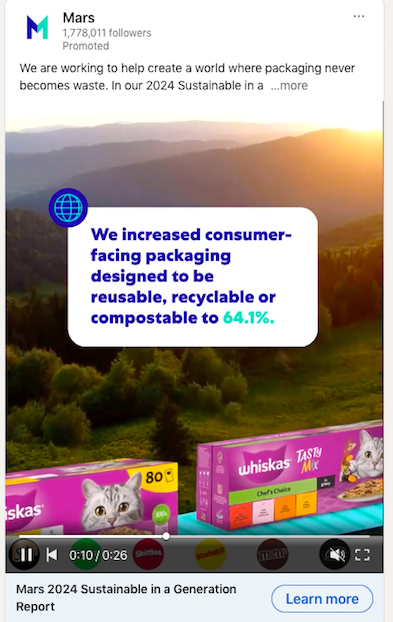
Video Ads: Recognized as a top format for B2B audiences, video ads are excellent for brand building, product demonstrations, and thought leadership. They auto-play muted in-feed, necessitating strong visual hooks, captions, and clear thumbnails. Videos can be 3 seconds to 30 minutes long (MP4, up to 500 MB), with aspect ratios of 1:1, 16:9, 4:5, or 9:16.
-
Document Ads: These allow users to read and download assets (PDF, DOC, PPT) directly within the feed, either ungated for reach or gated with a Lead Gen form for high-intent capture. Best for guides, reports, and case studies. File size up to 100 MB, aiming for under 10 pages for in-feed browsing.
-
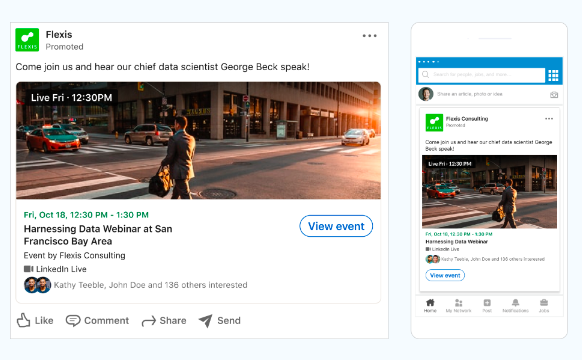
Event Ads: Designed to promote LinkedIn Events, enabling direct RSVP and participation. Marketers using these ads have observed significantly higher viewership. They pull details from the LinkedIn Event, using a 4:1 banner. Effective for webinars, conferences, and post-event replays.
-
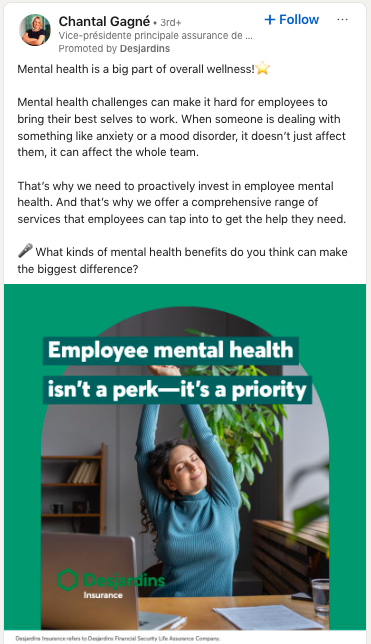
Thought Leader Ads: Promote a LinkedIn member’s post (e.g., executive, product manager) with a "Promoted by [Your Company]" label. This format leverages authentic voices and often garners higher engagement. Applicable for single image, video, and event posts.
-
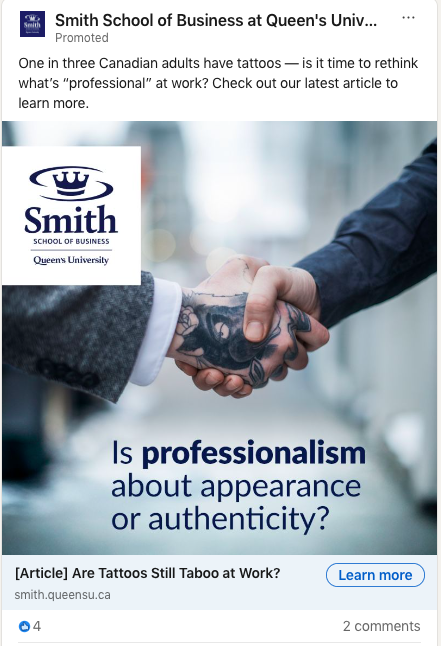
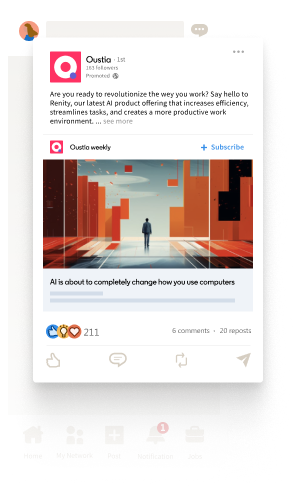
Article and Newsletter Ads: Drive readership and subscriptions to native long-form content on LinkedIn. They use the original post, providing an authentic feel. For Article Ads with a Lead Generation objective, a "Unlock Article" CTA can capture leads.
-
Sponsored Messaging Ads: Deliver personalized 1:1 messages directly to a member’s LinkedIn inbox.
- Message Ads: Designed for single, clear calls to action (e.g., event invites, product offers). Include a subject line (up to 60 chars), message text (up to 1,500 chars), and CTA button (up to 20 chars). Optional desktop banner (300 × 250 px).
- Conversation Ads: Create interactive, multi-path experiences with multiple CTA buttons, ideal for multi-offer nurtures or qualification flows. Message text up to 8,000 characters, up to 5 CTA buttons per message.
-
Lead Gen Forms: Enable seamless information submission directly on LinkedIn, pre-filled with profile data. These can be attached to various in-feed ads or used to unlock articles. Forms support up to 12 fields (3-4 recommended) and up to 3 custom questions. Essential for demos, trials, and content downloads.
-
Dynamic Ads (Follower, Spotlight, and Text Ads): Appear in the desktop right rail and personalize with a member’s name and profile photo.
- Follower Ads: Promote a LinkedIn Page to grow high-quality followers.
- Spotlight Ads: Drive traffic to specific landing pages or promotions.
- Text Ads: Small, efficient pay-per-click/impression units for desktop right rail or top banner, good for reinforcing messages and driving traffic.
-
Connected TV (CTV) Ads: Reach professional audiences streaming content on platforms like Paramount and NBCUniversal. These are upper-funnel tools for brand storytelling and creating high-quality video audiences for subsequent retargeting with in-feed formats. Specs include 16:9 aspect ratio, 6-60 second duration (MP4, up to 500 MB).
Crafting High-Impact Campaigns: Strategic Creative and Sequencing
The cornerstone of a successful LinkedIn advertising campaign, as emphasized by Gabe Feingold, is to "start with your business objective and work backwards." This principle dictates that every decision, from creative design to measurement, must align with the intended business outcome.
Outcome-Driven Creative: Creative assets must immediately communicate the value proposition. In a matter of seconds, an ad must capture attention. This translates to leading with a clear hook, concise copy, and early brand/product visibility. Mobile-first design is paramount, requiring square or vertical crops and legible typography. For video, captions are non-negotiable, and the initial three seconds are crucial for engagement. Document ads should feature a clear promise on the cover, designed for quick in-feed skimming even if the full download offers deeper content.
Strategic Sequencing: Campaigns should be viewed as a buyer’s journey. A well-designed LinkedIn strategy often begins by warming new audiences with thought leadership or educational content (e.g., video, document, article ads). This initial engagement is then followed by more direct offers using single image or carousel ads, culminating in a request for a form fill when the audience’s curiosity and intent are sufficiently high. It is also vital to target the entire buying group throughout this sequence, ensuring consistent messaging across all relevant stakeholders. Launching distinct creative concepts, allowing sufficient time for campaign learning phases, and implementing small, incremental changes are critical for stabilizing delivery and optimizing performance.
Measuring Success and Optimizing for Pipeline Growth
Accurate measurement and robust tracking are fundamental to demonstrating the return on investment (ROI) of LinkedIn advertising. Success is best judged against the specific objective established at the campaign’s inception, with tracking mechanisms in place to link ad spend directly to pipeline generation.
Objective-Based Metrics: Performance metrics should align with campaign goals:
- Awareness: Focus on reach, frequency, and video completion rates.
- Engagement: Track reactions, comments, shares, and new followers.
- Consideration: Monitor landing page views (LPV), click-through rates (CTR), and cost per LPV.
- Leads: Analyze open rates, completion rates, and cost per lead (CPL).
- Pipeline: Evaluate opportunity creation and cost per opportunity.
Initial performance signals, observed on days 1 and 3, can help identify any immediate issues, with weekly decisions guiding further adjustments.
Conversion Tracking and ROI: To measure ROI accurately, the LinkedIn Insight Tag is indispensable. This lightweight JavaScript snippet, installed across all website pages, enables conversion tracking, facilitates website retargeting, and provides valuable demographic data about site visitors. Once deployed, advertisers can define specific conversion actions in Campaign Manager for key events such as demo requests, sign-ups, or purchases, assigning a monetary value to each for precise cost-per-conversion and return-on-ad-spend reporting. For comprehensive pipeline attribution, integrating these conversions with a Customer Relationship Management (CRM) system allows businesses to trace a lead’s journey from initial ad click to a closed deal. This clean, integrated tracking transforms raw click data into actionable ROI insights for leadership.
Optimization and Scaling Strategies:
Optimizing LinkedIn ads involves a continuous cycle of testing, learning, and refinement:
- Delivery Tuning: Campaigns should ideally launch with an automated bid strategy to establish a performance baseline, then transition to cost-control strategies once stable. Adjustments should be small, spaced, and focused on one variable at a time to prevent performance whiplash.
- Creative Prioritization: Significant performance gains often come from refining creative assets and offer clarity. Regularly rotating 3-5 distinct creative concepts, retiring those experiencing fatigue, and ensuring strong visual and textual hooks are critical.
- Audience Segmentation: Developing segmented audiences for website visitors, video viewers, lead form engagers, and converters allows for tailored messaging and pacing. This supports a sequenced journey, warming new prospects with educational content before moving to direct calls to action. For Sponsored Messaging, adhering to frequency caps (approximately once every 45 days per member) is vital to maintain perceived value and avoid intrusiveness.
- Controlled Scaling: When a campaign meets its objectives, scaling should be gradual. This involves widening reach to adjacent audiences or incrementally increasing the budget. If performance dips during expansion, reverting to the last stable settings and adjusting one lever at a time (creative, audience, or bid) helps pinpoint the cause.
As Feingold concluded, "just like B2B advertising, LinkedIn Ads is not about quick wins; it’s about quality outcomes that advance pipeline performance by nurturing your ideal customers and building your brand." He further recommended that B2B marketers prioritize targeting the entire buyer group influencing a purchase and engage audiences with thought leadership and brand storytelling before moving to lead generation. This strategic, long-term approach underpins sustained success on the platform.
In 2026, LinkedIn’s advertising capabilities continue to evolve, with increasing integration of AI for smarter optimization and a growing emphasis on full-funnel measurement. Its foundational strength in professional targeting, combined with a diverse and adaptable array of ad formats, ensures its enduring relevance as a cornerstone of effective B2B marketing strategies, driving not just clicks, but qualified pipeline and demonstrable business growth.