The Future of Search: Why Mastering Answer Engine Optimization is the Defining Marketing Skill of 2026

The digital landscape is currently undergoing its most significant structural shift since the advent of the search engine. As generative AI becomes the primary interface for information retrieval, the discipline of search engine optimization (SEO) is evolving into answer engine optimization (AEO). According to recent research from Wix Studio, monthly unique visitors to major answer engines surged from 634 million in Q1 2025 to 904 million in Q1 2026, representing a 40% year-over-year increase. This rapid adoption suggests that the traditional "ten blue links" model is no longer the sole arbiter of web traffic, forcing brands to rethink how they present information to both human users and large language models (LLMs).
The Evolution of Information Retrieval: A Chronology
The transition toward AI-driven search began in earnest following the widespread integration of large language models into existing search infrastructure. In 2023, the industry saw the initial experimental phase of conversational search. By 2024, platforms like Perplexity and Google’s Search Generative Experience (SGE)—now evolved into AI Overviews—began to formalize how citations are displayed.
Throughout 2025, the focus shifted from simple search result aggregation to synthesis. As of early 2026, the industry has reached a plateau of maturity where AI search is no longer a novelty but a standard utility. This timeline highlights a critical shift: where SEO once focused on keywords and backlinks as the primary signals of authority, the current era prioritizes semantic clarity, data density, and the ability of an engine to parse a page as a verifiable source of truth.
Why Traditional SEO Remains the Bedrock
Despite the rise of generative AI, the fundamental architecture of the web remains tied to traditional search mechanics. Google’s AI Overviews, for instance, operate on a customized version of the Gemini model that relies on the existing Search index. This means that if a page is not crawled, indexed, or rendered by Googlebot, it is effectively invisible to its AI features.
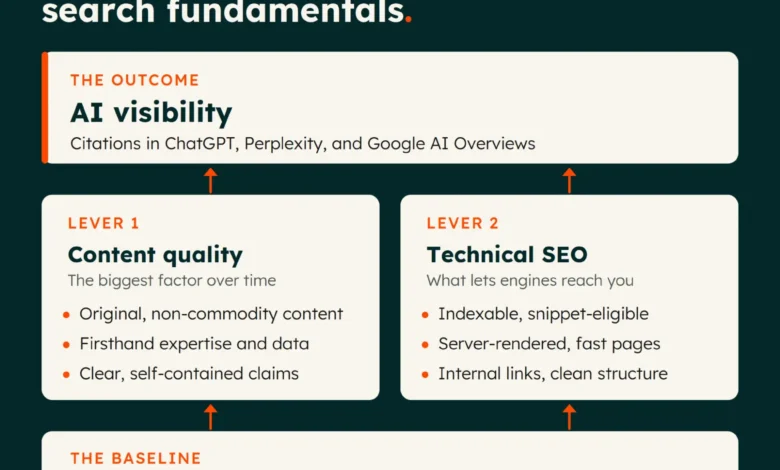
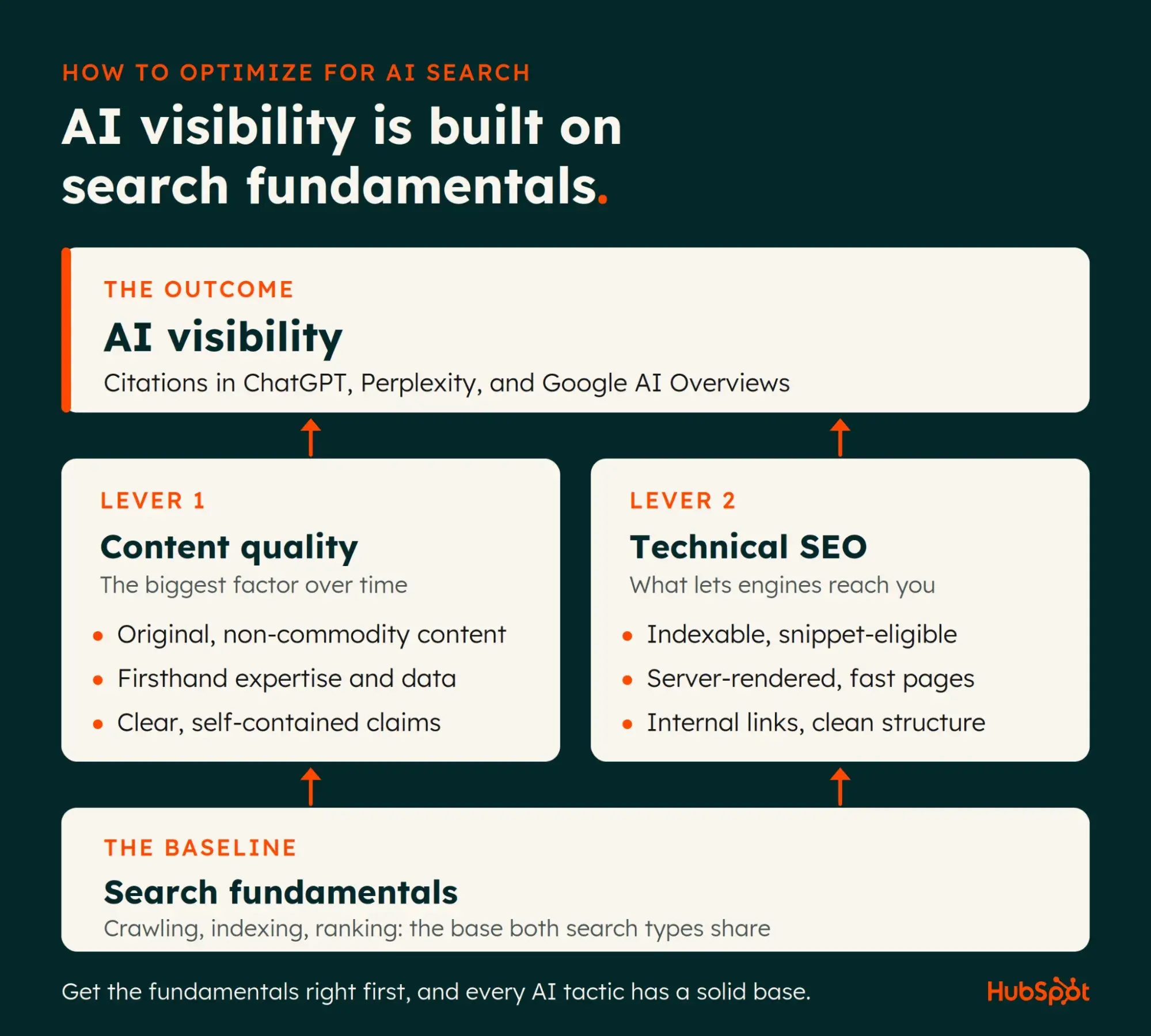
The symbiotic relationship between SEO and AEO is clear: AEO is not a replacement but an extension. Technical SEO—including site speed, crawlability, and clear site architecture—serves as the gatekeeper for AI citations. Research from SE Ranking underscores this, noting that pages with a First Contentful Paint (FCP) under 0.4 seconds earn nearly three times as many citations as those exceeding 1.13 seconds. The implication is that technical excellence provides the "permission" for an AI to trust a site, while content quality provides the "reason" to cite it.
The Rise of Non-Commodity Content
The most significant differentiator in AI visibility is the concept of "non-commodity" content. AI models are trained on vast datasets of common knowledge. Consequently, they have little incentive to cite content that merely repackages existing facts found on thousands of other sites. Instead, engines prioritize "people-first" content—material that provides original data, firsthand expertise, and unique perspectives that a model cannot synthesize from its own training data.
Data supports this shift in strategy. An analysis of over 200,000 pages revealed that content incorporating expert commentary received 4.1 ChatGPT citations on average, compared to just 2.4 for generic content. Similarly, pages containing high-density data—19 or more unique data points—earned nearly double the citations of data-light pages. This suggests a clear path for content marketers: prioritize primary research, proprietary statistics, and expert-led insights to maximize the likelihood of being cited by LLMs.
Technical Foundations and the JavaScript Challenge
A persistent friction point in AEO is the reliance on client-side rendering. While Googlebot has become increasingly proficient at rendering JavaScript, many other AI crawlers are less sophisticated, often reading only raw HTML. If a brand’s primary content is trapped behind complex JavaScript, it may appear as a blank page to these engines, rendering it ineligible for citation.
Industry experts recommend a "server-first" approach. By ensuring the most valuable information is served in static, server-rendered HTML, developers can ensure that even the most rudimentary crawlers can ingest the content. Furthermore, the use of structured data—or schema markup—acts as a machine-readable roadmap. While it does not guarantee a citation, it significantly reduces the cognitive load on the AI, allowing it to accurately categorize the page’s content and assess its relevance to a specific user query.

Divergent Behaviors: Perplexity vs. ChatGPT
A common misconception in the industry is that all AI search engines function identically. Data from Fan Out indicates that only 7.7% of cited URLs overlap across different engines. This suggests that businesses must approach each platform as a unique channel.
Perplexity, for example, functions as a high-frequency citer, often pulling from 10 to 11 sources per answer and showing a marked preference for discussion-based platforms like LinkedIn and Reddit. ChatGPT, conversely, maintains a more selective, curated approach, averaging around 3.3 citations per query and favoring long-form, authoritative articles. These divergent behaviors necessitate a multi-pronged content strategy that addresses both the discussion-heavy nature of Perplexity and the analytical focus of ChatGPT.
Addressing the Myths of AEO
As the field matures, several myths have emerged that can misguide marketing teams. One prominent myth is the efficacy of the llms.txt file. Despite some discussion in developer circles, there is no empirical evidence that implementing an llms.txt file improves citation rates; in fact, research has shown that predictive models often perform better without the noise created by such files.
Another myth involves the belief that AI search requires an entirely separate, proprietary schema. In reality, standard SEO best practices—such as clear H2/H3 hierarchies, concise summaries, and proper meta-tagging—are sufficient. The goal is to make the content as "parsable" as possible, not to reinvent the technical standards of the web.
The Path Forward: Measurement and Iteration
Measuring the success of an AEO strategy requires moving beyond traditional click-through rates. Brands must implement tracking for "visibility signals"—noting whether the brand is mentioned, cited, or linked in AI-generated answers. Conversion data remains the ultimate North Star, but it must be mapped to the new, fragmented journey that begins with a conversational query.
The workflow for a modern marketing team should be iterative:
- Entity Mapping: Define the relationship between the brand, products, and core topics to build a semantic footprint.
- Answer-First Formatting: Structure content so that the core answer is contained within the first 60 words, supported by bulleted lists and tables for increased extraction accuracy.
- Continuous Auditing: Conduct regular content refreshes to update statistics and claims, ensuring that the information remains current enough for AI models to prioritize it over outdated alternatives.
Implications for the Future
The shift toward AI search represents a fundamental change in the digital power dynamic. By prioritizing transparency, original data, and technical accessibility, businesses can position themselves as the primary sources for the AI-driven answers that will define the next decade of consumer behavior. The brands that win will be those that view AI not as a competitor to their website, but as a distribution partner that requires a more precise, structured, and authoritative version of their content.
Ultimately, the rise of AEO reinforces a long-standing principle of the internet: the best content, delivered through the most reliable technical channels, will always find its audience. Whether that audience is a human reader or an LLM, the requirement for clarity, expertise, and accessibility remains constant. As the industry moves further into 2026, the integration of these AI-ready strategies will become a standard requirement for any organization seeking to maintain its visibility in the digital marketplace.