The Rise of Answer Engine Optimization: Navigating the New Era of AI-Driven Search

The digital marketing landscape is undergoing a profound transformation with the emergence of Answer Engine Optimization (AEO), a critical new discipline focused on ensuring brand visibility within the increasingly influential realm of artificial intelligence (AI) tools like Google’s Gemini, Perplexity, and OpenAI’s ChatGPT. This shift marks a significant evolution from traditional Search Engine Optimization (SEO), compelling businesses to adapt their content and digital strategies to meet the demands of conversational AI, which is rapidly becoming the primary interface for information discovery and decision-making for a growing segment of internet users. Understanding AEO is no longer optional; it is essential for maintaining competitive advantage and engaging prospects in the channels they now frequent.
The Evolution of Search and the Dawn of AEO
For decades, digital marketing revolved around SEO, optimizing websites and content to rank highly on search engine results pages (SERPs). This era, primarily driven by keyword matching and link building, focused on driving clicks to websites. However, the rapid advancement of large language models (LLMs) and generative AI in the early 2020s introduced a paradigm shift. Users are increasingly turning to AI tools not just for links, but for direct, synthesized answers to complex queries. This user behavior bypasses traditional SERPs and directly impacts how brands are discovered and perceived.
The timeline of this evolution can be traced from the dominance of keyword-based search in the late 1990s and early 2000s, through the rise of sophisticated algorithms prioritizing content quality and user experience, to the breakthrough moment of generative AI. OpenAI’s public release of ChatGPT in November 2022, followed by Google’s Gemini and other specialized AI tools, democratized access to powerful conversational AI, fundamentally altering user expectations. These platforms do not merely list websites; they interpret, synthesize, and present information, often without requiring a user to click through to an external site. This new dynamic necessitates AEO, which complements SEO by specifically targeting how AI engines source, process, and present information. While good SEO provides a strong foundation, AEO introduces distinct strategies for visibility within these AI environments.
Key AEO Insights and Emerging Trends
Current data underscores the urgency for brands to integrate AEO into their digital strategies:
-
Accelerated AI Referral Traffic and Superior Conversion Rates: Analysis by Search Engine Land revealed that referral traffic originating from LLMs such as ChatGPT and Gemini more than tripled in 2025. This surge is not merely in volume; it represents high-quality traffic. A comprehensive Semrush study, which examined over 500 high-value digital marketing topics, indicated that visitors referred by LLMs converted at a rate 4.4 times higher than those arriving through conventional organic search channels, as reported by Growth Marshal. This compelling data suggests that even a modest increase in AI referral traffic can significantly enhance a brand’s sales pipeline and overall business outcomes, making AEO a highly efficient channel for lead generation and customer acquisition.
-
The Proliferation of "Zero-Click" Searches: A pivotal 2024 study conducted by SparkToro and Datos highlighted a significant trend: approximately 60% of Google searches now conclude without a click to an external website. This phenomenon, often referred to as the "zero-click" era, is largely attributable to features like AI Overviews, prominent featured snippets, and direct answers that provide users with immediate gratification within the search interface itself. For brands, this means that visibility within the AI-generated answer or snippet is becoming as crucial, if not more so, than simply ranking on the first page of traditional search results. Content must be structured to be easily digestible and directly answer user queries to be captured by these AI systems.
-
AI as a Critical Vendor Evaluation Tool: Research from McKinsey in 2025 indicates that a substantial percentage of shoppers—between 40% and 55% across popular sectors—are leveraging AI search tools to inform their purchasing decisions. This signals a fundamental shift in the buyer’s journey, where AI acts as an initial filter or recommender system. Brands that are not prominently featured or positively referenced by AI tools risk being excluded from potential customers’ consideration sets early in the decision-making process. Therefore, optimizing for AI visibility is paramount for influencing buyer intent and securing market share.
-
The Unseen Competitive Landscape: A significant blind spot in many marketing strategies is the lack of awareness regarding how AI tools discuss specific industries or brands. Competitors might consistently appear in ChatGPT responses to critical buyer prompts, unbeknownst to others. This unseen competitive advantage underscores the necessity of actively monitoring AI mentions. Specialized AEO tools are becoming indispensable for establishing a baseline of brand presence relative to competitors across various answer engines, revealing crucial gaps and opportunities.
-
The Broadened Scope of AI’s Information Synthesis: Unlike traditional SEO which heavily prioritized owned content and backlinks, AI answer engines synthesize information from a vast array of sources. This includes not just corporate blogs and official websites, but also review platforms, social media discussions, forum threads (e.g., Reddit), news articles, and other third-party mentions. Consequently, a brand’s AEO visibility is intricately linked to its holistic digital footprint and reputation, extending beyond just its owned content strategy. Brands with robust social engagement, positive review profiles, and consistent third-party mentions are more likely to be cited favorably by AI.
Implementing AEO: A Strategic Framework for Brands
To effectively navigate this new landscape, brands need a structured approach to AEO. While specific tools may vary, the core workflow remains consistent: identifying relevant prompts, monitoring brand visibility, analyzing citation sources, and developing actionable strategies.

-
Define Brand, Competitors, and Key Prompts: The foundational step involves clearly defining the brand, its primary competitors, and the specific questions (prompts) that target audiences are likely asking AI answer engines. Advanced AEO platforms can leverage existing CRM data to suggest high-intent prompts, ensuring relevance to actual customer needs. Organizing these prompts by product line or customer segment allows for granular performance tracking.
-
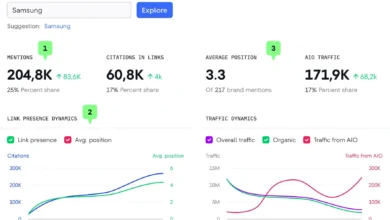
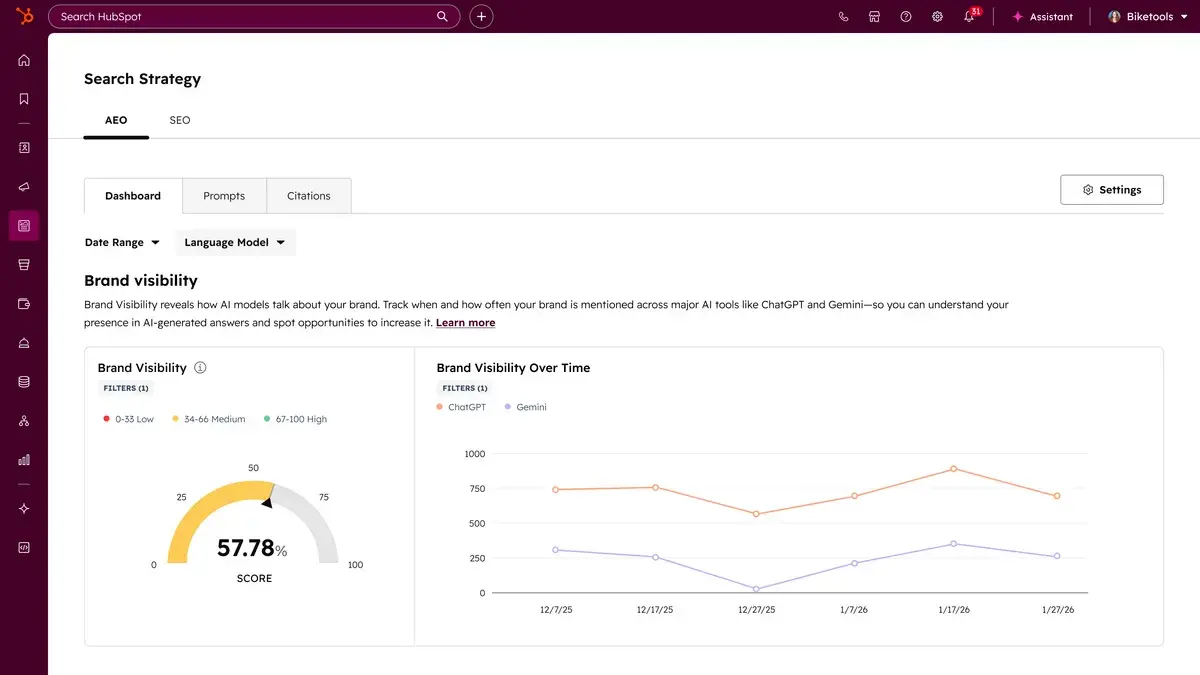
Assess Brand Visibility Score: A critical metric in AEO is the Brand Visibility score, which quantifies how frequently a brand is mentioned in AI responses to monitored prompts. For example, if a brand appears in 5 out of 25 tracked prompts, its visibility score is 20%. This score serves as a baseline, allowing brands to monitor trends (upward or downward) across different answer engines like ChatGPT, Perplexity, and Gemini.
-
Benchmark Against Competitors (Share of Voice): AEO success is inherently relative. Competitor analysis reveals a brand’s "Share of Voice"—the proportion of brand mentions in AI responses compared to its competitors. If 100 brand mentions occur across a set of prompts and a specific brand accounts for 25, its Share of Voice is 25%. This insight is crucial for identifying specific prompts where competitors are gaining traction and where strategic gaps exist for the brand.
-
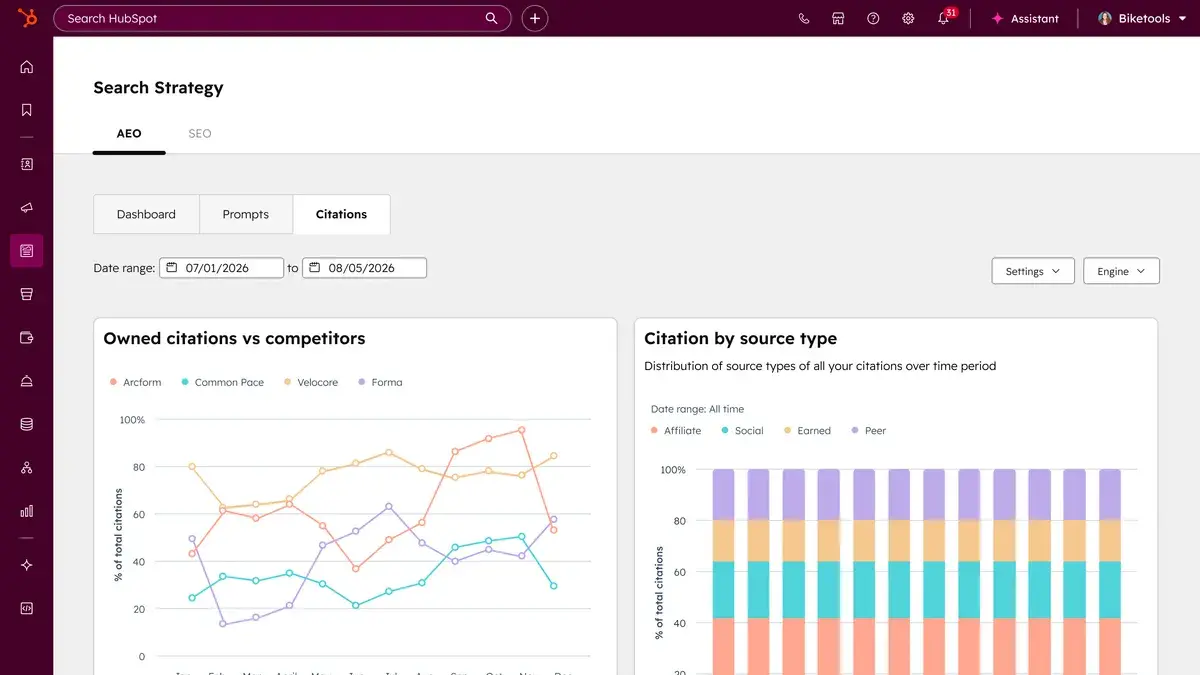
Analyze Citation Sources: AI engines generate responses by synthesizing information from various web sources. The "citations view" within AEO tools illuminates which sources AI engines are referencing. This data can be segmented by content format (e.g., blog posts, comparison listicles), channel (owned content, Reddit, earned media), and individual domain. This granular understanding helps marketers pinpoint the types of content and channels that are most influential in shaping AI answers, directly informing content strategy. For instance, if comparison-style content from specific review sites consistently appears in citations for high-intent prompts, it signals an opportunity to invest in similar content or engage with those review platforms.
-
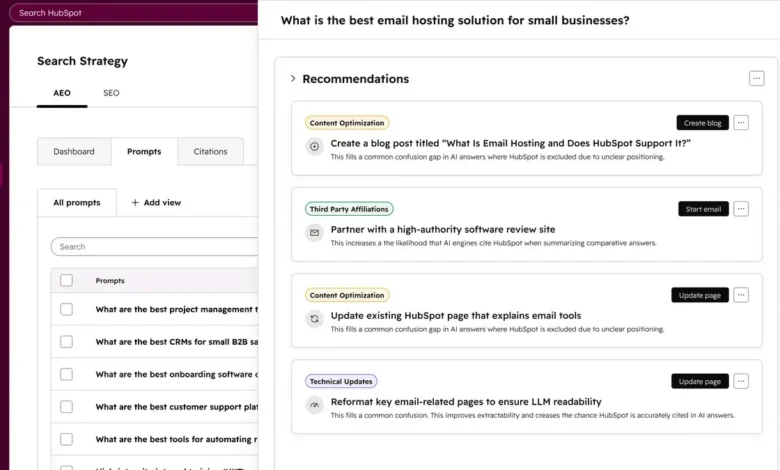
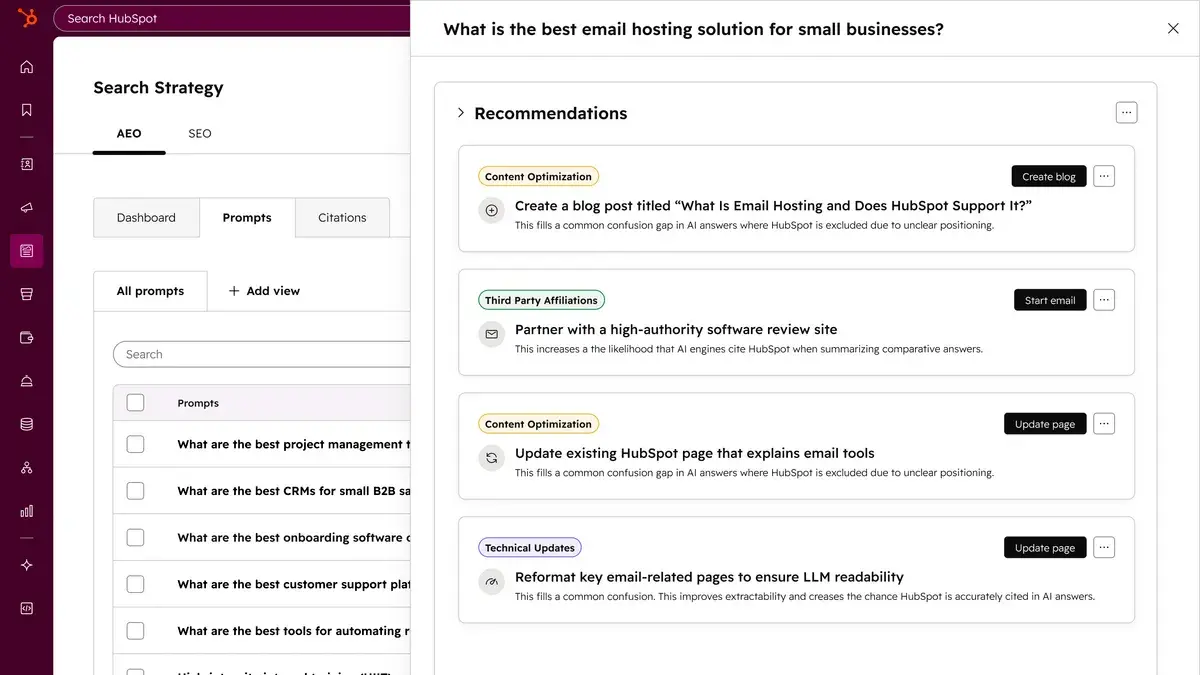
Develop Actionable Recommendations: Data alone is insufficient; it must translate into actionable strategies. Advanced AEO tools provide ranked lists of content and outreach recommendations, prioritizing actions based on their potential impact on visibility. These recommendations often include suggested content titles, target audiences, keywords, and the underlying reasoning, allowing marketing teams to understand why a particular action is advised and how it aligns with specific prompt performance or citation patterns.
-
Continuous Monitoring and Refinement: AEO is an iterative process. Regular monitoring allows brands to filter data by answer engine, date range, and prompt groups to analyze performance for specific product lines or customer segments. This is vital because different AI engines may exhibit varying behaviors, and a brand might have strong visibility on one platform but be nearly absent on another. A recurring monthly cadence for reviewing AEO data, tracking visibility trends, and assessing the impact of implemented actions is essential for sustained growth.
Tactical Optimization for AI Visibility
Closing AEO gaps requires specific content, technical, and strategic adjustments:
-
Content Formatting Best Practices for AI: Answer engines excel at extracting structured information.
- Direct Answers: Position concise answers to common questions at the beginning of content, using clear headings (H2, H3) and structured data like bullet points or numbered lists.
- FAQs and Q&A Formats: Integrate dedicated FAQ sections that directly address user queries, ensuring each question and answer is distinct and easily parsable.
- Summaries and Key Takeaways: Provide executive summaries or key takeaways at the start or end of longer articles, allowing AI to quickly grasp the core message.
- Definitive Statements: Use clear, unambiguous language when defining terms or explaining concepts.
-
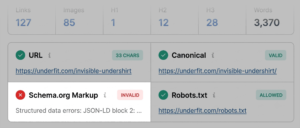
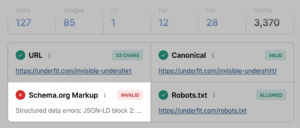
Strategic Schema Markup: Schema.org markup provides machine-readable context, reducing ambiguity for AI engines.
- FAQPage Schema: Highly effective for content structured around questions and answers, explicitly linking questions to their respective answers.
- HowTo Schema: Useful for instructional content, guiding AI through sequential steps.
- Article Schema: Provides context for editorial content, including author, publisher, and publication date, enhancing credibility for AI.
- Product & Review Schema: Crucial for commercial pages, providing structured data on product attributes, pricing, and customer reviews, which are highly relevant for buyer-intent queries. It’s important to note that schema enhances good content; it cannot compensate for poor quality.
-
Fastest Technical Wins for AEO:
- Review Robots.txt for AI Bot Access: Many sites implemented blanket blocks for AI crawlers like GPTBot in the initial panic. Re-evaluate
robots.txtto ensure legitimate AI search crawlers (e.g., OAI-SearchBot) are allowed to access content for citation purposes, while still potentially blocking specific bots for model training if desired. - Optimize for Core Web Vitals: Page speed, interactivity, and visual stability remain crucial. Faster, more stable pages are more likely to be crawled and cited by AI engines, as they contribute to a positive user experience, a factor AI models implicitly value.
- Implement Structured Data Strategically: Focus on the most impactful schema types relevant to your content (FAQPage, HowTo, Product, Article). This provides immediate, machine-readable context without requiring extensive content overhauls.
- Review Robots.txt for AI Bot Access: Many sites implemented blanket blocks for AI crawlers like GPTBot in the initial panic. Re-evaluate
How AEO Tactics Compound with Inbound for Sustainable Growth
For brands with established inbound marketing and content-led SEO strategies, AEO represents a natural extension rather than a replacement. It builds upon the same foundational principles of creating helpful content, establishing topical authority, and fostering brand trust. However, AEO introduces a broader spectrum of signals that AI engines consider. While traditional SEO heavily weighted on-page optimization and backlinks, AEO incorporates a brand’s presence across review sites, social media, community forums (like Reddit), and news coverage.
A single, well-optimized blog post targeting a buyer’s question can now achieve dual benefits: attracting organic traffic through traditional search and increasing the likelihood of citation in AI answers. Similarly, positive reviews on platforms like G2 can not only bolster domain authority but also serve as cited sources when an AI engine recommends tools in a specific category.
This compounding effect strengthens over time. Consistent brand presence across diverse channels signals "consensus" to AI engines, a powerful driver for AI recommendations. Brands that have invested diligently in inbound marketing for years often find themselves in a stronger AEO starting position than competitors who focused exclusively on paid acquisition. Nonetheless, AEO tools are invaluable for identifying specific gaps where a brand might rank well on Google but remain invisible on AI platforms for identical queries, allowing for targeted optimization efforts.
Practical Ways to Optimize Your Site for AI Answer Engines: A Prioritized Checklist
Here’s a strategic roadmap for integrating AEO into your marketing operations:
-
Start Here (Week 1): Immediate High-Leverage Actions
- Review
robots.txt: Ensure AI crawlers like OAI-SearchBot (for ChatGPT citations) are not inadvertently blocked. This is a critical first step to allow AI engines to access your content. - Establish AEO Tracking: Implement an AEO tool (or manual tracking for smaller scales) to define your brand, competitors, and key prompts. If using a platform like HubSpot Marketing Hub Professional/Enterprise, leverage CRM data for intelligent prompt suggestions.
- Define Prompt Groups: Organize your tracked prompts by product line or audience segment to enable granular performance analysis for different business areas.
- Optimize Core Web Vitals: Address any major performance issues (Largest Contentful Paint, Cumulative Layout Shift, First Input Delay) to ensure pages load quickly and are stable, facilitating AI crawling and positive user experience.
- Review
-
Build Your Foundation (Weeks 2–4): Strategic Content & Technical Enhancements
- Conduct Content Audits for AEO Gaps: Identify existing content that can be repurposed or optimized for direct answers, FAQ sections, and structured summaries. Prioritize content related to high-intent prompts identified in your AEO tracking.
- Implement Strategic Schema Markup: Focus on applying
FAQPage,HowTo,Product, andArticleschema to relevant pages. This makes your content more machine-readable, aiding AI in comprehension and citation. - Develop New Content with AEO in Mind: Create new articles, guides, and comparison pages explicitly designed to answer specific buyer questions directly and comprehensively, utilizing optimal formatting for AI extraction.
-
Maintain and Compound (Monthly Cadence): Ongoing Optimization
- Monthly AEO Data Review: Dedicate time each month to analyze your Brand Visibility trend, review new AI recommendations, and track the impact of previous AEO actions.
- Competitor Analysis Refinement: Regularly review your Share of Voice against competitors, identifying new threats or emerging opportunities in AI mentions.
- Content Refresh & Expansion: Update existing content to reflect new insights from your AEO data, ensuring accuracy and continued relevance for AI engines. Expand content clusters around key topics to build deeper topical authority.
- Monitor Third-Party Mentions: Actively track brand mentions on review sites, social media, and industry forums. Engage with positive mentions and address negative ones, as these external signals heavily influence AI’s perception of your brand.
Frequently Asked Questions About AEO
-
Should I block or allow AI crawlers like GPTBot?
The decision to block or allow AI crawlers should align with specific business goals. OpenAI distinguishes between GPTBot, which crawls for model training, and OAI-SearchBot, which crawls to generate cited responses for ChatGPT’s web search functionality. Blocking OAI-SearchBot will generally prevent your site from being cited in ChatGPT answers, irrespective of content quality. If the primary concern is preventing your data from being used for model training, blocking GPTBot specifically is the appropriate action, while allowing OAI-SearchBot to ensure eligibility for AI-generated citations. It is crucial to review yourrobots.txtfile as many sites still carry outdated blanket AI-bot blocks that could inadvertently diminish AI visibility. -
Which schema is most impactful for AEO?
There is no single universally "most impactful" schema for AEO; the optimal choice is context-dependent. For content structured around questions and answers,FAQPageschema is highly effective. For editorial content,Articleschema helps AI understand authorship, publisher, and publication dates. Commercial pages benefit significantly fromProductandReviewschema, as these directly align with buyer-intent queries. However, schema markup serves to make strong content more machine-readable; it cannot compensate for weak, thin, or irrelevant content. Its value lies in enhancing the discoverability and interpretability of high-quality information. -
How do I track traffic from Perplexity or ChatGPT browsing?
ChatGPT automatically appends the UTM parameterutm_source=chatgpt.comto outbound links when it returns search results. Most analytics platforms are designed to capture and process these UTM parameters, allowing for clear tracking and analysis of inbound traffic originating from ChatGPT. For Perplexity, marketers should look forperplexity.aiwithin their referral traffic reports in analytics platforms. Setting up dedicated segments or filters within your analytics tool for these specific sources is recommended. This enables separate tracking of volume, engagement metrics, and conversion rates, providing valuable insights into the performance and user behavior associated with AI-driven referral traffic, distinct from traditional organic search.
The rise of AEO marks a pivotal moment in digital marketing. By understanding the nuances of AI answer engines and strategically optimizing content and technical foundations, brands can unlock new avenues for visibility, engagement, and ultimately, sustainable growth in this rapidly evolving digital landscape.