The iPhone Duo didn’t reinvent Android foldables, but I fear the copycats anyway


The long-awaited entry of Apple into the foldable smartphone market marks a definitive shift in the mobile industry, signaling that the form factor has moved from an experimental niche to a mainstream requirement for premium device portfolios. The debut of the iPhone Duo represents years of internal research and development, following a decade-long period where competitors like Samsung, Google, and Motorola pioneered the technology. While the device does not deviate significantly from established folding mechanics, its refinement of the user experience and ecosystem integration poses a notable challenge to the current Android-dominated foldable landscape.
The Evolution of the Foldable Timeline
To understand the significance of the iPhone Duo, one must look at the timeline of foldable technology. The modern foldable era began in earnest in 2019, characterized by initial hardware failures and durability concerns. Samsung’s Galaxy Fold series led the charge, iterating through six generations to solve crease visibility, hinge reliability, and software optimization.
Google entered the fray in 2023 with the Pixel Fold, focusing heavily on a unique aspect ratio and computational photography, which allowed for a more "passport-like" experience. Throughout this period, Apple remained conspicuously silent, opting to wait for display technology—specifically ultra-thin glass and hinge durability—to reach a maturity level consistent with the company’s stringent quality standards.
The path to the iPhone Duo began in internal testing labs around 2020. Industry analysts long suspected that Apple was exploring multiple prototypes, ranging from rollable screens to dual-display devices. The final product, which emerged in late 2026, reflects a conservative but polished approach that prioritizes longevity and seamless software transitions over the "wow factor" of radical new mechanics.
Design Philosophy and Hardware Specifications
The iPhone Duo arrives with a familiar aesthetic, maintaining the flat-edge design language consistent with recent iPhone generations. Unlike some competitors that prioritize a paper-thin profile at the expense of battery capacity, the iPhone Duo opts for a balanced weight distribution. The hinge mechanism, which Apple has branded as the "Precision Pivot," is engineered to maintain a specific degree of resistance, allowing the device to hold various angles without the "floppiness" observed in early-generation folding devices.
Internally, the device utilizes an LTPO OLED display that achieves a seamless transition between the exterior cover screen and the expansive internal panel. A critical hardware focus was the "crease-mitigation layer," a proprietary polymer coating that, according to early technical teardowns, significantly reduces the tactile indentation common in foldable displays.
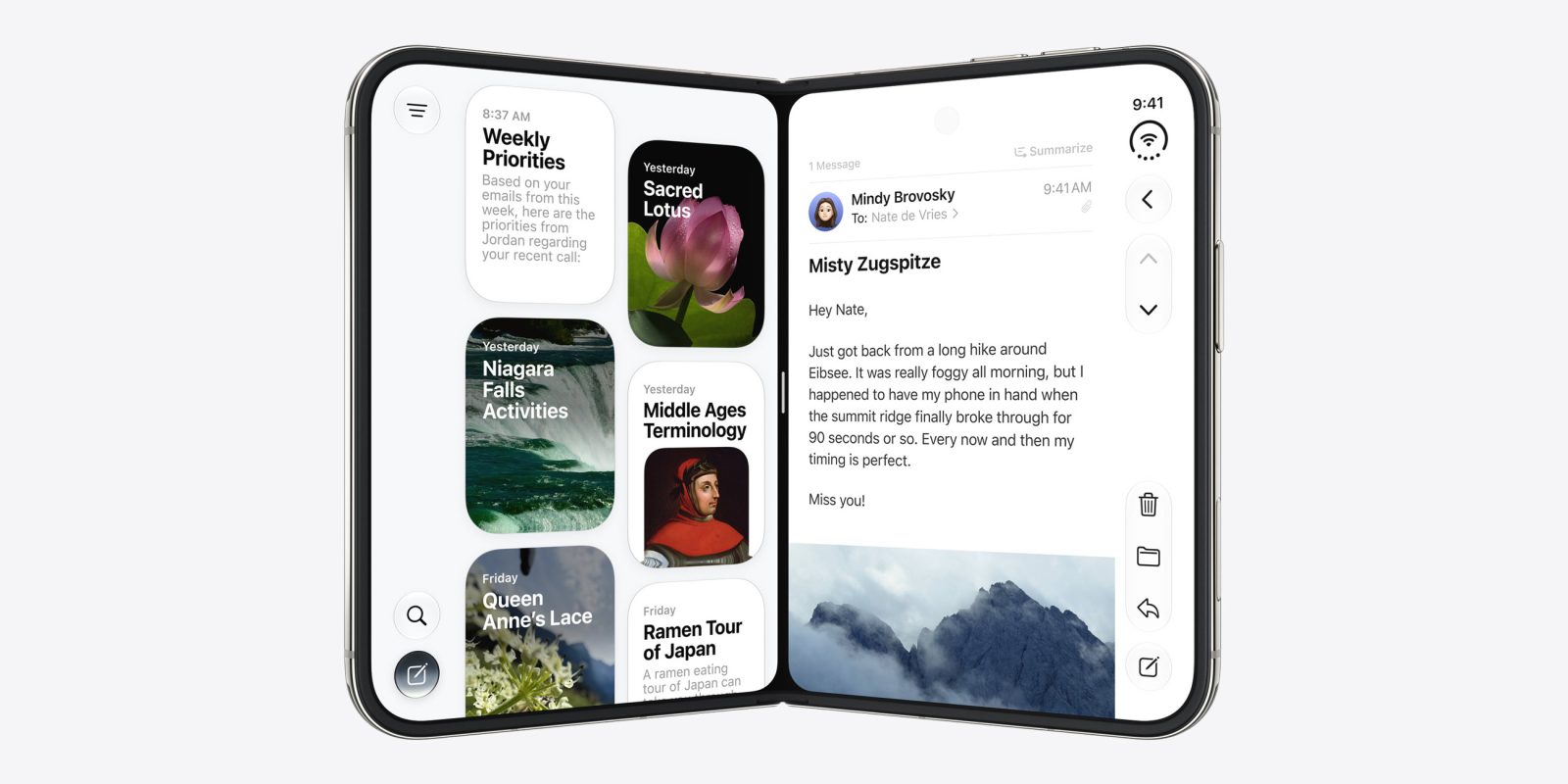
Battery management is another area where the iPhone Duo differentiates itself. By utilizing a dual-cell battery architecture—a necessity for foldable devices—Apple has managed to optimize power distribution to match the battery life of its flagship non-folding counterparts, a metric where many Android foldables historically struggle.
The Ecosystem Advantage: iOS and Continuity
The most significant differentiator for the iPhone Duo is not the hardware itself, but the software ecosystem. The integration of iOS with the foldable form factor brings a level of continuity that Apple’s competitors are still attempting to replicate.
The "Continuity Fold" feature allows for an instantaneous handoff of applications from the outer display to the inner screen without requiring a refresh or restart. This is supported by the A-series Pro processor, which handles the split-screen multitasking requirements with minimal thermal throttling. Furthermore, the inclusion of optimized iPadOS-inspired multitasking features—such as drag-and-drop between apps and an persistent dock—provides a productivity suite that aligns the phone more closely with a tablet than a traditional smartphone.
Comparative Market Analysis and Android Implications
The arrival of the iPhone Duo changes the competitive landscape for major Android manufacturers. According to market research from IDC and Counterpoint Research, foldable phone shipments have seen a steady year-over-year growth of approximately 20% to 25% since 2022. However, these sales have remained largely concentrated in the enthusiast market.
With Apple’s entry, industry experts project a "halo effect" that will likely drive consumer interest in foldable technology toward the mainstream. For companies like Samsung and Google, this is a double-edged sword. While Apple’s presence validates the category, it also forces these manufacturers to accelerate their innovation cycles. The "Android side of the conversation," as noted by industry observers, must now shift focus from merely achieving the folding form factor to perfecting the software synergy that Apple has effectively commoditized with this release.
Android manufacturers are expected to respond by doubling down on hardware superiority—such as superior camera zoom capabilities, faster charging speeds, and more aggressive hinge designs—to justify their continued market share. The competition will likely drive down the price of entry-level foldable components, which could lead to more affordable foldable options across the board by 2028.
Official Responses and Industry Outlook
While Apple has maintained its customary silence regarding specific sales targets, the company’s internal messaging emphasizes the iPhone Duo as a "productivity-first" device. In a brief statement provided during the launch event, an Apple spokesperson noted, "Our focus was not on being the first to fold, but on being the first to fold without compromise."

Independent analysts view this as a strategic narrative designed to protect Apple’s brand reputation. By avoiding the early "growing pains" of the foldable category, Apple has positioned the iPhone Duo as a reliable tool for professional users, effectively side-stepping the durability stigma that plagued early foldable adopters.
The implications for the broader tech sector are clear: the foldable smartphone has reached a level of maturity where it is no longer a luxury experiment. As the supply chain for foldable panels and specialized hinges expands, the barrier to entry will drop. For the consumer, this suggests a future where the choice between a standard smartphone and a foldable will be based on utility rather than technological risk.
Broader Economic and Environmental Impact
The manufacturing of foldable devices introduces new complexities in the supply chain, particularly regarding the recycling and repairability of the display components. Apple has stated that the iPhone Duo is designed with a modular approach, allowing for easier battery and screen replacements compared to previous foldable iterations from other brands. This aligns with the company’s ongoing "Apple Trade-In" and environmental sustainability initiatives.
From an economic perspective, the iPhone Duo is expected to bolster the average selling price (ASP) of Apple’s smartphone lineup. By offering a high-tier product that sits above the Pro Max models, Apple is effectively tapping into a segment of the market that has previously migrated to high-end Android foldables. This shift could potentially lead to a consolidation of the premium smartphone market, where users are less likely to jump between operating systems due to the specialized nature of the foldable experience.
The Road Ahead
As the iPhone Duo reaches consumers, the focus will shift to real-world durability and software stability. The long-term success of the device will depend on how the foldable screen performs after thousands of cycles and how third-party developers adapt their applications to the unique aspect ratios.
If the device proves as reliable as early reviews suggest, it will likely serve as the benchmark for the next half-decade of mobile design. The foldable is no longer a novelty; it is a structural evolution of the smartphone. Apple’s decision to enter this space confirms that the "slab" form factor, while still dominant, is no longer the sole peak of mobile engineering. The industry now enters a period of refinement, where the focus will shift toward battery efficiency, display material science, and the seamless integration of AI-driven tasks across expanding screen real estate.
Ultimately, the iPhone Duo does not need to reinvent the wheel to be successful; it simply needs to provide a seamless, reliable experience in a category that has been defined by its experimental, and often volatile, nature. By doing so, Apple has ensured that the conversation around foldable technology will remain central to the mobile industry for years to come, forcing every competitor to raise their standards to keep pace.