The Essential Guide to Social Media Archiving: Why Compliance, Audit Readiness, and Automated Records Matter for Government, Finance, and Healthcare


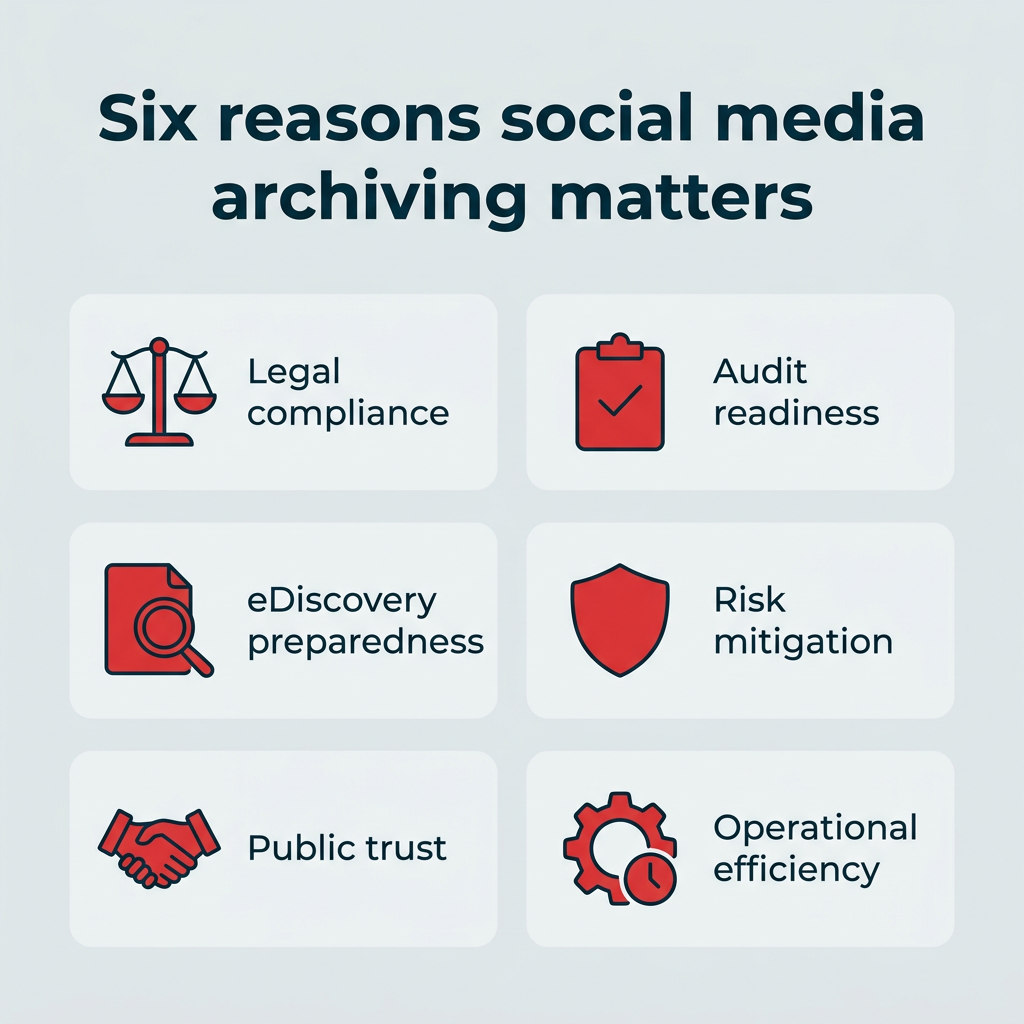
In an era where digital communication shapes public policy, market trends, and patient engagement, the mandate to preserve online footprints has transformed from a back-office administrative task into a frontline legal necessity. Social media archiving—the systematic process of capturing, preserving, and storing all social media content, metadata, and interactions in a legally defensible format—is rapidly becoming one of the most critical risk management strategies for modern institutions.
As regulatory bodies intensify their oversight and public transparency laws evolve, organizations across government, financial services, healthcare, and education face unprecedented scrutiny regarding their digital ledgers. Relying on platform-native features or manual screenshots is no longer sufficient. To remain audit-ready, institutions must adopt automated, comprehensive archiving frameworks that withstand the rigorous tests of eDiscovery, Freedom of Information Act (FOIA) requests, and compliance audits.
The Legal Landscape: Why Public Records and Regulated Communications Demand Preservation
The fundamental legal driver behind social media archiving is straightforward: digital communications are official records. For federal, state, and municipal government agencies, social media channels are recognized as public forums. Consequently, posts, threads, comments, and direct messages fall squarely under the purview of the Freedom of Information Act (FOIA) and state-level open records laws.
Government entities cannot selectively preserve their online footprint. Every communication directed at constituents—and every response generated by the public—must be retained according to strict legal schedules. This obligation extends to content that administrators subsequently hide or delete. For instance, if an agency hides an inflammatory comment or removes a spam response to maintain civil discourse, the original interaction must still exist within a permanent archive. This preservation is vital not only for routine records requests but also for defending against First Amendment challenges. Courts frequently require agencies to prove just cause when removing public commentary from official pages; an unalterable, comprehensive archive provides the necessary evidentiary backing.
Simultaneously, the regulatory pressures facing the private and institutional sectors are equally severe. Financial institutions governed by the Securities and Exchange Commission (SEC) and the Financial Industry Regulatory Authority (FINRA)—specifically under SEC Rule 17a-4 and FINRA Rules 3110 and 2210—must capture all business-related electronic communications. This mandate covers social media advertisements, direct messages, and interactive third-party dialogues. The financial sector has learned this lesson at high cost; regulatory enforcement actions targeting "off-channel communications" on unmonitored platforms like WhatsApp and Signal have resulted in multi-million-dollar penalties against major firms for failing to preserve electronic business records.
In the healthcare sector, the Health Insurance Portability and Accountability Act (HIPAA) imposes stringent boundaries regarding Protected Health Information (PHI). When patients inadvertently or intentionally share private medical details within the comments or direct messages of a healthcare provider’s social media page, providers face immense regulatory risk. Even if the organization deletes the comment to protect patient privacy, the underlying interaction must be archived to demonstrate compliance and responsiveness, avoiding penalties that can scale up to millions of dollars for willful neglect.
Meanwhile, educational institutions navigate the Family Educational Rights and Privacy Act (FERPA), which dictates that any social media communication identifying a student or discussing their academic record, enrollment status, or disciplinary history constitutes an educational record requiring rigorous protection and retention.
The Fallacy of Manual Archiving and the Rise of Automation
Historically, many organizations attempted to satisfy these sweeping legal mandates through manual archiving methods: taking periodic screenshots, exporting PDF summaries of feeds, or maintaining spreadsheet logs of published posts. However, modern legal standards and regulatory bodies have largely invalidated these manual approaches.
Screenshots are inherently fragile. They lack the background metadata required to prove authenticity, can be easily altered using basic image editing software, and fail to capture real-time deletions or edits made shortly after publication. Furthermore, manual processes are entirely dependent on human memory and diligence; if a staff member fails to capture a fast-moving comment thread before a user deletes it, that data is lost permanently, creating an immediate compliance gap.
Automated social media archiving eliminates these vulnerabilities. By integrating directly with platform Application Programming Interfaces (APIs), automated solutions capture content the moment it is published, edited, hidden, or deleted. These tools secure all associated metadata—including precise timestamps, unique user identifiers, device details, and edit histories—in a tamper-proof repository. This real-time capture ensures that organizations maintain a continuous, verifiable chain of custody for every piece of digital content associated with their brand or agency.
A Five-Step Workflow for Comprehensive Compliance
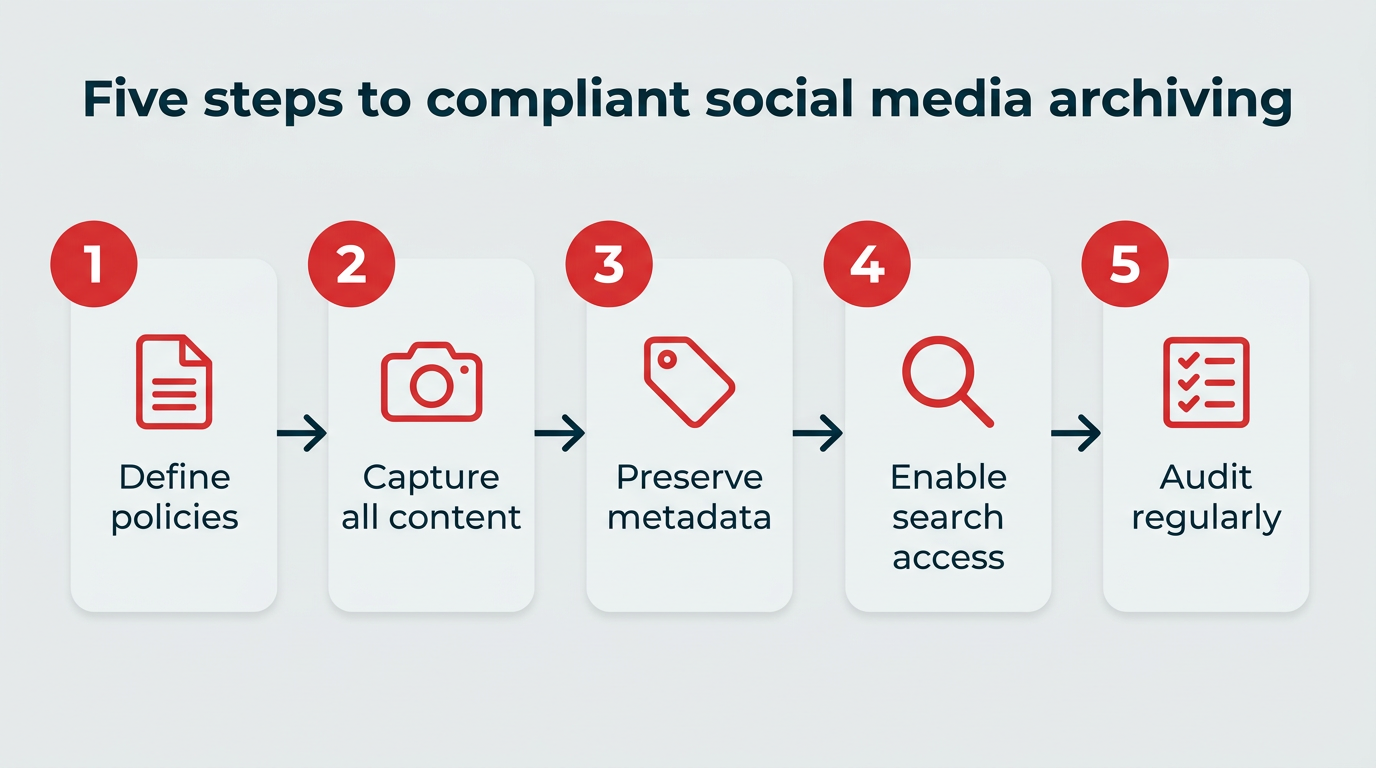
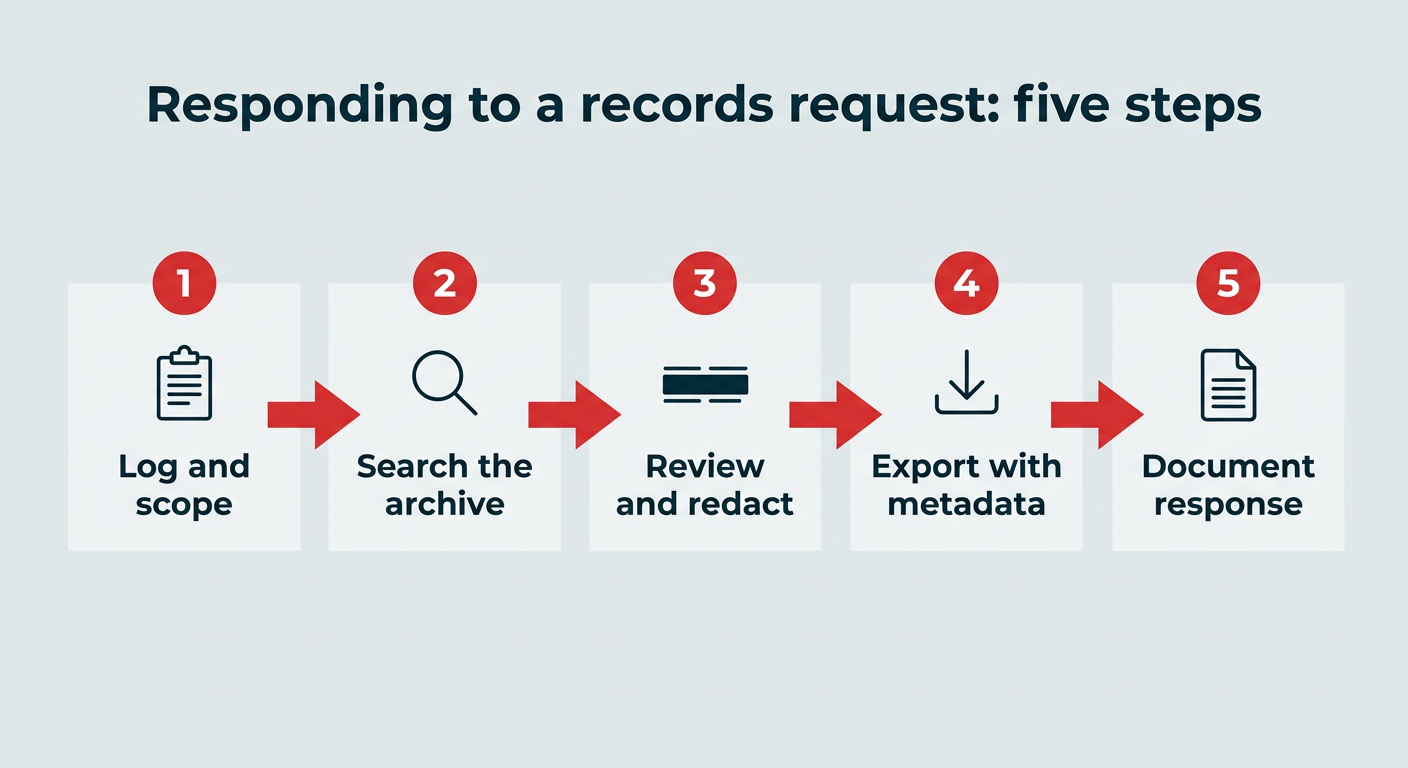
Implementing a resilient social media archiving program requires a structured, repeatable operational workflow. Organizations looking to overhaul or establish their archiving posture typically follow five core phases:
-
Define Archiving Policies and Procedures: Ground your program in a robust governance plan. Review all applicable federal, state, and industry-specific regulations to determine precise retention schedules. Document these policies within your overarching social media guidelines so that all communications staff have immediate access to compliance protocols. Additionally, establish a strict approval process for new social media accounts to ensure every digital touchpoint is automatically routed into the archiving infrastructure.
-
Deploy Real-Time Content Capture: Implement purpose-built software that connects directly to the APIs of every social network your organization utilizes. Ensure the tool captures not only top-level posts and multimedia assets but also every incoming comment, direct message, mention, and tag—regardless of whether that content is subsequently hidden or deleted by administrators or end-users.
-
Preserve Metadata and Contextual Information: Demand that your archiving solution records deep background data for every interaction. Timestamps, author metadata, IP addresses, and revision histories are essential for establishing legal defensibility during eDiscovery. Furthermore, retaining contextual data allows compliance officers to view a comment within the broader conversational thread, clarifying the intent behind moderation decisions.
-
Establish Searchable, Accessible Repositories: An archive is only valuable if records can be retrieved swiftly. Utilize tools featuring advanced search capabilities, allowing teams to filter records by date ranges, specific keywords, user handles, or sentiment tags. The repository must also support secure export functionalities to seamlessly feed records into electronic records management systems (eRDMS) or legal discovery pipelines.
-
Conduct Regular Compliance Audits: The digital regulatory environment is constantly shifting. Organizations should execute comprehensive quarterly audits of their social media ecosystem. These reviews should verify that all active accounts are successfully integrated into the archiving pipeline, new personnel are properly trained on governance policies, and technical integrations remain unaffected by platform API updates.
Data Residency and Regional Compliance Challenges

As institutions operate across increasingly globalized digital networks, where data is stored has become just as critical as what is stored. Regional data privacy laws impose strict limitations on cross-border data transfers and cloud storage locations.
For example, government agencies in jurisdictions like British Columbia and various Australian states are bound by strict data residency laws mandating that public records and citizen data must be stored exclusively within domestic data servers. Consequently, organizations in these regions must select archiving vendors equipped with localized data centers. Similarly, institutions operating within the European Union must strictly adhere to the General Data Protection Regulation (GDPR), ensuring that personally identifiable information (PII) collected via social media engagement is handled, stored, and processed with explicit consent and maximum security.
Evaluating Enterprise Solutions and the Role of FedRAMP
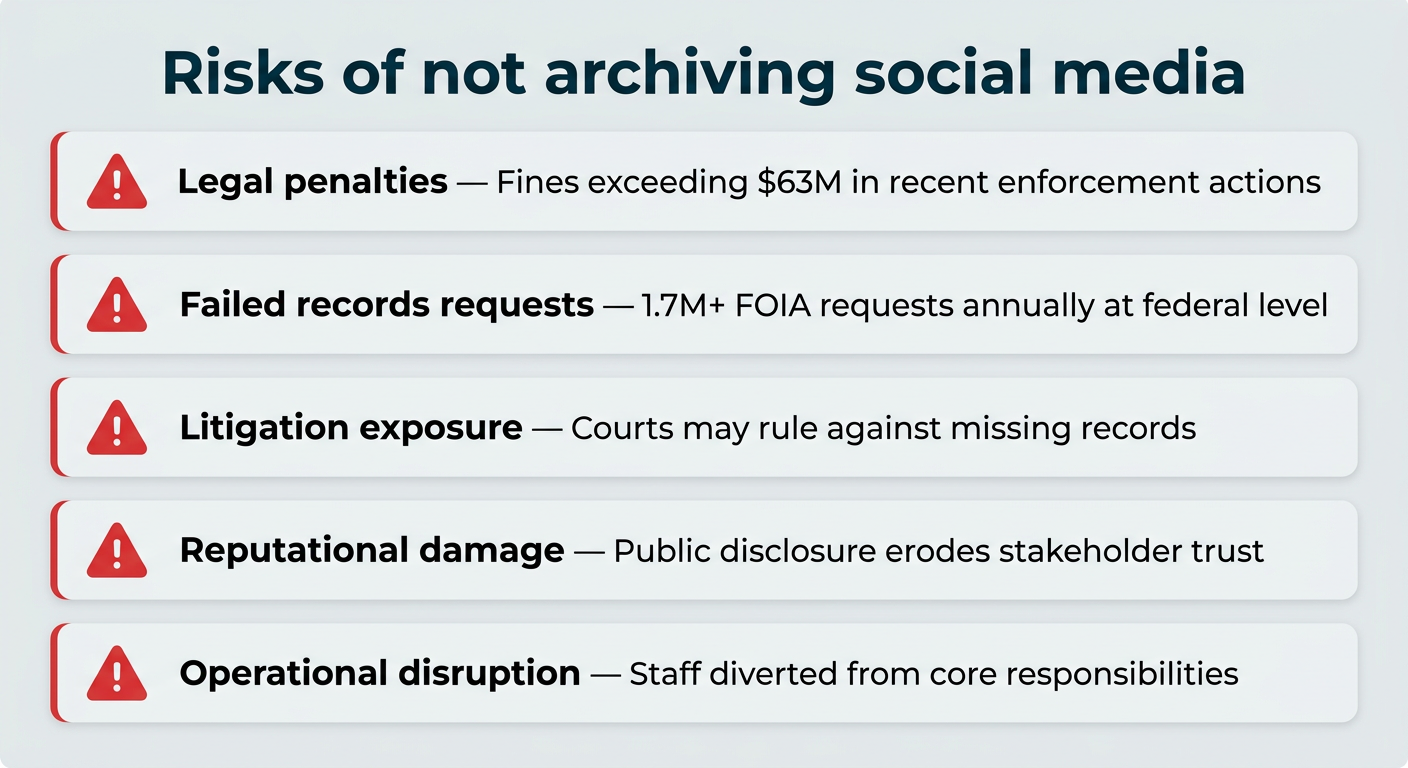
Selecting the right compliance-focused archiving tool requires rigorous vendor evaluation. Organizations must look for solutions that offer immutable storage, automated API synchronization, robust search functionality, and seamless export capabilities.
For federal agencies and highly regulated enterprises in the United States, security validation is paramount. The Federal Risk and Authorization Management Program (FedRAMP) sets the benchmark for cloud service security, requiring rigorous assessments before a tool can be utilized by government entities. Platforms such as Hootsuite have achieved FedRAMP authorization, cementing their status as trusted, secure environments for managing public-sector social media workflows. By integrating compliance layers—such as Vigil for governance and specialized archiving connectors like Brolly—enterprises can achieve real-time, metadata-rich archiving across dozens of accounts while maintaining strict adherence to SEC, FINRA, HIPAA, and FERPA standards.
Implications of Non-Compliance and the Path Forward
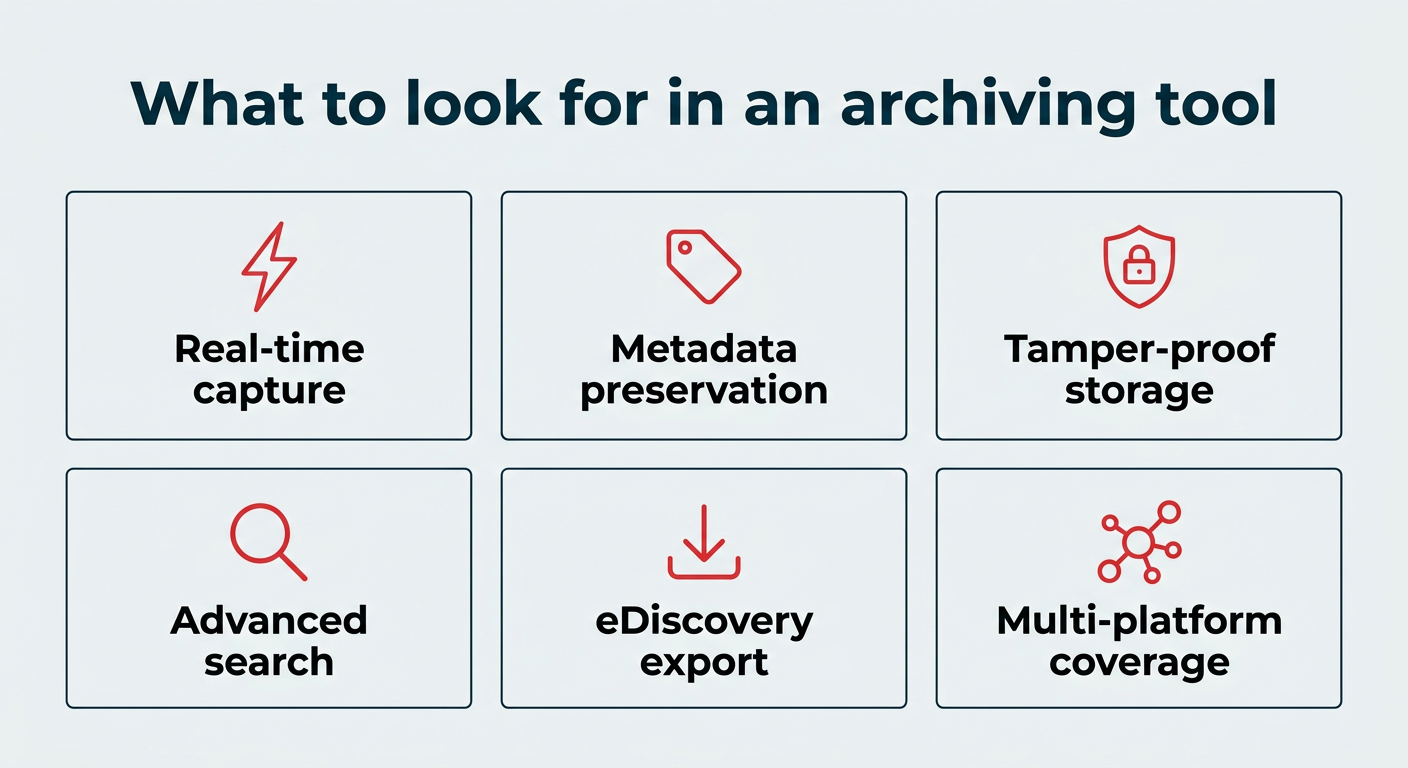
The financial and operational fallout of failing to maintain a robust social media archive can be devastating. Organizations face severe regulatory fines, court-mandated sanctions, reputational damage, and a loss of public trust. In litigation, the inability to produce requested digital records can lead to court rulings unfavorable to the defense, as courts may infer that missing records contained damaging information.
Ultimately, social media archiving is much more than a defensive shield against legal penalties. By maintaining a clean, searchable, and comprehensive historical record of digital interactions, institutions gain valuable insights into constituent sentiment, customer feedback, and public engagement trends. In an era where digital communication is permanent in the eyes of the public, ensuring that your organization’s digital recordkeeping matches that permanence is no longer optional—it is the baseline of modern organizational governance.