Radaris domain seizure signals a turning point in the battle between state privacy mandates and the data broker industry


The digital landscape of personal privacy in the United States underwent a seismic shift recently as a New Jersey court ordered the transfer of the Radaris.com domain—and over a dozen associated data broker sites—to Atlas Data Privacy Corp. This unprecedented judicial action follows years of systemic non-compliance by Radaris regarding "Daniel’s Law," a New Jersey statute designed to protect the personal information of law enforcement, judges, and government personnel. The move marks a rare, aggressive enforcement action against the "people-search" industry, which has long relied on jurisdictional complexity and procedural shell games to evade regulatory oversight.
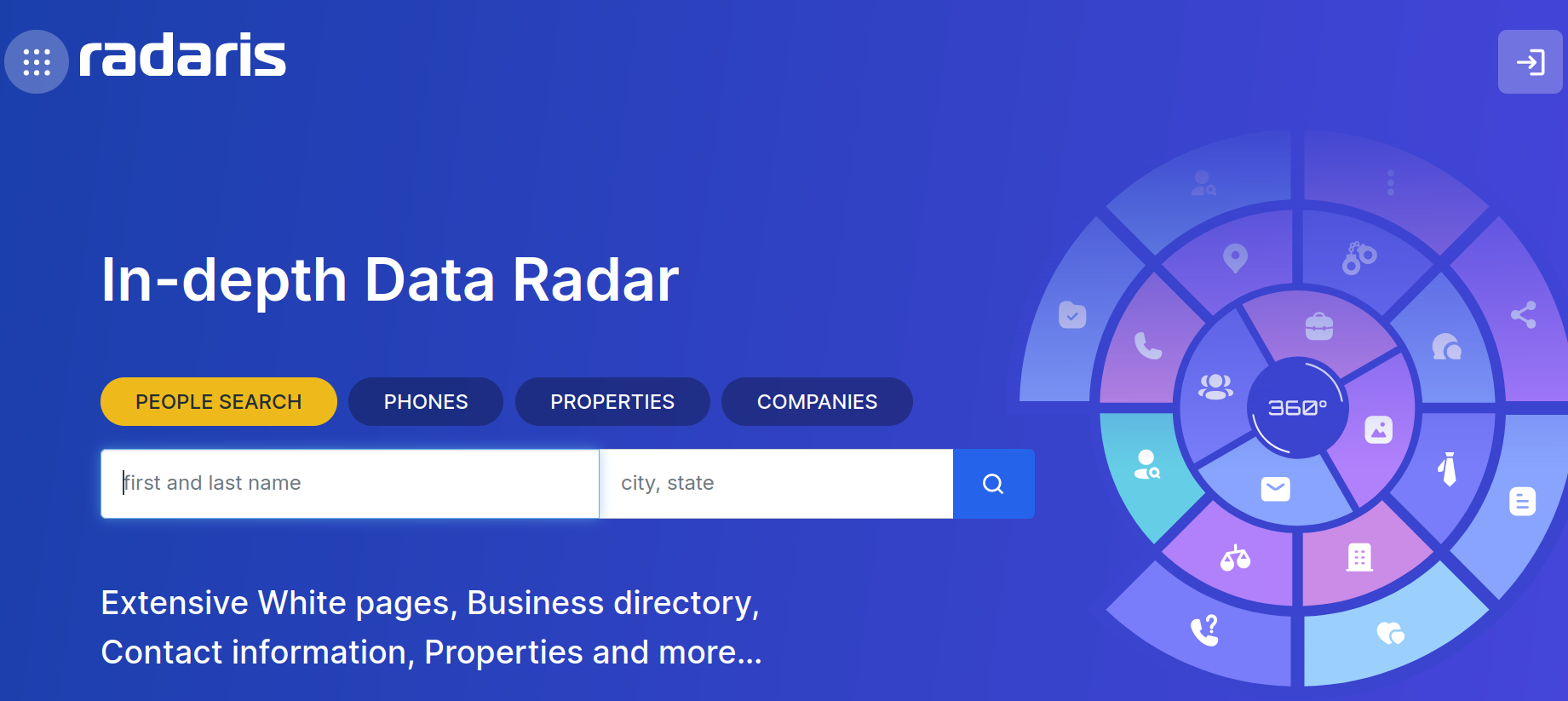
For over a decade, Radaris.com has operated as a behemoth in the personal data industry, aggregating vast swaths of information on American citizens. The company, however, earned a notoriety that extended far beyond its data collection practices. By consistently ignoring requests for data removal and employing a revolving door of shell companies to manage its assets, the operators of Radaris effectively neutralized the threat of litigation. That strategy reached a definitive impasse in a New Jersey courtroom, where a judge, frustrated by the company’s repeated stonewalling and evasive legal tactics, authorized the involuntary transfer of the domain.
A Chronology of Evasion
The conflict traces its origins to the enactment of Daniel’s Law, named in memory of the son of U.S. District Court Judge Esther Salas, who was murdered in 2020 by an individual who had tracked her home address through the internet. The law, which mandates the removal of personal data for public officials and provides for statutory penalties of $1,000 per violation, became the primary weapon for Atlas Data Privacy Corp.
In February 2024, Atlas initiated litigation against Radaris, alleging systematic violations of the statute. The ensuing months revealed a pattern of behavior characteristic of the broader data brokerage industry. Radaris’s defense team, led by attorney Val Gurvits, initially attempted to contest the legitimacy of the suit by claiming that the plaintiffs had failed to serve the "actual" owners. This defense was complicated by investigative reporting that exposed the true operators of the company: Russian-born brothers Igor and Dmitry Lubarsky.
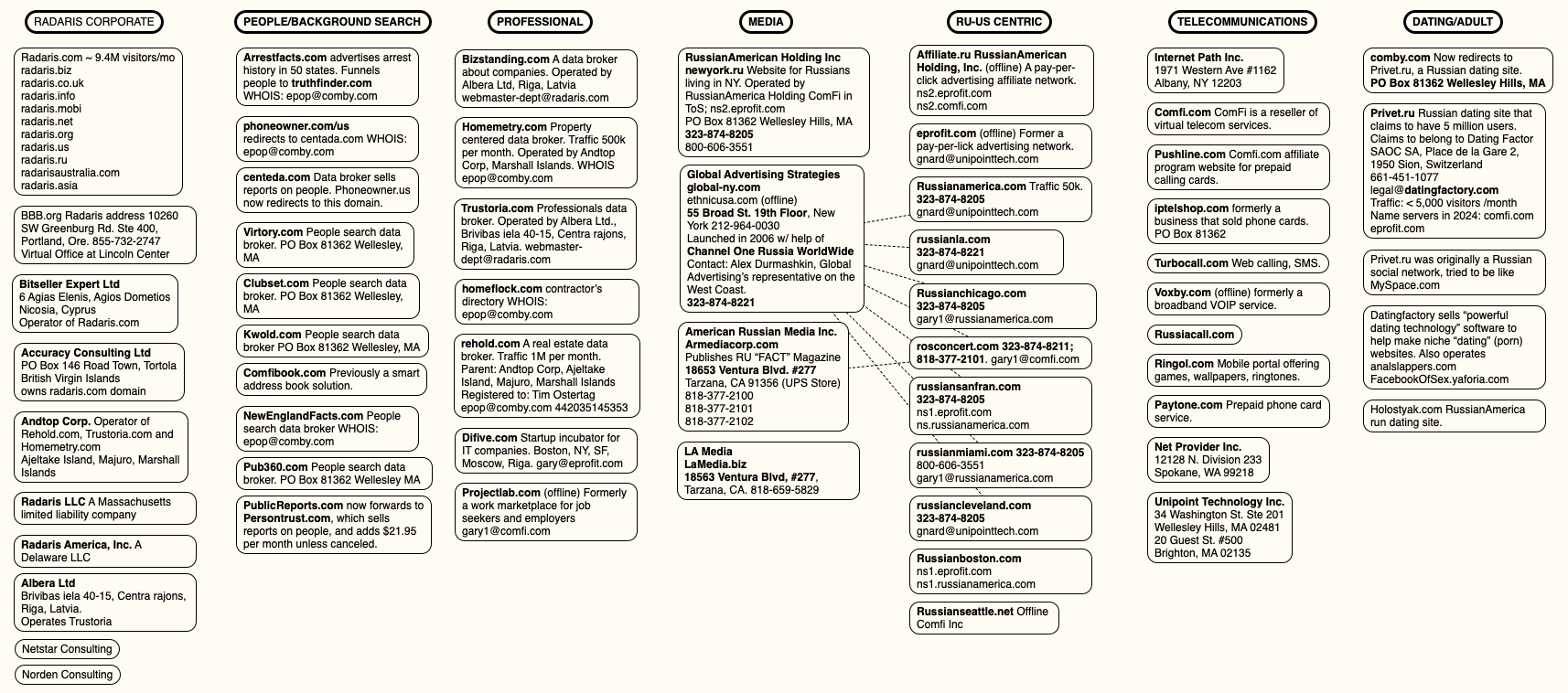
The brothers, residing in Massachusetts, allegedly oversaw a complex network of entities, including Bitseller Expert Limited (based in Cyprus) and various corporations in the Marshall Islands, the British Virgin Islands, and the Seychelles. This "island-hopping" phase, as described by Atlas CEO Matt Adkisson, was designed to create an impossible trail for plaintiffs to follow. When legal pressure mounted, ownership of the domains would simply be transferred to a new, offshore shell entity, rendering previous service of process void.
By June 2025, after an initial 2017 default judgment of $7.5 million went uncollected, Atlas re-filed its lawsuit with a significantly broader scope. The legal team demonstrated that the various "legal vehicles"—such as Virtura Corp, Veripages Inc., and Nuform Solutions Inc.—were merely administrative masks for a single, centralized operation managed from a virtual office.
The Anatomy of a Data Empire
The financial scale of these operations is significant. Evidence uncovered during the discovery phase indicates that Radaris.com generated approximately $42,000 in monthly revenue, while its sibling site, Veripages.com, pulled in an estimated $45,000. These figures are bolstered by strategic partnerships with major marketing firms and even other data privacy companies.
One of the most revealing aspects of the litigation was the discovery that the "Radaris family" of websites maintained an affiliate relationship with Onerep, a service that charges consumers to remove their information from the very data broker sites that the Lubarsky brothers operated. This revelation highlighted the perverse incentives inherent in the data privacy market, where firms profit from both the exposure and the subsequent "protection" of sensitive personal information.
The emails obtained by Atlas, numbering over 10,000, provided a roadmap of the company’s internal operations. They confirmed that technical and financial functions were funneled through a single administrative domain, proving that the multitude of corporate entities were, in fact, a singular, cohesive operation. This evidence proved instrumental in convincing the court that the entities were interchangeable and that the domain seizure was a necessary remedy for ongoing, willful non-compliance.

Official Responses and Legal Defense
The legal representatives for the defendants have maintained a defiant stance. Victor Worms, who replaced Val Gurvits as the lead attorney for the Radaris entities, has argued that the seizure is legally flawed. In a statement following the domain transfer, Worms asserted that the judgment was void, arguing that "Radaris.com" is a domain, not a legal entity, and therefore lacks the capacity to be sued.
"We intend to pursue all appropriate appeals because we believe the transfer of Radaris.com amounts to a forfeiture in violation of various constitutional principles," Worms stated. The defense rests on the argument that the transfer violates the due process rights of the underlying corporate owners, a strategy that has historically proven effective for data brokers in stalling litigation for years.
Conversely, the plaintiffs view the seizure as a vital victory for public safety. Raj Parikh, a partner at PEM Law, noted that for years, the industry operated on a model of "attrition." By making the cost of legal defense prohibitively high and the process procedurally exhausting, data brokers forced many plaintiffs to abandon their claims. The decision to pursue the Radaris domain was a calculated risk aimed at breaking this cycle.
Broader Implications for Privacy Law
The fallout from the Radaris case extends well beyond one company. The data broker industry is currently mounting a massive, coordinated constitutional challenge to Daniel’s Law, with dozens of firms seeking to move similar lawsuits to federal court. They argue that the law is overly broad and infringes upon First Amendment rights regarding the dissemination of "public" information.
The constitutional validity of these statutes remains a volatile issue. While 14 states have adopted versions of Daniel’s Law, others have faced stiff judicial resistance. In August 2025, a federal district court in West Virginia struck down a similar law, ruling it facially unconstitutional. This split in judicial opinion ensures that the matter is destined for the Supreme Court of the United States.
Privacy experts, such as Justin Sherman, argue that the industry’s reliance on the "public record" defense is a strategic redirection of a fundamental policy failure. "The lack of comprehensive federal privacy law is not for a lack of knowledge," Sherman noted. "We have seen eight million wake-up calls—from data breaches to the weaponization of personal records—yet we continue to allow data brokers to operate in a legal gray area."
The core of the problem lies in the definition of "public information." Currently, information such as property filings, court records, and voter registries are exempt from most privacy protections. As long as these records remain accessible to aggregators, companies like Radaris can continue to build comprehensive, searchable dossiers on citizens without consent. The breach of IDScan.net, which exposed the driver’s license data of 153 million Americans, serves as a stark reminder of the risks posed by the current regulatory environment.
The Road Ahead
The transfer of Radaris.com to Atlas Data Privacy Corp is a symbolic and functional blow to the data broker business model. However, it is not an end to the problem. The industry is highly adaptable; domain names are easily replaced, and offshore entities are cheap to incorporate. As long as the market for personal data remains lucrative, the "island-hopping" strategy of ownership will likely continue.
For the moment, the homepage of Radaris.com stands as a monument to the legal victory, displaying a notice from Atlas and providing a direct portal to the records of the case. While this specific node in the data-brokerage web has been silenced, the broader conflict remains unresolved. The outcome of the upcoming federal appeals will determine whether state-level protections like Daniel’s Law can withstand the pressure of corporate lobbying or whether the United States will remain one of the few developed nations without a baseline, comprehensive federal privacy law. Until such legislation is enacted, the battle over personal digital autonomy will continue to be fought in individual courtrooms, one domain at a time.
Related posts: