Security Experts Warn of Sophisticated Malicious npm Packages Evading Traditional Supply Chain Defenses


The modern software development lifecycle relies heavily on open-source ecosystems, but this interconnectivity has introduced profound systemic vulnerabilities. Recent intelligence from cybersecurity researchers highlights a concerning surge in malicious npm (Node Package Manager) packages specifically engineered to bypass conventional installation-time security checks and static analysis tools. As organizations increasingly adopt third-party code libraries to accelerate application deployment, threat actors are weaponizing software repositories. This evolution in cyber threat methodology forces a paradigm shift in how enterprise security teams approach dependency management, repository monitoring, and runtime defense architectures.
Background Context of the Open-Source Supply Chain Crisis
The npm registry, serving as the primary package manager for JavaScript and the broader Node.js environment, processes billions of downloads weekly. Because of its foundational role in web and server-side application development, it has become a prime target for threat actors seeking large-scale propagation vectors. Unlike proprietary software developed entirely in-house, modern applications are constructed like digital mosaics, incorporating hundreds or thousands of external dependencies.
Historically, security protocols for these repositories focused heavily on perimeter defense—scanning packages at the moment of download or installation to identify known malware signatures, typosquatting attempts, or obvious malicious payloads. However, adversaries have rapidly adapted. By employing obfuscation techniques, dynamic payload retrieval, and delayed execution models, malicious actors can successfully slip past static gatekeepers. These packages often appear entirely benign during the installation phase, executing harmless initialization scripts while concealing their true intent until the application is deployed in a production environment.
The Mechanics of Evasion: How Modern npm Malware Bypasses Defenses
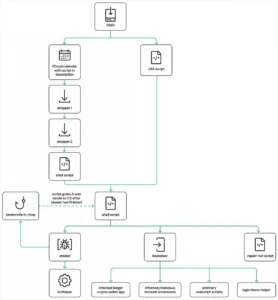
Security analysts tracking these campaigns have identified several advanced tactics used by threat actors to evade standard defensive perimeters. The primary method involves splitting the malicious lifecycle into discrete stages. During the initial npm install phase, the package performs minimal operations or mimics legitimate utility code, ensuring that static analyzers and repository scanners return a clean bill of health.
Once integrated into a build pipeline or active server environment, the package initiates its secondary payload deployment. This often involves downloading obfuscated JavaScript code from external command-and-control (C2) servers or leveraging legitimate cloud storage services to host secondary stages. By executing code dynamically at runtime, the malware effectively blinds traditional install-time scanners. Furthermore, sophisticated packages may check their execution environment, remaining dormant if they detect sandboxed analysis tools, virtual machines, or continuous integration (CI) environments, thereby frustrating automated security audits.
Chronology of Rising Supply Chain Threats
The escalation of software supply chain attacks is not an isolated phenomenon but part of a multi-year trajectory of increasing sophistication.
- 2017–2019: Early supply chain attacks primarily focused on typosquatting—publishing packages with names closely resembling popular libraries (such as
crossenvinstead ofcross-env) to capture credentials or environment variables naively. - 2020–2022: Threat actors shifted toward compromised maintainer accounts. By credential stuffing or phishing legitimate package owners, attackers pushed malicious updates directly into trusted, widely used libraries, affecting downstream projects transitively.
- 2023–2025: Automated generation of malicious packages became prevalent. Threat actors began utilizing automated scripts to flood public registries with thousands of obfuscated packages designed to harvest cryptocurrency wallets, SSH keys, and cloud credentials.
- 2026 and Beyond: The current landscape is defined by behavioral evasion. Attackers now deploy zero-day equivalent logic within JavaScript modules that specifically target runtime integrity, leveraging the pervasive integration of JavaScript across servers, desktop apps, and build systems to maximize disruption.
Architectural Vulnerabilities and the JavaScript Footprint
The pervasive integration of JavaScript across the entire technology stack has long been a subject of debate within the cybersecurity community. Originally designed as a lightweight client-side scripting language for web browsers, JavaScript has expanded its footprint into server-side environments (Node.js), desktop applications (via frameworks like Electron), and core operating system utilities.
Critics and security architects have frequently raised concerns regarding this expansive footprint. The inherent flexibility of JavaScript, combined with a deeply nested dependency tree—where a single application may rely on transitive dependencies numbering in the thousands—creates an immense attack surface. When a vulnerability or malicious injection occurs deep within a dependency tree, tracing the lineage and remediating the risk becomes an arduous, often manual process for enterprise security teams. Moreover, the standards bodies responsible for web and application specifications continue to introduce client-side execution capabilities, which security traditionalists argue unnecessarily complicate the threat landscape and expand the potential vectors for remote code execution.
The Shift Toward Runtime Behavioral Analysis
In light of these evolving threats, industry consensus is rapidly shifting away from a reliance solely on static installation-time scanning. Cybersecurity frameworks now strongly advocate for comprehensive runtime behavioral analysis and containerization strategies.
As highlighted by security researchers and industry veterans, defending modern application environments requires treating software dependencies with zero trust. Organizations are urged to implement runtime application self-protection (RASP) tools, strict egress filtering, and hypervisor-level monitoring. By observing the actual behavior of software components as they execute—monitoring system calls, network connections, and file system modifications in real-time—security systems can detect anomalous activity regardless of how cleanly a package bypassed initial repository vetting.
This defense-in-depth approach mirrors the conceptual divide between traditional perimeter-focused "castle" security and internal, compartmentalized "prison" architectures. In a prison-style environment, individual processes and dependencies are tightly sandboxed and monitored, ensuring that even if a malicious package successfully infiltrates the system, its ability to pivot, exfiltrate data, or alter legitimate software signatures is severely restricted by probabilistic runtime controls.
Broader Industry Impact and Strategic Implications
The implications of sophisticated npm malware extend far beyond immediate data theft or financial loss. They strike at the foundational trust of open-source collaboration. When developers can no longer safely assume that public code repositories are free of targeted malware, the velocity of software development is inevitably hindered by the administrative overhead of rigorous vetting and verification.
Enterprise software developers, open-source maintainers, and repository administrators face mounting pressure to collaborate on structural solutions. Proposals include cryptographically signed commits, mandatory provenance generation (such as through supply-chain levels for software artifacts, or SLSA frameworks), and enhanced automated behavioral sandboxing at the registry level before packages are indexed for public consumption.
However, technical controls alone will not completely resolve the crisis. The sprawling web of dependencies inherent in modern software demands a cultural shift within development teams. Developers must transition from viewing open-source packages as free, plug-and-play commodities to recognizing them as third-party codebases that require continuous auditing, minimal privilege assignment, and active runtime oversight.
Conclusion
The emergence of malicious npm packages capable of evading traditional defenses underscores the urgent need for a maturation in software supply chain security. As threat actors refine their evasion techniques, leveraging runtime obfuscation and staged payloads, the cybersecurity industry must abandon the illusion that static perimeter checks are sufficient. By embracing robust runtime behavioral analysis, strict system sandboxing, and a zero-trust philosophy toward open-source dependencies, organizations can better fortify their software pipelines against the persistent and evolving threat of supply chain compromise.
Related posts: