Apple Issues Urgent Security Patch for Actively Exploited CoreGraphics Zero-Day Vulnerability Affecting Legacy Operating Systems

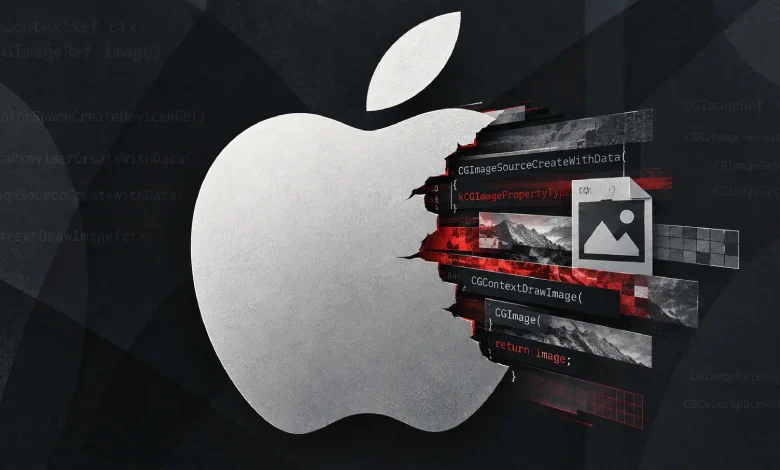
Apple has released critical out-of-band security updates to address a high-severity zero-day vulnerability impacting older iterations of its iOS, iPadOS, and macOS ecosystems. The flaw, which has been formally cataloged as CVE-2026-86950, is rooted in the CoreGraphics framework and allows for arbitrary code execution when a device processes a maliciously crafted file. According to advisory documentation published by the technology giant, the company has received credible intelligence indicating that this specific security defect has already been weaponized in highly targeted, sophisticated cyberattacks against high-risk individuals using operating system builds predating iOS 27.
The disclosure underscores a persistent challenge in the modern threat landscape: sophisticated threat actors increasingly focus their efforts on older, legacy software environments where security postures may lag behind current releases. While the campaign was remarkably narrow in scope, the capability to execute arbitrary code via a file-processing vector represents a severe breach of endpoint security, prompting swift defensive engineering from Apple’s security response teams.
Anatomy of CVE-2026-86950: Technical Breakdown
At the heart of the security advisory is CVE-2026-86950, an out-of-bounds write vulnerability residing within CoreGraphics, the foundational graphics rendering engine utilized across Apple’s software stack. Out-of-bounds write errors occur when software writes data past the intended boundary of a designated buffer, often corrupting adjacent memory regions. In the context of CoreGraphics, this defect manifested when parsing complex image or document formats containing structural anomalies designed to trigger the memory fault.
When a vulnerable device encounters a maliciously crafted file, the flawed bounds-checking routines fail to validate data lengths properly. This oversight enables an attacker to overwrite critical memory segments, effectively hijacking the execution flow of the application. Consequently, arbitrary code execution is achieved, potentially granting the attacker unauthorized access to underlying system resources, user data, or communication channels without requiring direct interaction from the device owner beyond opening or viewing the malicious file.
To neutralize this vector, Apple engineering teams implemented significantly improved bounds-checking logic within the CoreGraphics framework. By enforcing strict validation parameters on data size and memory allocation during file parsing, the updated software successfully blocks the memory corruption pathway exploited by the vulnerability.
Discovery and Attribution to Meta Product Security
The discovery and subsequent escalation of CVE-2026-86950 highlighted the vital role played by cross-industry threat intelligence sharing and collaborative corporate security operations. Apple officially credited Meta Product Security with the initial discovery and responsible disclosure of the vulnerability.
While major technology firms maintain robust internal red teams and automated vulnerability-scanning pipelines, many of the most sophisticated zero-day exploits are brought to light through the analytical capabilities of external security researchers. Meta’s specialized product security units frequently monitor platform-agnostic threat vectors, particularly those involving file-parsing components that could be leveraged across diverse enterprise and consumer digital ecosystems.
Following the initial notification from Meta, Apple verified the technical validity of the finding and accelerated its patch development pipeline. Because the vulnerability was actively being exploited in the wild, the Cupertino-based company prioritized the generation of backported security updates for supported legacy operating systems, ensuring that users unable or unready to upgrade to the latest major software iteration remained protected against active intrusion attempts.
Scope of Targeted Attacks and Operational Secrecy
Despite confirming that CVE-2026-86950 had been leveraged in malicious campaigns, Apple maintained its standard operational transparency policy regarding specific operational telemetry. The company has explicitly refrained from disclosing the precise number of individuals targeted, the geographic distribution of the attacks, whether any of the targeted exploitation attempts resulted in successful device compromise, or the exact timeframe during which the vulnerability was first weaponized.
This measured approach aligns with standard incident response protocols observed across the technology sector. Publicizing granular operational details or victim profiles risks tipping off sophisticated threat actors regarding the extent of intelligence community visibility, potentially driving advanced persistent threat (APT) groups to alter their operational infrastructure, obfuscation techniques, or delivery mechanisms.

However, the phrasing used in Apple’s security briefing—referencing "an extremely sophisticated attack against specific targeted individuals"—strongly indicates the involvement of actors possessing advanced technological capabilities, characteristic of commercial spyware vendors or state-sponsored cyber espionage units. Such campaigns typically rely on zero-click or low-interaction exploit chains tailored to high-profile targets, including journalists, political dissidents, human rights activists, and corporate executives.
Chronology of 2026 Zero-Day Vulnerabilities at Apple
The emergence of CVE-2026-86950 adds to a growing catalog of actively exploited zero-day vulnerabilities addressed by Apple during the 2026 calendar year, illustrating the relentless pressure exerted on consumer device manufacturers by sophisticated adversaries.
Earlier this year, in February 2026, Apple issued an emergency patch for a critical memory corruption vulnerability tracked as CVE-2026-20700, which carried a CVSS severity score of 7.8. That flaw specifically targeted dyld (the dynamic linker), a core component responsible for loading and linking dynamic libraries in macOS and iOS environments. Like the recent CoreGraphics incident, CVE-2026-20700 was identified as having been actively weaponized in the wild prior to the public availability of a patch.
The cadence of these disclosures demonstrates that threat actors continue to invest heavily in discovering deep architectural flaws within operating system primitives and rendering libraries. By focusing on foundational frameworks like dyld and CoreGraphics, attackers maximize the potential impact of their exploits, bypassing standard application-layer sandboxing mechanisms to achieve deeper system integration.
Broader Industry Implications for Legacy Endpoint Security
The necessity of issuing patches for legacy operating systems highlights a structural dilemma in modern device lifecycle management. While technology vendors heavily incentivize users to adopt the latest operating system iterations—such as iOS 27 and contemporary macOS releases—a significant portion of the global user base continues to operate on legacy hardware configurations or deferred update schedules due to enterprise compatibility requirements, device age, or personal preference.
When zero-day vulnerabilities are discovered in components shared across both current and legacy software branches, vendors face the critical operational burden of maintaining parallel codebases to backport security fixes. Neglecting legacy devices leaves a vast attack surface exposed to malicious actors who recognize that adoption rates for major OS upgrades take time to reach saturation.
Furthermore, the involvement of file-processing components like CoreGraphics in vector delivery emphasizes the inherent risk associated with processing untrusted data in modern computing environments. As document formats, image rendering specifications, and multimedia containers grow increasingly complex, the underlying code required to parse these assets expands correspondingly, creating fertile ground for memory safety issues, buffer overflows, and out-of-bounds writing errors.
Mitigation Strategies and Recommendations for Users
In response to the active exploitation of CVE-2026-86950, cybersecurity professionals and enterprise IT administrators strongly advise all users operating affected Apple hardware to apply the designated security updates immediately. Because zero-day exploits targeting memory corruption flaws can frequently be delivered via innocuous vectors—such as an email attachment, a compromised website hosting malicious images, or messaging applications—traditional perimeter defenses are often insufficient to prevent compromise.
Organizations managing fleets of Apple devices are encouraged to verify that their mobile device management (MDM) platforms and endpoint detection and response (EDR) solutions are configured to enforce rapid patch deployment. Additionally, users at elevated risk of targeted surveillance should adhere to rigorous digital hygiene practices, including exercising heightened caution when opening files from unknown senders, limiting the execution of untrusted code, and ensuring that their devices are operating on the most current software iterations available for their specific hardware models.
As the threat landscape continues to evolve, the rapid identification, disclosure, and remediation of vulnerabilities such as CVE-2026-86950 remain paramount to maintaining the integrity and trustworthiness of global consumer and enterprise technology ecosystems.