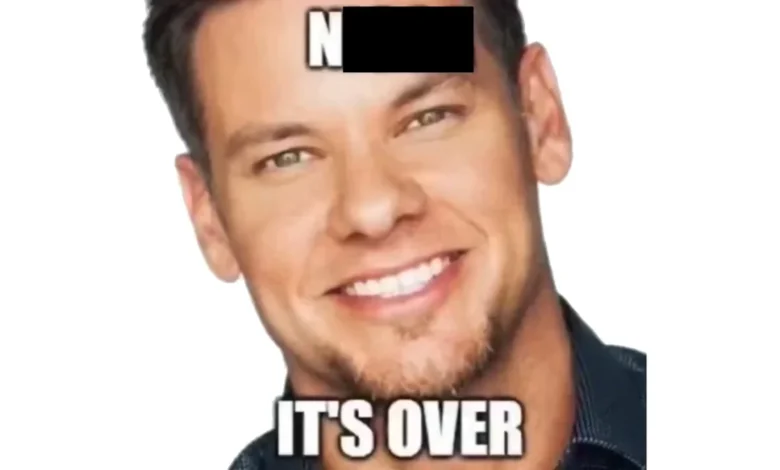
The digital landscape of late 2026 has been marked by a peculiar and rapidly spreading internet phenomenon known widely as the Theo Von "Nigga It’s Over" meme. What began as a static image macro shared among niche communities on Instagram has metastasized into a widespread viral sensation across X (formerly Twitter) and other social media platforms. Driven by advancements in consumer-grade generative artificial intelligence, the meme has evolved from a simple visual punchline into a complex template of existential defeatism, adopted by internet users to signify the absolute conclusion of various scenarios, trivial or profound.
The meme centers around an unmistakable image of American comedian and podcast host Theo Von smiling cheerfully, juxtaposed with the stark, blunt caption, "Nigga, it’s over." As the format gained traction through algorithmic amplification and user participation, it transcended its initial subject. It quickly grew into a sprawling multi-platform trend that saw AI tools employed to animate not only Von, but a wide array of public figures, political leaders, and pop culture icons delivering the same deadpan verdict.
Chronology and Evolution of the Trend
The trajectory of the meme traces a winding path through the decentralized architecture of modern internet culture, moving from obscure image boards and Instagram accounts to mainstream algorithmic visibility.
The foundational roots of the joke can be traced back to April 18, 2026. On this date, an Instagram user operating under the handle schlazawg published a basic image macro featuring Von’s face accompanied by the text, "Nigga it will never end." Though the post garnered modest engagement—accumulating roughly 25 likes over a six-month span—it established the visual pairing of Von’s distinct facial expression with colloquial phrasing. The image notably carried a watermark from an account named "@greetingsnigga," which has since become inactive or scrubbed from the platform.
The format underwent a subtle yet crucial mutation a few months later. On June 13, 2026, another Instagram user, owen_kung, uploaded a variation utilizing the same photograph of the comedian, this time subverting the sentiment with the caption, "Nigga it’s over." This iteration resonated more strongly with audiences, pulling in over 5,500 likes within four months. The post received an immediate algorithmic boost when it was promptly reposted by user hardlypc on the same day, driving an additional 14,300 likes and planting the seeds for broader internet dissemination.
Despite these early indicators of viral potential, the meme remained relatively contained within Instagram’s image-macro ecosystem until October 2026. A pivotal inflection point occurred on October 4, 2026, when an X user, @bergen_exe, introduced generative AI technology to the format. By utilizing AI video and audio tools, the user transformed the static image into a dynamic clip where an artificial rendition of Theo Von reads the caption aloud, underscored by the melodic strains of Breaking Benjamin’s 2004 rock hit "Blow Me Away." This multimedia presentation struck a chord within digital circles, accumulating over 33,000 likes in three weeks and serving as the catalyst for the meme’s mass migration to X.
Diversification and Expansion Across Platforms
Following the introduction of AI-driven video and audio synthesis, the meme shed its specificity regarding Theo Von, spawning a cottage industry of derivative content. Internet users recognized the template’s versatility as a universal reaction image for modern despair, bureaucratic failure, or cultural disillusionment.
Throughout late October 2026, the trend splintered into numerous thematic branches. On October 22, X user @jacobfastpro published a politically charged iteration featuring a synthesized clip of Donald Trump delivering the trademark phrase. The post, accompanied by the commentary remarking on the surreal nature of contemporary political discourse, captured over 1,800 likes.
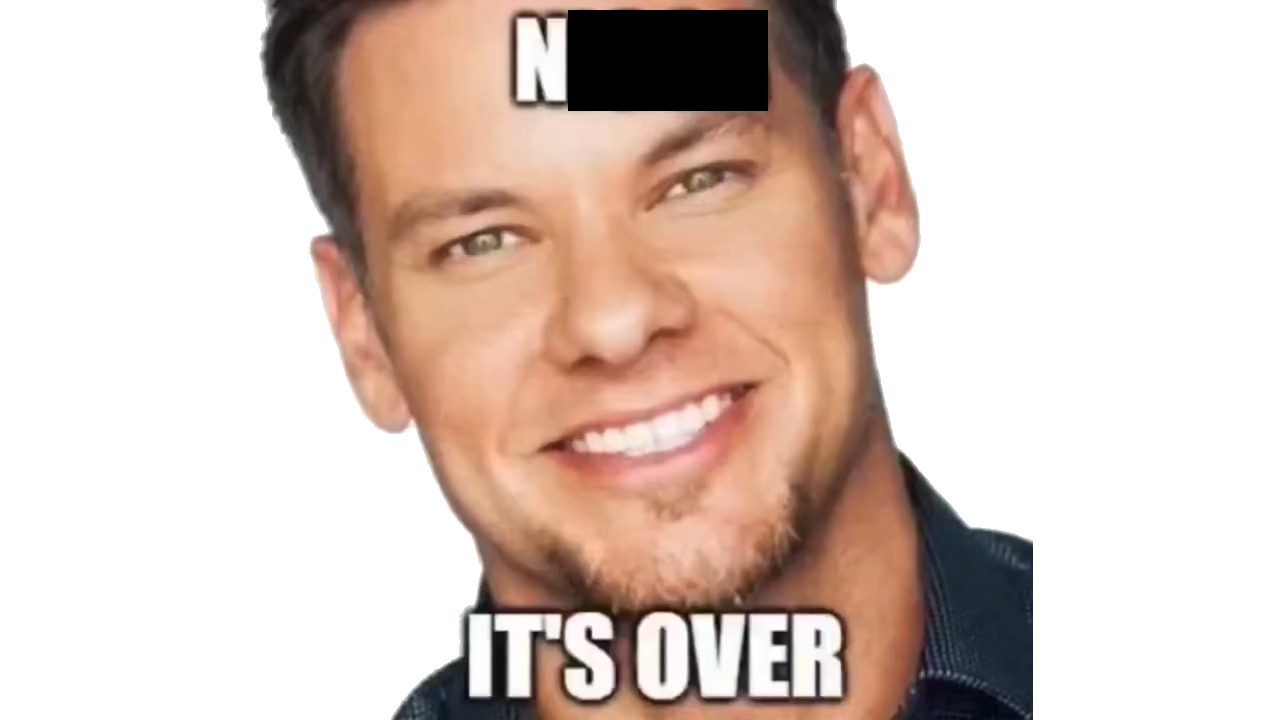
The following day, on October 23, user @McKean_enjoyer leveraged the format to comment on internet drama, pairing the caption with an image referencing high-profile online controversies involving Ethan and Hila Klein. This post significantly outperformed its political predecessor, securing more than 11,000 likes within a week.
The meme’s adaptability was further demonstrated on October 27, when user @d_xelly deployed a surrealist interpretation in response to breaking tech news regarding Discord policy updates. By depicting Von as a mushroom cloud—a visual metaphor for total devastation—the post resonated deeply with digital privacy advocates and casual users alike, surging to over 67,000 likes in just three days. Subsequent variations incorporated absurdist roleplay elements, anthropomorphic animal tropes, and late-night digital banter, cementing the phrase as a flexible linguistic shorthand for resignation.
Underlying Technologies and the Role of Generative AI
The rapid acceleration of the Theo Von meme underscores a broader technological shift in meme culture: the democratization of deepfake and AI-generation tools. Historically, the evolution of image macros relied heavily on standard photo-editing software, limiting creators to static text overlays and crude image cropping. However, the 2026 digital landscape is defined by accessible text-to-video, voice-cloning, and facial-animation software that allows average internet users to generate convincing multimedia content in minutes.
The integration of artificial intelligence into the meme serves a dual purpose. First, it heightens the comedic absurdity by lending a false sense of authenticity to completely fabricated scenarios—such as mainstream celebrities or political figures casually uttering internet slang. Second, it accelerates the evolutionary cycle of the meme. Because AI tools lower the barrier to entry for multimedia production, community members can continuously remix, parody, and iterate on existing formats, preventing the joke from stagnating before it reaches peak saturation.
Sociological Implications and the Psychology of Internet Nihilism
Beyond its technical mechanics, the widespread adoption of the "Nigga It’s Over" meme offers a window into the prevailing psychological state of heavy internet users in the mid-2020s. The phrase itself functions as a vehicle for digital nihilism—a recurring cultural coping mechanism characterized by humorous resignation in the face of overwhelming information, sociopolitical instability, and perpetual online connectivity.
By channeling moments of minor inconvenience, platform policy changes, or macro-level societal stress through the face of a recognizable pop-culture figure, users collectively externalize feelings of powerlessness. The juxtaposition of sophisticated generative AI with deliberately colloquial, marginalized street vernacular creates a jarring comedic friction. This stylistic choice highlights the chaotic synthesis of high technology and low-brow internet subcultures that frequently defines contemporary discourse.
Future Outlook and Search Trajectory
As the meme continues to circulate through algorithmic feeds and niche online communities, analysts note that its sustainability relies entirely on the community’s capacity for continuous reinvention. While initial search interest and social media engagement peaked during the final weeks of October 2026, the underlying framework remains structurally open-ended. Whether the format will permanently alter the lexicon of internet reaction culture or merely serve as a fleeting autumn fixation remains to be seen. Nevertheless, the phenomenon stands as a textbook example of how modern generative AI can rapidly transform a dormant image macro into a dominant cross-platform cultural artifact.