Evaluating the Landscape: 10 Sprinklr Alternatives for Enterprise Social Media Management in 2026


As enterprise organizations increasingly scrutinize their software expenditures, the market for unified customer experience management platforms is experiencing a profound structural shift. Sprinklr long dominated the high-end enterprise sector by offering a comprehensive suite that combined social media management, advertising, customer care, and research into a single, highly modular ecosystem. However, rising deployment costs, lengthy implementation timelines spanning multiple quarters, and opaque pricing models have led corporate decision-makers to re-examine their investments. According to recent market analysis from Forrester, roughly 81 percent of business-to-consumer marketing executives planned to evaluate their existing social suites heading into 2025, a trend that has accelerated significantly into 2026.

This widespread re-evaluation is driven primarily by a mismatch between enterprise needs and vendor capability. While Sprinklr is structurally designed for massive global corporations managing dozens of regional brands and disparate operational teams, many mid-market and enterprise departments require rapid deployment and transparent, predictable pricing. Organizations seeking core social media functionalities—such as publishing, listening, customer care, and strict governance—frequently find themselves locked into costly contracts for far larger systems than their daily operations require. Consequently, the search for robust, agile, and cost-effective alternatives has become a top priority for digital marketing leaders, public relations directors, and customer support heads.
Understanding the Core Motivations Behind Vendor Migration

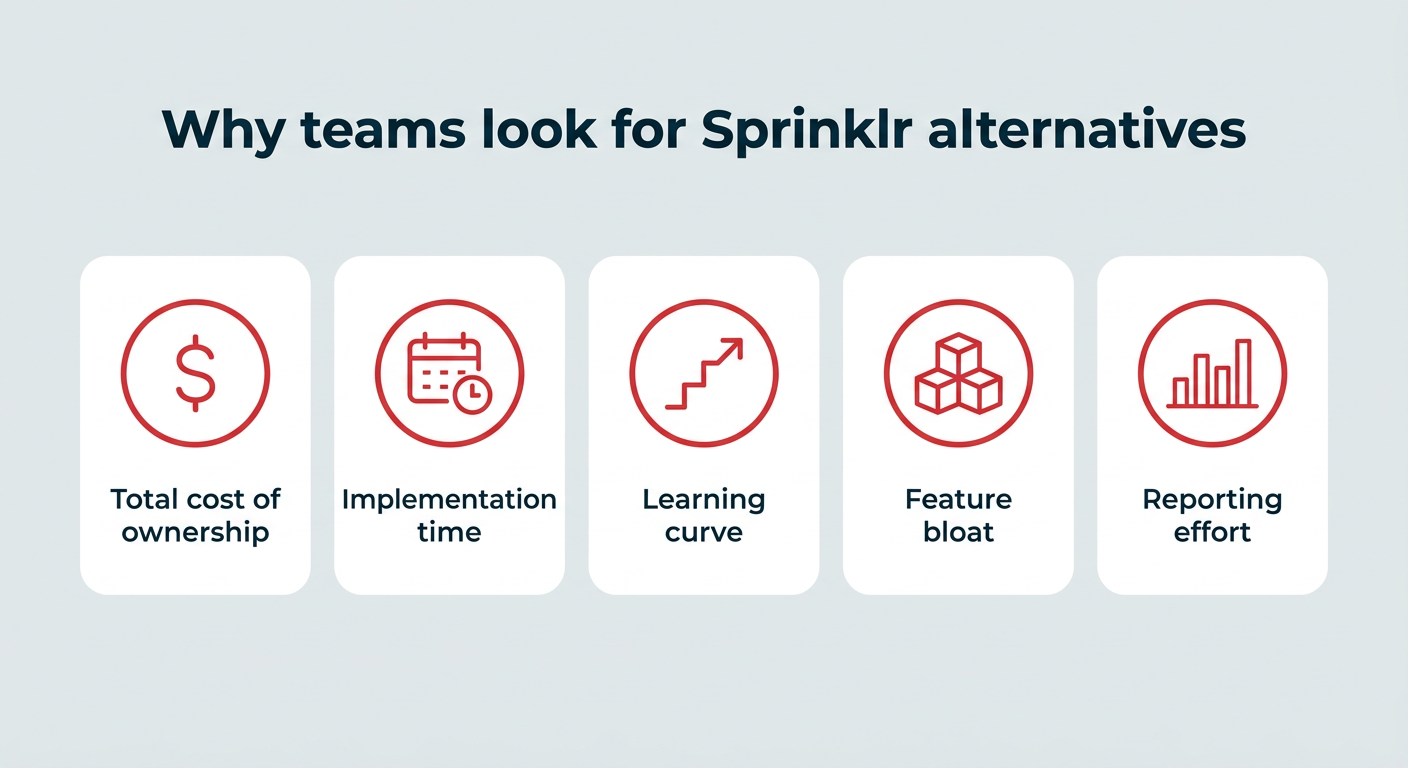
The departure from legacy systems like Sprinklr is rarely a reflection of functional inadequacy; rather, it is a matter of total cost of ownership and time-to-value. Enterprise buyers on platforms like G2 and Gartner Peer Insights consistently highlight three primary friction points: extended onboarding periods, complex modular contracts that inflate operational budgets, and steep learning curves that slow down daily execution.
In response, the enterprise software ecosystem has evolved to offer specialized solutions that bridge the gap between heavy, all-encompassing frameworks and agile point solutions. Modern social operating systems now provide enterprise-grade security, compliance, and AI-driven insights without demanding a multi-month consulting engagement to go live. To assist marketing executives and operations teams navigating this landscape, an examination of the top ten alternatives highlights how pricing, features, and target use cases compare for the 2026 market.
Top Alternatives for Enterprise and Mid-Market Operations
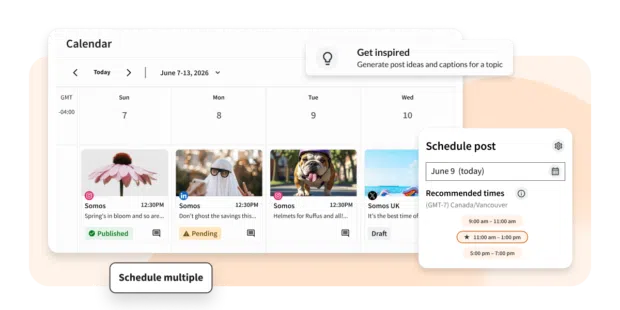
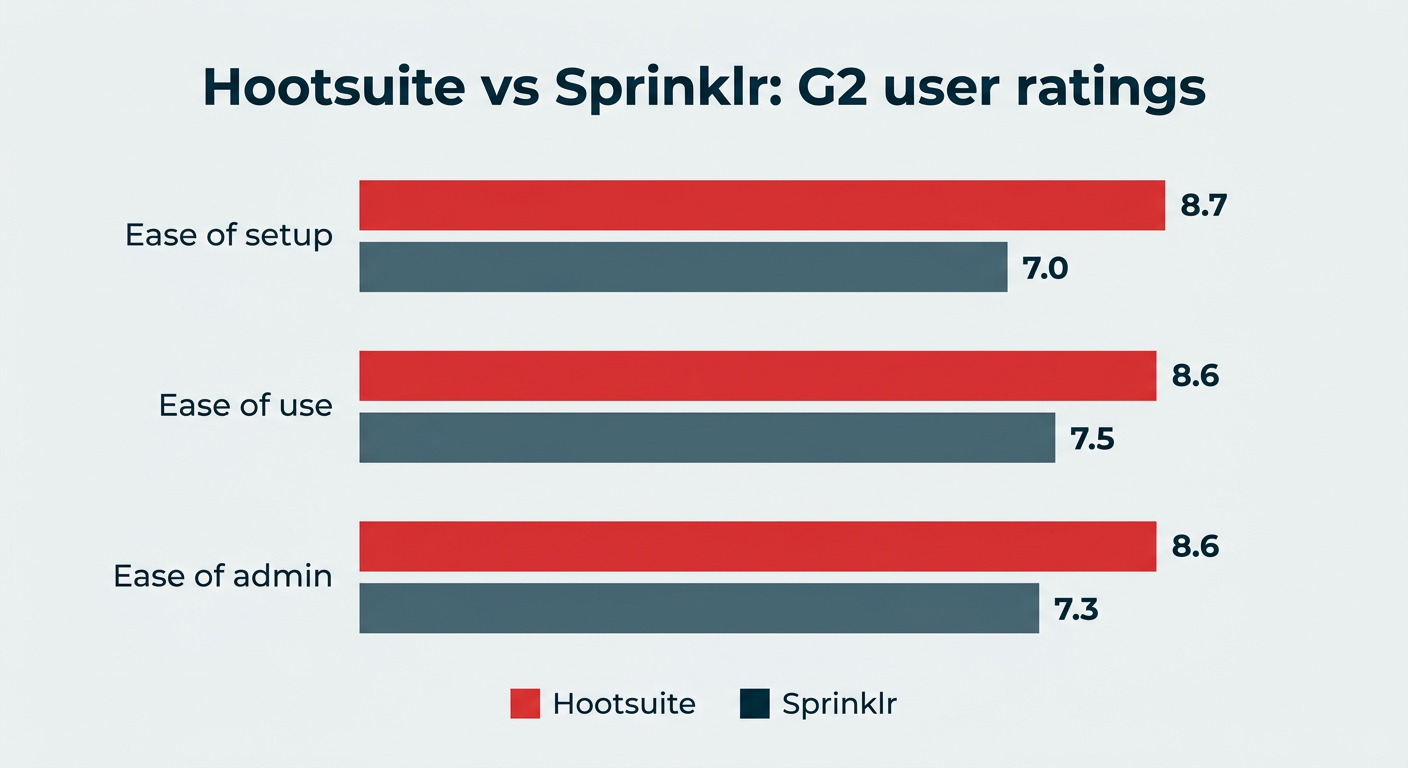
Leading the market in full-suite capability is Hootsuite, which positions its Social OS as a streamlined alternative to Sprinklr. Designed to unite social listening, publishing, customer care, and compliance governance into a single operating environment, Hootsuite connects directly to established enterprise software stacks like Salesforce, Adobe, and Microsoft. G2 user feedback consistently scores Hootsuite higher than Sprinklr in ease of setup, administrative usability, and overall time-to-value, with teams going live in days rather than quarters. Pricing models begin at an accessible $99 per user per month, making it an attractive proposition for organizations seeking enterprise scalability without exorbitant deployment fees.
For public relations and media monitoring teams whose workflows demand a heavy emphasis on earned media, Meltwater remains a prominent contender. Meltwater aggregates press, broadcast, and social mentions into a single analytical deck, offering coverage that pure social management platforms often struggle to match. However, its publishing, approval workflows, and community management features are lighter, meaning PR-heavy teams may need to pair it with dedicated publishing tools. Like many enterprise-tier vendors, Meltwater relies on custom quotes based on mention volume and seat count.
Brandwatch caters specifically to research-intensive organizations focused on consumer intelligence, trend spotting, and sentiment analysis. Operating as a listening-first platform, Brandwatch delivers deep audience segmentation and narrative tracking over time. While it competes directly with Sprinklr’s intelligence modules, organizations utilizing Brandwatch typically pair it with a separate publishing platform to handle day-to-day community engagement and content scheduling.
Sprout Social occupies a strong position in the mid-market segment, offering a polished user interface, presentation-ready analytics, and a rapid onboarding process. While it provides robust publishing, engagement, and customer service features, its per-user pricing structure and the requirement to purchase social listening as an add-on can scale costs rapidly for larger teams.
Specialized Platforms for Customer Care, Commerce, and CRM Integration

Organizations where customer support forms the backbone of social operations frequently turn to Khoros. By prioritizing agent-based social care, messaging queues, and online community forums, Khoros serves industries such as telecommunications, financial services, and consumer technology. Its deep focus on digital care makes it a natural fit for support-centric enterprises, though marketing-led teams often find its publishing capabilities overly specialized.
Emplifi, formerly known as Socialbakers, bridges the gap between social media marketing, customer care, and social commerce. By integrating traditional publishing and analytics with shoppable content and influencer management features, Emplifi appeals directly to retail and consumer goods brands.

For businesses deeply embedded in broader software ecosystems, Zoho Social and HubSpot offer integrated alternatives. Zoho Social provides a cost-effective publishing and monitoring option starting at $40 to $65 per month, with tight integrations into the wider Zoho CRM suite. HubSpot integrates social scheduling directly into its Marketing Hub Professional tier—starting at $890 per month—making it ideal for marketing teams that prefer to manage social metrics directly alongside broader inbound marketing and CRM data.
Meanwhile, smaller enterprises, solo creators, and visual-first brands continue to leverage lightweight tools like Buffer and Later. Buffer provides an accessible entry point with free tiers and paid plans starting at $6 per channel per month, while Later specializes in visual content planning and link-in-bio functionality for Instagram- and TikTok-centric campaigns. However, neither platform offers the multi-region governance, agent care queues, or deep listening capabilities required by large corporations.

Comparative Feature Analysis for Enterprise Buyers
When selecting a platform, decision-makers must look beyond basic publishing and scheduling capabilities to evaluate the breadth of the technology stack. Modern enterprise requirements necessitate a careful assessment of seven core pillars: publishing, social listening, customer care, analytics, artificial intelligence integrations, advocacy programs, and administrative governance.

While platforms like Hootsuite and Khoros offer near-comprehensive coverage across all seven pillars, point solutions such as Buffer and Later focus almost exclusively on publishing and basic analytics. Intermediate platforms like Meltwater and Brandwatch excel heavily in listening and intelligence while offering limited governance and customer care frameworks. Consequently, enterprise buyers must audit their actual daily workflows rather than defaulting to the largest available software suite.
Strategic Guidance for Making the Transition

Selecting the optimal Sprinklr alternative requires a methodical, step-by-step internal audit. Organizations should begin by mapping their exact functional requirements, distinguishing between absolute necessities—such as regulatory compliance and approval workflows—and secondary nice-to-have features. Next, stakeholders must calculate the total cost of ownership, factoring in implementation timelines, user seat expansion, and add-on module fees. Finally, conducting hands-on trials or live sandbox demos with key end-users ensures high adoption rates and prevents post-purchase friction.
Ultimately, the choice depends heavily on organizational scope and primary objectives. Large enterprises that require a unified command center spanning multiple global regions and departments can achieve robust operational efficiency without the prohibitive deployment hurdles of legacy suites. By prioritizing platforms that seamlessly connect intelligence with execution, modern marketing leaders can reduce overhead, accelerate time-to-market, and build resilient social media operations tailored for the demands of 2026 and beyond.
Related posts: