The Evolution of the Digital Dismissal
To understand why a simple icon of golden, salted potatoes has become a weaponized tool of social media discourse, one must look at the linguistic trajectory of the last half-decade. In the fast-paced ecosystem of digital communication, phrases often undergo a process of "semantification," where complex sentences are distilled into single, recognizable symbols.
The phenomenon began with the viral phrase, "Just put the fries in the bag, bro." Originating in the early 2020s, this directive was initially used as a performative way to silence individuals who were perceived as oversharing or attempting to sound intellectual in spaces where such discourse was unwanted. The sentiment was rooted in the imagery of a fast-food drive-thru: the speaker is essentially telling the recipient that their opinions are of no consequence, and their sole utility is to perform their expected "service" role—in this case, simply providing the fries.
By 2024, the phrase had solidified its place in the lexicon of internet irony. As Gen Alpha, the demographic born roughly between 2010 and 2025, began to command a larger share of the social media landscape, they accelerated the trend by stripping away the words entirely. The transition from text-based mockery to emoji-based signaling represents a broader trend in digital linguistics: the prioritization of speed, visual economy, and high-context communication.
Chronology of a Cultural Shift
The transformation of this meme can be mapped across a distinct timeline:
- 2022: The emergence of "Just put the ketchup in my bag, bro" on platforms like Facebook. At this stage, the phrase was primarily used to mock influencers or public figures who engaged in long-winded, unsolicited explanations.
- 2024: The "fries" variation gains critical mass on TikTok. The phrasing becomes a standardized response to anyone deemed to be "trying too hard" or acting as if their perspective holds more weight than it does.
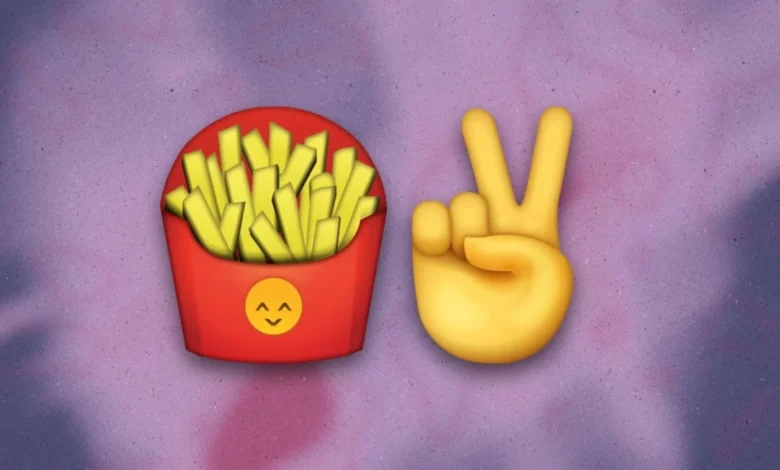
- Late 2025 – Early 2026: The transition to emoji-only communication. Users begin pairing the 🍟 emoji with the peace sign (✌️) to convey a final, dismissive "wrap it up" sentiment.
- October 2026: The usage becomes so widespread that it is recognized as a staple of Gen Alpha slang, frequently appearing in the comment sections of popular creators to shut down debates or mock cringeworthy content.
Data-Driven Insights on Emoji Usage
While exact demographic data on emoji usage remains difficult to quantify due to the ephemeral nature of platform algorithms, engagement metrics suggest a significant spike in the use of the 🍟 emoji in negative-sentiment comment threads. According to social listening patterns observed throughout 2026, the inclusion of the French fries emoji in a comment is increasingly correlated with a "dismissive" intent rather than a culinary one.

Digital sociologists note that this is consistent with the way younger generations have repurposed existing Unicode characters to convey irony. Much like the "skull" emoji (💀) transitioned from representing death to signifying laughter, the fries emoji has moved from a food item to an abstract signifier of social hierarchy. The use of the peace sign (✌️) alongside the fries is a critical addition; it serves as a non-verbal "mic drop," effectively telling the recipient that the conversation is closed.
Analyzing the Socioeconomic Implications
While the joke may seem harmless in the context of a social media comment section, its origins warrant deeper scrutiny. The phrase "Just put the fries in the bag, bro" relies heavily on the denigration of service-industry labor. It functions by equating the act of speaking or having an opinion with a failure to perform one’s "job," implying that the service worker is beneath the person they are addressing.
Critics argue that this usage reflects an underlying class-based bias that has been normalized through meme culture. By turning the act of working in a fast-food restaurant into a punchline for being "unimportant" or "servile," the meme inadvertently reinforces a social hierarchy that devalues essential labor. When this phrase is reduced to an emoji, the original bite of the insult is obscured, but the dismissive attitude remains intact. For many young users, the sociopolitical weight of the meme is lost; they are simply participating in a trend of "shutting down" someone they find annoying.
Reactions from the Digital Culture Sphere
Industry observers and internet anthropologists have noted that this is a classic example of how Gen Alpha interacts with legacy memes. Unlike previous generations, who might have kept the text-based meme alive, Gen Alpha is characterized by a "hyper-visual" approach to communication.
"They don’t want to type out a sentence," says one digital communications analyst. "They want the most efficient way to signal to their peers that they find something embarrassing. The fries emoji is the perfect tool for that because it’s innocuous enough to avoid immediate platform moderation, but specific enough to carry a heavy, well-understood cultural meaning."
Creators who find themselves on the receiving end of the 🍟 emoji often express confusion or frustration, as the meaning is not immediately apparent to those who have not been deeply embedded in the specific corner of TikTok where the slang originated. This creates a "gatekeeping" effect, where the emoji serves as a shibboleth—a way to separate those who are "in the know" from those who are "out of the loop."

The Future of Emoji-Based Communication
The rise of the fries emoji as an insult is not an isolated event; it is part of a larger, ongoing shift in how humans communicate via technology. As the digital landscape becomes increasingly saturated with content, the need for brevity increases. We are moving toward a period where nuanced emotions, complex social rejections, and collective mocking are conveyed through a standardized set of icons.
Whether this trend will persist or if the fries emoji will eventually lose its "insult" status remains to be seen. Historically, once a slang term or meme becomes widely adopted by the mainstream—or once it is explained in detail by media outlets—it often loses its "cool" factor, leading to a decline in usage among the very demographic that popularized it.
For now, however, the 🍟 emoji remains a potent tool in the digital arsenal of Gen Alpha. It is a reminder that in the world of internet culture, nothing is ever truly what it seems, and even the most mundane items can be repurposed to serve as instruments of social commentary, exclusion, or ridicule. As social media platforms continue to evolve, one can expect to see more of these "coded" symbols emerging, further complicating the bridge between traditional language and the rapidly shifting world of digital discourse.
The next time you see a basket of golden fries in your notifications, consider the context carefully. It may not be a compliment, and it certainly isn’t an invitation to talk. It is a sign, clear and concise, that in the eyes of the digital natives, you have officially said too much.