The Ultimate Guide to Social Media Search Engines: How Platforms Like TikTok, Instagram, and LinkedIn Are Replacing Google for Modern Consumers

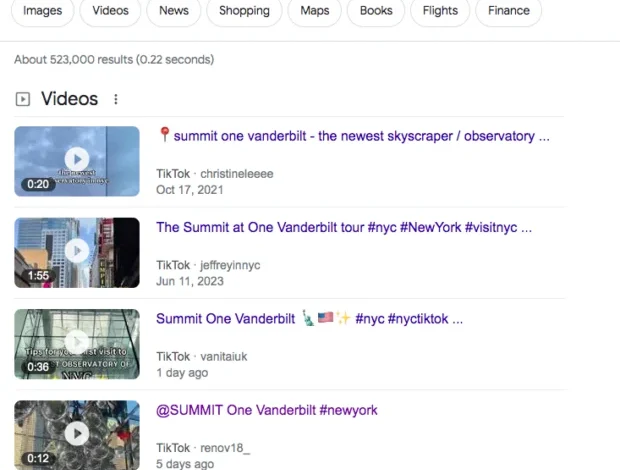
The fundamental way internet users discover information, products, and services has undergone a seismic shift, moving away from traditional search engines and toward social media platforms. For millions of consumers, particularly younger demographics, the search for answers no longer begins on Google or Bing. Instead, it starts with a typed query or a spoken phrase inside the search bars of TikTok, Instagram, YouTube, and LinkedIn. This transition represents a major evolution in digital navigation, forcing brands, marketers, and enterprises to fundamentally rethink their digital visibility strategies.

Understanding this behavior requires looking at how modern consumers interact with online data. Traditional search engines like Google have historically relied on domain authority, complex algorithmic linking, and structured web pages to surface information. In contrast, social media platforms have evolved from casual entertainment feeds into active search engines. Users now utilize these apps to look up specific recommendations, peer reviews, tutorials, and local hotspots by actively inputting queries rather than passively scrolling through algorithmic timelines.
Recent behavioral studies underscore the scale of this transformation. According to data compiled by the Pew Research Center, an overwhelming majority of U.S. teens regularly turn to video- and social-centric platforms for daily information, with 90 percent utilizing YouTube and 63 percent relying on TikTok. Furthermore, approximately one in five teens report being on these platforms almost constantly. As Generation Z matures and Generation Alpha enters their teenage years, they bring deeply ingrained expectations of fast, visual, and highly personalized answers delivered directly to their mobile devices via a single thumb-scroll.

Recognizing this behavior, tech companies have aggressively invested in transforming their applications into comprehensive discovery engines. TikTok, Instagram, and YouTube have rolled out advanced, AI-assisted search features. These include suggested queries embedded directly inside comment threads, keyword search capabilities that stretch far beyond traditional hashtags, and results pages summarized or grouped neatly by topic. For these digital-first generations, social search significantly outperforms traditional search engines when it comes to discovering, evaluating, and saving information on mobile devices.
The Mechanics of Social Search Versus Traditional Search
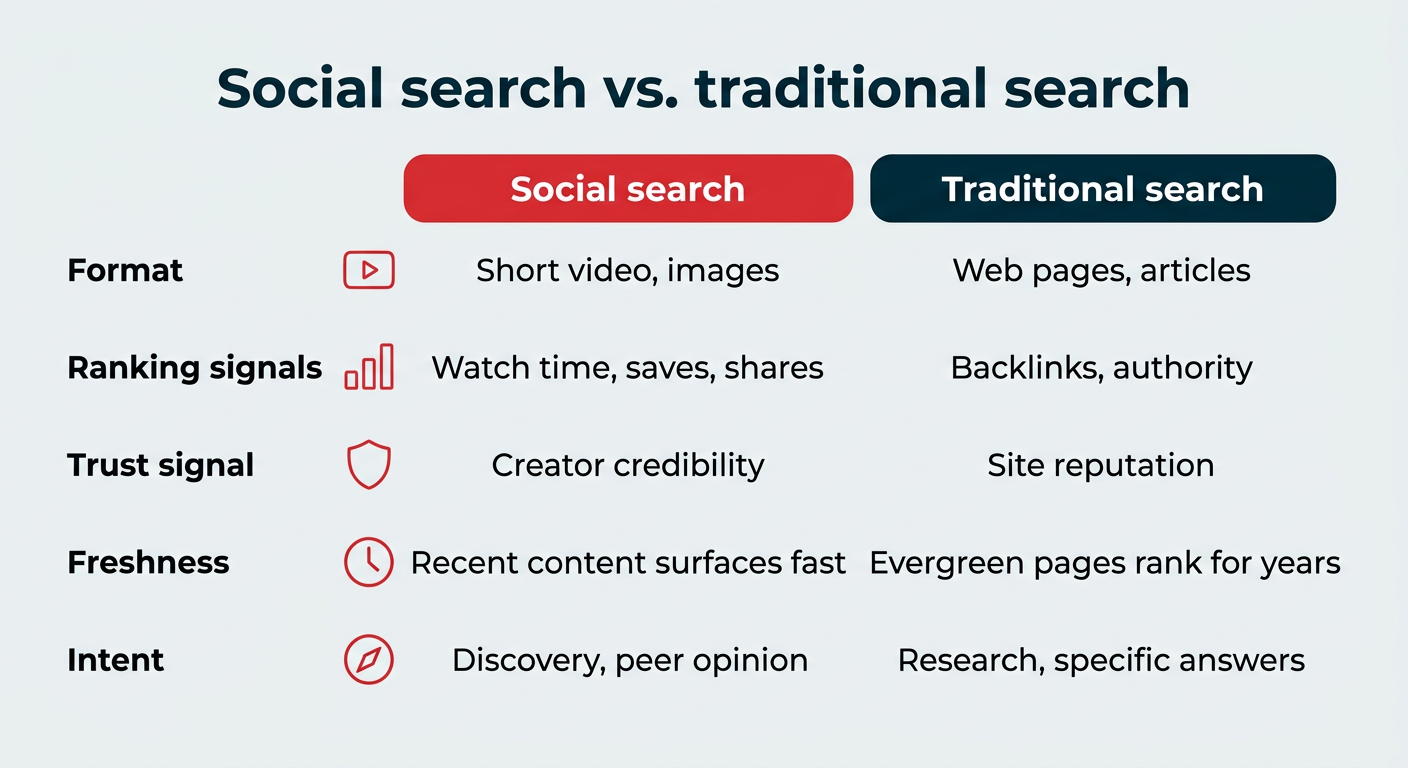
To effectively capture modern audiences, marketers must grasp the fundamental differences between how social media search engines and traditional search engines rank and surface content. While traditional search rewards established websites, technical SEO, and domain authority, social search heavily rewards creator authenticity, immediate engagement, and user-generated social proof.
On Google, a page’s ranking is largely dictated by inbound backlinks, technical site architecture, and semantic keyword matching. On platforms like TikTok or Instagram, however, a post surfaces based on a completely different set of signals. These include exact keywords found within captions and on-screen text, audio transcripts, watch time duration, save rates, share frequencies, and how closely the content aligns with a user’s historical viewing behavior. Crucially, this creates a meritocracy where a brand-new account with zero followers can vastly outperform an established corporate profile if the underlying piece of content captures high engagement.

| Dimension | Social Media Search Engines | Traditional Search Engines |
|---|---|---|
| Dominant Format | Short-form video, images, comment threads | Web pages, articles, structured data |
| Main Ranking Signals | Keywords, watch time, saves, shares, comments | Backlinks, domain authority, on-page relevance |
| Trust Signal | Creator credibility and social proof | Site reputation and citations |
| Personalization | Heavy, shaped by individual viewing history | Moderate, shaped by location and history |
| Freshness Bias | Strong, recent content surfaces fast | Mixed, evergreen pages can rank for years |
| Typical Intent | Discovery, inspiration, peer opinion | Research, transactions, specific answers |
Despite these differences, the two systems are not mutually exclusive; rather, they increasingly feed into one another. Social media posts originating from platforms like TikTok, Instagram, Reddit, and LinkedIn are routinely indexed by traditional search engines like Google, frequently appearing directly within standard search engine results pages (SERPs). Consequently, a single, well-optimized social post can achieve dual-channel visibility, capturing users during both their early exploratory phases and their later transactional research phases.
Platform-Specific Search Dynamics and Optimization Strategies

Because each social network relies on unique algorithmic architecture, a uniform optimization checklist will rarely yield success across the board. Brands must tailor their approach to the specific mechanics of individual platforms.
TikTok processes more than three billion searches daily, driven heavily by keyword recognition rather than simple hashtags. The platform’s system actively reads captions, on-screen text, audio transcripts, and user comments to contextualize video topics. To rank effectively on TikTok, creators must speak target keywords out loud, embed them visually as on-screen text, and integrate them naturally into the caption.

Instagram search has similarly evolved beyond basic account names and hashtags. When a user searches for a term like "sourdough starter," the platform delivers a blended feed of accounts, Reels, and static posts, with short-form Reels typically dominating the results. Because Instagram indexes captions, alt text, and embedded video text, brands achieve the fastest visibility wins by writing descriptive captions using the exact vernacular real consumers use when searching.
LinkedIn functions as a powerful professional search engine structured around three primary pillars: people, companies, and content. It heavily weighs profile and page metadata, meaning job titles, professional skills, headlines, and corporate descriptions directly dictate search visibility. For B2B organizations, LinkedIn search serves as a direct sales pipeline, as corporate buyers routinely research vendors and individual professionals before initiating contact.

Meanwhile, platforms like YouTube, Pinterest, and Reddit maintain distinct search behaviors. YouTube operates as a dual-purpose video search engine where titles, chapters, and transcripts dictate visibility, while watch time determines long-term positioning. Pinterest acts as a premier visual search engine for purchase intent and project planning, driven by board categorization and descriptive pin titles. Reddit has rapidly emerged as a dominant search destination for authentic peer reviews and consumer opinions, largely due to Google’s preference for surfacing Reddit threads in traditional search results.
Brand Awareness and Competitive Intelligence Implications

The rise of social media search has fundamentally altered how brand awareness compounds in the digital economy. With roughly 73 percent of Generation Z consumers identifying social media as their primary resource for learning about new products, social search drives discovery long before a traditional web search ever occurs.
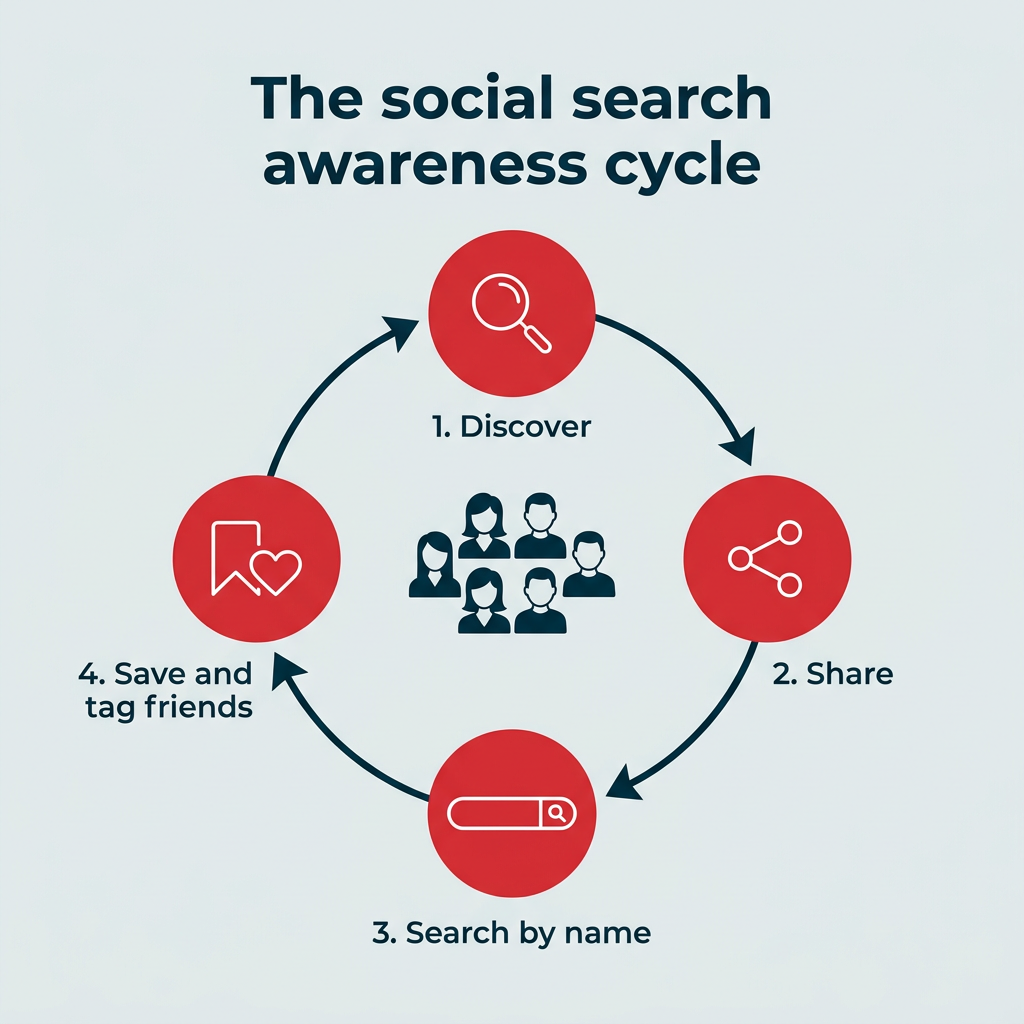
This creates a powerful, self-sustaining awareness cycle. When consumers discover a brand through social search or algorithmic feeds, they frequently share that information with peers, both online and offline. Word-of-mouth recommendations subsequently drive brand-name searches back into social platforms, surfacing content created both by the brand itself and by independent users. These posts generate likes, saves, and tag-based comments, feeding the algorithmic loop anew. Furthermore, because search-optimized content continues to surface months after its initial publication, it captures prospective customers who do not currently follow the brand’s profile.
Beyond consumer discovery, social search serves as an invaluable tool for competitive intelligence. By routinely searching industry-specific keywords and monitoring competitor profiles, organizations can identify emerging market players, benchmark performance metrics, and pinpoint content gaps. Analyzing the specific phrasing utilized by target audiences in comment sections provides free, real-time market research, highlighting consumer pain points, frequently asked questions, and unfulfilled product desires.
Actionable Best Practices for Social SEO

To capitalize on the shift toward social search engines, digital marketers must implement a dedicated social SEO strategy across all active channels.
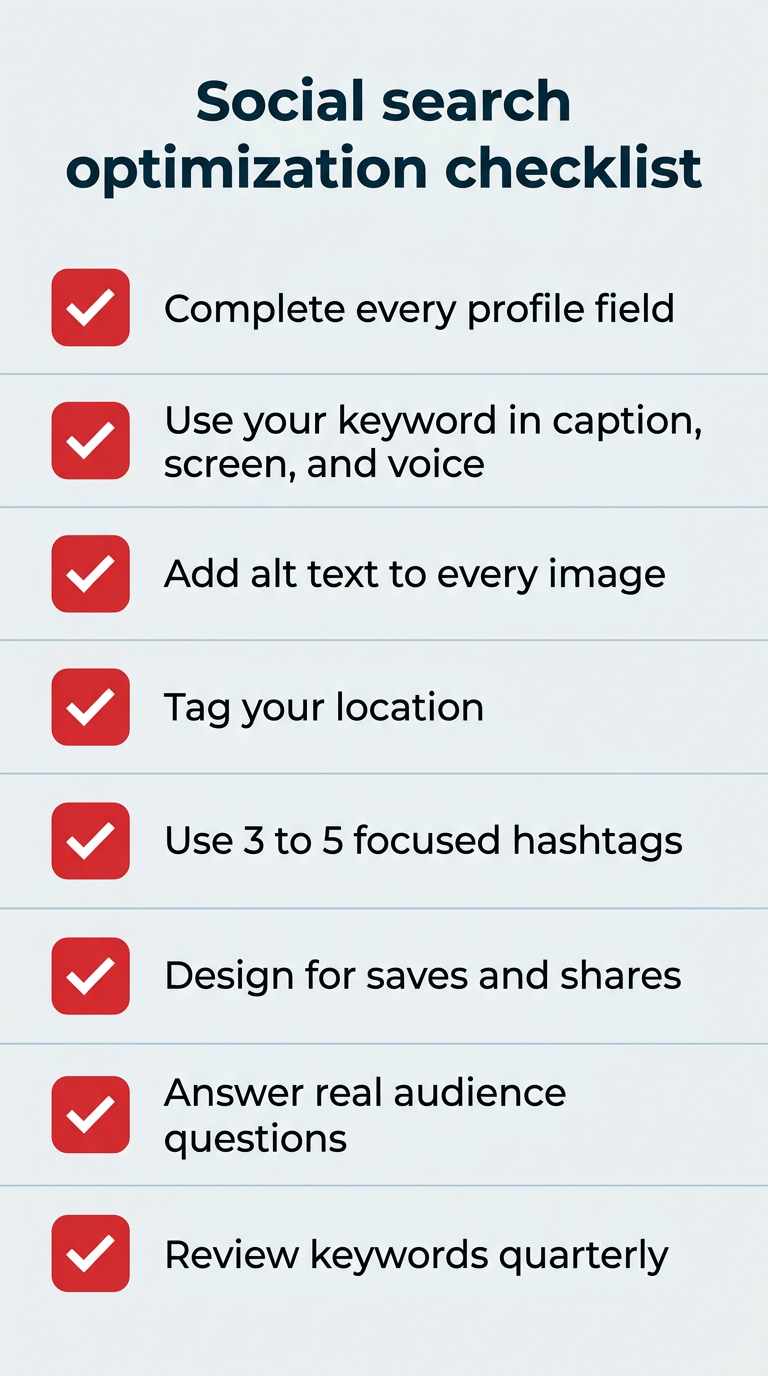
First, profiles must be meticulously optimized for search discovery. Because a brand’s profile page consistently appears in name-based searches, it requires descriptive, keyword-rich language within the account name, handle, bio, and operational sections. Every available field—including geographic location, industry category, and contact options—should be completely filled out using natural language that aligns with consumer search intent.

Second, content must be purposefully crafted with target keywords embedded naturally across multiple touchpoints. For video content, this means weaving keywords into spoken audio, on-screen graphics, and descriptive captions. Keyword selection should reflect everyday consumer language rather than corporate or technical jargon.
Finally, brands must leverage auxiliary search levers such as geographic location tagging, precise alt text descriptions, and strategic hashtag deployment. While broad hashtags have diminished in value as keyword search capabilities improve, engagement signals—specifically saves, shares, and high watch times—remain paramount. Content that compels users to save or share it signals to algorithms that the post successfully answers the user’s query, ensuring long-term visibility on results pages.
Evaluating Social Search and Monitoring Tools
As social search grows in complexity, organizations rely on a suite of tools to monitor brand mentions, track keywords, and analyze cross-platform performance.
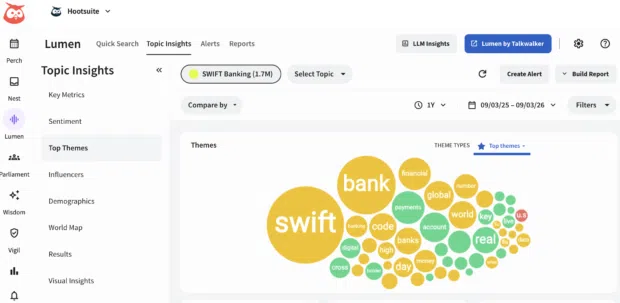
Integrated solutions like Lumen within Hootsuite Social OS allow marketing teams to combine social search, sentiment analysis, and theme detection directly within their publishing and analytics workflows. For ad-hoc research, advanced Google search operators—utilizing Boolean logic and site-specific filters—allow marketers to efficiently locate social mentions, user-generated content, and influencer profiles across the wider web. Specialized platforms like Social Searcher provide rapid cross-platform spot-checks for mentions and hashtags, while enterprise-grade solutions such as Lumen by Talkwalker offer global, multi-network AI listening capabilities that track text, visual logos, and audio podcast mentions across millions of digital sources.
Ultimately, as consumer habits continue to evolve, treating social media solely as a broadcasting channel is no longer sufficient. By mastering the distinct mechanics of social search engines, brands can future-proof their digital marketing strategies, capturing high-intent audiences earlier in the discovery journey and securing lasting visibility across both social and traditional search landscapes.